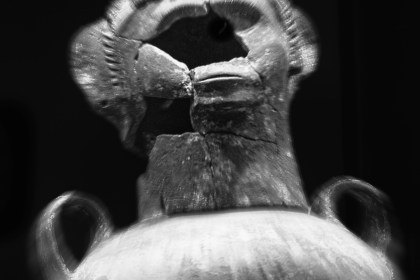
Burial urn. Etruscan 7th or 6th century BCE. Glyptotek, Copenhagen.
metamorphosis

Becoming stone
Figuration. Statue. Flint pebble rolled by the Storebaelt, Nyborg, Fyn. Titan Kronos, fearful of the prophecy that his children would overthrow him, ate them whole upon their birth. Until Rhea, his partner, gave Kronos a stone that he mistook for the infant god Zeus. Having returned from Mount Ida where he grew to maturity, Zeus…

Becoming stone — death and transfiguration
Stevns Klint, Denmark. Connie Svabo and I are visiting this extraordinary geological site that achieved World Heritage status in 2014. She was part of the team that developed the concept for the superb new visitor center [Link]. Here is a vitalist and hylozoic commentary. Exposed limestone and chalk geology. Højerup old church. The beds of…

Newsletter — Stanford Archaeology Center
Prospective reflections on 2025-26 Acting with nature — prehistory My new book Archaeologies of Nature: Activating the Archive, written with Gabriella Giannachi, University of Exeter and Turin, is now complete and in production. Open Access — it will be available as PDF in June 2026. We use an archaeology of artworks to probe human relationships…

The archaeological life of things — Bornholm
Hosts, ghosts, visitors For some years I have been making archaeological visits to Bornholm, the Danish island south of Sweden. Rock art, unique prehistoric sites and monuments, medieval settlement, churches and castles, rune stones, fishing industry, cold war relics, an arts community since the nineteenth century, contemporary heritage and tourism. The mingling remains of many…

Studio update – Spring 2022
This academic year I am on sabbatical leave finishing three long-running projects and planning to focus more on applications of the archaeological imagination to matters of common and pressing contemporary concern, especially through design foresight and futures literacy. This is why I have put to one side my critical commentary on all things archaeological and…