
Museum of Classical Archaeology, Peterhouse, Cambridge 1977.
Author: Michael Shanks
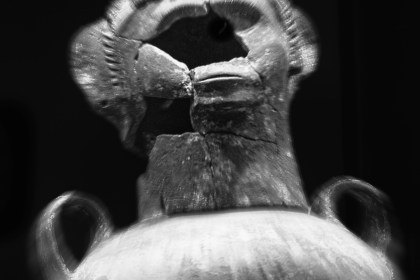
Etruscan
Burial urn. Etruscan 7th or 6th century BCE. Glyptotek, Copenhagen.

Fogo Island — field notes on design, place, community
I have just returned from a fascinating gathering on Fogo Island, Newfoundland, Canada — Shore Time [Link], organized by Fogo Island Arts, a part of Shorefast [Link], the social enterprise founded by Zita Cobb in 2006 to build economic and cultural resilience on the island. Speakers and hosts were Kitty Scott, Leonor Antunes, Tom McDonough,…

Palmyra in the (archaeological) north
More legacies of antiquity, reworkings of what remains. Displacements. Funerary portraits. Loss and the burden of interpretation. I have been posting some photographs of statues from the extraordinary collections in the Glyptotek in Copenhagen. The museum also holds a large collection of funerary reliefs from ancient Palmyra, the oasis city in Syria that once served as…

museum piece
Museum basement. Archaeological theatre.
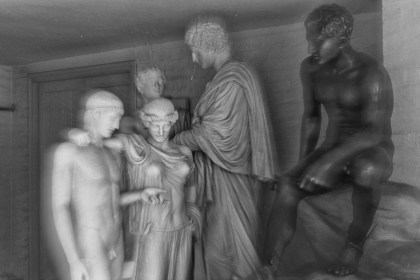
Museum of Classical Archaeology
Plaster casts. Basement, Museum of Classical Archaeology, Peterhouse, Cambridge. 1976. Reprinted 2026. A precocious teenager, student of Classics, I was visiting Cambridge to talk with archaeologist David Clarke. With extraordinary generosity he gave a couple of hours to me to discuss not antiquity, but prehistory, how the field was a corrective and antidote to the…