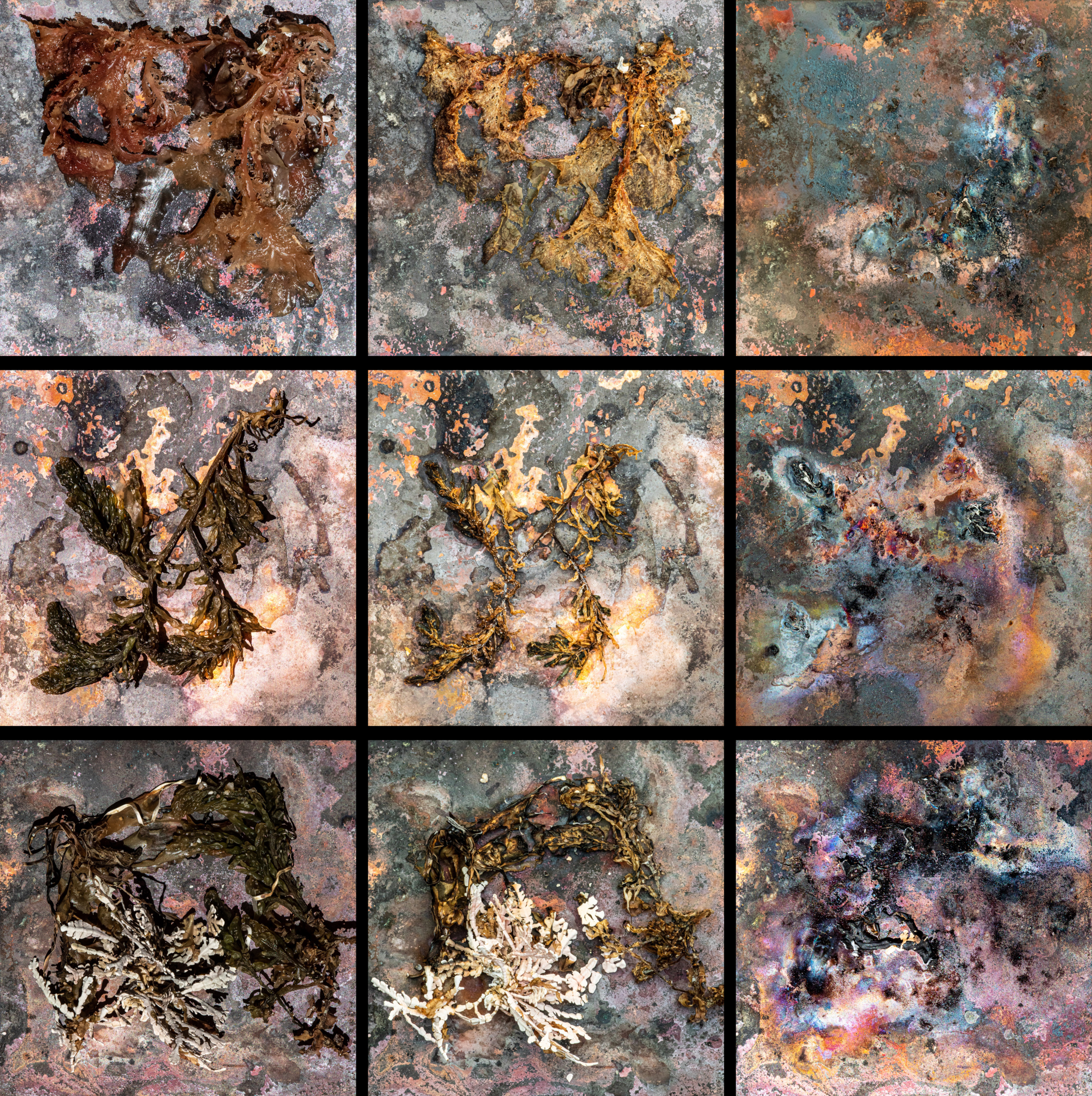
in the alchemist’s studio – 01


Four new works from Anselm Kiefer go on exhibition at Gagosian Le Bourget, Paris, February 7.
Marvelous manifestations of the archaeological imagination – [Link]
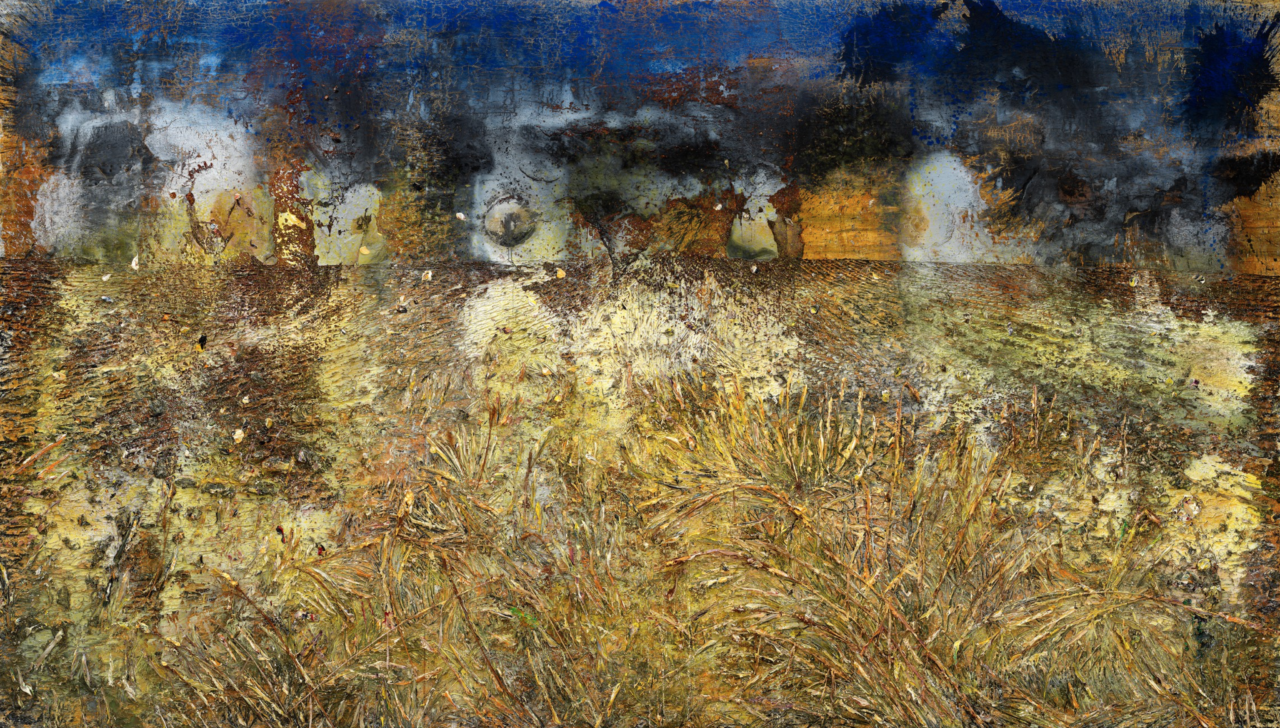
What interests me is the transformation, not the monument. I don’t construct ruins, but I feel ruins are moments when things show themselves. A ruin is not a catastrophe. It is the moment when things can start again.
The pictures become interesting when the subject matter is no more than an excuse, when the artist remembers the struggle, when he sets forth his own world in conflict with the self-secluding earth.
—Anselm Kiefer
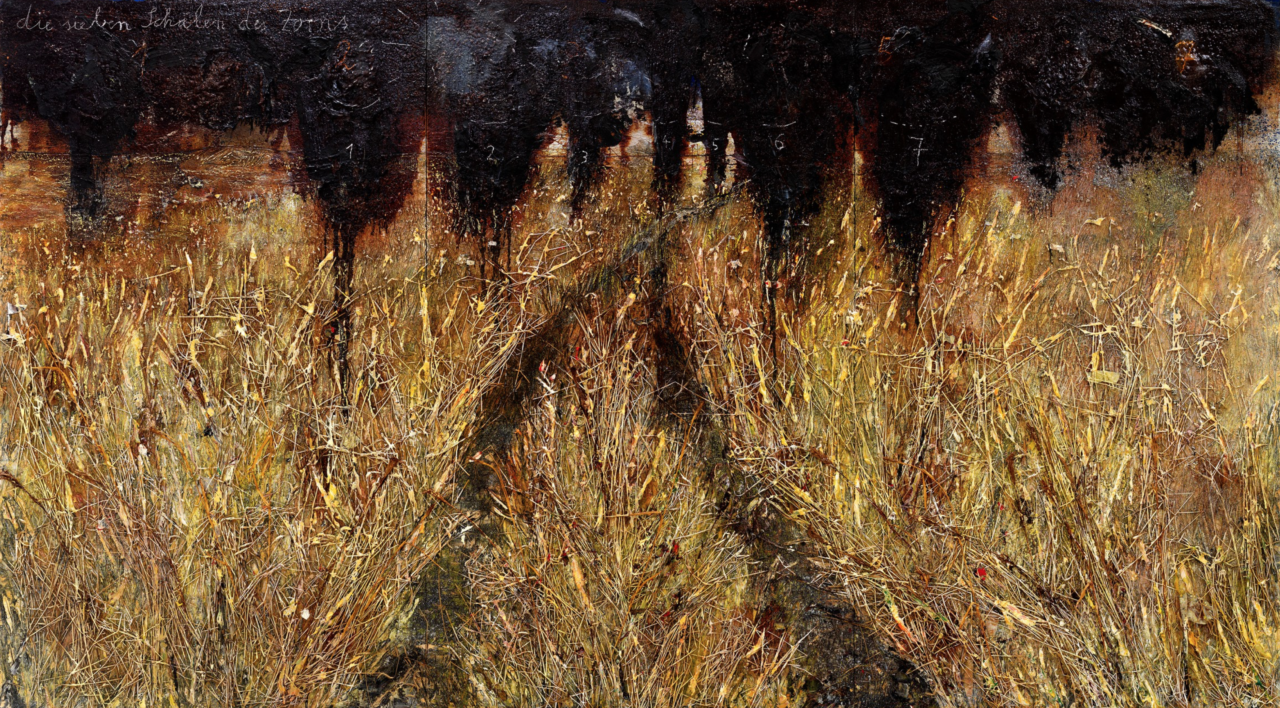
Gagosian is pleased to present Field of the Cloth of Gold, an exhibition of four monumental new paintings by Anselm Kiefer.
The tension between beauty and terror, alongside the inextricable relationship between history and place, has animated Kiefer’s work since the 1970s. Drawing on the literature of cultural memory—including poetry, the Old and New Testaments, and the Kabbalah—Kiefer gives material presence to myths and metaphors. He infuses the medium of paint with startling and unconventional gestures and objects, juxtaposing it with organic and abject materials such as straw, sand, charcoal, ash, and mud. Kiefer asserts himself as an iconoclast; his paintings undergo various processes—such as being cut, burned, buried, exposed to natural elements, splashed with acid, or poured over with lead—so as to be made anew. These strategies, along with the use of materials such as lead, concrete, glass, fabric, tree roots, or burned books, create a symbolic resonance, making palpable both the movement and destruction of human life and the persistence of the lyrical and the divine.
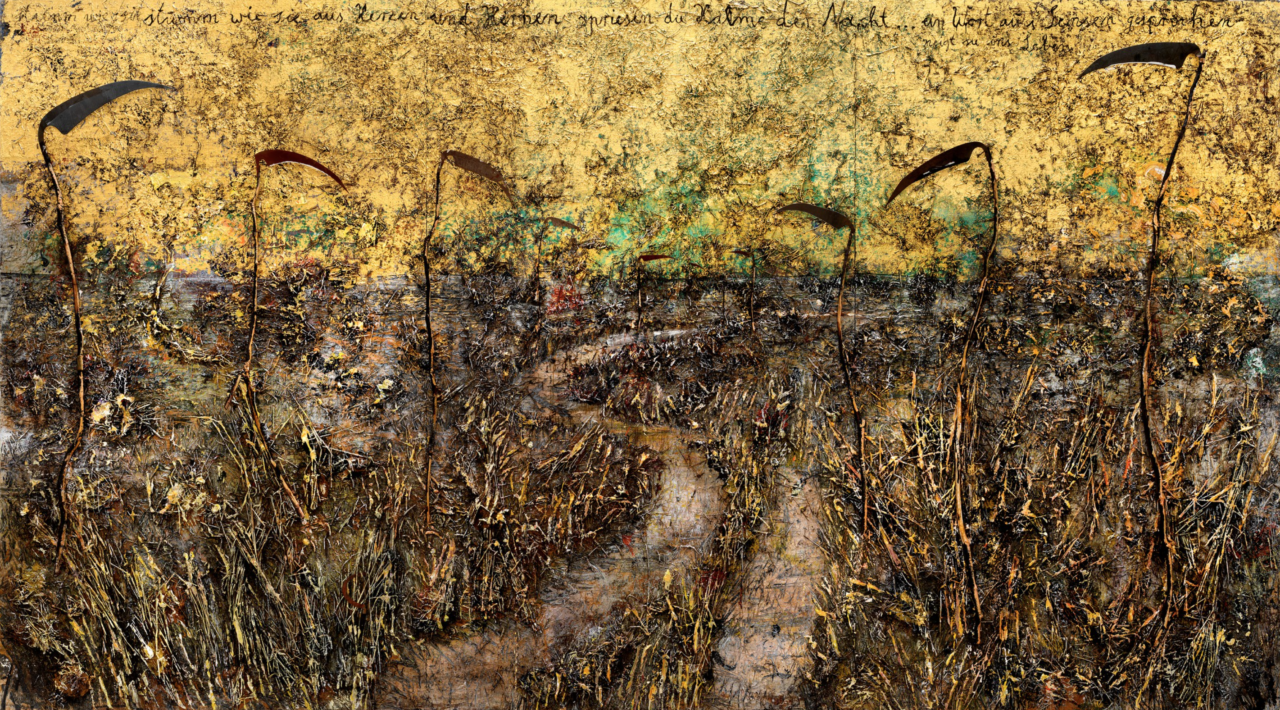
The exhibition’s title refers to the historic peace summit between King Henry VIII and King Francis I that took place five hundred years ago in a field in what is now Pas-de-Calais, France. The conference, centered around a strategic alliance between England and France, had the goal of outlawing war between Christian nations. The alliance was considered a key event in shaping Europe’s geopolitics—until it dissolved and war broke out, a year later. While Kiefer did not begin making these works with this event or title in mind, the connection became apparent and synchronous after their completion. As he stated in a recent interview, “the title is often not the explanation of the picture,” but is rather “an allusion.” History is one of the materials he uses and synthesizes in his work, “like clay for the sculptor or color for the painter.”
Completed over the last two years, these works predate the COVID-19 pandemic, the ripple-effect crisis it created, and the international and cross-cultural relationships it has reconfigured. While history has been fractured and unpredictable since the Field of the Cloth of Gold conference, our cultural memory holds the violent unpredictability of human relations on a continuum. The layered and visceral character of these paintings, whose scale almost matches the landscapes they depict, evokes the surging capriciousness of European history and the effects and aftermaths of war. As in The Morgenthau Plan series of 2012, Kiefer affixes other elements to the surfaces of these paintings, from plant matter to industrial material, building a third dimension onto the painted canvas. Here the field of history is transfigured into a field of gold under a dark sky.
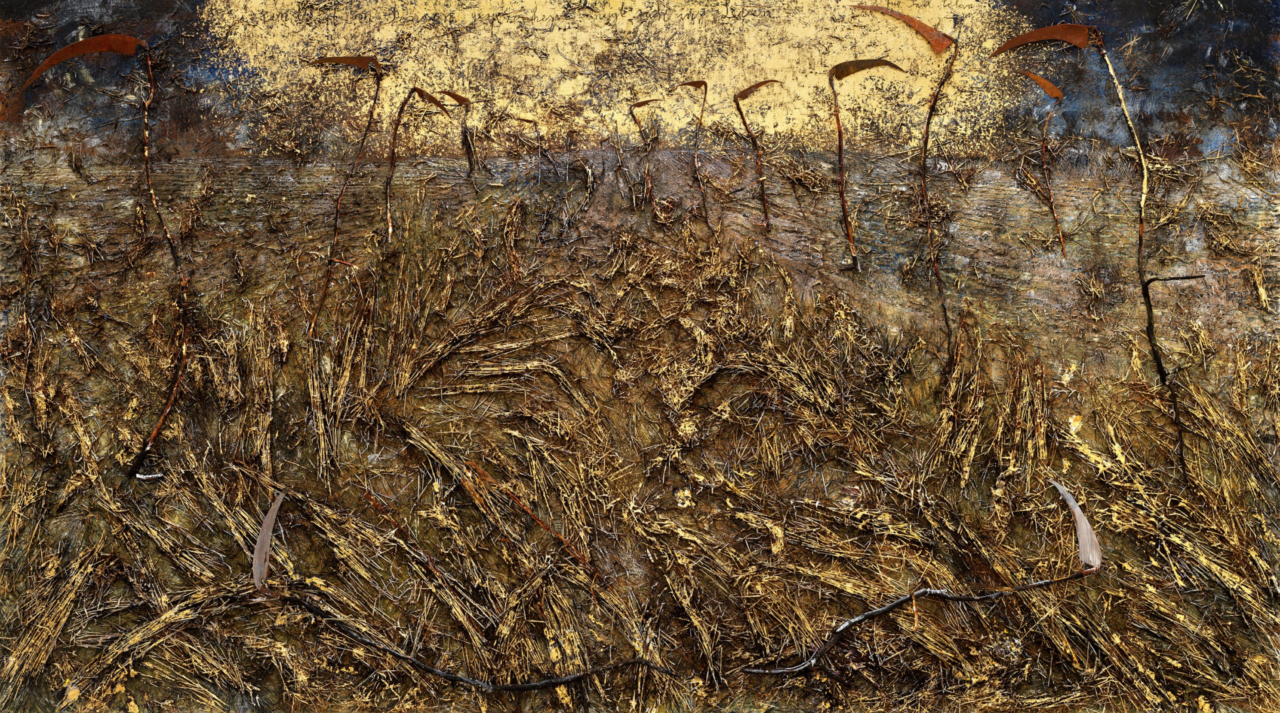
As is customary in Kiefer’s work, each painting’s title and symbols contain a rich literary and historical set of references. Sichelschnitt (Sickle Cut) (2019) refers to the Manstein Plan (Sichelschnittplan), a war plan devised by the German Army during the Battle of France in 1940, while Beilzeit—Wolfszeit(Axe-Age—Wolf-Age) (2019) nods to “Völuspá (Prophecy of the Seeress),” the first poem of the Poetic Edda of Old Norse mythology. Verse 45 of this poem is translated as “Axe-time, sword-time, | shields are sundered, / Wind-time, wolf-time, | ere the world falls.” Ein Wort von Sensen gesprochen (One Word Spoken by Scythes) (2019–20) evokes the poem “From Hearts and Brains” by Paul Celan, whose poetry has been a point of reference for Kiefer for decades. Celan’s verse reads, “and a word, spoken by scythes / bends them into life.”
[Link] – Anselm Kiefer: Field of the Cloth of Gold, Le Bourget, February 7–March 28, 2021 | Gagosian

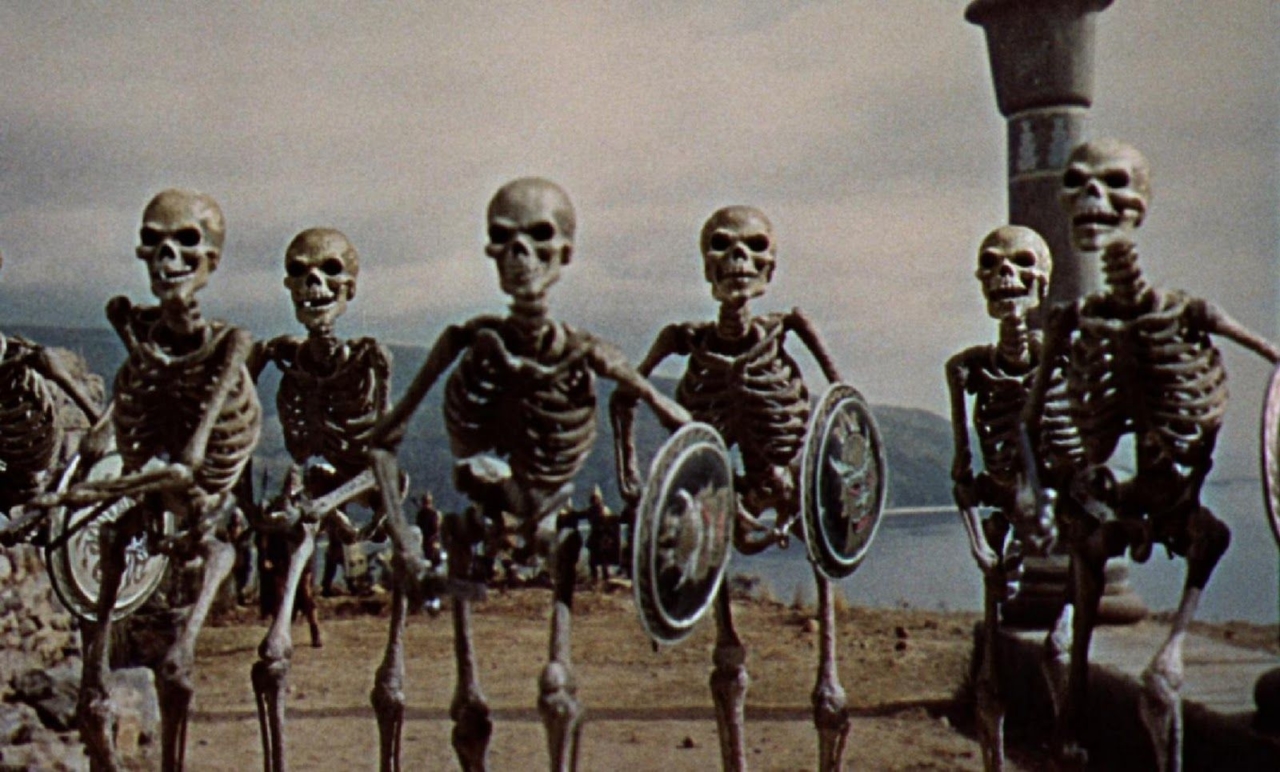
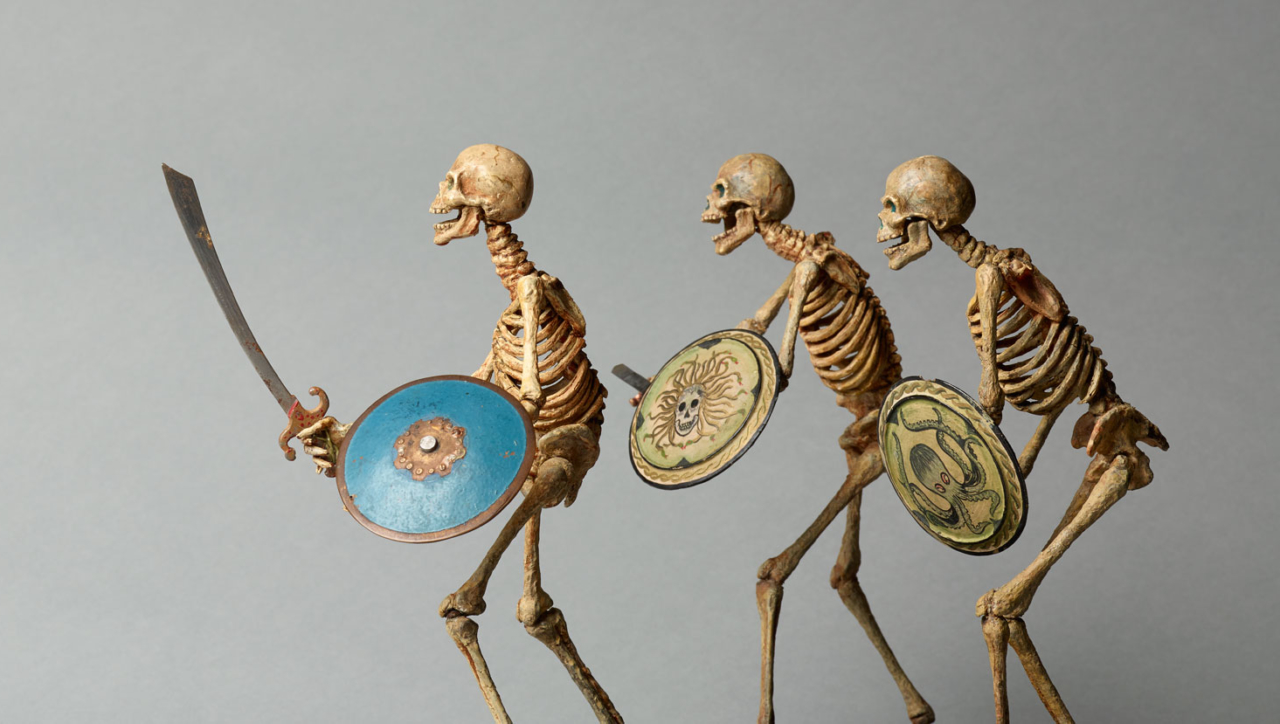
There’s an exhibition of the stop-motion animation of Ray Harryhausen running at Scottish National Gallery of Modern Art – [Link]. I vividly remember first seeing his magical movies in the 60s and 70s. The infamous fighting skeletons in Jason and the Argonauts (1963); Pegasus the winged horse in Clash of the Titans (1981). Paul Noble sent me a book about him a few years back – part of our conversation around world building and the fantastical. Mike Pearson and I have written much about reenactment and performative presence. And most recently Gary Devore and I have been exploring the crucial role of conjecture and the imagination in archaeology and history writing.
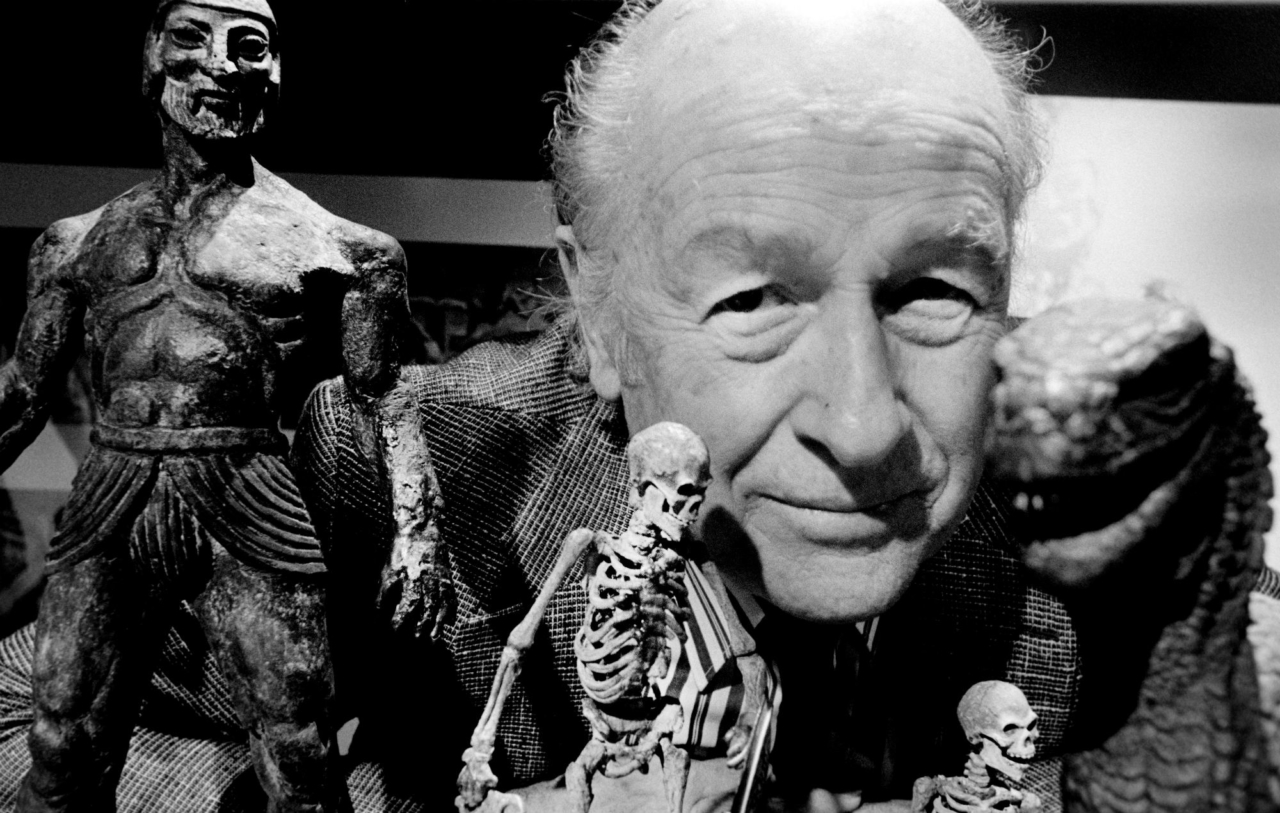
Harryhausen’s movies are not great works of art. The plots, dialogue and acting were often wooden. Why then is he rightly considered so influential and inspiring?
Because his models are so much more than special effects. They breathe presence and attest to our constant remaking of lifeworld. How does this work? Here are some lessons for those of us who would wish to reconstruct, remodel the past into a better future (see Futures Literacy – [Link]).
Computer generated imagery (CGI) can be remarkably photo-realistic, blending seamlessly with the way photographs capture the appearance of things. Stop motion animated models are not like this. They never quite blend in; and this is actually the source of their energy to evoke, I think.
CGI is the product of a quite different design process and mode of production. Here we might contrast naturalism and realism. Naturalism is the reproduction of the way the world appears superficially. Photography is good at naturalism, as is CGI. For many this is the objective of CGI and photo work, to reproduce the appearance of things.
We might use the concept of realism to refer to features of lifeworld that exceed appearance, relating perhaps to structure, or causation, to our relationships with experience. The rhetorical purposes of naturalism and realism are different. Naturalism says – here is the way things appear. Realism says – here is how things work, maybe, depending upon your interest.
Harryhausen’s stop motion animated models belong to worlds of fantasy. There is no attempt to deny this. One might say that their realism is about the power of narrative; they augment the ways one might imagine stories by offering versions of characters that do not occur naturally in everyday experience, like fighting skeletons or flying horses.
The realism of stop motion animated models is also that they acknowledge their mode of production. In CGI the objective is often to have the imagery fabricated by the computer blend in so one doesn’t notice where the fabrication begins or ends. The rhetorical purpose of CGI is to fool, to deceive. Harryhausen’s models don’t look “real”. More precisely, they don’t look “natural”. No one need be fooled. One admires the craft in their making. Trickster Harryhausen gets us to admire his skill and artistry.
In contrast, CGI can tend to an experience of alienation. The hand of the maker is occluded, by design. We don’t see, are not meant to see the connection between the CGI artist/engineer and the image on the screen. A gap, a fault or error in the naturalism (perhaps the fur of a creature doesn’t quite look as naturalistic as it might), might induce an experience of what gets called the “uncanny valley”. CGI figures can look creepy in their slight “imperfection”. Such a gap actually adds to the appeal of stop motion animation.
(Nick Park’s Wallace and Grommit series comes to mind here. Why would one ever want their world to be naturalistic? One is instead drawn into the extraordinary skills of trickster Park and his Aardman team through the medium and acknowledgement of how it works [Link].)
Ironically perhaps, when watching Harryhausen’s models, we suspend any final belief in illusion. We don’t commit to the fantasy’s naturalism, and don’t have to. The models invite one to believe and at the same time be aware of their fabrication. This is a kind of synchronicity [Link]. They are real and fantastical at the same time: both/and, interrupting the illusion while acknowledging it.
The models perform. They don’t naturalistically represent. One appreciates how Harryhausen made an armature (actually, his father took on this task), fleshed it out in latex, and ran the stop motion process, moving the model little by little, this way and that, building up the performance, and guided by his concept drawings and a storyboard rather than any precisely computed motion algorithm. Model performance is improvised.
And material. The modeled materials metamorphose, seem to come to a kind of fantastical life. Life is breathed into raw matter, metal skeleton, latex flesh, glass eyes. Prometheus moulds humankind out of clay.
If one appreciates this vitality, character, call it authenticity of the performing models, one might extend the argument and insights into realism and naturalism with a concept of selective fidelity. Hi fidelity naturalism is not necessarily as persuasive as low resolution performance. The most real and engaging may well be what doesn’t quite fit, where fidelity to the way we experience the world is partial, and we are drawn into the gaps to complete the world, the illusion. Such rhetoric affirms our agency and complicity, thereby adding to the sense of realism.
There’s something allegorical in this dreamlike quality of the animated models, their belonging to a kind of traumwerk within which we create worlds that bridge self and fantasy.
Here’s what I wrote recently about allegory as ontology:
There is a strong case to be made that allegory not only refers to ways of handling our experience of things, but also is an aspect of the way things are, their ontology.
With multiple aspects, incomplete, fragments, ruins, pointing to indeterminate, ever displaced and ever put off completion: this is the way things are.
Concepts of entropy and negentropy (negative entropy) point to the energy dynamics of our lifeworld, that, in the face of eternal transience, perpetual effort, the energy investment of negative entropy is needed to maintain things in constant re-creation. Hence the figurative emblem which one might find so apposite in modern times, the allegorical force of the face that is both skull and angel, death and redemption/rebirth [Link].
There can be no knowledge of such a world if we conceive of knowledge as a kind of description or display of the way things are. The quest for knowledge can deliver no full conclusive destination or possession because things flow, are dynamic, in constant creation and passing away, passing in and out of being. Any insight, understanding is always provisional.
Again, this is a performative model of coming to know the world, as we engage and act.

In our exploration of historical narrative, Gary Devore and I have been looking at the work of Alan Moore, graphic novelist.
Of note is his Voice of the Fire (1996), a concatenation of voices echoing over 6000 years through Northampton, England, his home town.
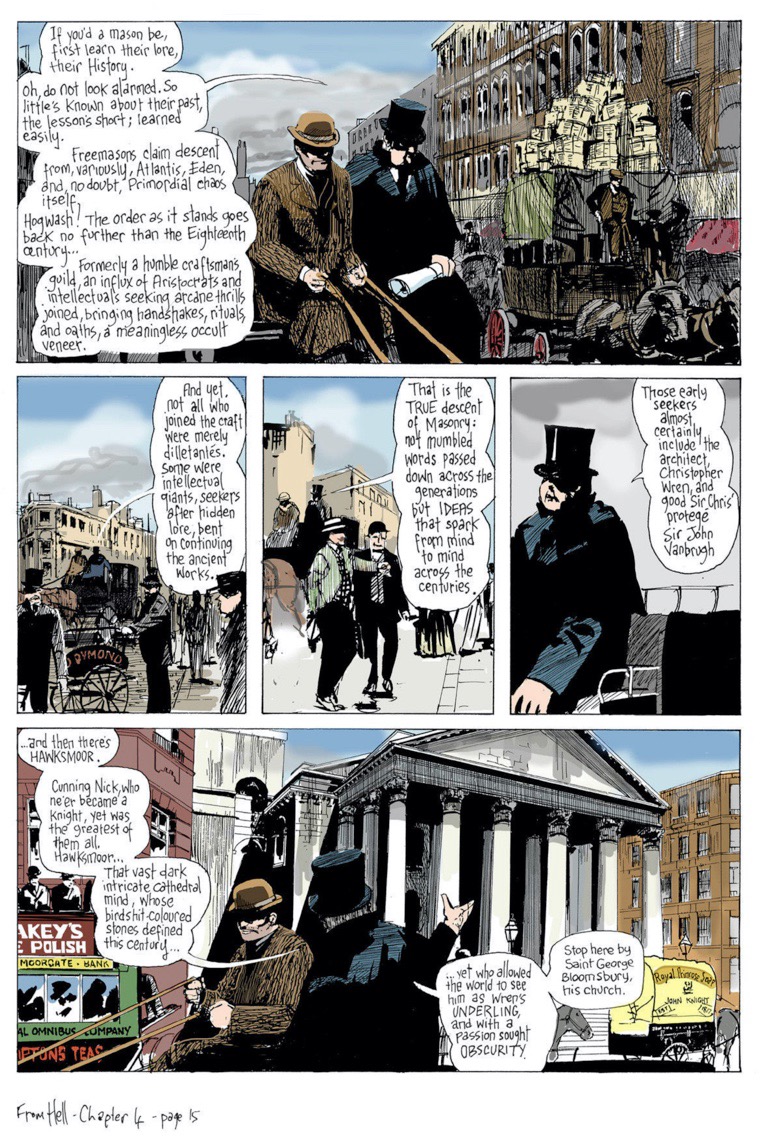
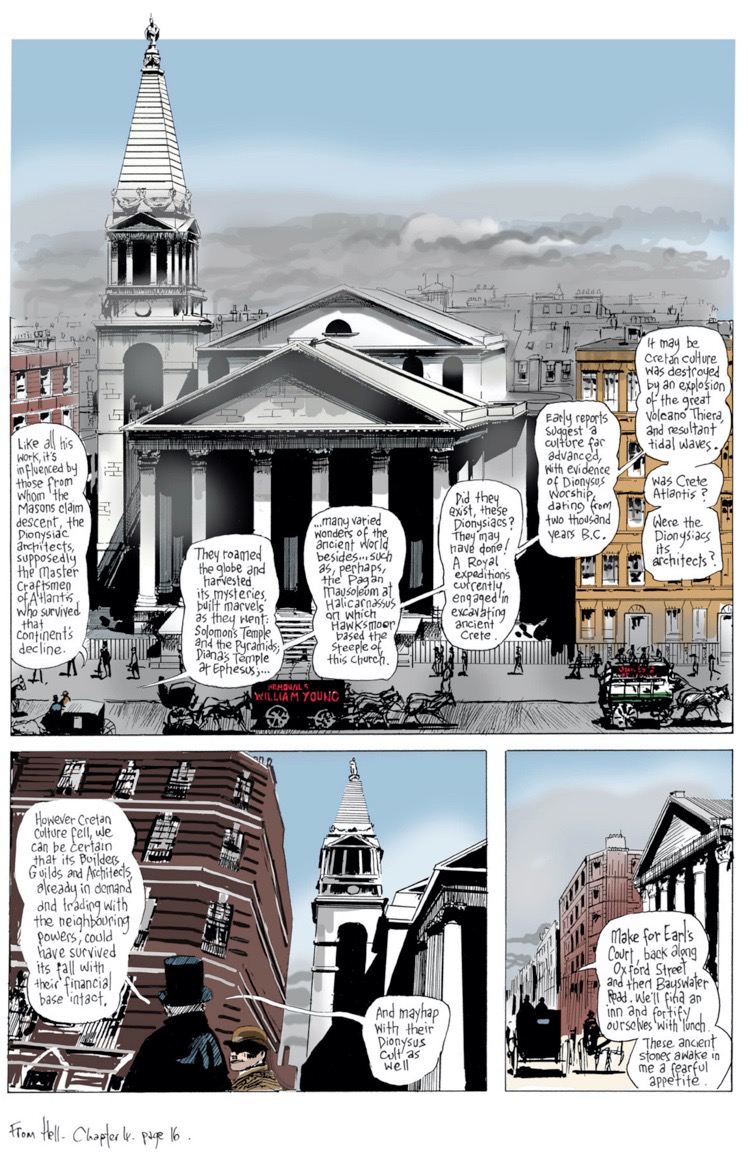
Here are a couple of pages in From Hell (1989-1996) conveying a fabulous insight
That is the true descent of masonry: not mumbled words passed down across the generations, but IDEAS that spark from mind to mind across the centuries.
Concept: synchronicity [Link]

I have been avoiding giving any attention to the last days of Trump. Jody Maxmin, however, directed me to an executive order this last weekend concerning classical architecture.
Here’s the report in the New York Times:
An executive order stopped short of banning modernist architecture, but states that “the preferred architecture” style for new buildings should be classical.
“Though we are appalled with the administration’s decision to move forward with the design mandate, we are happy the order isn’t as far-reaching as previously thought,” Robert Ivy, chief executive of the American Institute of Architects, said in a statement promising that his organization would never prioritize any one type of architectural design over another. The group said it would ask the incoming Biden administration to reverse the order.
Michael Kimmelman, the architecture critic for The New York Times, condemned the measure last February. “Just to have this argument feels demeaning,” he wrote.
“The executive order is meaningless,” said Reinhold Martin, an architecture professor at Columbia University.
“This is an effort to use culture to send coded messages about white supremacy and political hegemony.”
Of course the Classical has always been the go-to style for the architectures of European states that wish to trace their origins to Rome and Greece.
Here we have an example of the orientation upon a desired future, a utopia, that can be associated with this celebration of Classical style. Style, material, and values are here connected with a particular urban staging, setting for certain experiences, a particular ambient rhetoric.
Architecture is never simply form given to space.
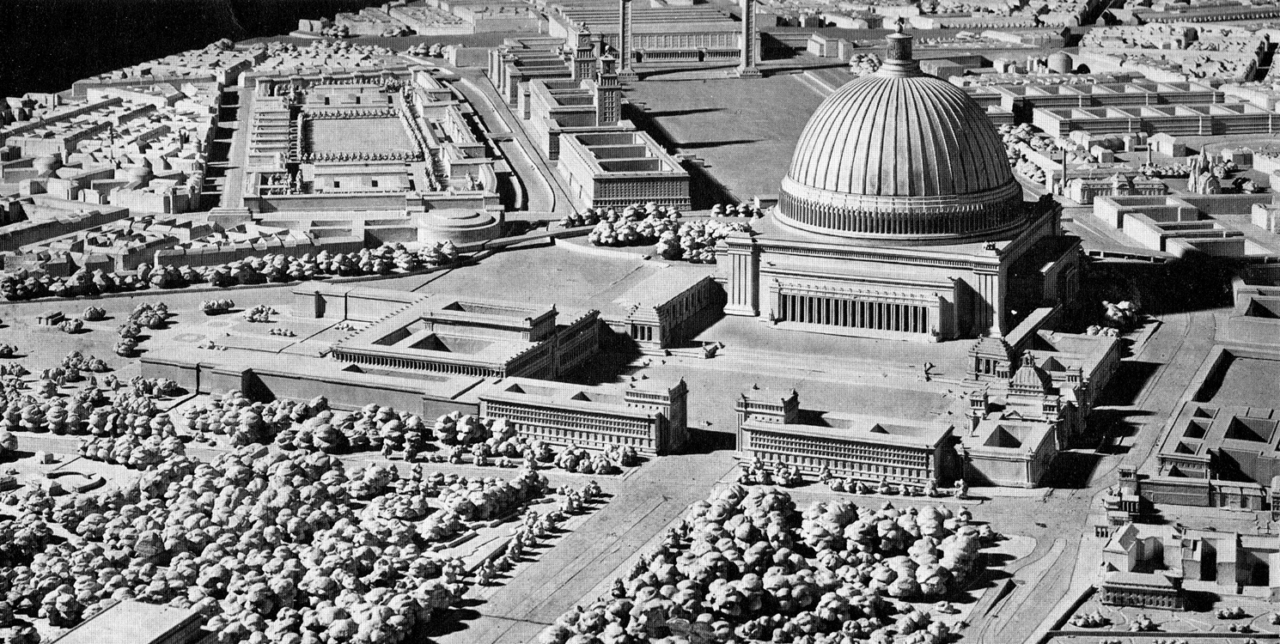
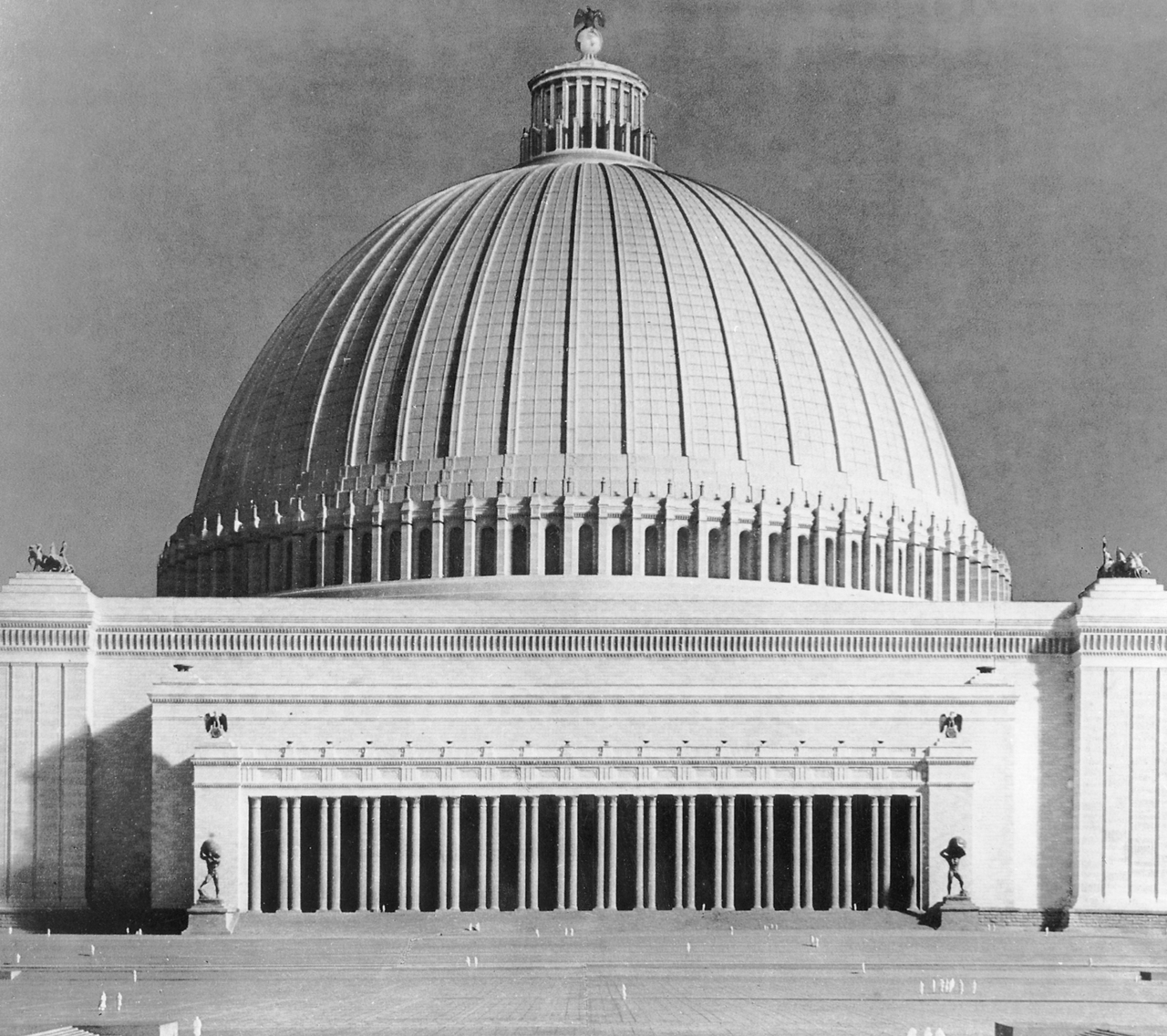
In this orientation on the future one is reminded of Albert Speer’s infamous Neo-Classical plans for remodeling Berlin in the Third Reich, plans so beloved of Hitler. Here is a model of the People’s Hall. (There was a great article in the Guardian back in 2016 on this project in urban planning – [Link])
Here’s another post about Speer, spectacle and architectural spaces – [Link]
In my book on the archaeological imagination [Link] I was concerned to trace the processes that work through relationships between past and present in establishing what we can call ideological fields of meaning and significance, materialized in building. A fascinating case is that of Belsay Hall (1810-1817) in the north of England. Charles Monck, wealthy estate owner and amateur Classicist, designed and had built an extraordinarily purified and rationalized translation of Classical architectural ideals. It is said that he had to have masons retrained to be able to cope with his architectural plans that were drawn to an accuracy of a hundredth of an inch – in order that the building would faithfully respect the mathematical ratios of Classical harmony..
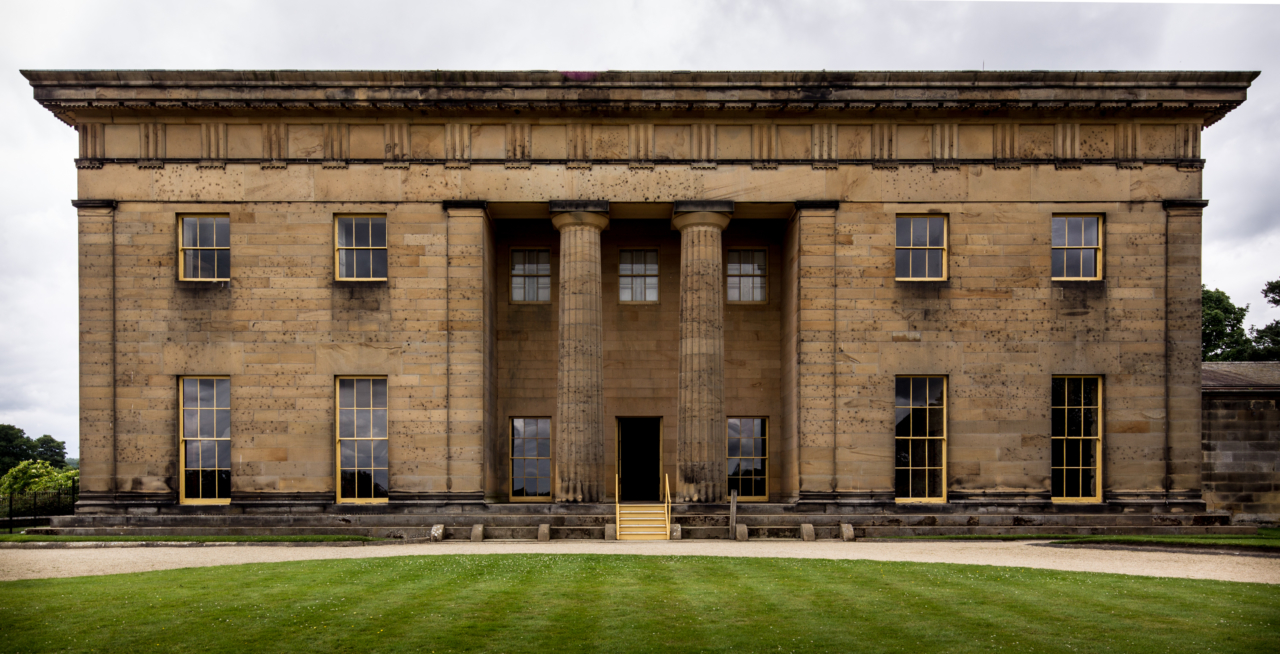
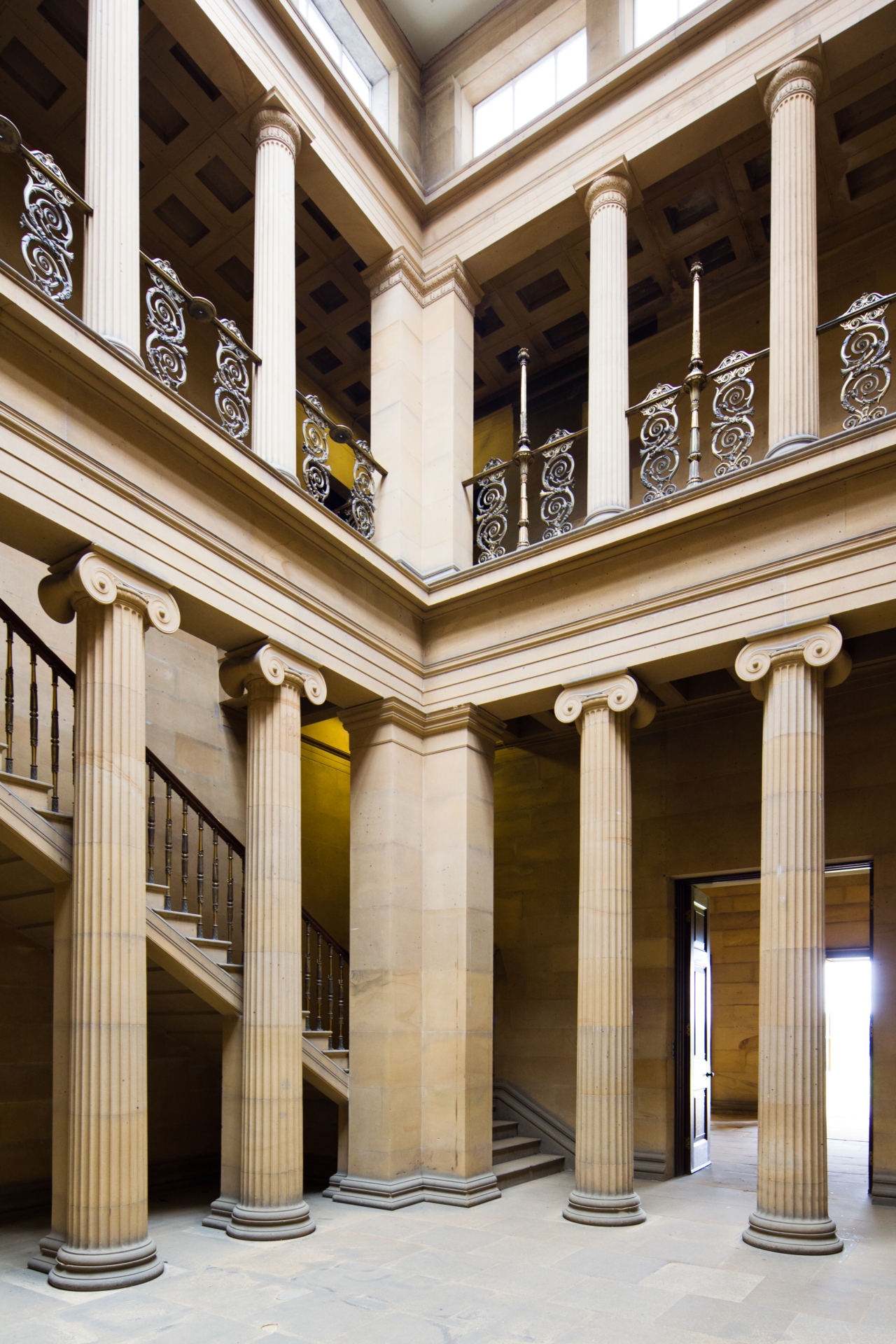
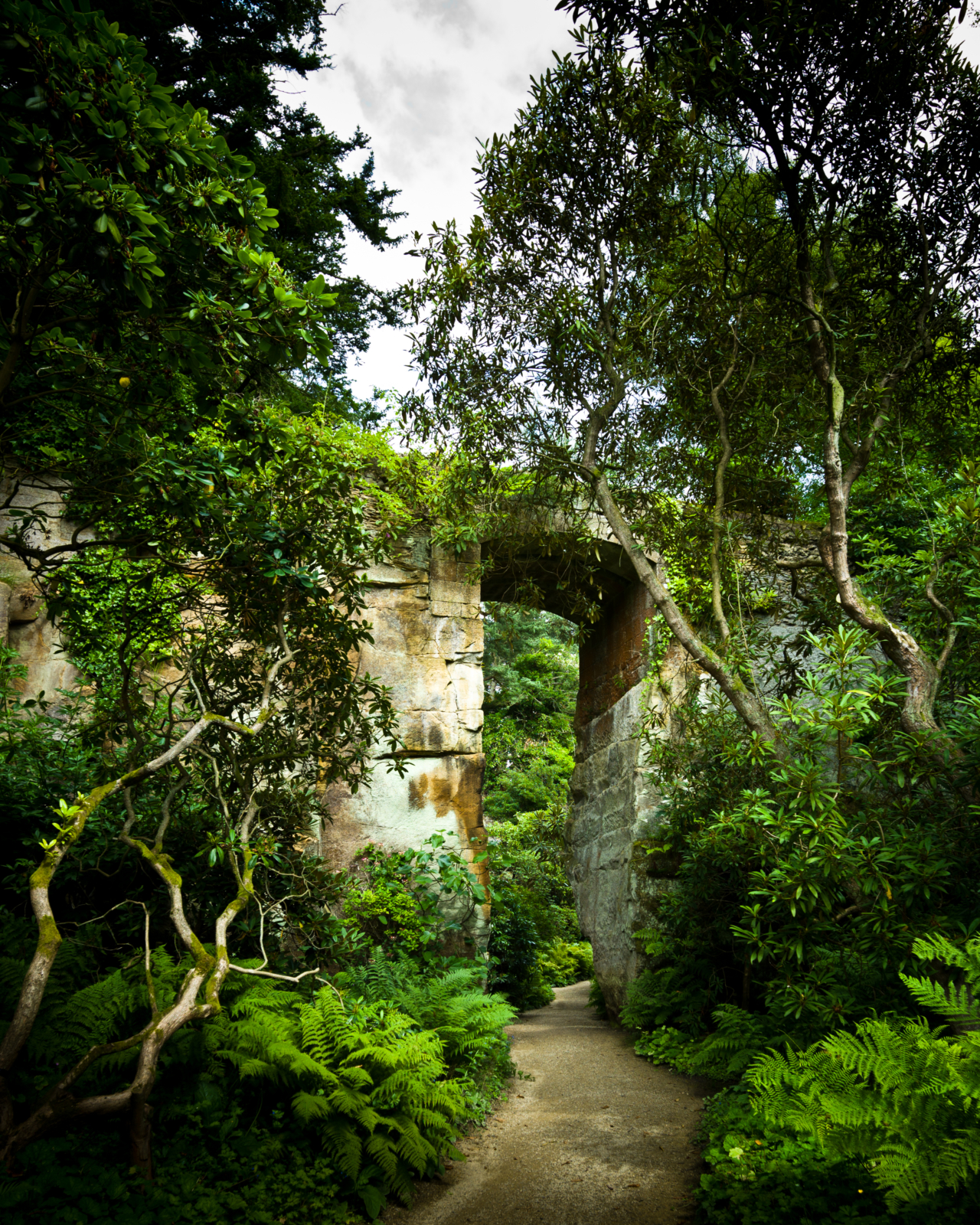
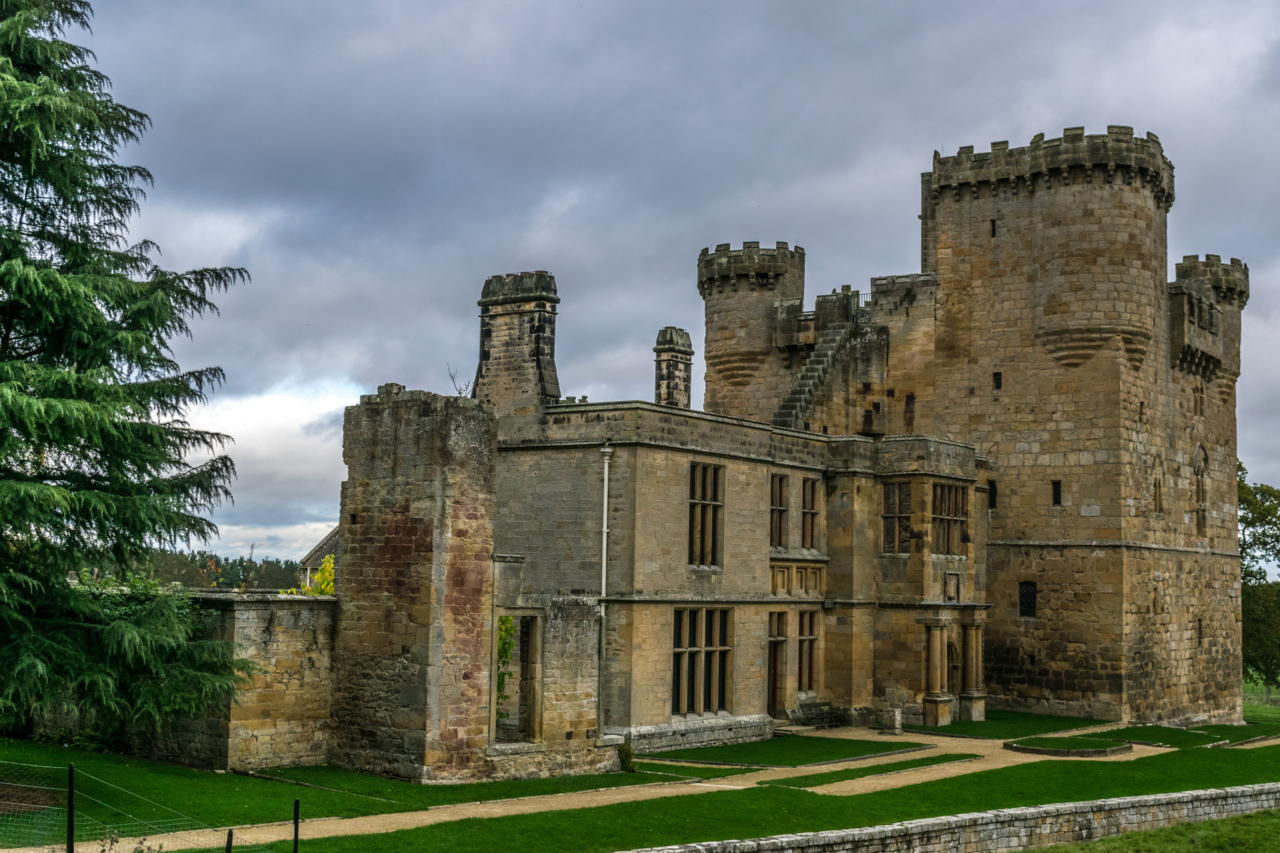
In contrast to the austerity of the house is the lush romantic garden created in the stone quarry that leads to the old (Gothic) castle with its Jacobean extension.
Perambulation connects grand historical dispositions with the genealogy of his great family (the Middletons).
Another post on Belsay – [Link]
Past-present-future trajectories. Imagined, speculative futures, are always present, of course, in any architectural project. Such is part of the working of the archaeological imagination.
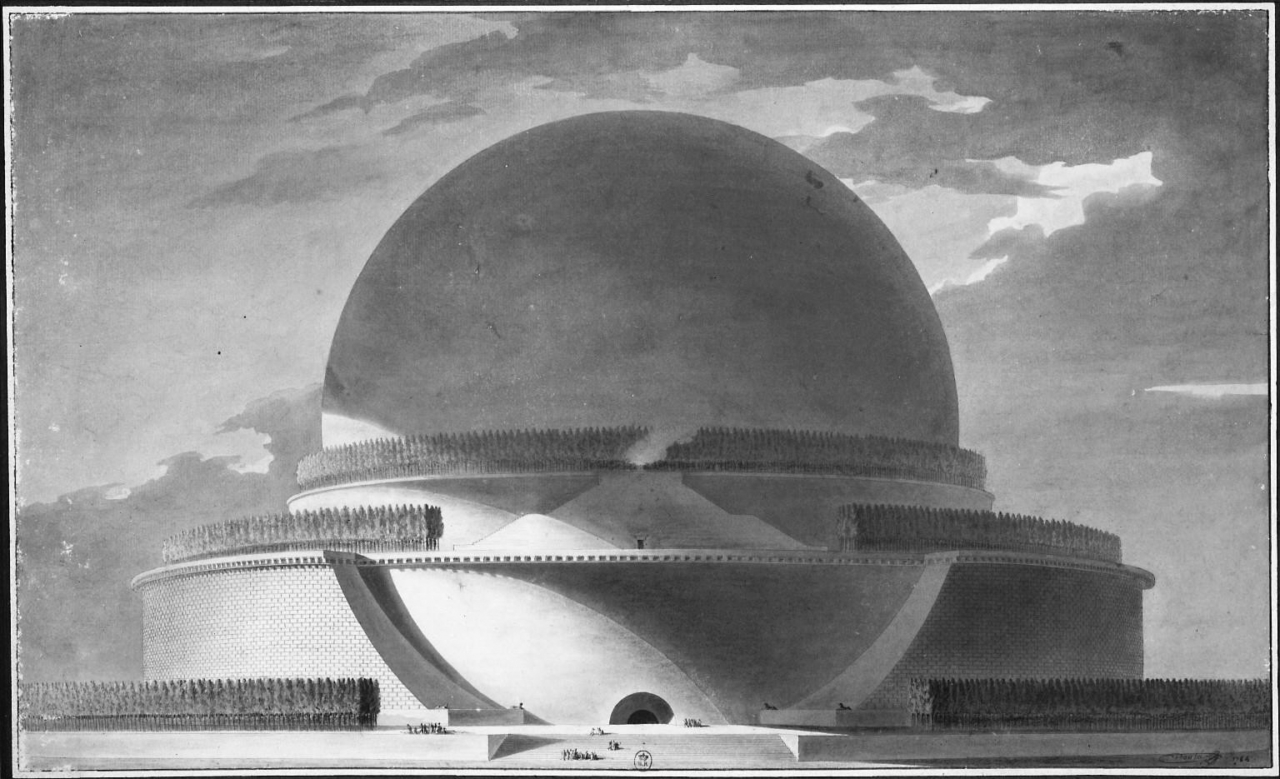
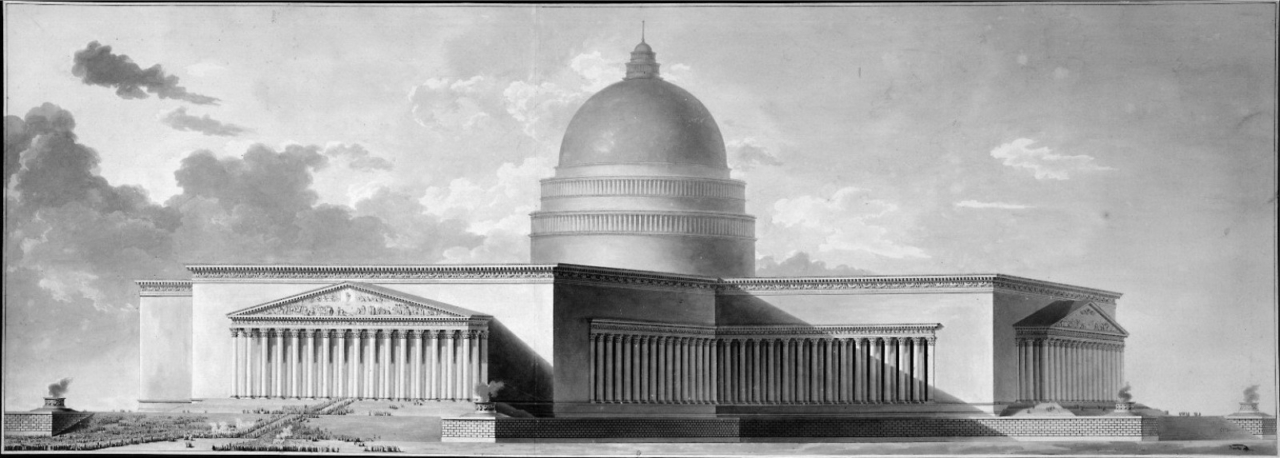
Etienne Louis Boullé, an older contemporary of Monck’s never realized his visions of a rationalized future embedded in the reincarnation of the past:

Pebbles. Storebaelt, North Sea – [Link]
One year after one year after.
(click on image for slideshow)