Applied Archaeology — Applied Humanities

Studio Michael Shanks Stanford University

Newsletter 2024 Stanford Archaeology Center

Archaeological mission and vision? Ivory tower as lighthouse?

In a recent newsletter for Stanford Archaeology Center [Link] I talked of slow archaeology, of the benefits of long-running projects that afford time for unfolding reflection. Three interrelated projects remain ongoing. A kind of archaeological triptych.

— A prehistory of Graeco-Roman antiquity. Modeling: against narrative. An episodic and synoptic treatment of Graeco-Roman antiquity through scenario modeling. With Gary Devore.

— Theatre/Archaeology: Performing Remains. Pragmatics: against method. Case studies in performance design. With Mike Pearson.

— A Border Archaeology: northern margins. Trespass and transgression: against place. Archaeological itineraries in northern Europe.

Fifteen years in the making, these projects in the archaeological imagination are a milieu within which I follow digressions and deviations to confront matters of common and pressing concern in publication, conversations, through conferences and symposia, in collaborative projects with colleagues in the academic and corporate world.

In another newsletter in 2022 [Link] I flagged up how I see archaeology to be less about the past-in-itself, and more about past-present connections. This is to see what we do as archaeologists as a kind of memory practice, with a percolating temporality of actuality, of present-pasts, and of kairos, the concept of opportune moment, that nudges us to be aware of the timeliness of our engagements with the remains of the past.

These standpoints and concerns came into much sharper focus this year. I have long spoken about applied archaeology; it is clear to me that such an archaeology-for-the-present-and-future is a model for a related field of applied humanities. Both involve a reanimation of what can be summarized in a concept of archive.

What has all this actually looked like?

I find myself ever more deeply involved in projects concerned with how we share and learn skills and competencies oriented on future well-being. A book on such matters, Creative Pragmatics for Active Learning in STEM Education (edited with Connie Svabo, Tamara Carleton, and Chungfang Zhou) [Link] is receiving great responses. Projects focused on building communities of learning continue with the corporate world, in conferences and symposia, and in the discussions current in the research network that includes my studio/lab. A long investment in the archaeology of landscape is bearing fruit in a new book with Gabriella Giannachi (Archaeologies of Nature: from Landscape to Climate Breakdown) that mobilizes an archaeology of arts practices, from prehistory to contemporary art, to offer action-oriented responses to climate change.

Of note here is the ongoing collaboration with FNUG (Forskningscenter for Naturvidenskabelig Uddannelse og Formidling), the Center for Research in Science Education and Communication at University of Southern Denmark, directed by Connie Svabo. A shared interest is typically labelled impact — how the academy connects with society more widely. More than this, for me, the center is a hub of extraordinary transdisciplinary expertise and creativity that exemplifies the value of collaboration in scholarship. 

More than ever it is clear to me that we cannot afford the luxury of hyper-specialized research.  Better put — specialized deep knowledge must be accompanied by lateral address, collaboration and communication across disciplines. Such a disposition is captured well in the concept of the “T character”, where drilling down in research is capped by a capacity to connect (my memory tells me it was Tim Brown who introduced the concept in his book with Barry Katz, Change by Design, (2019) — the connection with design practice is appropriate, because the academy engineers knowledge).

What role for such an academic? What mission for archaeology? What vision for the future? In the ivory towers of academia? Of course the academic might hide indulgently and hope for protection in a precarious world. Or, rather, one might treat the tower as a protected viewpoint from which to make forays, to survey the world and offer commentary and critique, maps and directions — ivory tower as lighthouse. Applied archaeology, applied humanities — where the effectiveness and value of such wayfinding is not just short op-ed opinion, but interventions founded in high-quality scholarship.

(One also knows what happens when there are no stable beacons of navigation.)

In the wake

Between 1979 and 1993 I worked with Chris Tilley (Cambridge, Wales, and University College London) in studies of contemporary beer can design, prehistoric pottery and monumentality, heritage and museology, theory and method. Our books published in 1987, ReConstructing Archaeology and Social Theory and Archaeology, launched our academic careers and caused some commotion in archaeology.

Tilley’s untimely death at the age of 68 in March 2024 prompted me to look back over his academic life [Link]. I must have spent a month rereading his books. I found myself following his ideas yes, but there was also a nagging question in my mind. How are we to value the life of an academic researcher? Does it lie in original findings? In the number of books, publications, citations? In the ideas? In academic memes and isms — fashionable phrases, concepts, approaches that catch on? In honors and awards made by the establishment?

Many have claimed to be influenced by Tilley’s phenomenology. My close rereading of his books led me to ask what this means. It is clear that Tilley’s work is indeed much cited, but rarely in any detail (I found only a couple of close engagements with his fieldwork). How much of his work is read? Many of his books are difficult to access. How long is to be the life of his books on the shelves of academic libraries?

There is an academic melancholy to this question. I am deeply fascinated by Tilley’s phenomenology and have a cherished and personal connection with his work. Yet I found it quite impossible to read the long descriptions of megalithic-encounters-in-the-landscape, of viewings of panels of rock carvings that feature so prominently in his books. I skipped over the detail. Maybe it was his style that didn’t grab my attention. Maybe there is a broader issue about academic writing, about reading and citation.

The percentages may vary (between 70% and 90% for the arts and humanities), but it is very clear and uncontroversial that most academic research is never cited (we might harbor hope that no citation does not mean no reading). Do we need the percentages? Witness the experience in any university library — the miles of academic texts, testimony to life sentences of academic labor, and most of which, yes, will be hardly read. Is this what we work for? 

Bruno Latour made the case (in his Science in Action (1987)) that academic writing may seek citation, but is designed not to be read. What does this mean? Surely the job of academics is to write and read. One might challenge the assumption that close reading is the complement to academic writing if we acknowledge that the apparatuses of scholarship, including style and citation, work to assure any reader that they need not read too closely to accept what is offered in the way of synopsis and conclusions. In taking up an academic text one might note a tight style that anticipates questions and critique and offers sufficient qualification and conditional context (“only if these conditions are met will what is proposed be a candidate for approval”, for example) to justify a quick perusal rather than a close reading. I have suggested in a recent essay on social theory in archaeology [Link] that much academic debate is organized around summarizing labels (“isms”, positions, approaches, paradigms) that reduce and simplify, without the need for close reading and commentary. Tilley = landscape phenomenology, a development of post-processual archaeology. Period.

Another way of expressing this is to hold that what matters in the pragmatics of the academy is not so much what we write, but the way we act. This is more than McLuhan’s “medium is the message”; it is about the performance of scholarship.

Tilley’s was a life-long project in what we can call environmental aesthetics. Aesthetics, for me, is the key here. Value not in what Tilley said but in the ways he engaged with places and things, and with colleagues, friends, students, strangers. Tilley dealt in relationships with environment; respect and acknowledgement of diverse voices; developing secure foundations of knowledge, in experience, modes of engagement with the world, representation and report.

I attended a symposium at University College London in November 2024 [Link] to celebrate his life and work. Over and again one heard of his attitudes, manner, the way he worked and was part of institutional life, and his life beyond. Tilley was skeptical of too-easy answers delivered by institutional authority and reached out to everyone with infectious energy in an open invitation to seek authentic vital experience together. This is a most valuable legacy.

In a book of interviews with 20 or so archaeologists called Archaeology in the Making (edited with Bill Rathje and Chris Witmore and published in 2013) [Link], this key insight into the value of archaeological practice and experience was clearly affirmed. Do archaeologists dig up the past,  create theories and follow methodologies in movements of ideas and accounts of the past? This is how most textbooks describe the discipline. Just as in my rereading and reflection upon the work of an archaeological friend, Chris Tilley, archaeology is much better understood as what archaeologists actually do — work with what remains in all sorts of ways, and as part of communities and institutions of learning.

The concept of archaeology

Our academic research communities today tend to be globally distributed, especially because of digital media. The extended research community to which my studio/lab belongs is much concerned with the concept of archaeology.

Bjørnar Olsen, a colleague from Tromsø in Norway, was back at Stanford in Spring 2024. We were working on this topic and here is a summary of what we are holding forth.

Archaeology is not history. While historians typically focus on how and why the past unfolded the way it did, archaeologists work with what remains. As a kind of genealogy, archaeology traces the connections that tie the past to the present while denying the historical continuity and linearity of an unfolding story. Emphasized instead are discontinuities, ruptures, as well as underlying energies.

Archaeology’s focus on remains makes central the concepts of archive and curation. Its methodology is concerned with how the past persists and returns, transforms and evolves, haunts and orients us in the now and for the future, as well as how we might deal with concern and care for those remains.

As a kind of memory practice, archaeology draws on the concept of memory found in Proust and Freud. In “rubbing history against the grain” we share much with Walter Benjamin’s opposition to historicism through his immanent materialist critique, his own kind of archaeology. There are affinities also with the genealogy and archaeology of Nietzsche and Foucault. Discourses, modes of production of knowledge, are characterized by discontinuities, matters of power and agency, and historical contingencies. By uncovering these infrastructures archaeology provides tools for critically remodeling contemporary values and practices.

Such an archaeological orientation aligns with cutting edge approaches in new materialist and pragmatist philosophies, science and technology studies, critical theory, performance studies, and media and communication studies. A comprehensive exposition of such connections can be found in Laurent Olivier’s wonderful book The Dark Abyss of Time: Archaeology and Memory (2011).

And such a concept of archaeology is intensely personal. Another death in summer 2024 was that of my father at 90 years. In hIs home of 47 years were gathered the things that accompanied him through his life, that he had selected, cared for, arranged and rearranged. A ship-model-in-the-making and yet to be realized, a care-worn garden with an old vine in a shattered glasshouse, a calendar of anticipated events on the wall, records kept of prescribed medicines, photos of moments spanning decades and many places, curated cared-for memorabilia, upcycled ships’ parts, a standard lamp of style circa 1960s, CDs and DVDs ranging in date of manufacture from the 90s to the present, in music and film from medieval to contemporary 2024. And more.The value, for him, in small things remembered. They bear witness — but not to any history, any coherent narrative — in small things forgotten. No history, but archaeology — yes. [Link]

Archaeologies of nature

Another collaborator of long-standing, Gabriella Giannachi, from Exeter UK, was in Stanford a couple of times over the year as a guest of my studio/lab and of Ng Humanities House, where I am resident faculty. As of the end of 2024, we have nearly completed a manuscript of a book, out now with Routledge for review for publication.

Here is a brief summary of the project.


Archaeologies of Nature: from Landscape to Climate Breakdown

In the contemporary concern about climate emergency, the science and policy, the pragmatics and debates, nature is a key concept. Implicated are matters of cognition and perception, how we think about and sense the world around us, matters of relationships and connections with other species and environments, of science and knowledge building, of action and impact, and deep existential questions of how we conceive of humanity itself.

In this book we propose a radical reexamination of the concept of nature, refreshing and renewing with a view to how we might act for the future. Artworks have long explored human relationships with nature. We engage with artworks, reframing key artistic practices that have involved the concept of nature, spanning prehistoric rock art, landscape painting, to activist contemporary art that deals with climate change. 

Our approach and methodology are new. We present an archaeology of art practices. Ours is not an art history that tells a story of art and nature organized by date and movement. Instead, we take the past to be all around us, immanent in the present, just as what has happened geologically, in prehistory, in the past continues to be a fundamental part of what is happening now and offers orientation on future possibility and potential. Archaeology is a kind of memory practice. Through close and comparative examination, we animate an archive of artworks, prehistoric to contemporary, exploring the stratigraphic foundations of the present, and the energies and processes that have brought us to where we are and where we might go.

Thinking through artworks, treating arts practice as research, we show how the concept of nature is affiliated with environment, ecology, weather, climate, earth, dwelling, inhabitation in an expanded semantic field of complex living and adaptive systems. This foundation takes us beyond an arts-science binary into futures-oriented strategies and tactics.

We use an archaeology of artworks to refresh the concept of nature as an aspect of environing — the vital processes of our lifeworld conceived as a complex living adaptive system. Our archaeology reveals what is immanent, already present in our long inhabitation of the planet, as explored in artworks. In this we offer orientations, practices, policy, and a concept toolkit.


In the wake of Benjamin and Foucault we are reclaiming the concept of archaeology (just as Alfredo González-Ruibal would have us do in his 2013 edited book Reclaiming Archaeology: Beyond the Tropes of Modernity).

The book animates an archive of artworks. Gabriella and I have just been commissioned to write a book about archive, archaeology, and AI. Manuscript due end of 2026.

Pedagogies for the anthropocene

I have always treated pedagogy and the design of curricula and learning programs to be critically important. How might we make our learning more effective? Ready-to-hand and fit-for-purpose. Matters of inter-generational communication. Archaeology, an archetypal transdisciplinary field, simultaneously art, science, humanities, project management, cultural production, is such fertile ground for exploring and testing pedagogies that prepare us for the future in all its uncertainty and precarity.

Initial responses to Creative Pragmatics for Active Learning in STEM Education [Link] are very positive. The book is supported by ESERA (European Science Education Research Association) and the Novo-Nordisk Foundation (that funds much research in education and pedagogy). My favorite endorsement has come from Andrew Pickering, the philosopher and historian of science. His inspiring work in science studies makes the case that research and knowledge building (the engineering of knowledge) are well conceived as performance. He introduces our book as follows:

How would you teach STEM subjects in a way that foregrounds not finished and ready-made science but science-in-action? How might the findings of Science and Technology Studies translate into teaching? — Creative Pragmatics is the answer!

At the beginning of 2024 Riel Miller came to stay at Ng Humanities House. Ex head of UNESCO’s program in Futures Literacy, he hosted a series of talks and workshops over more than a month that introduced Stanford students to skills and competencies, cognitive toolkits appropriate to creatively realizing future well-being, de-colonizing the future.

Sabine Remdisch (Professor, Leuphana), an expert in the psychology of leadership, continues this year as Visiting Scholar in my studio in the Archaeology Center. We hosted several symposia through 2024. Our project is to reach out through applied archaeology and humanities into the corporate business world. We are supported in this by the German government; Oliver Schramm, Consul General of the Federal Republic of Germany opened a symposium we held in March.

With long-standing collaborator, Tamara Carleton, I hosted a conference at the Archaeology Center in July for 70 members of the eMBA program at the University of Zurich. Here we explored what might be called business archaeology as design foresight — a way of gaining actionable insight into matters of concern. Tamara rolled out her book Building Moonshots (written with Bill Cockayne, another member of my studio’s research community for over 20 years) — design foresight aimed at a realization of big-picture vision for the future.

Learning Community has come to be a key concept for me in this convergence of method and epistemology, creativity and innovation, organizational culture and modes of leadership, ontology and design. It has been the research focus of the ongoing project with Connie Svabo’s Research Center in Science Education and Communication (FNUG), at University of Southern Denmark, and with Aisin Corporation in Japan — applied archaeology and humanities scaled-up to address the needs of a corporate community of 120,000. With Kimihiko Iwamura, a thought-leader in innovation culture and emeritus Senior Fellow at Stanford mediaX, we ran workshops throughout the year, and in November hosted a colloquium for the Japanese members of the project at Innovator’s Garage in Nagoya.

More than ever the role of the academic and of scientific research is under scrutiny. I am encouraged by the energy and enthusiasm for fresh application of fields of scholarship associated with archaeology, with an archaeological sensibility, through the archaeological imagination — big picture thinking rooted in the minutiae of everyday life. What Joseph Cornell called the eterniday.

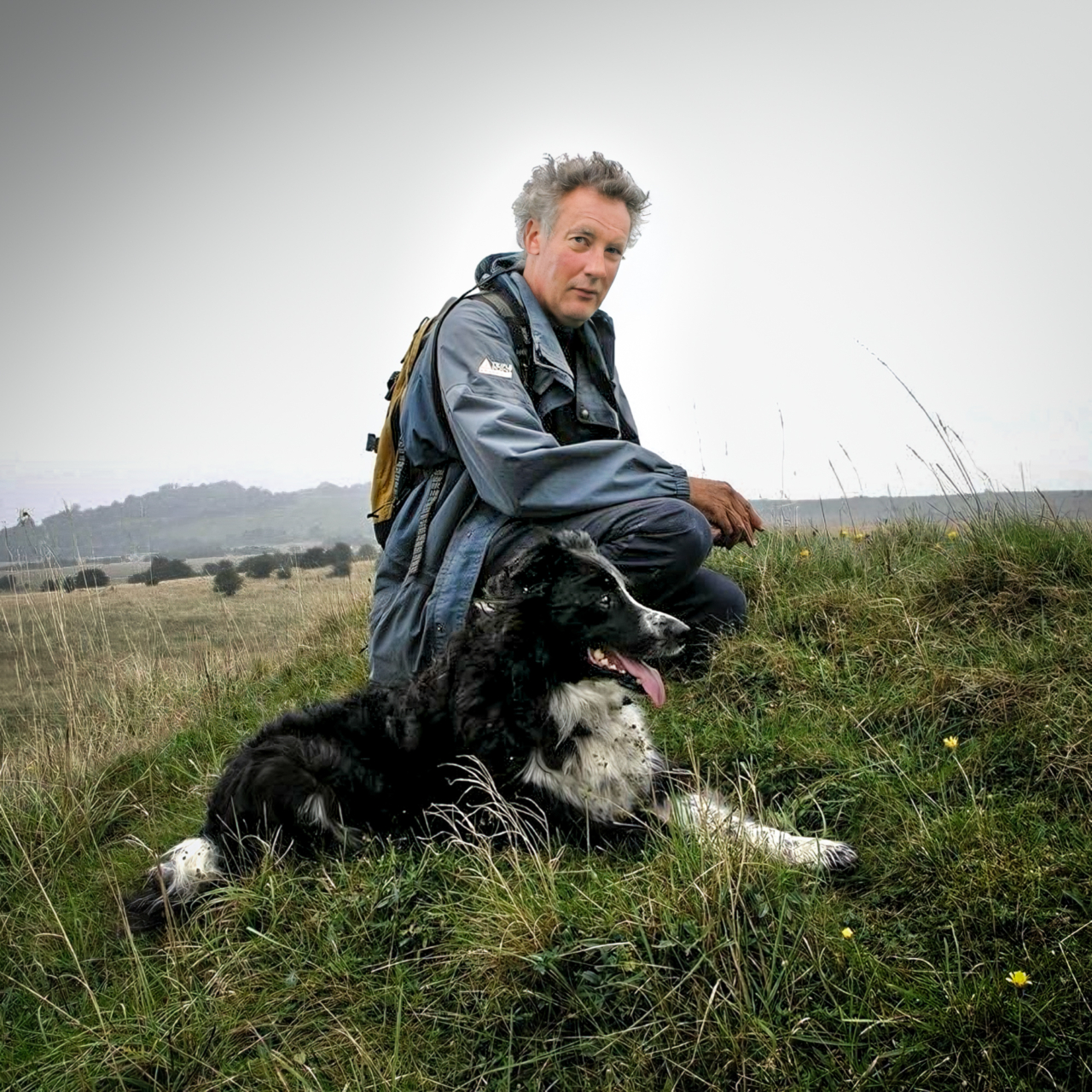

A day for Chris Tilley: reflections on the performance of academic life

University College London November 15 2024.

This morning I was online at a gathering of colleagues, friends, former students, to reflect upon the life and work of Chris Tilley who died earlier this year [Link].

Appreciative memories; what remains; hindsight and legacy; influences.

There were the regular, standardized, and orthodox accounts of Tilley’s part in the theory debates of the 70s and after: positivism and its discontents in the social sciences and humanities. Some spoke of his academic writing, some recounted anecdotes, others presented their own research that had benefited from his influence.

His passing in March has prompted me to reconsider the qualities and potential of academic labor, and what I now see with hindsight as the deepest foundation of his academic life.

People first — for whom we work

An academic melancholy. The percentages may vary (between 70% and 90% for the arts and humanities), but it is very clear and uncontroversial that most academic research is never cited (we might harbor hope that no citation does not mean no reading). Do we need the figures? Witness the experience in any university library — the miles of academic texts, testimony to life sentences of academic labor, and most of which, yes, will be hardly read. Is this what we work for? 

Bruno Latour made the case (in his Science in Action 1987) that academic writing may seek citation, but is designed not to be read. One might challenge the assumption that close reading is the complement to academic authorship if we acknowledge that the apparatuses of scholarship, including style and citation, are to assure any reader that they need not read too closely to accept what is offered in the way of synopsis and conclusions. In taking up an academic text one might note a tight style that anticipates questions and critique and offers sufficient qualification and conditional context (“only if these conditions are met will what is proposed be a candidate for approval”) to justify a quick perusal rather than a close reading. I have suggested in a recent essay on social theory in archaeology that much academic debate is organized around summarizing labels (“isms”, positions, approaches, paradigms) that reduce and simplify, without the need for close reading and commentary [Link].

Another way of expressing this is to hold that what matters in the pragmatics of the academy is not so much what we write, but the way we act. This is more than McLuhan’s “medium is the message”; it is about the performance of scholarship.

Tilley cut quite a distinctive character in his academic drama. Today we heard much of this character, his persona. Mike Rowlands even talked of him as an archetype — the trickster, the disruptive eccentric (an Odysseus of material culture?). Tilley had markedly apparent and negative attitudes towards authority and institutions — suspicious, refusing, and skeptical. This was a key component of his dramaturgy, and it was by no means all positive — all who knew him experienced his stubbornness, oftentimes curmudgeonly behavior. His persona involved the way he dressed (“never an ironed shirt”), the way he addressed you (anecdotes of his dry English humor).

And Tilley came to stand, literally, for embodied cognition — drawing on all one’s faculties, cognitive, sensory, evaluative, in a forever searching, peripatetic, interpretive stand towards research (look here, notice that, what happens if you focus all your attention on this matter rather than that?). We heard about how he led inspiring student field trips. His paradigm was field walking, restless probing and questioning in repeated returns to fields of interest, on foot, grounded. We even heard how he had offered heart-felt advice on choice of footwear for a coastal field project!

One might call this an academic habitus — attitudes, gestures, dispositions, manners, modes of behavior and modes of engagement with objects of interest as well as with colleagues, students, others.

Tilley modeled a certain package of behavior, a habitus encompassing certain values, a distinctive academic mission and vision. While he would perhaps not like to acknowledge it (an ironic aspect of the trickster archetype), it is clear to me that Tilley played a marked role of academic leadership. I have heard this in many responses to his passing — how he led the way in opening space for others to explore, his work granting permission, his position and standing backing up his encouragement and exhortations to probe and question. I am reminded of how in the early days of our collaboration our progressive mission as outsiders was to raise the bar on standards of academic debate — that one might spread the wings of adventurous research.

Tilley’s energy was untiring. His prolific projects and productivity signal this, though, again, it is the many anecdotes of his vitality that strike me. To me, they concern the ergonomics of academic labor.

At its conceptual base, ergonomics is about the regulation, disbursement and consumption of labor, work-as-energy. Energy management. We all know of colleagues, of administrative procedures, of bureaucratic requirements that sap energy, leave us drained. We all also know of circumstances and opportunities that energize and motivate. Tilley reminded us of this. Danny Miller spoke of the energy in Cambridge academics in the 70s and 80s, Esther Solomon spoke of a similar energy in the anthropology department at University College London at the end of the 90s.

Tilley so often left many of us feeling energized.

Generosity in diversity — internationalism

The constraints of academic discipline regulate our research, teaching, service and administration. Institutions offer infrastructures that enable and facilitate our work.

Tilley will remain part of the story of archaeology and anthropology at University College London. Faculty and students have been attracted to the academic programs where they were co-workers, where they were taught and supervised. Without this institutional infrastructure of a first-rank university, Tilley’s energy would have been so much more dissipated and received much less validation; he would not have reached those he did.

Tilley joined the anthropology department in the 90s as part of the promotion of material culture studies. The concept of material culture has leant special coherence to an expanded interdisciplinary vision of anthropology. One might call it an academic meme in the way that the concept and its institutional mobilization has captured interest and aspiration across many fields concerned with artifacts and materiality while remaining within the domain of anthropology. It is notable that after 1992 Tilley rarely, if ever again, referred to his work as archaeology. The particular genealogy of the meme in the context of an expanded anthropology also accounts for the extraordinary lack of engagement and connection with another meme concerned with making and materiality — design, and, by implication, design studies.

Other memes through which Tilley directed his work into interdisciplinary fields were noted in the talks. Danny Miller mentioned “epistemology” — a concern with the character of knowledge building in the social sciences and humanities; “immersion” and “interpretation”, mentioned by Julian Thomas and others as such a characteristic disposition in Tilley’s work. These vital memes were the foundation for what some have described as his intellectual generosity. He ranged widely and even eclectically in a willingness to take on new ideas.

And he did markedly shift his own ideas and principles. A rigorous focus on debates in social and cultural theory was a characteristic of his earlier work that gave way over the decades to immersive engagement and embodied cognition — a shift in emphasis in his academic habitus. This was part of his motility — his capacity and competency in being mobile, and in many senses literal and figurative, while also being grounded in a capacity to engage with the world shared by everyone — embodied cognition and a fluid, restless questioning.

Tilley stood above all for an open and universal disposition of human being-in-the-world-with-others — human species-being. This was what used to be a core tenet of the radical left — an internationalism that respected and celebrated diversity while acknowledging a common and universal interest in addressing the inequalities and injustices of globalist capitalism in late modernity — common interest shared through the very diversity that makes us human. Tilley offers us his way of doing just this — reconciling universals of human experience with the deepest of respect for the diverse textures of living in the local.


Update: December 2022 – slow archaeology

“Our brains aren’t designed for multitasking”, my dear friend Cliff Nass, mathematician, cognitive scientist and psychologist, warned me a good long while ago – and he’d written a book about it! “It will slow you down and cloud your reasoning.” OK — I’m still working on the same big three projects as back then. But I am quite sure that my research and thinking have evolved most significantly and in ways I could not have anticipated because I have run the three projects in parallel, letting the frictions and unexpected contrasts throw up insights and prompt new lines of reasoning. And what’s wrong with slow research, when one is obliged to explore new territory, follow diversions, smuggling concepts across disciplinary borders? All this takes time, especially when you learn the lay of the land and change your mind about where you want to go.

Greece and Rome began as a project with Gary Devore to write a text book. It will still be able to act as one when Gary and I finish, but it is very different from what we set out to write. We deal with challenges to the field of classics, most notably the shape of the great grand narratives, busting some old myths. We employ a well-evidenced model that accommodates the social and cultural dynamics of antiquity, the dramaturgies, choreographies and scenographies (our model draws on performance theory), with focus on the actuality of the past. Ours is not another “reception” of antiquity, but work performed on and by the remains of the past, presences now, entanglements in matters of contemporary concern.

And then we started up a book club, Reading Antiquity. Just about every week for the past 18 months we have read books with club members enrolled through Stanford Continuing Studies, watched movies, discussed fictional works that deal in ancient Greece and Rome — Gore Vidal, Madeline Miller, Federico Fellini, Alice Oswald, Anne Carson and many more. Gary’s smart insights as a novelist of antiquity himself, my own experiences in research creation and arts practice as research (ongoing work in theatre/archaeology and performance design), and especially the wonderful engagement of our book club members have prompted us to rethink our project. How might we work with what is left of antiquity so as to witness voices and agencies beyond those who remain so familiar in their constant and unchanging retelling? Our answer is to embrace conjecture, to pursue speculative fabulation in a kind of ironic and anachronistic amalgam of David Hume and Walter Scott, two prominent figures in the Scottish romantic enlightenment at the beginning of the modern historiographic project, with contemporary  inspiration from Donna Haraway and Ursula Le Guin. So now the load-bearing skeleton of the book comprises characters fleshed out in fictional scenarios, with characters, some well-known, alongside commoners and outsiders, long hidden from history, accessed through archaeology. A current favorite of mine is our story of druid Diviciacus visiting Rome in the political turmoil of the end of the Republic, reflecting on the lifestyle of his community compared with that of his host at dinner, the politician Cicero. 

Last academic year, 2021-2022, I spent a sabbatical leave in northern Europe. The objective was to pull together another long running project, Borderlands, that has involved fieldwork and research focused on the northern edge of the Roman empire (including excavation of the outpost at Binchester), extended back into prehistory and forward through to the present. I knew from the outset that I needed to take in wide angle and long-term perspectives as well as microscopic detail to understand, in a fractal way, this extraordinary archaeological landscape. The challenge here is to find a form, a chorography, that can handle the richness, the heterogeneity of senses of place, genius loci. Experiences involving the pandemic, of mobility, of traversing borders and territories, have sharpened my appreciation of how important is the concept of bordering. I am finding the concept to be surprisingly under theorized.

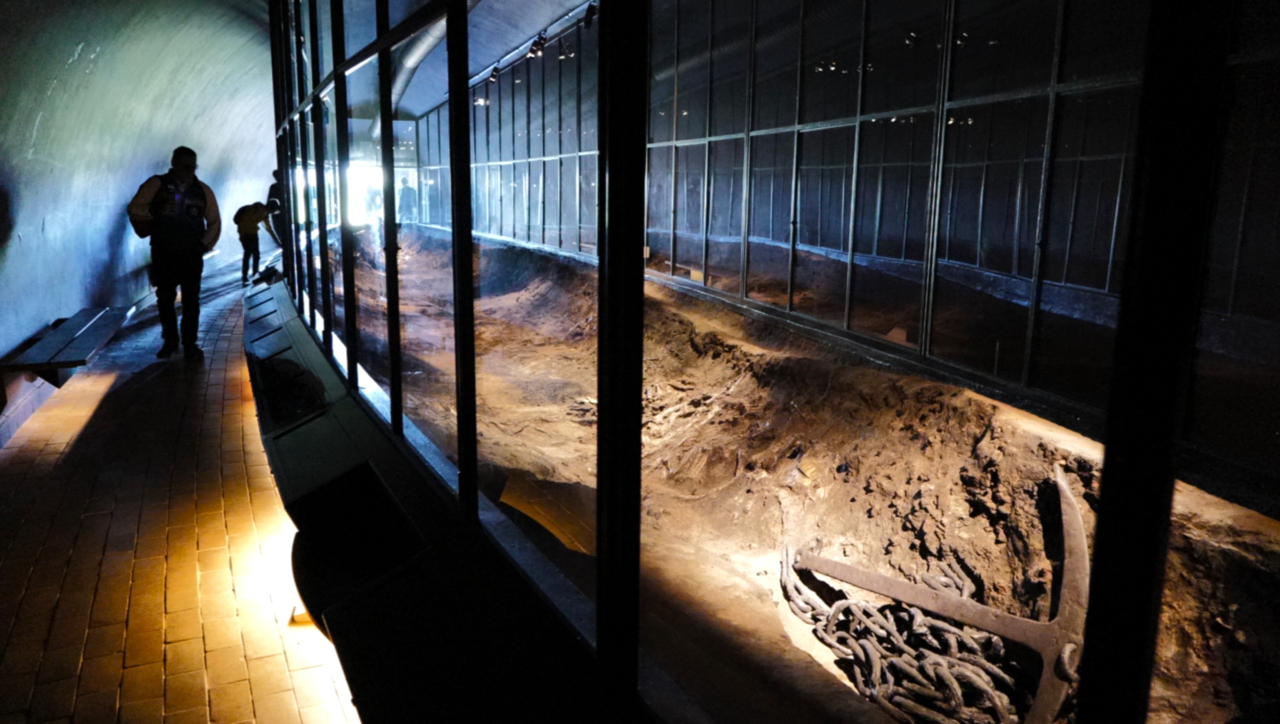
Viking ship burial, Ladby, Denmark – exploring the connectivity afforded by the North Sea in the wake of the Roman empire

Greece and Rome and Borderlands are both projects that center upon a quest for a form that is adequate to their subject matter. They involve the media experiment at the heart of another ongoing project, Theatre/Archaeology.

The publication more than 20 years ago of my book with Mike Pearson, Theatre/Archaeology, prompted satisfying ripples of discussion to run through the fields of performance studies and performance design. Defined as the rearticulation of remains as real time event, the project of theatre/archaeology seeks to generate insights and creative practices in both performance and archaeology by foregrounding shared concepts of temporality (actuality and encounter, metamorphosis and archive), and design (the pragmatics of theatre production and building archaeological knowledge). For devised performance this involves archaeological sensibility to the materiality of media and performance, its scripting and representation. For archaeology this involves focus on the production of knowledge, the performance of research in specific contexts, especially those associated with cultural heritage.

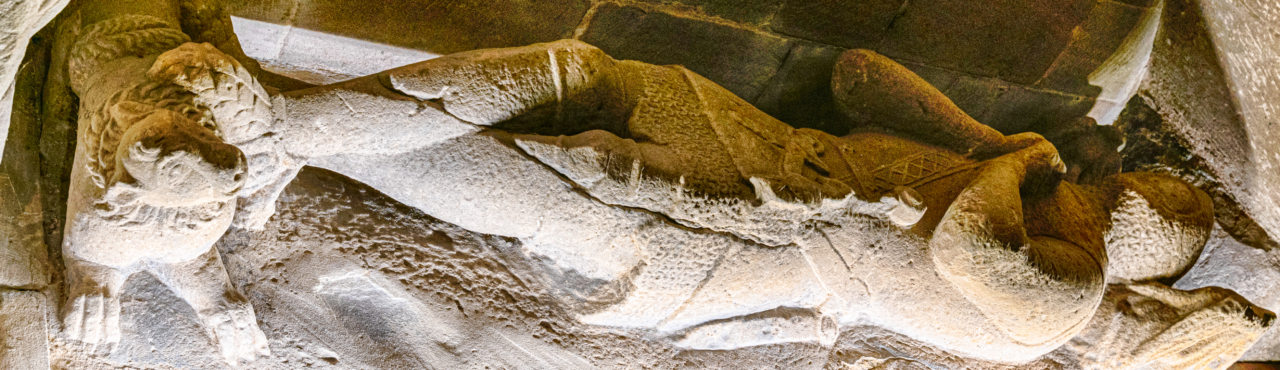
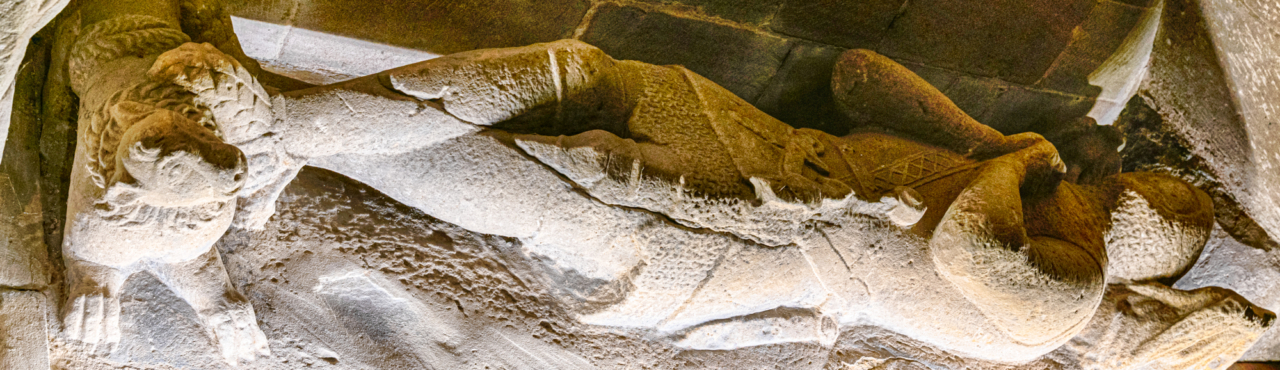
Becoming stone – effigy of an unknown knight, St Aidan’s Bamburgh Northumberland UK

Our experiments in theatre/archaeology didn’t stop with the book in 2000. Greece and Rome has involved a model of the working and experiences of antiquity using concepts of performance and performativity. And now Gary and I are employing speculative fabulation as retelling, as metamorphic transcription of what remains of antiquity with a view to contemporary concerns. Critique of the components of the metanarratives of antiquity (characters, agencies, emplotment, and scenographies) has taken me into media experiment around figuration, myth and archetypes, reconfiguring components of the archaeological imagination — how we work to recollect and reimagine the past. This has included my long-standing fascination with photography as a fundamentally archaeological medium — photowork as performance, archaeography as theatre/archaeology. In Borderlands I am compiling portfolios, assemblages that articulate the performance of itinerary, of visiting, of the archaeological dérive. In all – the performance of research.

Mike’s works of performance in the last couple of decades have also pursued themes of theatre/archaeology and more. In a series of performance works and publications Mike delved deeply into the performative dynamics and cultural politics of place-making in rural and urban environments, especially Cardiff and Lincolnshire, an extraordinary exploration of temporality and spatiality, memory and recollection, encounter and engagement — an environmental aesthetics, as Connie Svabo would put it. And Mike took up a senior role with National Theatre Wales. From 2010 Mike has designed and directed site specific productions of Aeschylus (Persians), Shakespeare (Coriolanus, with Royal Shakespeare Company), restagings of Ovid (Metamorphoses) and Homer (Iliad). Mike’s theatre/archaeology taking up the actuality of classical works of theatre and poetry.

At the end of 2016 Mike and I were artists in residence at Bard Graduate Center in Manhattan. We presented a series of works under the heading “Staging Evidence”. The location of this theatre/archaeology, an exhibition of the works of Charles Percier, architect-designer to Napoleon, forced us to directly and uneasily address the katachestic synchronicities, the deviations, transgressions, the border-crossings in our research creation. In the wake of this perturbing experience we made a visit to the northern borders of England together in 2017 and started planning a new summary account of the praxis of theatre/archaeology.

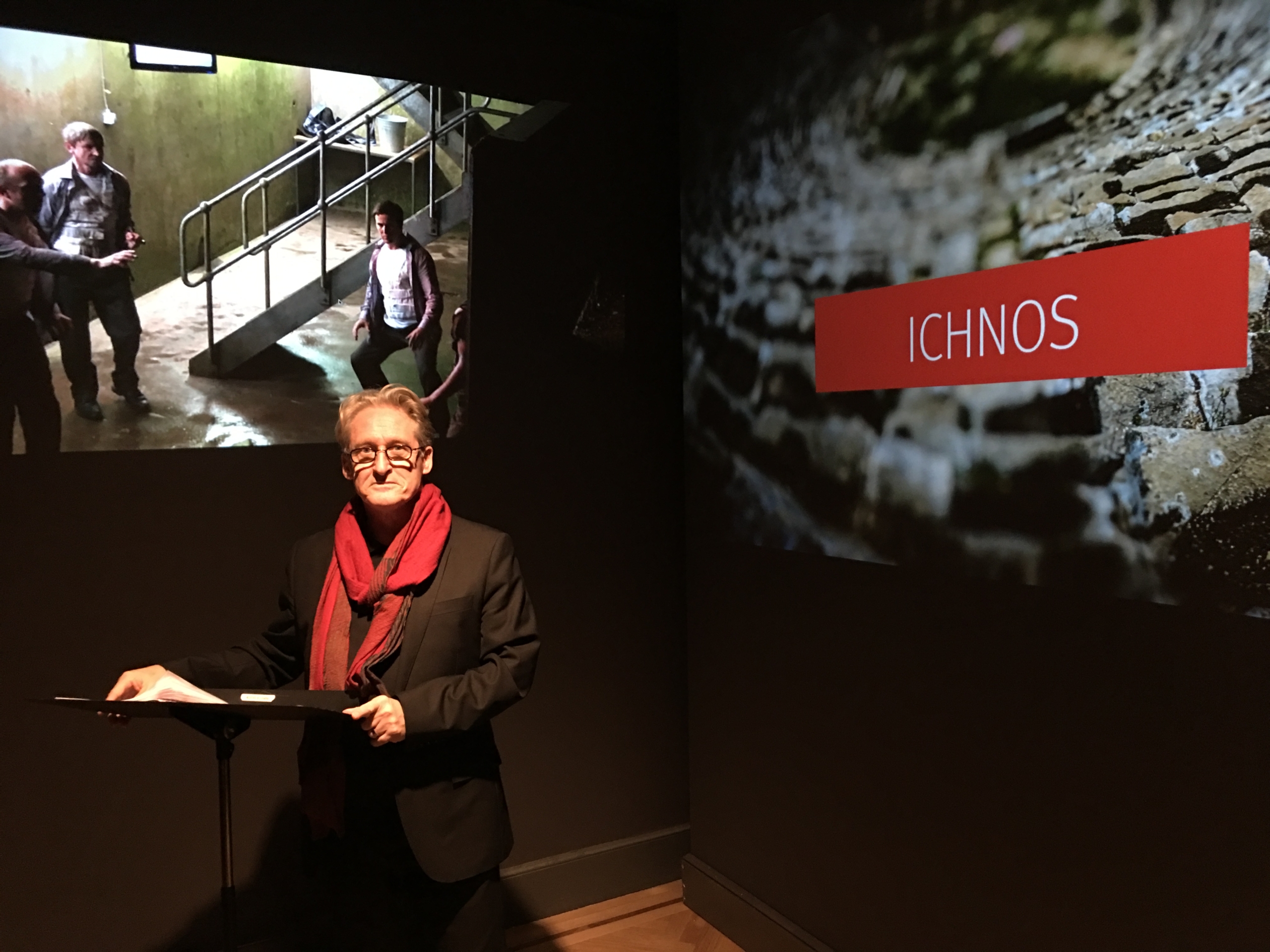
The legacy of a perturbing experience – with Mike Pearson in “Staging Evidence” five performances in theatre/archaeology, Bard Graduate Center

The overlap with the Borderlands project helped us complete the bulk of the new book during my sabbatical leave last academic year. The heart is the presentation of an annotated portfolio and a dialogue through our works in theatre/archaeology since 2000. This is organized in five parts centered on five key processes: fieldwork and visiting; assembling and gathering; worldbuilding between past and present; working with things; metamorphosis and entropy. These lead to an outline of a pragmatics, a more-than-representational methodology of theatre/archaeology as a paradigm of research creation, a transdisciplinary practice suited to contemporary troubled precarity. Introductory sections deal with theatre and performance, the archaeological imagination, and especially with the philosophical foundations of theatre/archaeology in pragmatism, performativity, science and technology studies, process and relational philosophy, design foresight.

And then Mike died. It’s not possible to express the sorrow, loss, and impact. It’s enough to say that I’m working with friends and colleagues to get our book out as a a case study in transdisciplinary daring and collaboration.

There are two other noteworthy features of this last year. 

The first concerns what may be called applied archaeology, extending the reach of a transdisciplinary humanities beyond the arts/science siloed boundary. H-Star and mediaX, industrial affiliates and research programs at Stanford under leadership of Martha Russell and Keith Devlin, closed business in March 2022. I worked with them for many years, applying the scope and insights of anthropological archaeology to interests and needs beyond the academy. How can archaeology inform design-actionable visions of the future, mobilizing long-term hindsight for creative future building in businesses, communities, organizations? Rooted in the mission of Stanford Humanities Lab, directed with Jeffrey Schnapp and Henry Lowood until 2009, and through my ongoing connection with the design group and d.school in the School of Engineering, much of this effort overlaps with what Riel Miller at UNESCO is promoting as futures literacy – skills and competencies needed to imagine better futures, indeed to decolonise the future, preventing things from becoming an extension of the inequalities and incompetencies of the present. This year I helped organize two workshops with mediaX and Tamara Carleton exploring futures literacy with partners from industry. And while I will miss contributing to their visionary agenda, I have found myself working more and more on applied archaeology and humanities. This year I joined Kimi Iwamura’s Valley Breeze Consulting in projects with Nissan Motor Company (on human values in future mobility design – research managers Takashi Fukushige and Jun Tamura), with Aisin (imagining the future of a major industrial corporation refocused on human values and social innovation – Vice President Kenji Suzuki and General Manager Sadafumi Shirai), and with Biprogy, formerly Nihon Unisys (the concept of Digital Commons – CEO Akiyoshi Hiraoka). Extraordinary intellectual adventures in business archaeology addressing a critical challenge of the academic humanities to justify their research, learning and pedagogy and to extend their skills and insights beyond the academy in the service of public good.

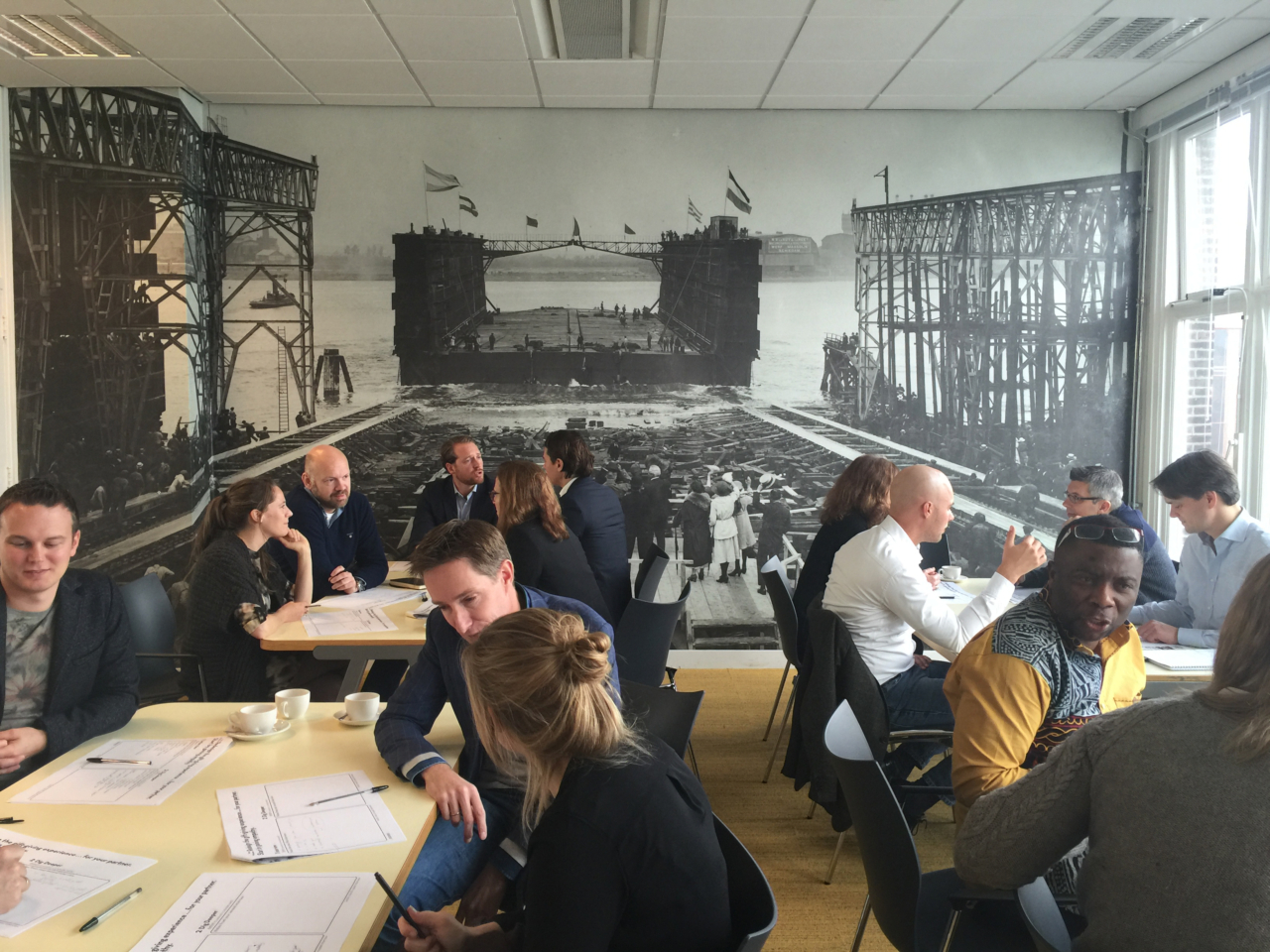
Professional learning community – a workshop in design foresight in Rotterdam

While I call this applied archaeology, it is not a one-way knowledge transfer. I have used the tools and techniques of design foresight in building the socio-cultural model that is the core of our book on Greece and Rome. Mike and I have made much of the pragmatics of project management that is design foresight in developing the principles of site-specific performance design.

In all this I am finding inspiration in collaboration with Connie Svabo and her Research Center for Science Education and Communication at SDU (Syddansk Universitet – University of Southern Denmark), with its mission to bring the arts and creativity to STEM education, connecting technology and experience design in education and training, in the academy and beyond. Drawing on science and technology studies, key concepts include scholartistry and research creation, creative pragmatics (the subject of a forthcoming book from Springer we are editing with Chunfang Zhou, Tamara Carleton and Jesper Simonsen) and eco-literacy, 360 degree understanding of complex adaptive living systems. This year a research team from SDU (with Tina Maria Brinks and Kean Najmeddini Gindesgaard) worked on the projects in experience design with Nissan and Aisin. We also helped a mediaX project run by Janet Carlson offer advice in the creation of a school in China centered upon design thinking and experiential learning.

This work draws upon my long-standing commitment to student-centered pedagogy and project-based experiential learning, learning by making and doing, a commitment activated in these projects with University of Southern Denmark, Roskilde in Denmark (where I hold an honorary doctorate), going back beyond Stanford Humanities Lab, though Larry Leifer’s Learning Lab at Stanford, a precursor to H-Star, to learning programs in archaeology that we pioneered at University of Wales Lampeter back in the 90s, and indeed back to my work in the 80s to develop a new curriculum for high school Classics. My classes at Stanford continue to be a testing ground for such pedagogical practice. This last term of Fall 2022 I ran a new seminar in environmental aesthetics, exploring perceptions, experiences and engagement with the environment, surely a critical component of eco-literacy, of any sustainable environmental policy. 

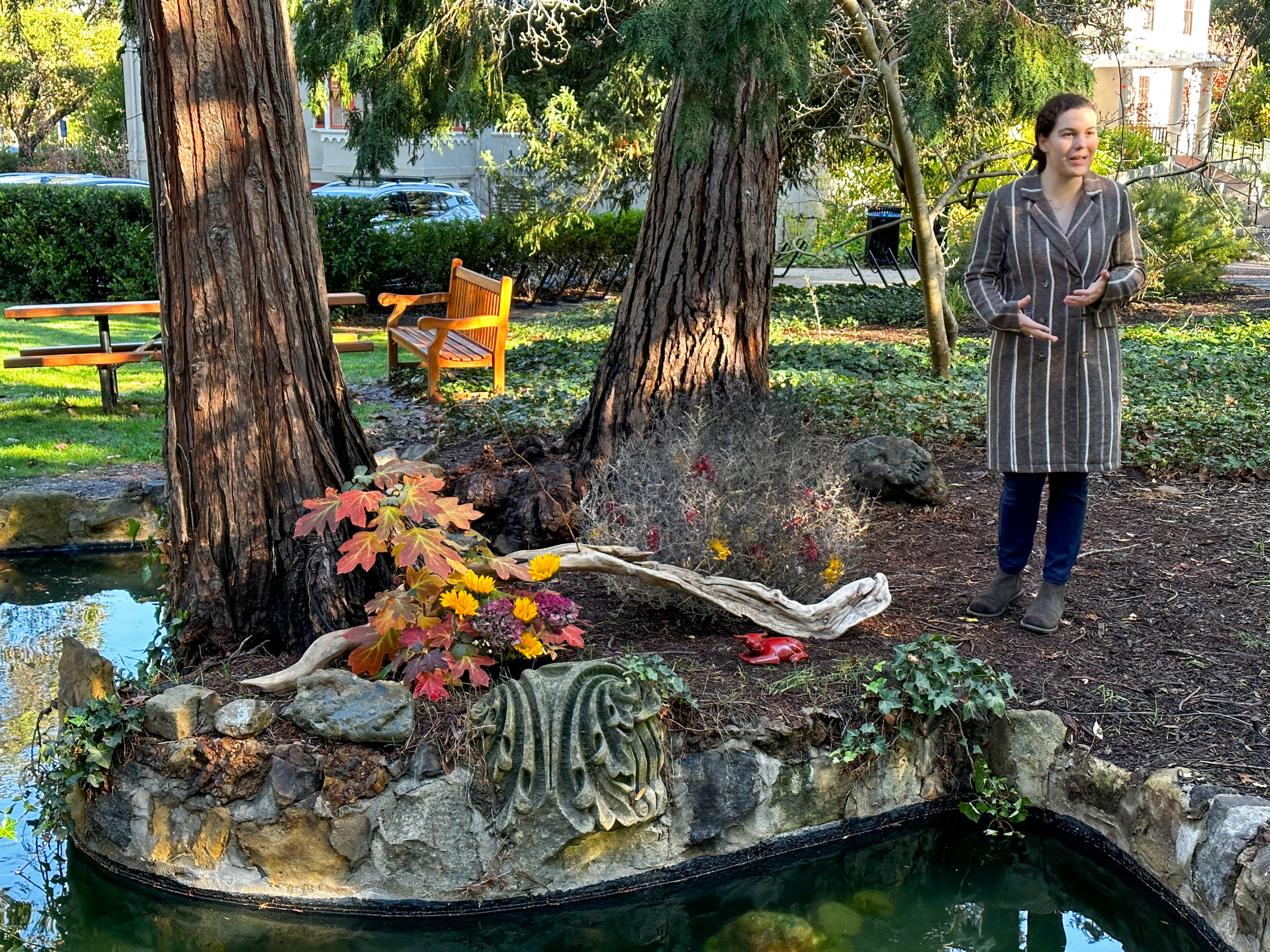
Sophia Colello’s fabulous seminar project in environmental aesthetics – Ikebana meets the metaphysical principles of Zoroastrianism

Uniting research and learning, for we are all life-long learners, reaching beyond the academy, focusing on the needs and interests of learners, means we should surely endeavor to get to know our learning communities, whether they are associated with an academic institution or a corporate concern. The core of the design projects with corporate communities is deep ethnography of organizational culture. And this year I joining Ng Humanities House, an undergraduate residence at Stanford, as resident faculty. I am learning so much in the way of refreshing insights into these wonderful and talented young people. A personal mission – to do what I can to help them deal with the challenges that come with the legacy of the contemporary past.


Studio update – Spring 2022

This academic year I am on sabbatical leave finishing three long-running projects and planning to focus more on applications of the archaeological imagination to matters of common and pressing contemporary concern, especially through design foresight and futures literacy.

This is why I have put to one side my critical commentary on all things archaeological and made few posts here at mshanks.com and at archaeolog.stanford.edu.

Borderlands

The three projects have all been decades in the making. Borderlands is an exploration of the concept of bordering through encounters and engagements in an archaeology of the northern edges of Europe, discontinuities and transgressions in empire, industry, sovereignty, rationality, corporeality. It has not gone as well as intended this year. I was hoping to spend more time following up fieldwork in the English-Scottish borders, but Covid made access to facilities and archives difficult. The pandemic has prompted an unexpected turn too – towards an inspection of mobility and contact here in and around the North Sea, and indeed towards an environmental aesthetics, following what is now quite a commonplace that the sea, winds, clouds, atmospheres are ambient and connecting media.

Theatre/archaeology

So I have brought the border explorations to bear on a new book with Mike Pearson, a summary of our works in Theatre/Archaeology since our last book in 2001. A portfolio, a commentary on this hybrid field, an outline of the potential that lies in the (re)articulation of remains as real time event. We interweave excursions and chorographies, fieldwork and survey, site specific productions of Aeschylus and Shakespeare, design ontologies of automobiles, animated archives, media archaeologies. With an emphasis on practice and making, concept, agency and project management, we show how we have come to do theatre/archaeology. But we offer not so much a methodology or a playbook as a creative pragmatics of critique and intervention in matters of common and pressing concern – where what is needed is not the preservation of the past but the redemption of past hopes.

Greece and Rome

Greece and Rome. I have reported several times on this web site and elsewhere the progress of my project with Gary Devore, a new synthetic model of the working of Graeco-Roman antiquity. I have made many more comments on the current state of Classical Studies in a broader context of what is appropriately treated as a growing crisis in the academic humanities. Circumstances have so changed since we planned the project a decade ago. And we are responding and reworking. This last couple of years and more in online classes and an ongoing book club Gary and I have been testing out, prototyping speculative fabulation, modes of polyphonic storytelling, working through the constitutive (archaeological) imagination. We have many a previous draft; I believe the last is imminent.

Design foresight

Looking to the future in a creative pragmatics. A counterpoint to the writing projects has been my growing interest in design foresight. Deep foundations lie in the Stanford research group involving Tamara Carleton, Bill Cockayne and Larry Leifer, Victor Taratukhin and Natalia Pulyavina further afield. This last year I have teamed up with Kimihiko Iwamura, and continued to work with Stanford mediaX offering workshops and scenario planning with several agencies and corporations – modeling futures drawing on archaeological insights into long term processes of innovation and change, agency and creativity (world building).

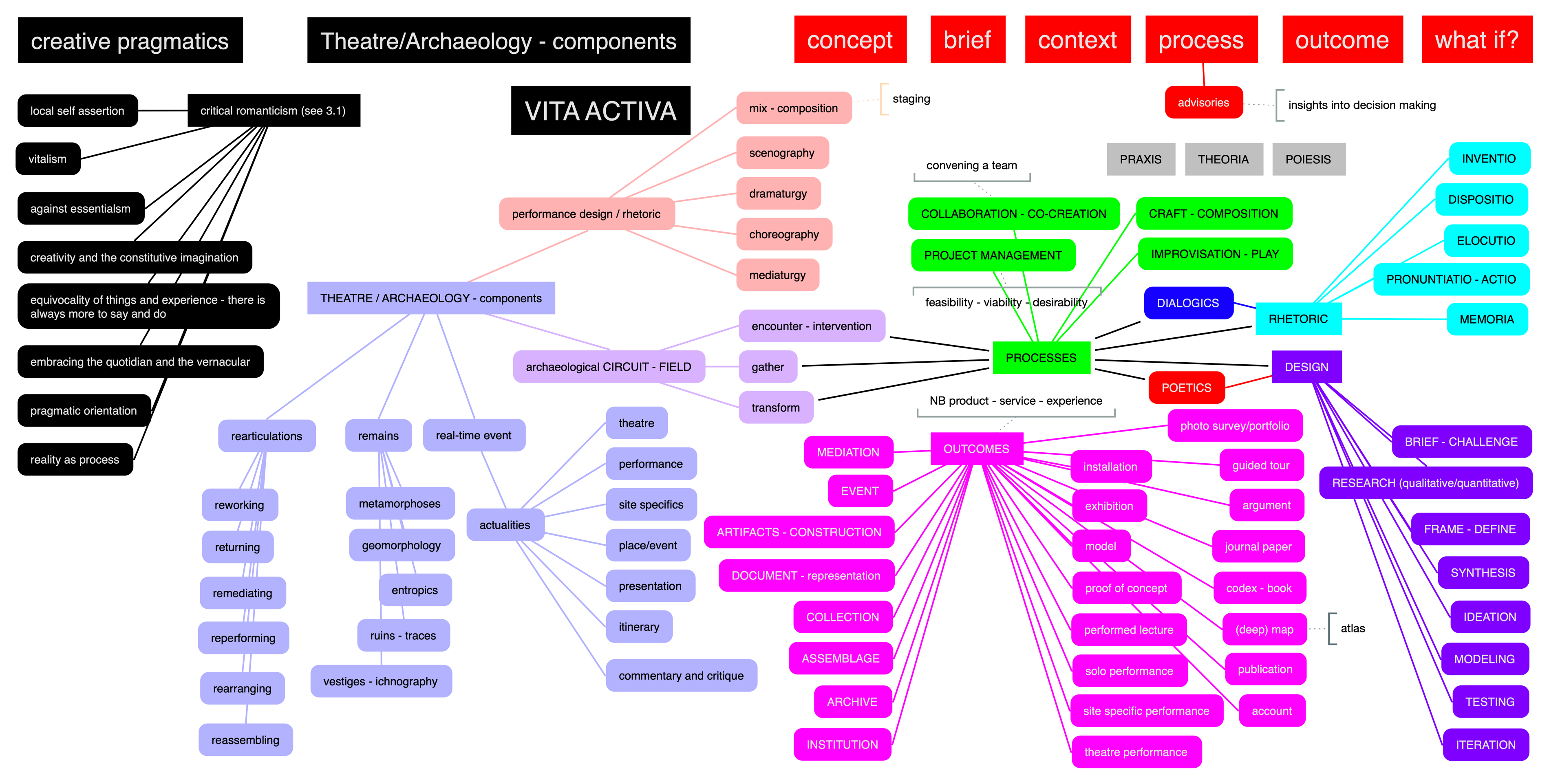
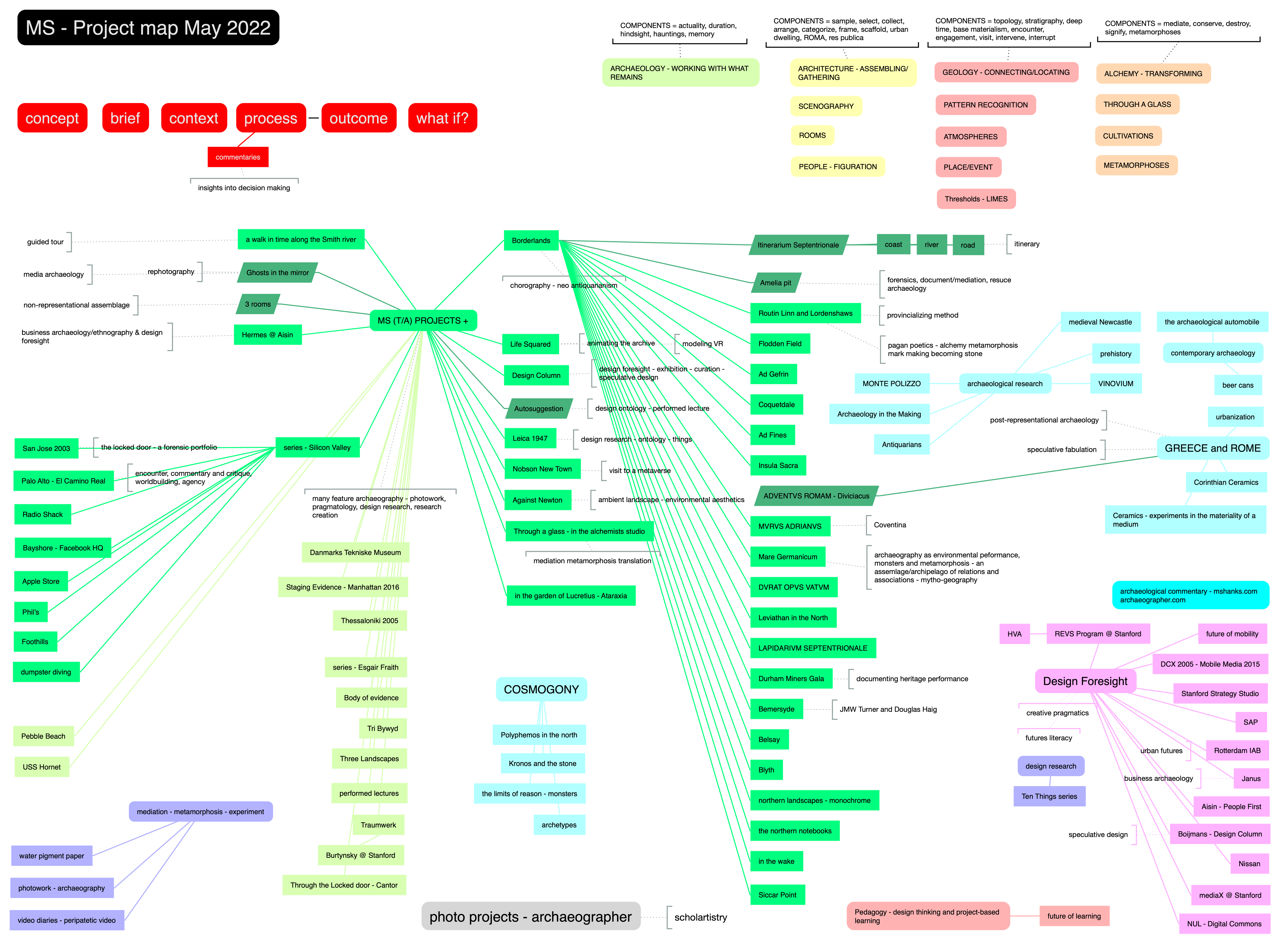
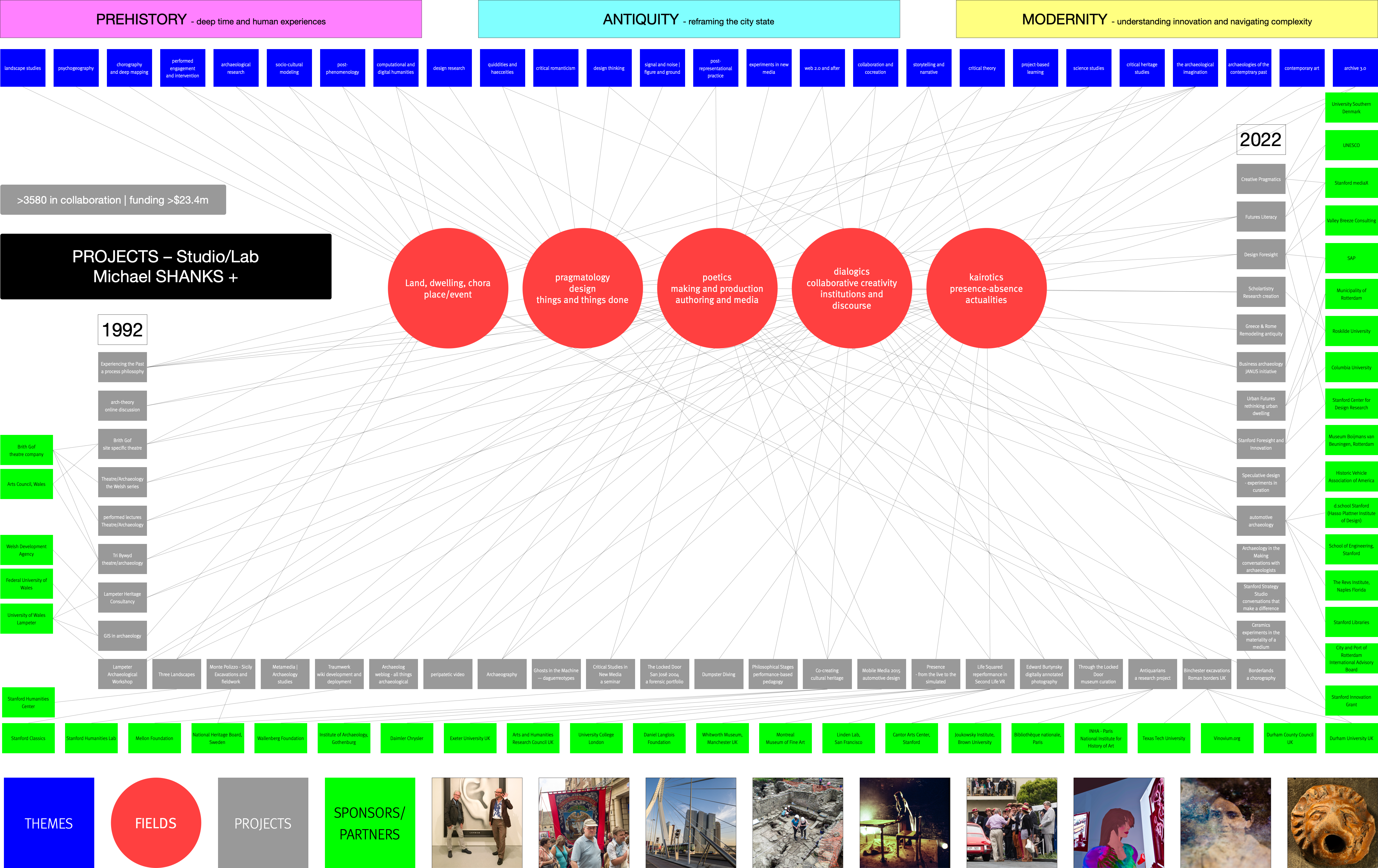
Below are some project mappings. Click on the image to load an enlargement.

theatre/archaeology
Theatre/Archaeology: concepts and practices – outline of the structure of the new book with Mike Pearson
project map
Stdio/Lab projects 1992 - 2022
Two long term reviews of projects
Becoming stone – St Aidan’s, Bamburgh, Northumberland
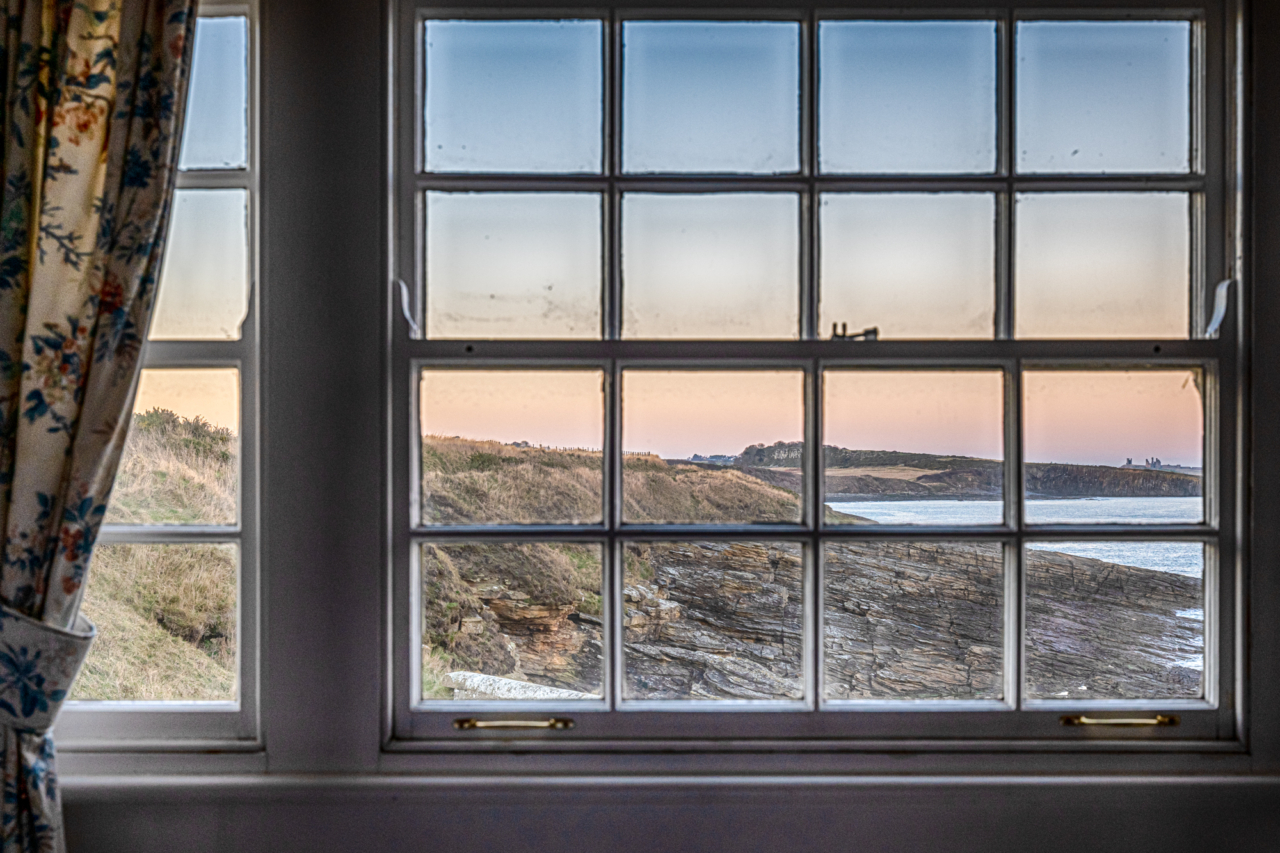
Fenestration – through a glass – Howick, Northumberland
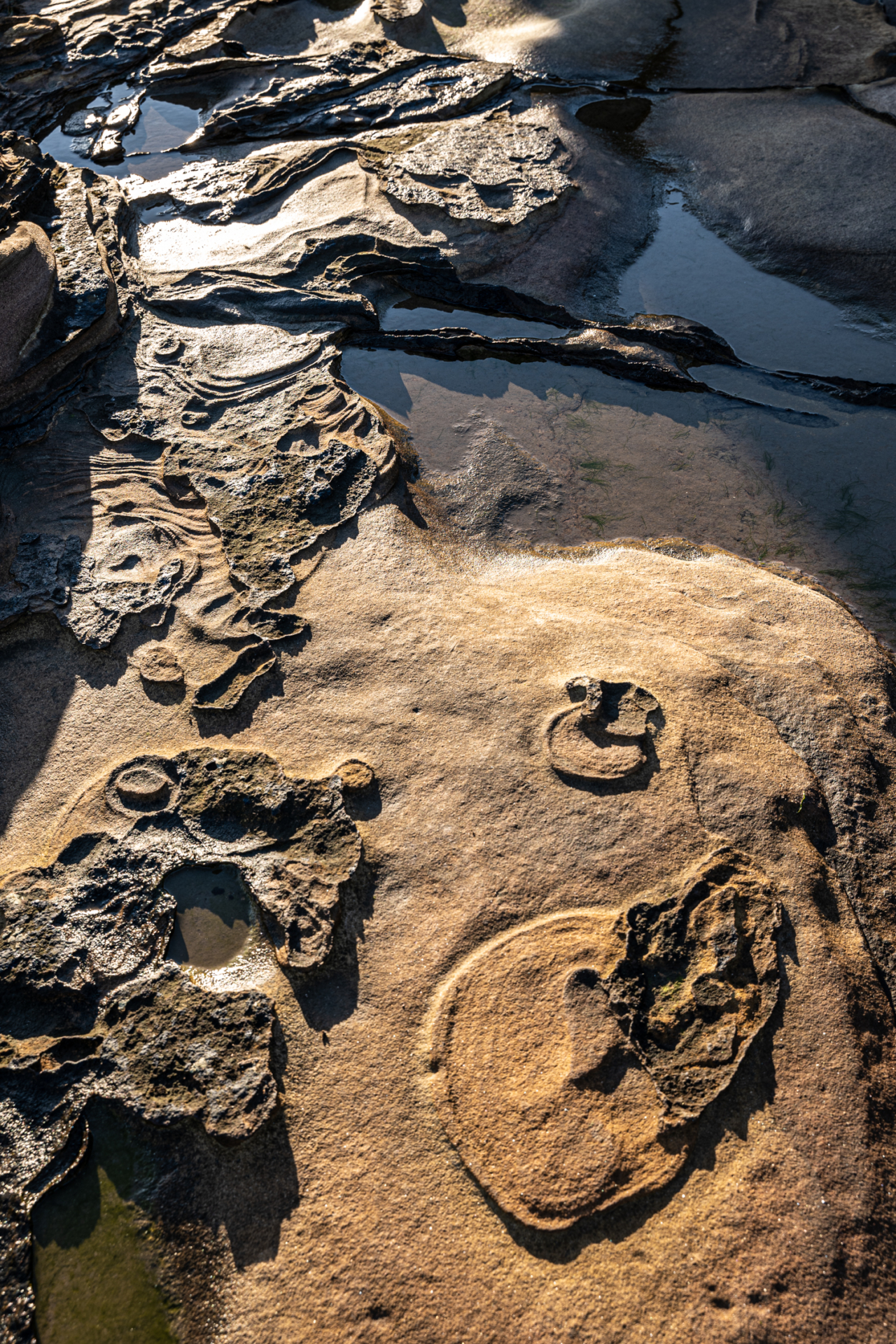
Liquid stone – fractal landscape – Rumbling Kern, Howick, Northumberland


rubric for a doctoral dissertation

See also
A personal learning manifesto – [Link]
A learning manifesto – pragmatics – [Link]

Two members of my studio/lab at Stanford have successfully defended their doctoral dissertations this year. Congratulations to Anne Duray and Anja Krieger with their research into the history of archaeological approaches to the Bronze Age/Iron Age transition in Greece (Anne), and the human experience in antiquity of seafaring in the eastern Mediterranean (Anja).

I will pick up their extraordinary insights into these topics at another time. Here I wish to offer some thoughts on the concept of a dissertation or thesis, how best to think of it in relation to its evaluation by a committee of academic readers.

Writing a dissertation is a rite of passage in the academy and it is far too much surrounded in mystery, hype, and misunderstanding. So I am going to cut though to pragmatics, because I think this is the best mindset to adopt in what can be a daunting challenge as a graduate student – when some hold that a dissertation is meant to be a report on research that is to be considered significant in one’s chosen disciplinary field!

I am also quite aware that what I have to say here is not the view taken by many of my colleagues. But it is grounded in a pedagogy that I have thoroughly explored and practiced over four decades, along with many others. I have tried to summarize what I have learned in a personal learning manifesto posted here – [Link] [Link], and where references and publication can be found.

Dissertation rubric – a checklist

It’s best to hold that a dissertation is meant to display competency in the research process, rather than adding somehow to a body of knowledge that might be associated with a disciplinary field.

So here are the key questions that should be asked of a dissertation and answered in the positive.

  • Is there a coherent thesis/proposition?
  • Is the thesis/proposition relevant to debates in a disciplinary field?
  • Are such debates adequately covered?
  • Does the dissertation handle a coherent body of data?
  • Are the data adequately controlled and managed?
  • Is there adequate articulation and transformation of data into workable information and an argument related to the thesis/proposition?
  • Is the argument coherent?
  • Is the argument mindful of method and theory?
  • Is the argument delivered through a scholarly apparatus (involving the likes of transparency and clarity, acknowledgement of sources, use of citation)?
  • Does the dissertation draw appropriate conclusions?
  • Does the work hold future potential relevant to a knowledge/research community, disciplinary field, program or project?
  • Is the dissertation an appropriate result of three to four years of research. This is an essential pragmatic basis of evaluation.

As far as I am concerned this is it. Answer yes to the questions and you are done.

I hope this helps all of us – because we actually never cease to be graduate students, if we are honest with ourselves. We are always vulnerable, uncertain, learning – and the more you know the more you realize how much there is to learn.

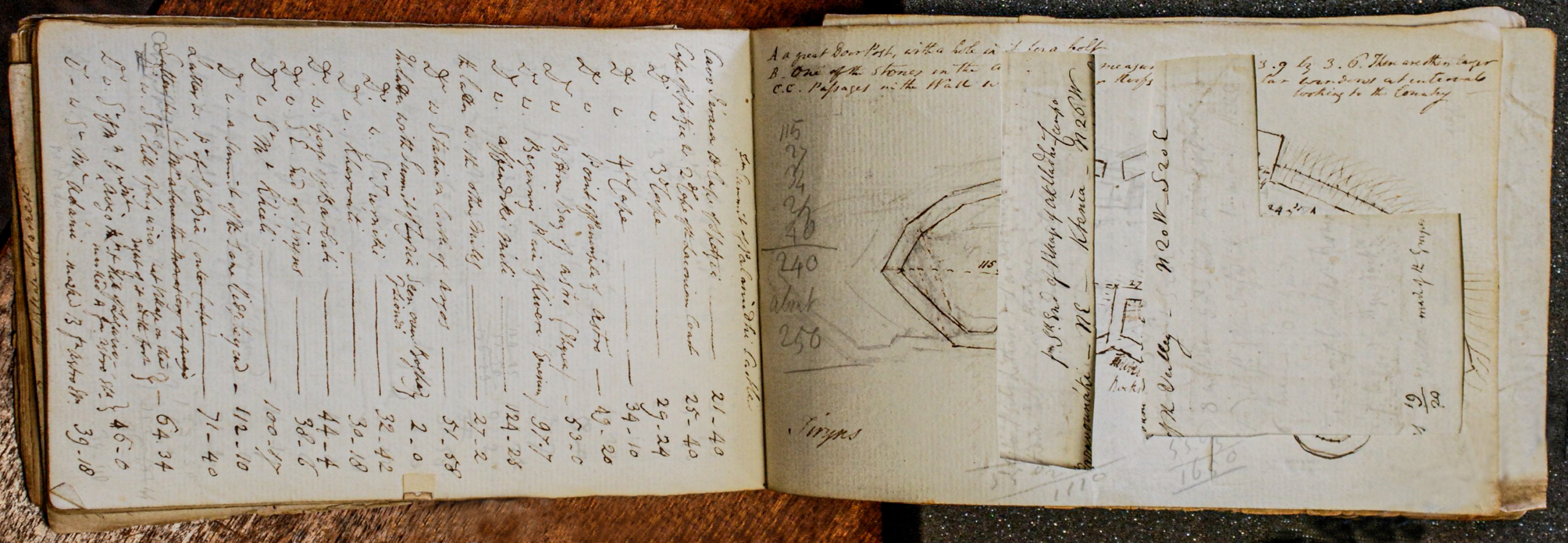
Wiliam Martin Leake’s notebook – exploring Ancient Greece in the early nineteenth century – the scholar as military spy. Thanks to Chris Witmore for the photograph.


Reconstructing Classics – voice

Part 2 of a review of Confronting Classics, by Mary Beard [Link].

Some tactics for challenging the orthodox monologue of academic Classical Studies and opening space to hear other voices.

What is Classical Studies about?

Mary Beard argues that Classics is not about ancient Greece and Rome at all, but about what happens in the gap between past and present. I would add the future. Scholars of ancient Greece and Rome don’t represent the way things were. They fabricate, perform research, build knowledge, looking to the future.

This is such an important argument coming from an establishment academic – Dame of the British Empire, Professor at Cambridge University, Fellow of Newnham College, beloved of the Media, UK “national treasure”.

In this pragmatic understanding of research as performance, I call again for a need to rebuild, to dismantle and reconstruct. The old accounts of antiquity are looking decidedly dodgy and compromised by their complicity in chauvinistic contemporary ideologies. Modern Classical Studies remain the offspring of nineteenth century imperialism and colonialism.

Voice – a critique

What might such reconstruction look like? In this post I will take up the subject of voice and suggest some ways that diverse and different voices in and through Classical antiquity might be sounded and heard.

I recognized the tone, timbre, standpoint of the kind of voice Mary Beard adopts as soon as I started reading her book. Such a voice has been with me all my academic career since I attended a most traditional grammar school in the 1970s. The curriculum I followed there would have satisfied any member of the leisured elite at the beginning of the nineteenth century.

The book Confronting Classics is a collection of reviews written over a good number of years. They follow a formula. The outlines of a topic of interest are sketched (Alexander the Great, Caesar’s assassination, emperors Caligula and Hadrian, Roman Britain). An author’s fresh insights into the topic are given credit. Then Beard shows how she knows more than the author by pointing out omissions and inaccuracies. This is quite extraordinary; she always knows more. This voice is didactic, patronizing even. One better make sure one has delved into every nook and cranny of fact, otherwise fault will be found by the all knowing Professor.

Expertise is indeed to be valued. But this is a particular form of expertise that we need to question and doubt. This voice of authority is grounded in bodies of factual knowledge. There is no questioning of the framing of topics (biography predominates), no discussion of methodology or the many new approaches to antiquity that have come out of critical theory or archaeology. This voice belongs to a disciplinary field grounded in learning a canon of literary and textual works that one might talk about them in a certain way. Its college curricula are still so often dominated by the transmission of bodies of knowledge, where controversy lies in the impossible challenge of balancing knowledge of a specialized topic with a breadth of factual familiarity across more than a thousand years of history.

Sniping criticism: Beard is a sharp-shooting sniper. This voice delivers criticism from a position that is quite secure and even unassailable. Sniping is the mode of confrontation in Mary Beard’s Confronting Classics. These reviews were all written for the New York Review of Books, the London Review of Books, the Times Literary Supplement (for which she is Classics editor), journals that you might justifiably associate with a cultural elite. You might disagree or contest her comments, but the chance of shooting back a response in these journals is zero. Best option – secure a sniper’s nest for yourself.

Nevertheless those reviewed are quite established themselves and maybe we shouldn’t be too concerned about their voice. But scan the list. Is it unfair or unrealistic to comment that they are not quite as diverse a selection as one might hope for? Little chance here of a different voice.

Beard clearly doesn’t like some of these characters in Classics past and present, and doesn’t hold back telling the reader, even though it can sound a little too personal, too ad hominem. She delivers, for example, a startling judgement of the works of R.G. Collingwood (died at 54 in 1943), claiming them to be overrated and a curious amalgam of philosophy and Roman archaeology. Beard puts this down to immaturity – he never managed to get over his undergraduate days at Oxford. In what is familiarly known as “Greats”, the second half of a Classics degree program, Collingwood combined modern philosophy with Roman Archaeology, and both fields fascinated him for the rest of his life. Incoherently, according to Beard.

Some might find this witty, lively, entertaining, a window into the life of an “Oxbridge Don” engaging in far from dry academic debate with colleagues, some likable, some not, some smart, some needing a leg-up the tough intellectual slope to expertise in Classics. Even though such reviews might be written as if they were features of dynamic disciplinary debate, this is, I suggest, an exclusive monologue. It is inward looking and doesn’t stray from completely conventional topics. Who, I ask, as a member myself of the international Classics community, actually cares about these debates?

Voice – the performance of research

Be clear that my comments here are not actually about Mary Beard. They are about voice, something that comes with a stage, a scenography, a dramaturgy, the acting out of a certain kind of academic position and authority. Voice is a key component of the performance of research.

(Read the sympathetic profile of Mary Beard from Charlotte Higgins in the Guardian and assess how such a voice connects with personhood – [Link].)

Polyvocality

What of other voices?

I don’t just mean the many voices from antiquity that have been subdued or lost, such as those of women, slaves, and all the others left out of most of the sources (written by elite men). Mary Beard has done a good deal in her academic career to help identify such voices as part of the growth of interest in social and cultural history over the last few decades. It is significant, however, that she sticks to the literary and epigraphical sources. She seems to have little awareness of the remarkable insights that can come from working with archaeological remains. And it is even more telling, for me, that we hear these marginal voices through the voice she uses, in a kind of ventriloquism.

What of voices that have quite different stagings, diverse standpoints, purposes, audiences? What of voices that are confrontational, that refuse to be accommodated, that are discordant? For surely history does not ring harmoniously.

A personal anecdote

Let me use a personal anecdote to indicate how such voices might be sounded and heard, and to what ends. It’s an experience from when I was a graduate student hoping to make my way into an academic job.

First some background. My traditional schooling in Classical languages came because of a scholarship that took me from a working class family in a colliery and shipbuilding port in the NE of England to the old grammar school in the local big city. I went on to read archaeology and anthropology at university and then shifted eventually into an academic career. I was driven by a fascination with the extraordinary riches of a local Roman landscape at the edge of empire, in the north of England, Hadrian’s Wall country. Growing up in this land involved intimate association, through archaeological remains, with the cultural expanse of classical antiquity that stretched from my back door across Europe and beyond.

From the outset voices jarred. That of academic classical scholarship, that of the amateur local historian and antiquarian, and the sharp political banter of the public houses in this heartland of labour party socialism, to name but three. I found the incongruences troublesome. My local experiences of past-in-present, of actuality, of the ghosts in the border landscapes of the NE of England, were almost entirely drowned out by the monotonous single voice I have been describing. This voice did not come naturally to me.

In this context, enthusiasm for the study of Classical antiquity led me to seek ways of making the voice less exclusive, more my own, and to be shared. How might Classical Studies be made more open? How might richer more nuanced multiple voices be sounded? The local antiquarian, the voices of complaint against academic monologue, and more. Polyvocality.

In search of answers I embraced critical theory in archaeology, radical student-centered skills-oriented pedagogy (teaching Classics in a high school) (see now a new book – [Link]), and then I pursued what I have come to call research creation [Link].

And now the anecdote. It was 1991. I was on a PhD program and received an invitation to share my research into ancient Corinthian ceramics at a conference at the University of Newcastle in the UK. This is the city where I had gone to school. I had come to know and admire the hosting department as a champion of new populist approaches to teaching and promoting Classical Studies. I liked what I interpreted as a commitment to reconstruction. I delivered a talk that I thought would appeal because it exemplified tactics that could, I proposed, help transform Classics, help deconstruct ideological formulae, open the stage to, yes, other voices.

Tactics – dissonance

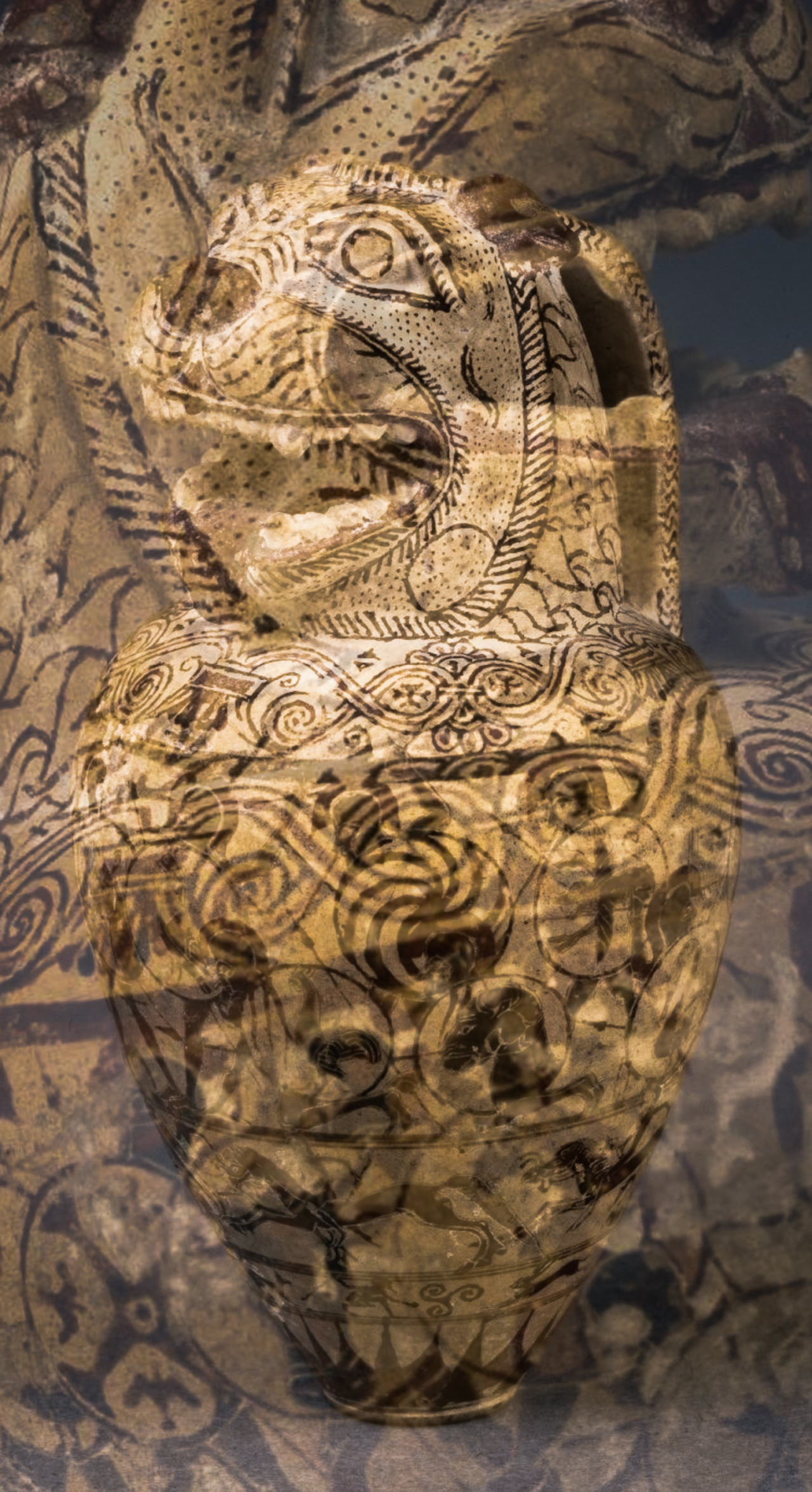
I juxtaposed three scenarios that were unconnected by any causal or historical relationship. A scene with armored soldier hoplites, animals, birds, monsters and floral graphics on a Corinthian perfume jar made in the days of the early polis. A scene from Stanley Kubrik’s film Full Metal Jacket (1987) when US marines confront a Vietnamese teenage girl sniper in a ruined city. A scene from Shinya Tsukamoto’s Tetsuo: Iron Man (1989) involving the metamorphosis into monumental monster of a metal fetishist.

I attempted no comparison.

The tactic I used, and it has become a favorite, was a version of katachresis. Juxtapose abusively. A metaphor says this is that. Synechdoche says this is a part of that. Metonymy says this stands in for that. Katachresis isn’t so easy going, and says you probably don’t want to put these things together, but let’s see what happens when you do. Katachresis nudges one to handle frictions and incongruities and look for patterns and connections that one had never anticipated before. Abuse what is accepted! Discordant katachresis is a kind of Brechtian verfremdung, making the familiar awkward and strange.

The particular frictions I was hoping to energize in this talk for a Classics audience concerned the personae (another useful term from performance) in the new bodies politic of the early Greek poleis. Soldier, citizen, farmer males in membership. And also contemporary gender and class positions in modernity, because these are implicit in any relationship between past and present. These connected with my interest in Giles Deleuze and Felix Guattari, their efforts to “deterritorialize” the secure ground of sovereign discourse (read “voice”), of primary binaries (such as past and present, researcher and object of interest, facts and values, antiquity and modernity). I had been reading Klaus Theweleit’s extraordinary Deleuzian account in his two volume Male Fantasies (1981) of the metaphors and imagery in the literatures and letters of the militaristic Freikorps in 1920s Germany. And then there were Antonin Artaud’s expressions of dislocated corporeality in extremis, the body-without-organs.

Other dynamic components or structuring principles I have come to favor in katachresis are actualization and synchronicity. Actualization – the articulation of past-in-present. Synchronicity – the experience of meaningful connection, of alignments across time and space [Link]. Both involve making temporality and spatiality relative and irrational. Yes – then can also be now. Yes – here can also be there. Just imagine! Speculate!

(Grant Parker recently reminded me of Gayatri Spivak and Homi Bhabha discussing katachresis as a disruptive option in the context of colonial, subaltern and post-colonial voices.)

How might such tactics deliver polyvocality? Primarily though interruption, disruption, opening space that other voices might be heard. We might seek personal voices of actual individuals, though here I am conceiving other voices as part of different performative discourses, to use some jargon, and as indicated above. In contrast to the voice I have been exploring through its particular manifestation in these writings by Mary Beard, one might include informal anecdote, personal reflection, an antiquarian chorography [Link], scholartistry [Link], a dialectical image, a deep map [Link], a spreadsheet, a story, verfremdung, and many other poetic options in research creation [Link]. What is actually expressed in such different voices is a pragmatic matter. It depends on rhetorical specifics in communities of interest. Who is speaking? On what grounds? To whom? For whom? To what end?

These were my ambitions back in 1991, and viewed now, of course, with hindsight.

Back to the conference in 1991. Several of the audience walked out. Conspicuously. Was it Peter Jones, professorial champion of a new Classics, who shook his bowed head in hands? There was an awkward silence and no questions. Brian Shefton, an old-school connoisseur, acknowledged that I seemed to know the Greek pottery, and corrected my Italian pronunciation.

I had made a critical mistake. This audience, for all the pretensions of the hosting institution to renew Classics, was not seeking new voices. As now, Classics seemed under threat as an academic field. In defending their old territory, they wanted to retain the old voice.

And so does Mary Beard. She plays the mischievous forthright sceptic and critic, “confronting Classics”, but the voice remains the same.

If we learn anything from the field of Science Studies it is surely that to understand knowledge we must address the conditions under which knowledge is fabricated. Included here are personal motivations, the adoption of persona and voice, what drives the will to know, institutions that provide the material infrastructures in the pragmatics of building knowledge. Such matters are part of what I have described as the performance of research.

I have chosen to use a personal anecdote about the fragility of an early academic career deliberately to make these points about voice. These are not abstract academic issues. The matter of voice is about interpellation, one’s personal induction into persona, scenography, dramaturgy (again, read Charlotte Higgins, albeit between the lines, on Mary Beard [Link]). The matter of voice is the matter of agency, one’s capacity to voice, to be heard, to act, to make a difference. I have been lucky perhaps in my state sponsored social mobility offered through a “first generation” schooling experience. But there is also alienation, displacement in the return whence I departed, because so many remain without such voice and agency, disempowered.

Let me return to the acknowledgement I made of Mary Beard’s case that Classics is not about the ancient past. Here we do well to recall again the suggestion of Theodor Adorno and Max Horkheimer in their lament about rationalization (Dialectic of Enlightenment 1947) –

what is needed is not the preservation of the past, but the redemption of hope.

Yes – this is the matter of voice.

Mouth, teeth, head, eyes, body, statue, silhouette.

What other voices are there in Classics? I’ll explore this question in another post.