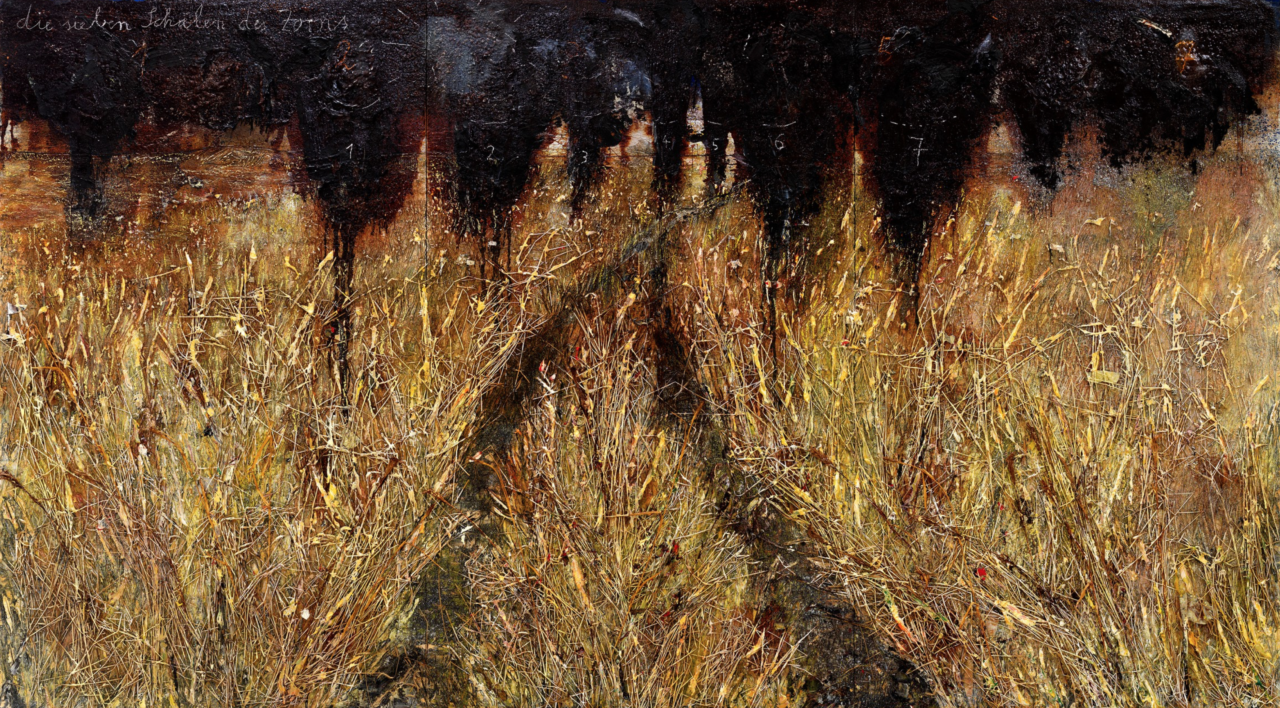
the limits of reason



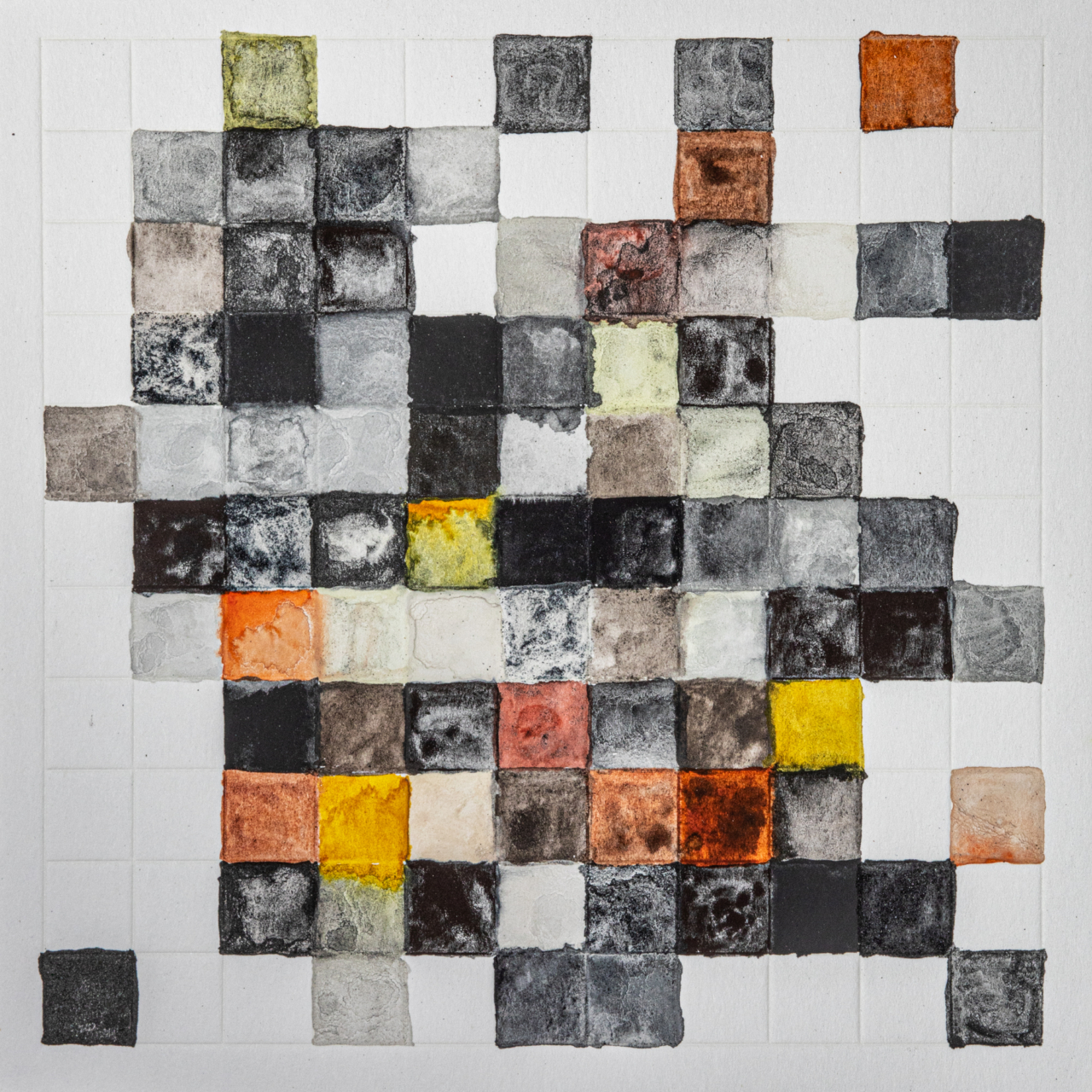
Sampled pigments from mine tailings. Amelia Colliery, Shankhouse, Cramlington, Northumberland UK. Closed 1938. One of many coal mines in south east Northumberland.
The pit heap was notorious for its internal burning – hence the red and orange oxides.
Non-representation. Post-phenomenology.
Part of project Borderlands – [Link]

A marvelous talk today at Stanford from Tim Flohr Sørensen (Copenhagen) about his project – Insignificants – [Link]. So much in a short report on such a beautifully simple experiment.
Archaeologists often pride themselves on taking up what is overlooked, insignificant, discarded as irrelevant, detritus, mere traces, garbage. But what does this involve? What happens when we deliberately focus upon what may be categorized as insignificant? How liberating might this be?
Tim’s project, this experiment investigating insignificance, has involved each month gathering insignificant things and putting them on display in a bell jar, to which he adds a title and a caption, a “speculative fabulation”.
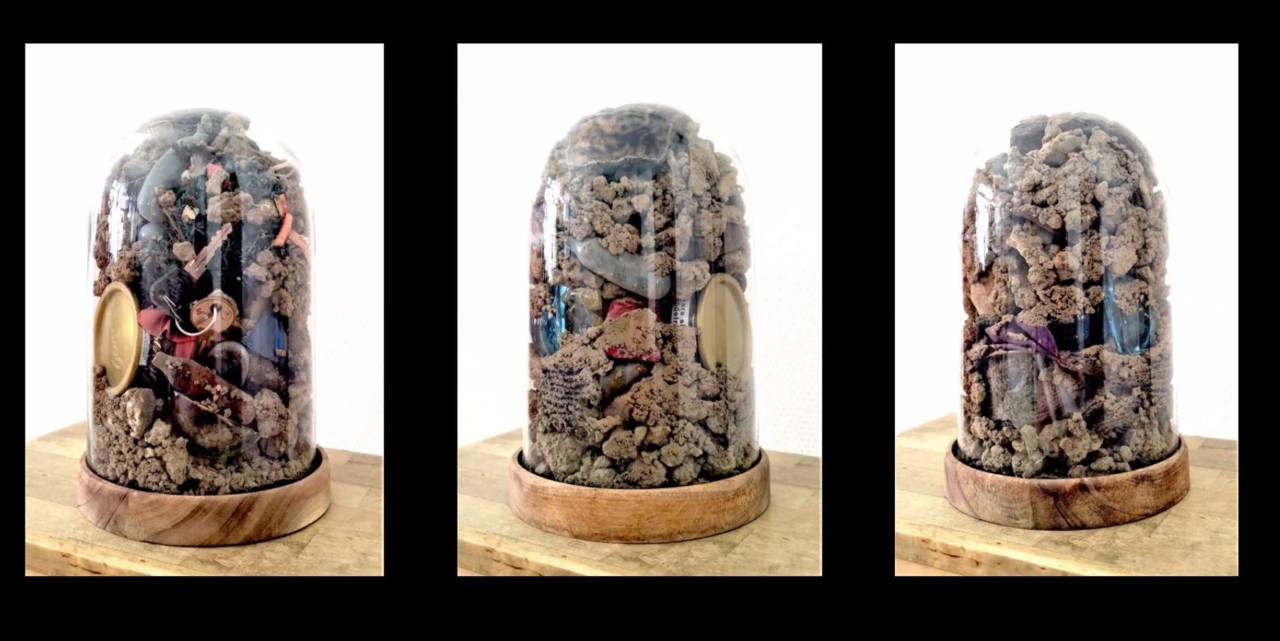
Last year he finished the series, buried the bell jar in a nature reserve, found that someone had investigated it, then had the remains excavated.
Of course these acts are ironic, contradictory, conferring significance upon what otherwise would have remained insignificant. This is one of the take-aways from the “experiment” which poses, in such a wonderfully concise and compressed way, questions of the archaeological imagination, its circuit of encounter, gathering, and transformation [Link].
Tim’s simple experiment shows us how our knowledge making actually works – pragmatically, in everyday performances. The work of archaeology that makes the past what it is to us.
The insignificant becomes significant, and vice versa, even as we try to hold onto one or the other. This is surely what Hegel would hold as the dialectic, the relational association of contradictory states of being. In this both significance and insignificance belong to a dynamic field that is navigated when we act, when we perform certain operations.
A conceptual field, a semantic field. Tim outlined the suggestive range of words and concepts that go with insignificance – weak, meek, irrelevant, unassuming, trivial, shy, humble, tedious, overlooked – all aspects of agency!
The necessity of speculation. Wasn’t it David Hume who emphasized that conjecture is essential in any empirical account, offering bridges between what would otherwise remain discrete?
Pragmatic leaps of faith. Wasn’t it Carlo Ginzburg who unpacked Peirce’s pragmatist concept of abduction as speculative reasoning, the intuitive leap of faith in recognition of significance that is grounded in accumulated experience.
Tim’s experiment, his performances of gathering and locating, side step the meanings that are conferred through words. Significance is here a dynamic pragmatic achievement. What you do may matter much more than what you say in the way of (un)intended communication.
When Marcel Duchamp “playfully” diplayed a urinal in a gallery and named it as art object, he drew attention to the agency involved in the status of things. As artist, he could turn something into something else by saying and displacing, in a performative (speech) act. And with no necessary distinction between personhood and thinghood: we can do this with people and with things.
Dynamic processes here incorporate signal and noise, figure and ground, distinguishing what matters from what is background “noise”, reminding us also that there can be no signal without grounding noise, without material “medium”.
The situationist dérive – attentive to the katachrestic accumulation of encounters in the urban milieu.
This involves the forensic disposition so characteristic of modernist senses of space and locale – at a scene of crime anything might be significant evidence – even when it isn’t a scene of crime!
I liked a comment made in the questions posed to Tim after his talk that he has taken us into matters of “base materialism” (after Bataille and Dubuffet), the existential encounter with formless being, and the nausea that may accompany the slippery shifts between meaning and nonsense.
Tim left us with a concept he didn’t explore much in his talk, but which suggests so much – the stowaways of history …
The objects in the exhibition were all collected during April 2020. This is a period marked by the outbreak of the COVID-19, which means that I have spent a lot of time in my neighbourhood and bicycling around Copenhagen with my children, not getting an awful lot of work done. Despite enjoying these tours tremendously, I admit to having been periodically absent-minded, as my thoughts have occasionally been wandering off to the academic tasks and challenges that I would have liked to work on more intensely.
While I cannot justify the random and unplanned tours to various places in Copenhagen as proper ‘fieldwork’, I did nevertheless make observations and collected objects, while also starting to notice how the daily rides often resulting in some kind of silent, inner dialogue about the objects of my roadside collection campaign. This conversation was stirred by a resonance between what I observed on the ground and more theoretical challenges in my academic work. I guess, this is – at least for me – how theoretical questions always emerge: when I least expect them. Attending to traffic and listening (and responding) to my children’s conversations, my theoretical echo chamber got interrupted repeatedly, but I noticed how I started taking things literally. That is to say, the things I passed by – lying on the ground, by the side of the roads, at driveways to garages, in makeshift parking lots, on paths, in bicycle sheds and former industrial plots, now reclaimed by shrubbery, weeds and moss – resonated in a very direct and literal way with my theoretical musings. And since the things that repeatedly caught my attention were often struck, run over, trampled or squashed, I began sending warm thoughts to the notion of ‘flat ontology’ in a very literal sense. – I know, it’s a bit silly, but that’s what happened. I couldn’t help it, and I see no reason to censor this way of unleashing a thought process.
Flat ontology is a name given by a number of scholars to the idea that all objects exist on the same ontological level. While frequently misunderstood and deliberately misrepresented as an unethical way of making all entities in the world identical, flat ontology means that everything – i.e. everything – exist on the same ontological level. Importantly, in a flat ontology everything is different. Nothing is the same. For some scholars, this means that each object is infinitely independent, and for others it implies quite the opposite, i.e. that all objects are incessantly coming into being through their relations to other objects.
As an inconsistent materialist, I wonder why one thing has to exclude the other. I would appreciate an ontology accommodating that which is contradictory and mutually exclusive. Is this not the very lesson learned from archaeology? That things change, move in and out of conditions and states of being; sometimes they are one thing, sometimes the other, and occasionally, they are both at the same time. So, do things really have to be categorically one thing or the other? Do they have to be either independent or relational?
My capricious observations of literally levelled objects resonated with my flimsy philosophical pondering. This stirred a basic question: What does a topography that almost approximates to nothing do to flat ontology? The things on the surfaces repeatedly showed themselves as objects that were not merely themselves, nor simply entangled with other things, but also sponging off their edges. Sometimes it seemed that they wanted to create a buffer between themselves and their surroundings, creating space by dissolving the contours that touched other things. At other times, it appeared as if they had to efface any strict Euclidean line preventing them from seeping into and merging with other things, as if they wanted to establish relations. In yet other cases, these metamorphoses looked more like a process towards nothing, as a dissolution towards becoming non-objects.
Over the past years, I would say that I have accumulated quite some training in making incidental observations, and I believe to be moving more confidently in the direction of a strictly accidental field method. Accordingly, in the encounter with unanticipated, flattened things, I had quite a few “Hmmm…?” experiences. As many of the objects were lying on temporary or makeshift parking lots amidst gravel and dust, or in the ‘edgelands’ between the orderly and the vibrant, they were often visually indistinct, their colours blending with their surroundings; an impression enhanced by crackled and torn edges, making it difficult to determine the end of one object and the beginning of another. Such objects are easily overlooked, and I like to think it is in this very capacity we need to appreciate them.

Project Borderlands – [Link]
More reflections on the entanglement of property and colonialism, taste and upbringing, class and inequality. [Link] [Link] [Link]
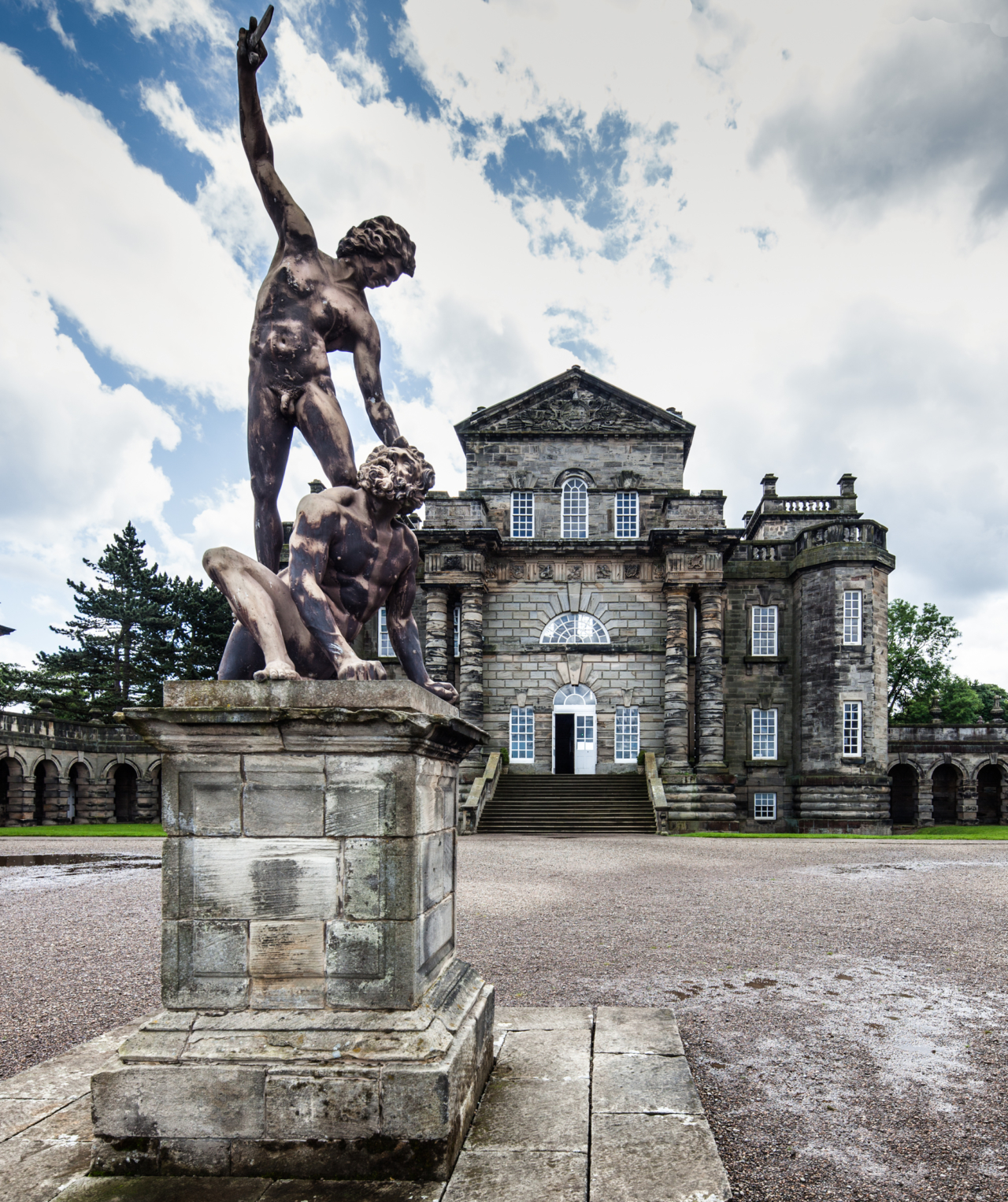
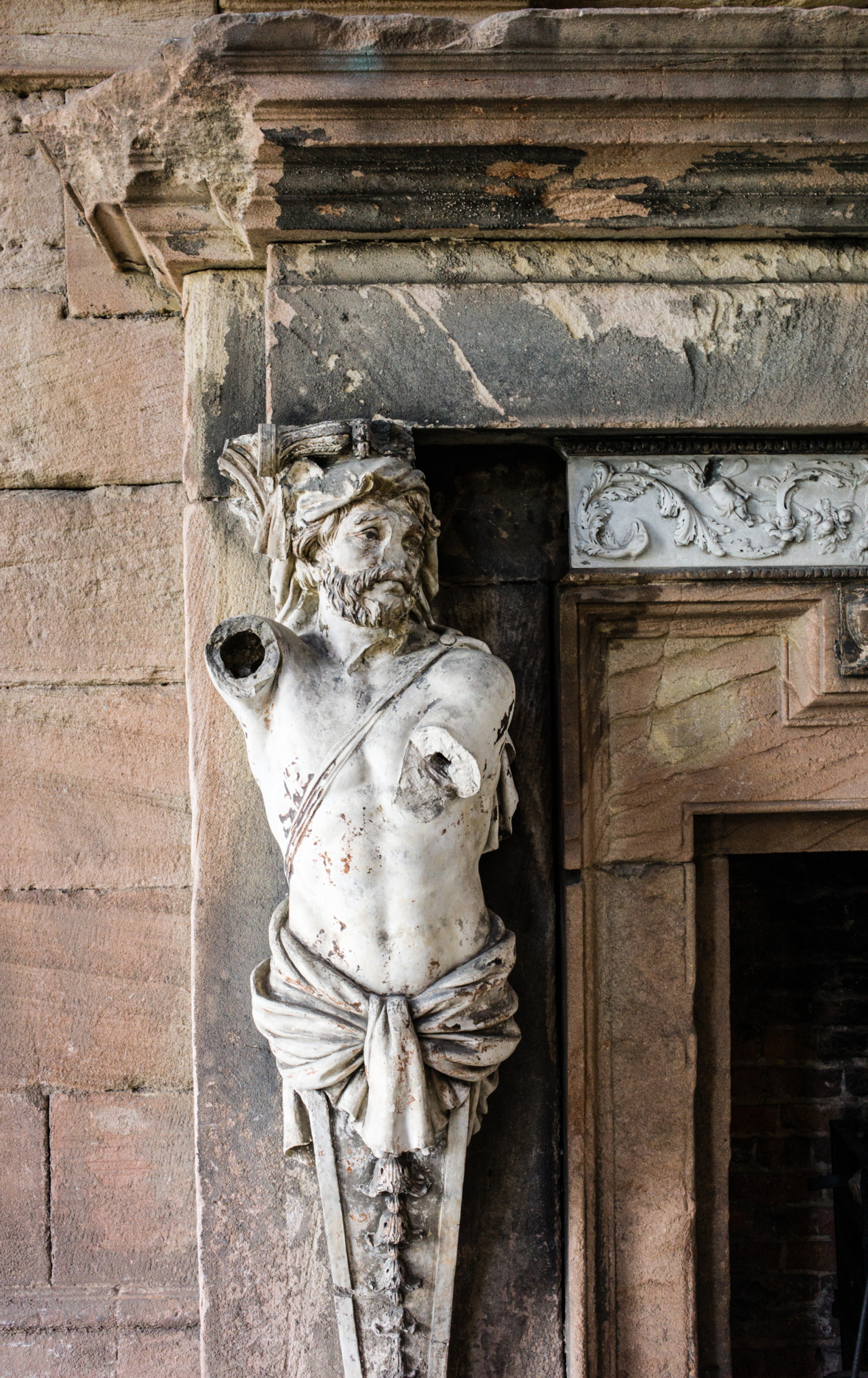
In the early 1700s Admiral George Delaval, wealthy from a career in the Royal Navy, diplomatic service and from overseas investments, bought his old family estate from an impoverished cousin. He hired Sir John Vanbrugh, playwright, architect, member of the Kit-Cat Club, to rebuild the house. Seaton Delaval Hall is now considered a paradigm of Vanbrugh’s English baroque, one of the great country homes of England – precious heritage.
Most of the house was abandoned after a great fire in 1822 destroyed the interior of the central block, the corps de logis. In the 1980s a titled member of the family moved back into residence. In 2009 the National Trust [Link] raised £6.3 million to buy the house and gardens from him and open them to the public.
The story is unsurprising. Global trade between the 17th and 19th centuries, along with early adoption of industrial capitalism, brought empire and wealth to Britain. Much of this was invested in property, buildings, and in collections of fine and decorative arts. In the early nineteenth century the formal abolition of slavery was accompanied by Parliament’s agreement to deliver financial compensation for the loss of ‘slave property’. Even more spending on private buildings and the arts followed.
The figures are staggering. Never mind the direct profit made from empire and colony, the Slavery Abolition Act (1833) made provision for £20 million to be paid in compensation to slave owners. This was 40 per cent of the British government’s total annual expenditure at the time, about £100 billion today. The debt incurred in this massive transfer of public wealth to private slave owners was only paid off in 2015.
The connections between the influx of wealth from colonialism and slavery and the Trust’s portfolio of 500 historic properties is all too evident in the report:
Here is what the report says about Seaton Delaval Hall.
Admiral George Delaval (c.1668–1723) purchased stock in the South Sea Company in 1711, the year of its formation, and maintained his shares until at least 1720.
Sir John Hussey Delaval, Baronet (1728–1808), assumed a leading role in his family’s estates, and in 1766 sought advice on how to set up and manage a sugar plantation from Joseph Manesty (d.1771/2), a Liverpool slave-trader. Manesty’s detailed response includes, for example, lists of necessary tools and equipment, appropriate furnishings for the ‘Masters House’ and the number of people required, including ‘3 white servants … 10 Negro Men … 10 negro women’. It is not known whether Sir John Delaval followed Manesty’s advice, but he did obtain an allotment of 20,000 acres in East Florida in 1766. He held this land for at least five years, but a letter of 1771 indicates he was looking to sell.
The actor, soldier and MP Sir Francis Blake Delaval (1727–71), the great-nephew of George Delaval, had an illegitimate son, Lieutenant-General Francis Delaval (c.1752–1824), who was Governor of St Lucia and a resident of Martinique. His will included an instruction to bequeath an enslaved person in his ownership to ‘my friend’ Mr Alexander (?) Glennie.
National Trust, Interim Report, page 93.
Some of the responses to the report are disturbing and have become distressingly familiar (The Spectator – [Link]). It is held that liberal intellectuals (the authors of the report) are undermining national treasures with stories that belong to the past and don’t need to be voiced. Don’t lecture us, says The Independent, we just want to admire the furniture – [Link].
A group of Members of Parliament even threatened the National Trust with removal of public funding, their charge being that the leadership has been captured by “elitist bourgeois liberals … coloured by cultural Marxist dogma, colloquially known as the ‘woke agenda’” [Link].
Here is how Peter Mitchell expresses it in The Guardian – [Link]:
… the dispute also stirs darker feelings. As Nesrine Malik wrote earlier this year, the narrative that the culture of these islands is being stolen from the (implicitly white, native and straight) majority is now disturbingly commonplace in our politics. Suggestions that demographic change – orchestrated by the treachery or connivance of a “cosmopolitan” liberal elite – threaten British identity, or indeed the entirety of western civilisation, have been around since the late 19th century, but they have become ever more insistent in recent years, and have characterised much of the commentary surrounding Black Lives Matter and the statue protests of the summer.
I grew up in a colliery port in the border county of Northumberland in the UK. Scattered through the many colliery villages were the grand homes of the owners. Down the road was the grandest country house of them all, Seaton Delaval Hall. It was occasionally open to the public when you could go look at the fine paintings and porcelain, and regret that the great hall was but an empty shell after the fire so long ago. In the 1970s I went with my parents to a mock medieval banquet in one of the wings of the house. My mother and father loved the theatricals, and so did I; it was a night to remember.
What are we to do with such experiences?
What is needed is more of what we read in this report. Research into the history of place and collection that we might understand context, understand that our experiences today are often founded on contradiction. Research that delivers deep knowledge, intimate knowledge of places and things, their contexts, associations, entanglements in matters so specific and yet also often so extensive, so global. A fine piece of mahogany furniture, a chocolate pot: distant relations of profit and property in small things so often forgotten.
See my comments on Alan Bennett’s satirical quotidian and the National Trust – [Link]
A name for such intimate specific knowing in and through context and association is connoisseurship. The concept and all that it entails has been too often associated with the specialized expertise that offers authorized valuations of property in the world of art and antiques markets. We should reclaim the concept, ironically.
I will have more to say about connoisseurship in later posts.
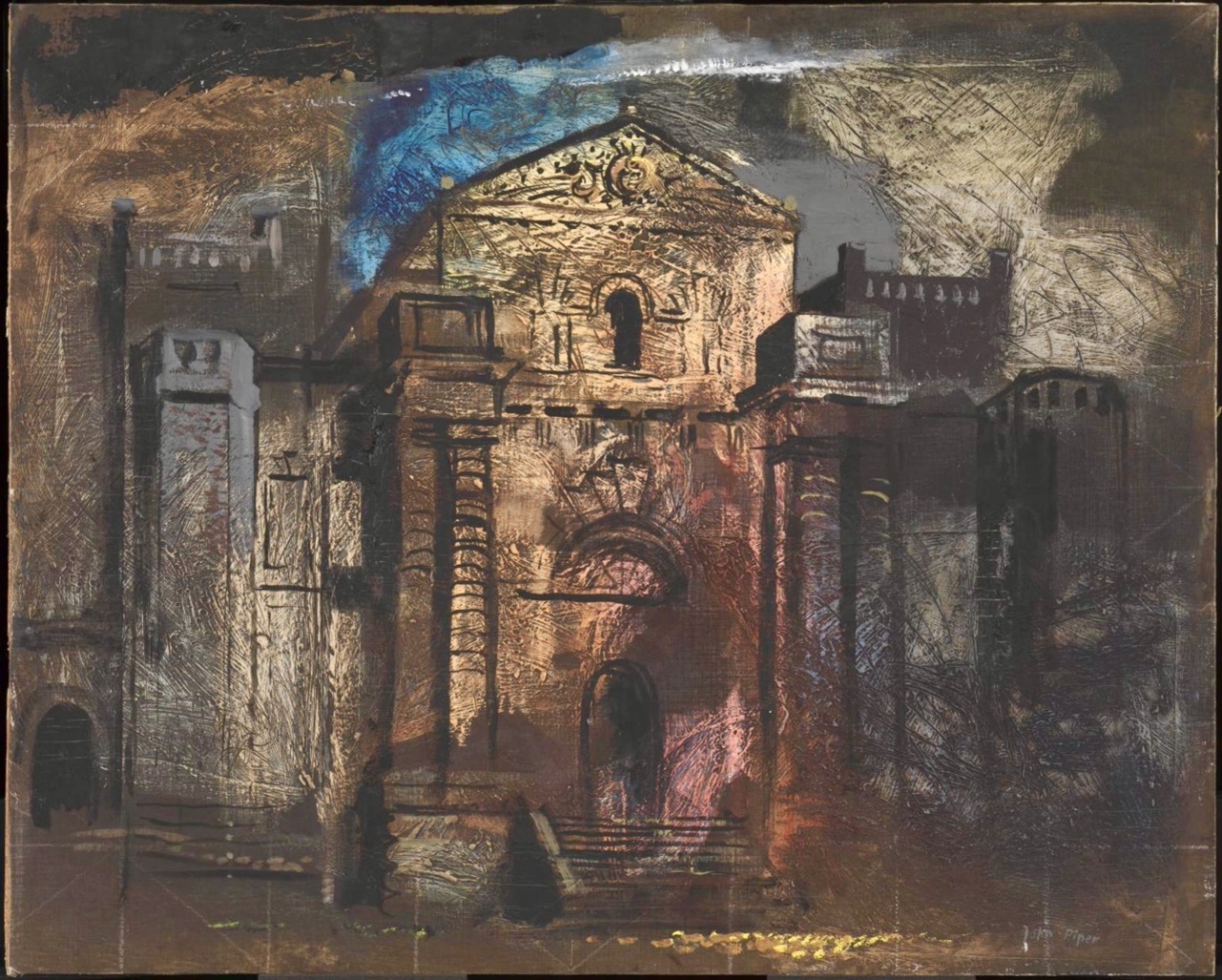

Another contribution to an ongoing discussion at Stanford around the future of Classics and the Humanities [Link].
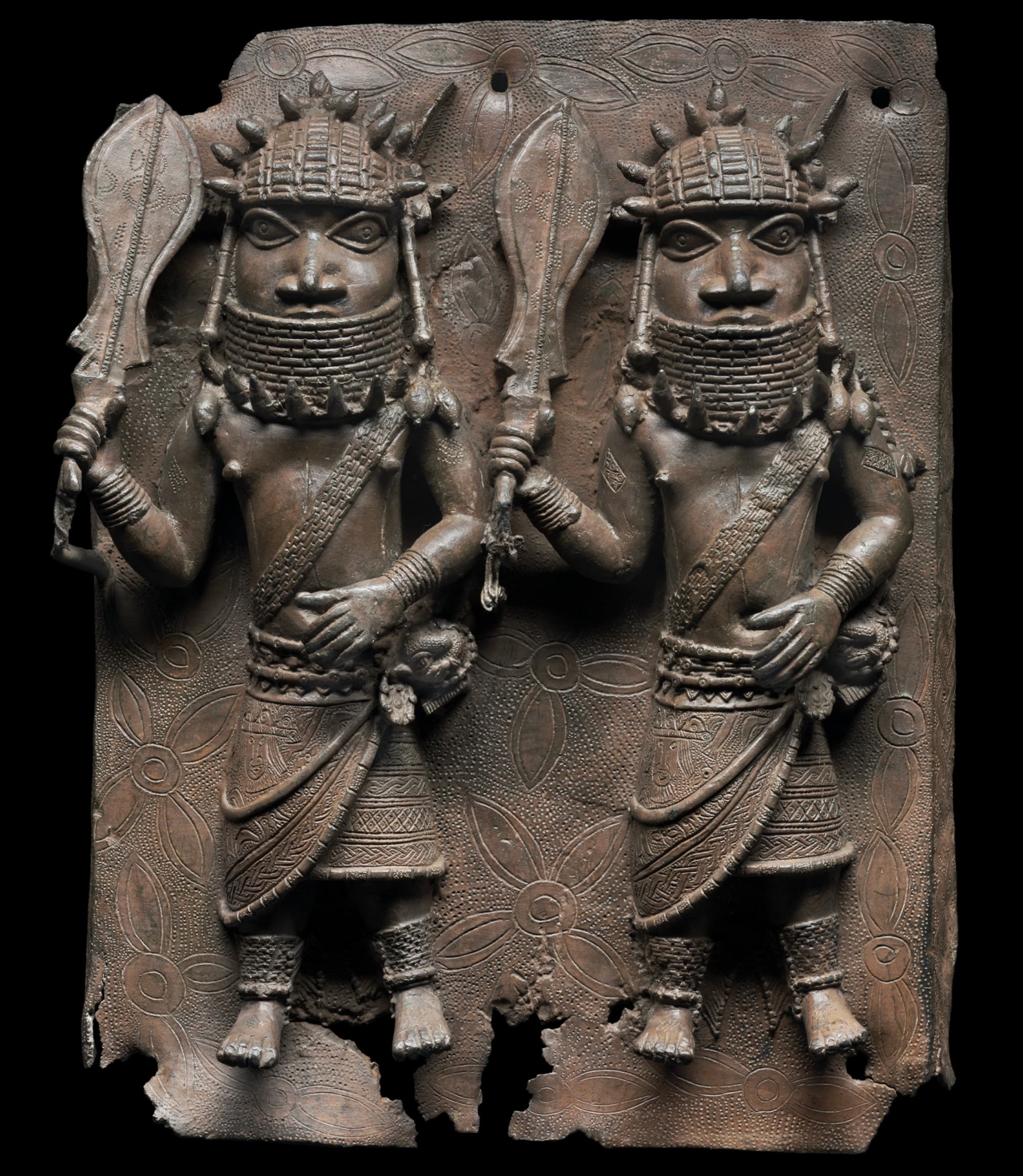
In 1897 a British military force burned and looted, murdered their way through the capital city of the kingdom of Benin in west Africa. It was another dreadful act aimed at securing political and economic control across the continent, a culmination of centuries of exploitation that had included the Atlantic slave trade. Thousands died. Thousands of artifacts, brass plaques and sculptures, ivories and art pieces, were carried off, were sold, and are now to be found scattered through private collections and museums across the world, including the British Museum in London and the Metropolitan Museum of Art in New York.
In recent posts I have been reflecting upon ways that we might account for and act against such appropriations of the past, sometimes violent, usually ideological. These artifacts are critical past presences in contemporary cultural politics, implicated in concepts of cultural heritage. I have been posing a question now often heard –
How might we reckon with colonial and imperial legacies in museums, in archaeological and anthropological works, in popular culture?
And particularly in the study of Graeco-Roman antiquity.
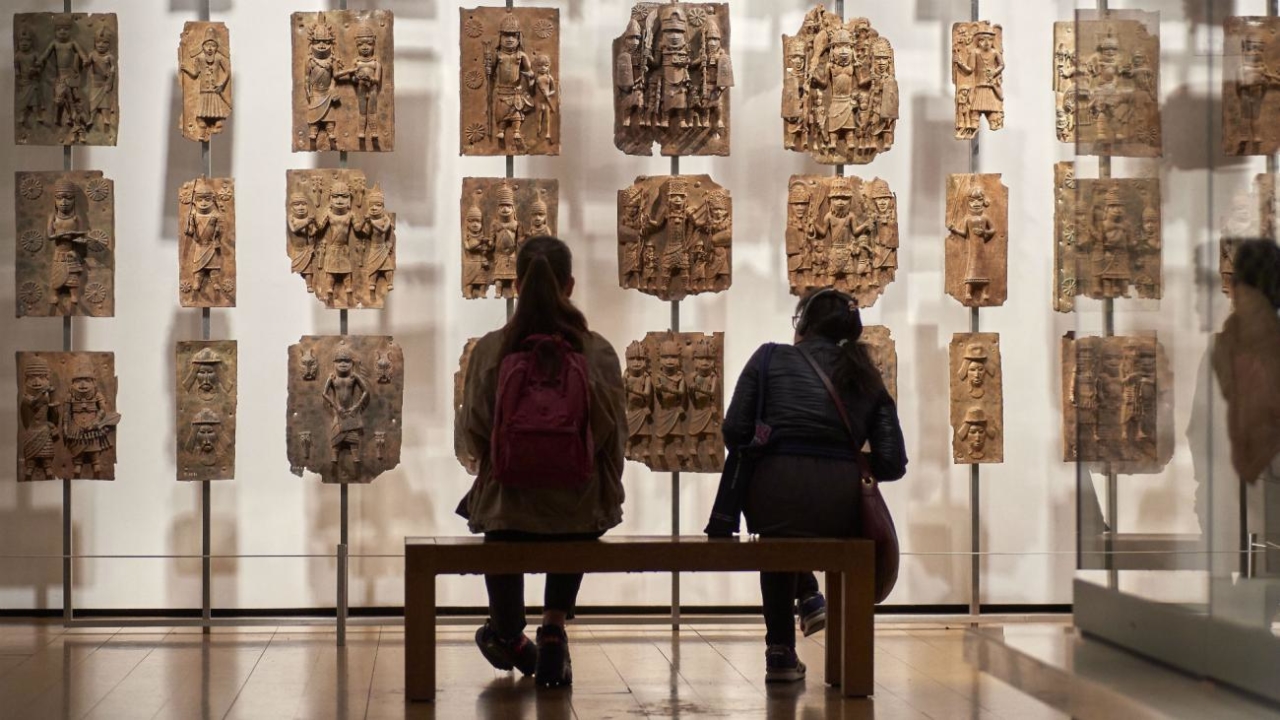
A century after the looting, in 1997, Bernie Grant, black Labour Party Member of Parliament for Tottenham in London, drew attention again to the injustice and called for the Benin artifacts to be sent back [Link]. The matter was well covered in the press (Richard Gott in The Independent February 22, 1997 [Link]). I recall it was by then part of a long-running campaign for repatriation of museum holdings. Anthony Snodgrass, Professor of Classical Archaeology at Cambridge, for example, has championed since the 1970s the return of the Parthenon marbles from the British Museum to Greece.
In the same year, 1997, Sven Lindqvist’s book, Exterminate all the Brutes [Link], dug into this history of colonial oppression and its cultural ramifications. I was very much taken by how he showed the ways that Joseph Conrad had made manifest the colonial horrors in this heart of darkness.
Twenty years and more later, not much has changed. In a year so marked by global protest against enduring racial inequities and injustice, Dan Hicks, a curator at one of the museums that holds Benin artifacts, the Pitt Rivers in Oxford UK, has voiced his frustration. His book, The Brutish Museums (October 2020), turns Lindqvist’s title, a reference to colonial attitudes towards Africa, against the institutions that he sees as failing in efforts to decolonize their collections.
How does Dan Hicks answer this question?
With a simple call to action, Hicks says –
Confess and give the stuff back!
This call is aimed at professional curators like himself. He admits his book is “self-consciously anglocentric” (page xiii). To this end he stays close to home, his museum in Oxford, and makes the case that the work of the curator needs now to be what he calls necrography (after Achille Mbembe). This involves documenting the acts of looting, tracking the histories of artifacts in a kind of archaeology of museum collections, so that they might be returned whence they were taken. In so doing, curators of anthropology museums will be acting as the social conscience of their communities, reminding the rest of us of blame and culpability.
I actually don’t want Dan Hicks as my social conscience. Let me explain.
No one will doubt the horrors of colonial imperialism and the implication of academic interests, nor that redress and account, reconciliation and redemption are needed. Is Hicks offering anything new?
His anger and calls for the dismantling of collections are not new, as I have mentioned. So what about the reasoning he uses, the case he makes for curation as necrology – a science of death?
Hicks is adamant that this is a new turn, founded in his own fresh theory of museological material culture. The book does not actually delve very deeply at all into such foundations. Don’t expect to find a reasoned case for necrography in this book. Instead Hicks offers gestures of critique rooted in his personal and righteous indignation. He claims to have worked out the answer to the question of decolonizing museum collection. Without argument he trashes anthropological concepts of the unalienated gift after Mauss in the 30s (what about theft?, he asks). He trashes new materialist approaches to artifacts and their embeddedness in experience, and concepts of agency that extend beyond human subjectivity (outmoded tropes, he claims). He has no time for museum exhibitions that might explore the vitality of artifacts and their implication in the richness of life, and in the complexity of, yes, social and cultural conflict, including the legacies of colonial imperialism.
So is the book to be read as an urgent and appropriate rhetorical gesture, and not so much as a reasoned argument? I suggest we should perhaps be generous and read the book in just this way – as a gesture of complaint. The involvement of collection in colonial violence is a critically important matter. We might forgive Hicks for not substantiating his case.
But I also suggest that we cannot ignore the foundations upon which Hicks builds this case. I suggest Hicks actually perpetuates the mindset and methodology that lie behind the practices of colonial collection that he wishes to eradicate.
Hicks is only concerned about property. The book outlines in great detail the circumstances surrounding the violent seizure of thousands of artifacts that have been incorporated into institutionally authorized accounts of the cultural superiority of imperial European powers. The book’s focus is almost entirely upon goods and property – precious things. And violence.
But what of the makers of the stolen goods, their lives? What of the people of the kingdom of Benin, then, and now, further back in history beyond 1897, and in the future? These questions hardly concern Hicks. There is nothing of the people of Benin in his book.
Respect for the lives of those murdered, attention to the destruction of community and its reconstitution, surely involves an understanding of their creativity and labor, the human wealth, rather than just material goods in themselves. For without such an understanding we are in the same mindset as colonial thieves. Hicks is saying “our forebears took these things that are precious to you, and now we want to give them back to atone for the sin”.
Such an understanding advocated by Hicks associates senses of identity and the legacies of cultural heritage with property. Is this what Hick’s necrology involves – documenting the provenance of property, transfers of ownership? This would indeed be what he promotes – a necrography – documenting dead things. Dead – because they are alienated, separated from the vital lifeworlds to which they belong.
Hicks is dealing, quite explicitly, in the death of human lifeworlds.
I suggest we might focus on life.
Hicks makes no apologies for adopting the voice of the professional academic curator. Indeed he celebrates the (potential) agency of the role – the anthropologist as hero. We are assured that once museum curators have become necrologists, dealers in death, as he has, then they will have become society’s conscience – heroes.
We might well ask if this is at all realistic, feasible, practical. We might doubt that this is the way institutions such as museums change (see my comments about change management – [Link]). How many are going to heed Hicks’s heroic monologue? Are curators going to abandon a century of anthropological theory in favor of a few pages of a “necrological” manifesto penned by Hicks? It doesn’t look like the Pitt Rivers Museum is rushing to follow his advice, and that’s the institution where he holds a senior position. And even if the museum was dismantling its collections on necrological grounds, would you wish to have such an all-knowing authoritative voice as your (patriarchal) collective conscience?
How different is this voice to those that we have heard so often before? There have been many anthropologists before Hicks who have also claimed heroic insight into the fundamentals of their practice, into history and the nature of humanity. Included, of course, are those who collected Benin artifacts for their ethnological collections.
Perhaps Hicks aims simply to make a clear call to action. Elsewhere he is quoted as holding that restitution is “fundamentally about listening to voices from the global south, Africa and African descendants in the UK and elsewhere” [Link].
It is crucial that we get involved in debates such as this, even when the likes of Hicks adopt a posture of one-sided monologue. We must not be put off, but embrace his enthusiasm for necessary change, albeit through dialogue and deeper understanding.
So I end with some other voices, some links to dialogues in and around these difficult matters of legacy and injustice.
A report from the BBC (June 29 2020) offers more views from the British Museum – [Link] .
A report in the New York Times (January 2020) features other voices, Steve Dunstone and Timothy Awoyemi – [Link]
Muesums and Heritage Advisor – [Link]
Above all I recommend Sathnam Sanghera’s subtle and powerful Empireland: How Imperialism Has Shaped Modern Britain (2021) – [Link]. I suggest Sathnam’s voice is far more authentic that that adopted by Dan Hicks, Professor and Curator at Oxford University.

Four new works from Anselm Kiefer go on exhibition at Gagosian Le Bourget, Paris, February 7.
Marvelous manifestations of the archaeological imagination – [Link]
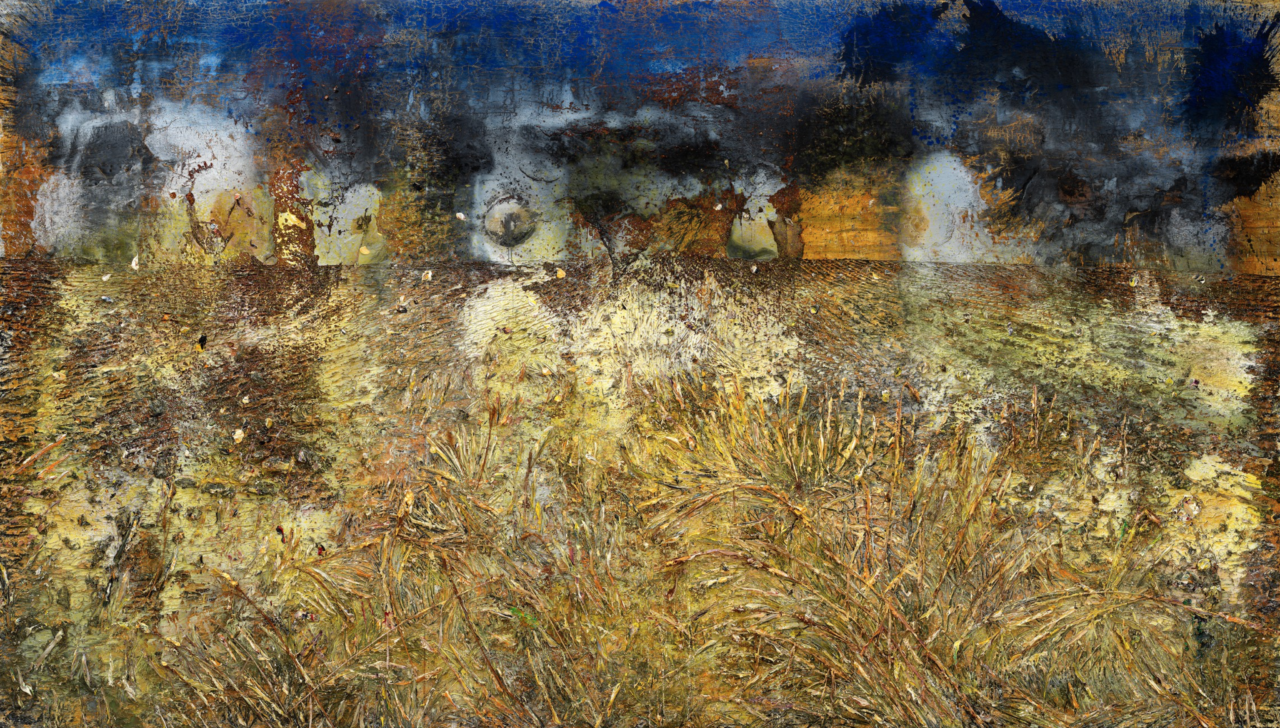
What interests me is the transformation, not the monument. I don’t construct ruins, but I feel ruins are moments when things show themselves. A ruin is not a catastrophe. It is the moment when things can start again.
The pictures become interesting when the subject matter is no more than an excuse, when the artist remembers the struggle, when he sets forth his own world in conflict with the self-secluding earth.
—Anselm Kiefer
Gagosian is pleased to present Field of the Cloth of Gold, an exhibition of four monumental new paintings by Anselm Kiefer.
The tension between beauty and terror, alongside the inextricable relationship between history and place, has animated Kiefer’s work since the 1970s. Drawing on the literature of cultural memory—including poetry, the Old and New Testaments, and the Kabbalah—Kiefer gives material presence to myths and metaphors. He infuses the medium of paint with startling and unconventional gestures and objects, juxtaposing it with organic and abject materials such as straw, sand, charcoal, ash, and mud. Kiefer asserts himself as an iconoclast; his paintings undergo various processes—such as being cut, burned, buried, exposed to natural elements, splashed with acid, or poured over with lead—so as to be made anew. These strategies, along with the use of materials such as lead, concrete, glass, fabric, tree roots, or burned books, create a symbolic resonance, making palpable both the movement and destruction of human life and the persistence of the lyrical and the divine.
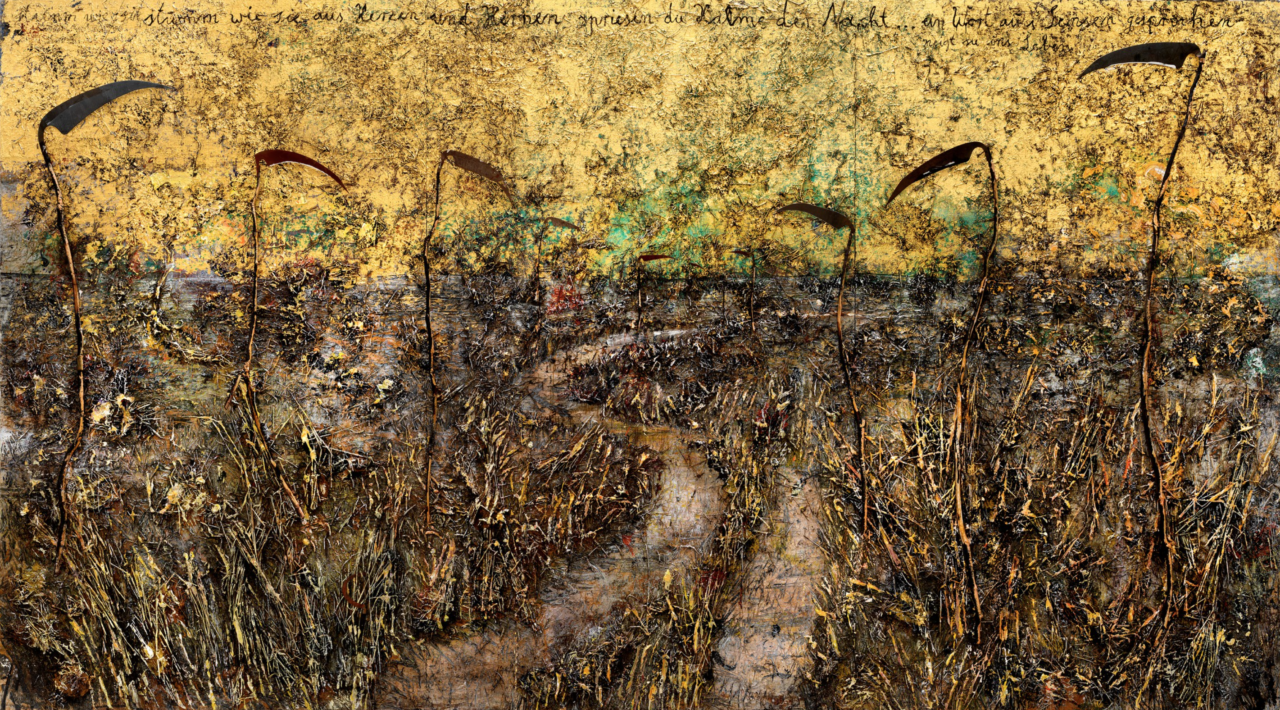
The exhibition’s title refers to the historic peace summit between King Henry VIII and King Francis I that took place five hundred years ago in a field in what is now Pas-de-Calais, France. The conference, centered around a strategic alliance between England and France, had the goal of outlawing war between Christian nations. The alliance was considered a key event in shaping Europe’s geopolitics—until it dissolved and war broke out, a year later. While Kiefer did not begin making these works with this event or title in mind, the connection became apparent and synchronous after their completion. As he stated in a recent interview, “the title is often not the explanation of the picture,” but is rather “an allusion.” History is one of the materials he uses and synthesizes in his work, “like clay for the sculptor or color for the painter.”
Completed over the last two years, these works predate the COVID-19 pandemic, the ripple-effect crisis it created, and the international and cross-cultural relationships it has reconfigured. While history has been fractured and unpredictable since the Field of the Cloth of Gold conference, our cultural memory holds the violent unpredictability of human relations on a continuum. The layered and visceral character of these paintings, whose scale almost matches the landscapes they depict, evokes the surging capriciousness of European history and the effects and aftermaths of war. As in The Morgenthau Plan series of 2012, Kiefer affixes other elements to the surfaces of these paintings, from plant matter to industrial material, building a third dimension onto the painted canvas. Here the field of history is transfigured into a field of gold under a dark sky.
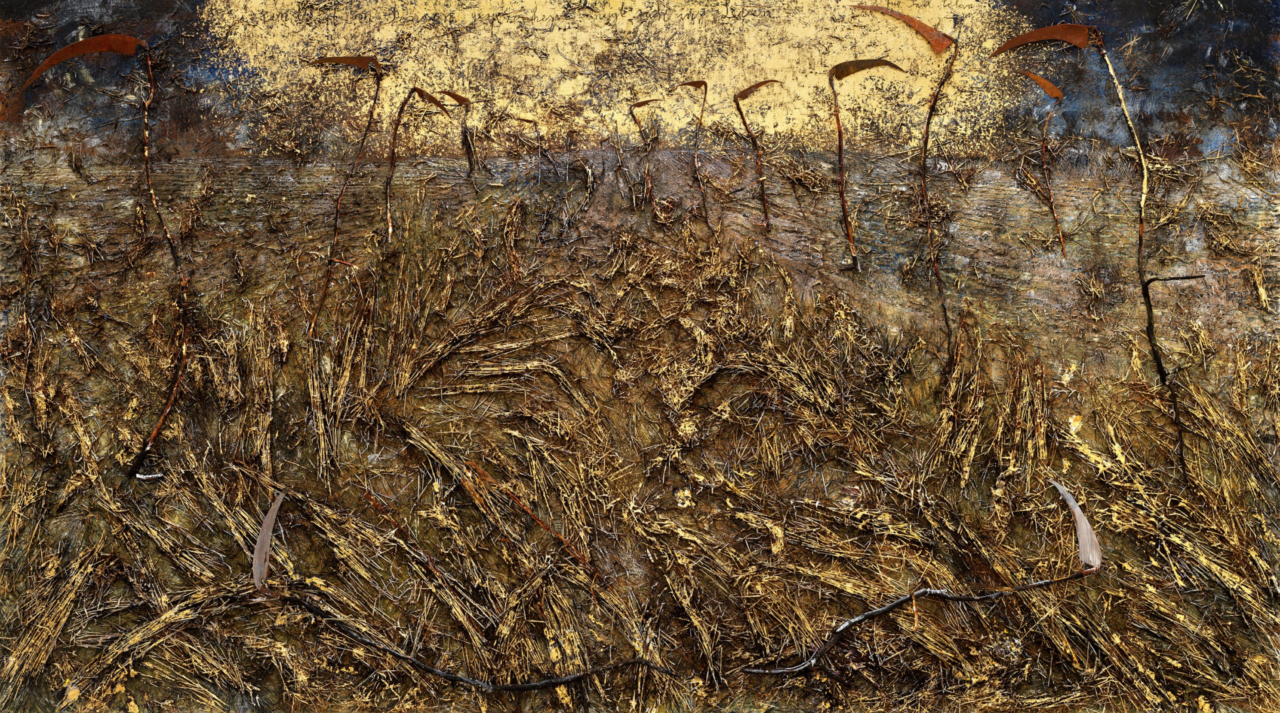
As is customary in Kiefer’s work, each painting’s title and symbols contain a rich literary and historical set of references. Sichelschnitt (Sickle Cut) (2019) refers to the Manstein Plan (Sichelschnittplan), a war plan devised by the German Army during the Battle of France in 1940, while Beilzeit—Wolfszeit(Axe-Age—Wolf-Age) (2019) nods to “Völuspá (Prophecy of the Seeress),” the first poem of the Poetic Edda of Old Norse mythology. Verse 45 of this poem is translated as “Axe-time, sword-time, | shields are sundered, / Wind-time, wolf-time, | ere the world falls.” Ein Wort von Sensen gesprochen (One Word Spoken by Scythes) (2019–20) evokes the poem “From Hearts and Brains” by Paul Celan, whose poetry has been a point of reference for Kiefer for decades. Celan’s verse reads, “and a word, spoken by scythes / bends them into life.”
[Link] – Anselm Kiefer: Field of the Cloth of Gold, Le Bourget, February 7–March 28, 2021 | Gagosian