Mike Pearson – theatre/archaeology

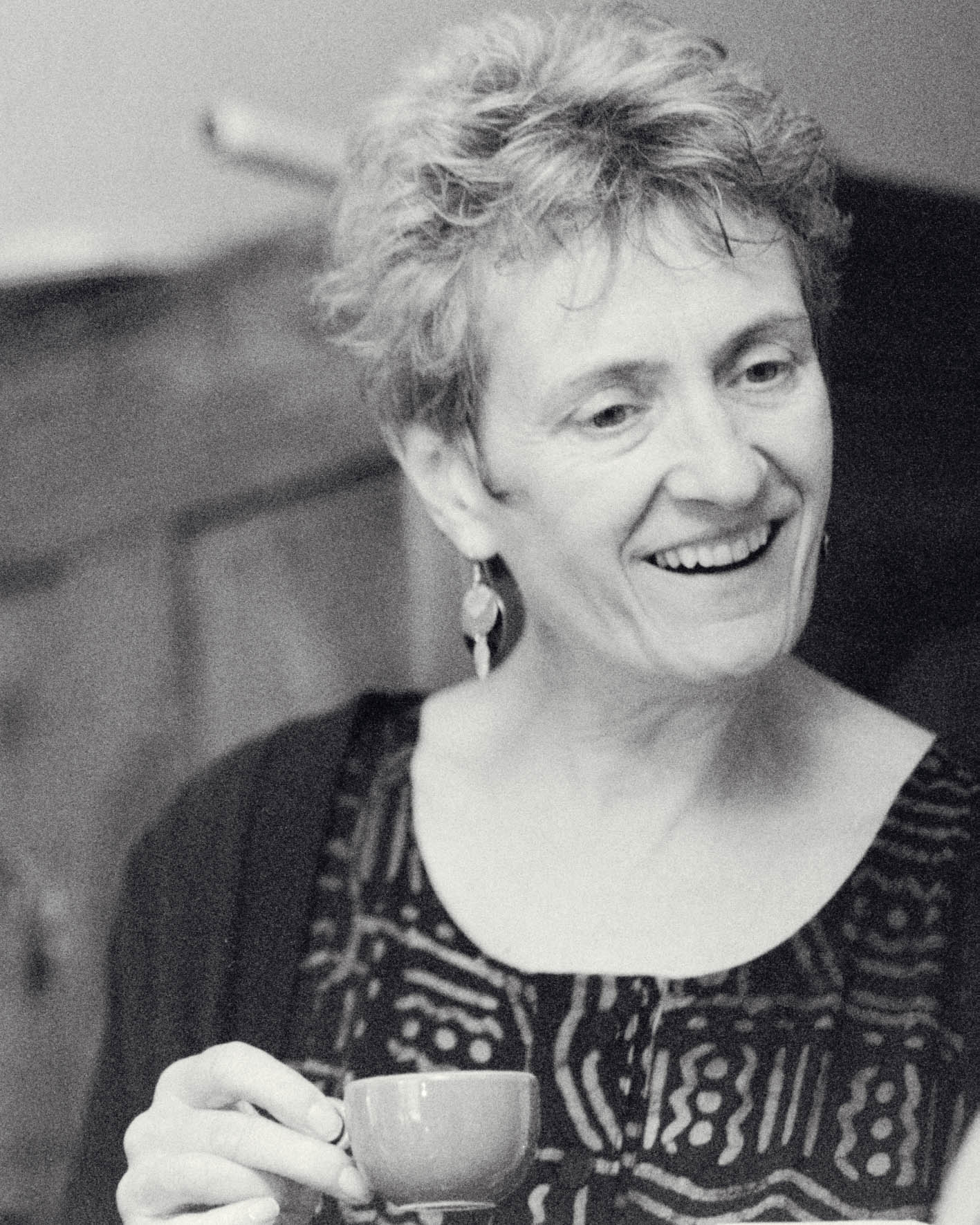
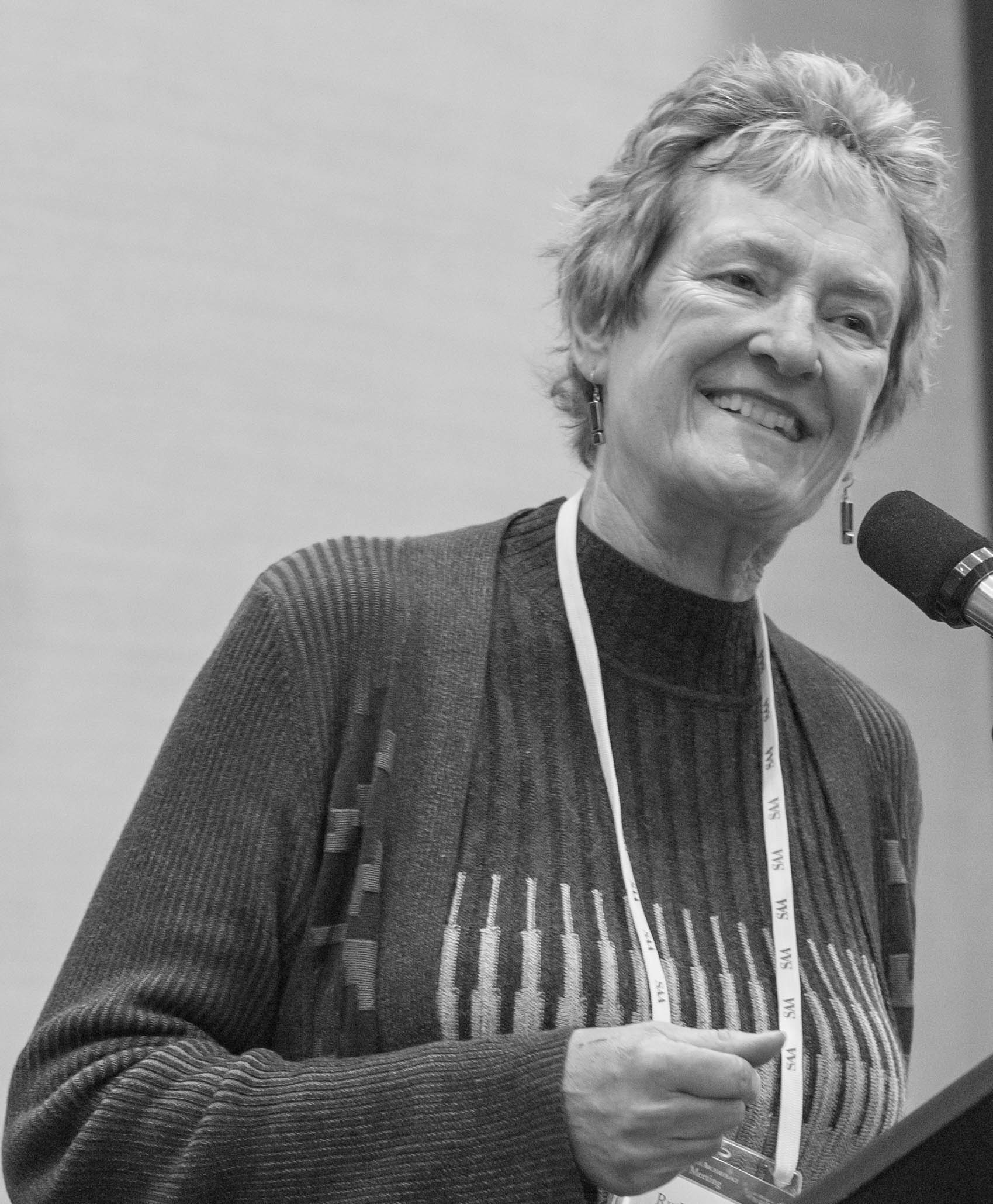
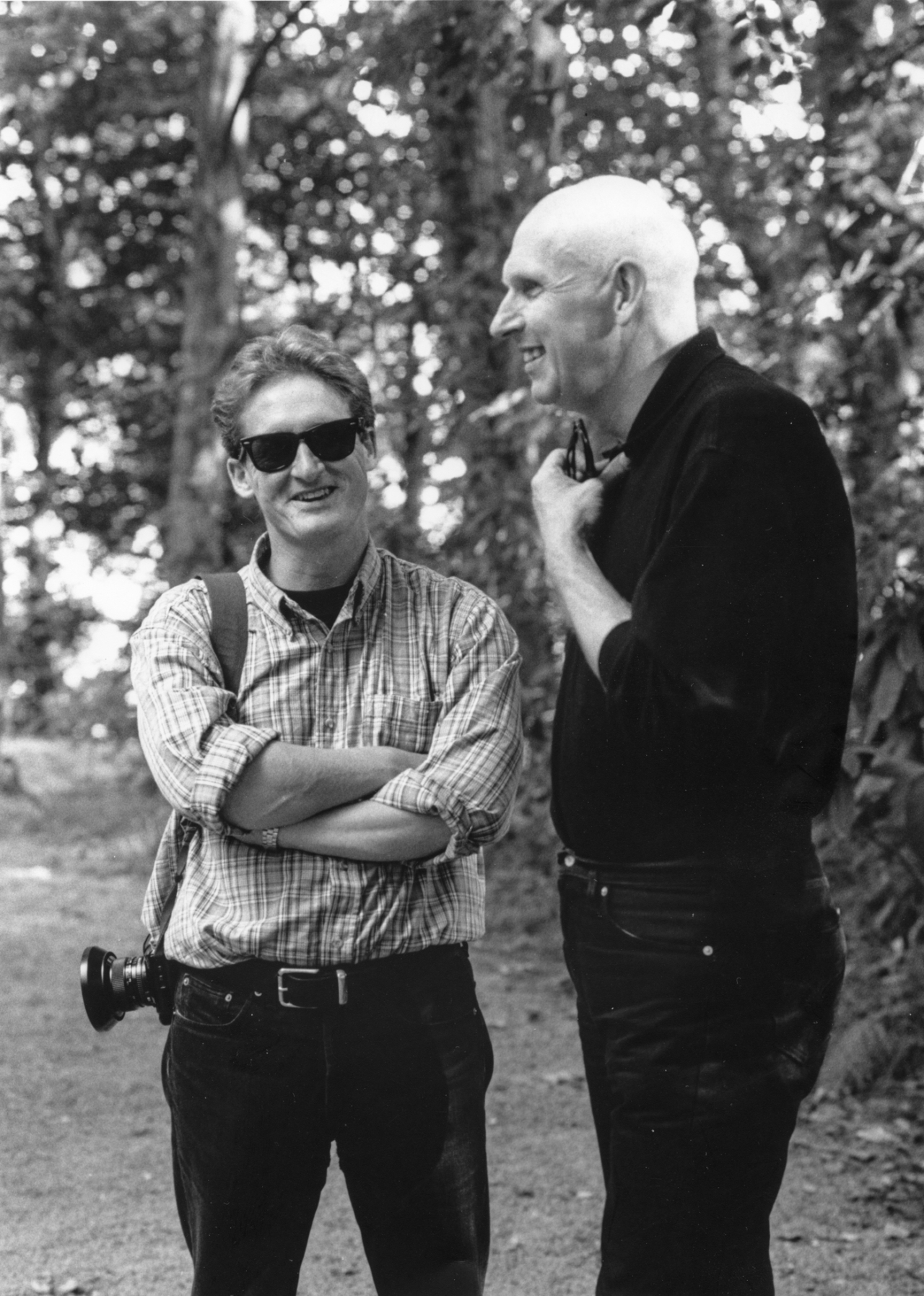
Mike Pearson died last week.
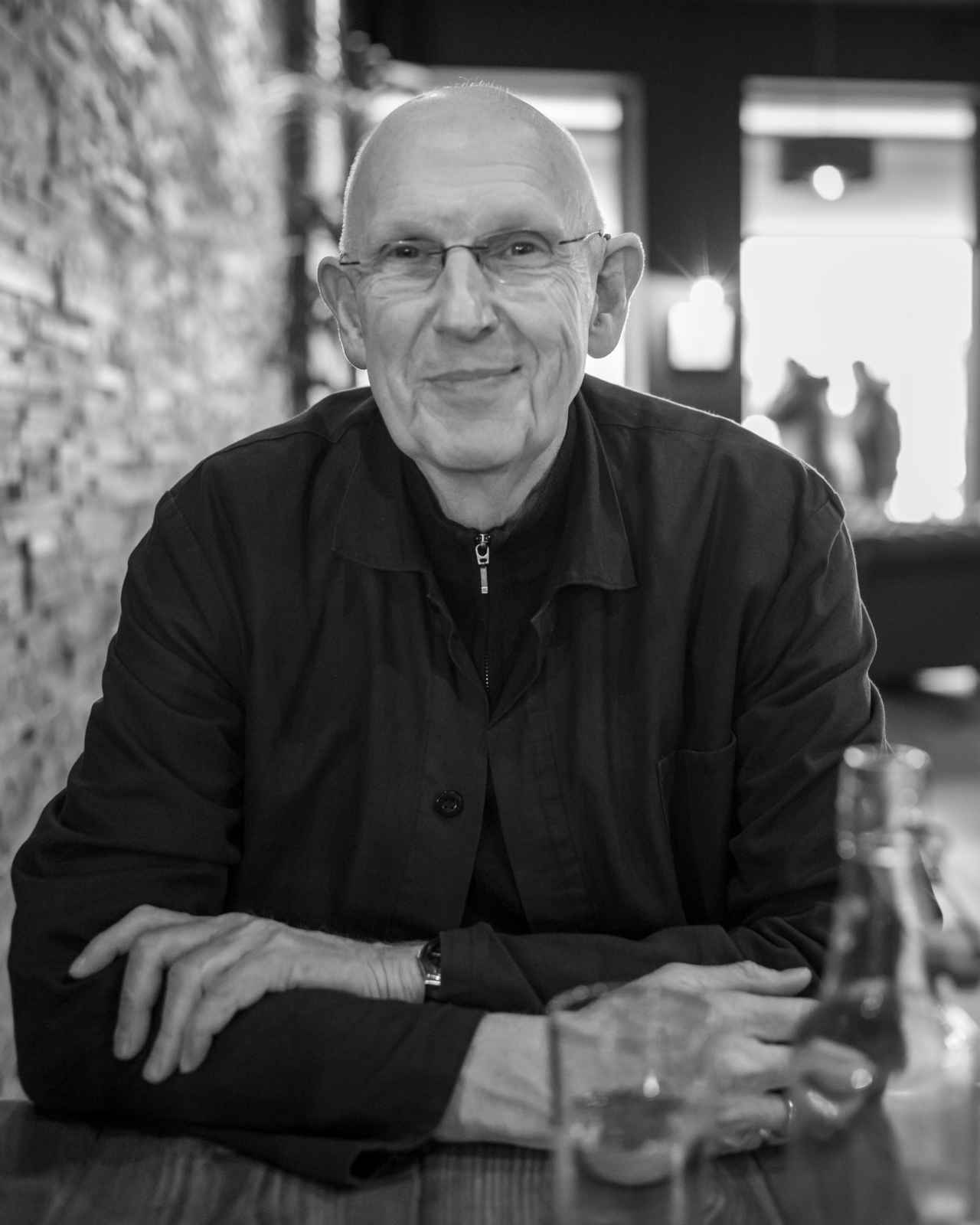
He was a performance artist, theatre director, theorist and philosopher, scholar and teacher. And, as composer John Hardy said, Mike collaborated and connected – visual design, architectural stagecraft, poets, playwrights, composers, experimental jazz musicians, dancers, disability & gender specialists, comics, community art conveners, museum curators, traditional Japanese theatre performers, Patagonian farmers, Welsh folk historians, wild creatures and their bones [Link]. And, I add to these, archaeologists and geographers, performance theorists and anthropologists – the list could go on.
Mike has been a key figure in Welsh theatre, in European theatre, in physical and experimental devised performance. There have already been many wonderful tributes to his life and qualities, to his work in theatre, to his generous humanity.
I want to add to these with a personal reflection upon the extraordinary intellectual scope, range and depth of his art.
I find this very difficult. It’s not possible to disentangle our collaboration, and I am concerned to witness his unique voice. To acknowledge also the enormous inspiration and support of his network of friends and colleagues. So I apologize in advance if I am not sensitive enough, or if I could have spoken more of those who have given us so much support.
In some ways what follows is a kind of summary of what Mike and I called theatre/archaeology, a concept, set of projects, focus of conversation over 30 years. I have found it appropriate to offer a good deal of detail to explain how theatre/archaeology connected with Mike’s performances, less how it relates to my archaeology. I apologize if the reader finds this post rather long. I have tried to break it into clear and coherent sections.
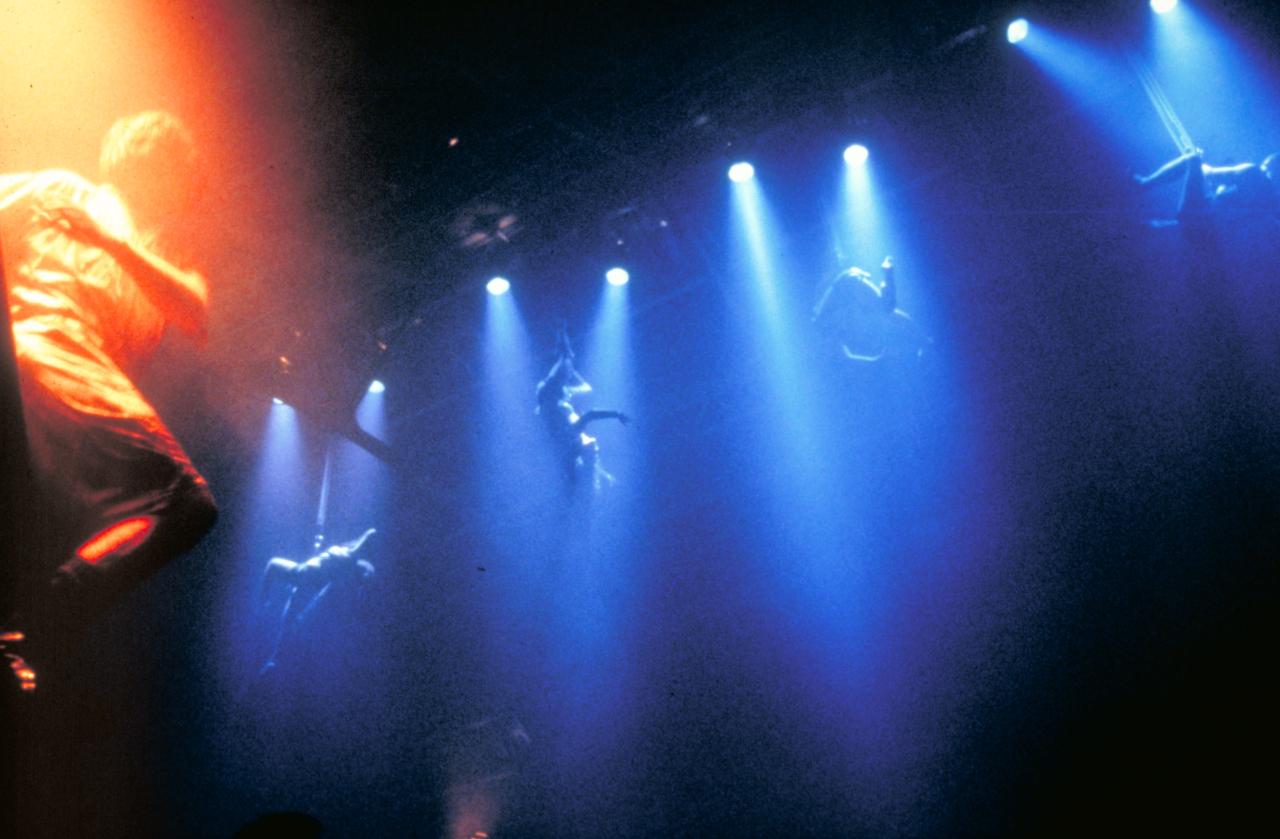
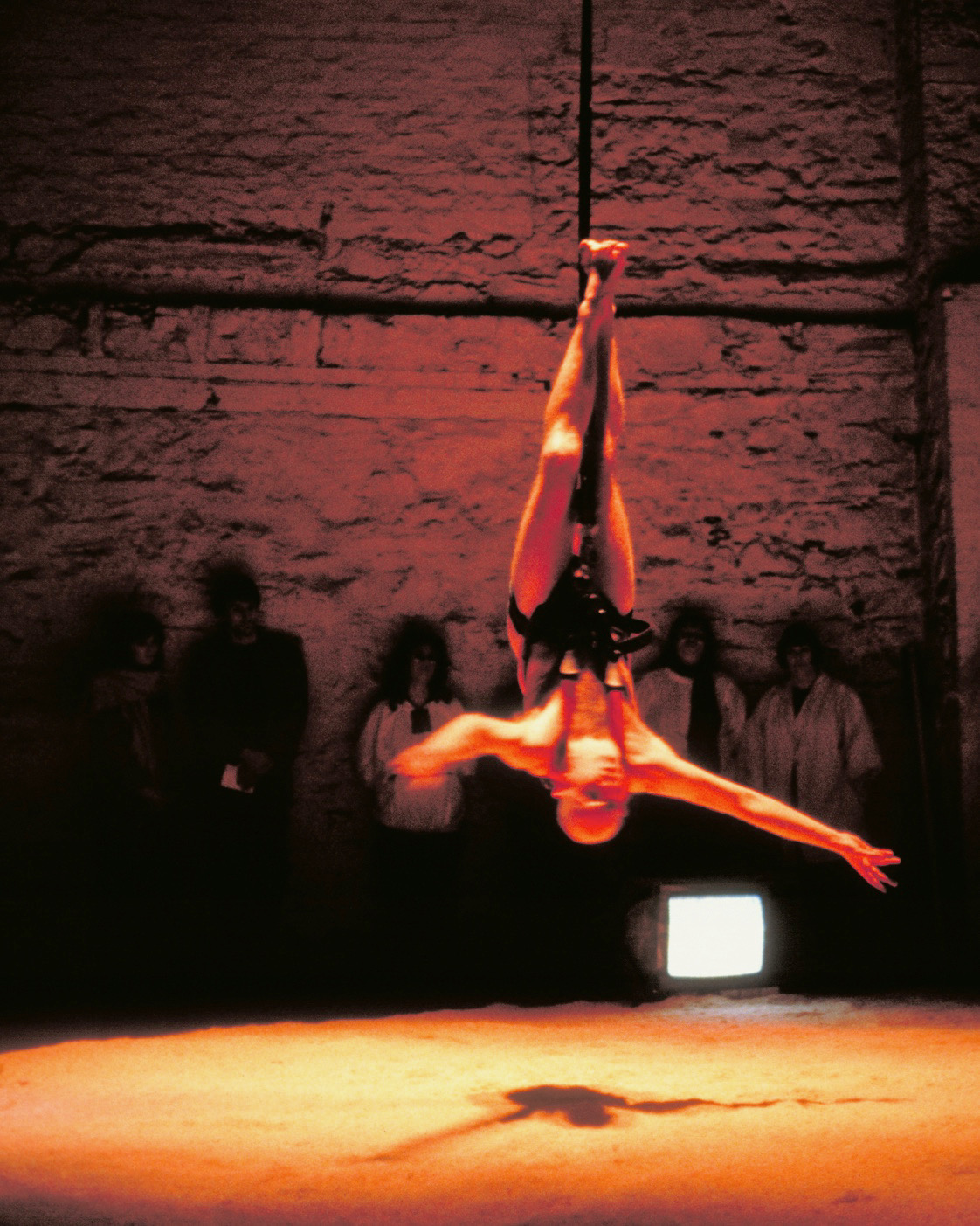
It was more than 30 years ago that Mike visited my archaeology lab in Lampeter, a small rural campus of the University of Wales. He brought with him a video to show me. It was called Pax TV – an experimental work from his theatre company Brith Gof. Layered frames and scanning cameras offered windows on a Welsh farm house and the woman who lived and died there. In a mélange of memory, media, and event (her death), Mike appeared as an angel, as Hermes.
I was puzzled – why was Mike showing me this? I did not expect his reply. He said that this video was actually about archaeology – the kind of archaeology I had described in a recent book of mine (Experiencing the Past, 1991). I didn’t know what he meant, and so started the conversation and collaboration between us that has been interrupted, that has taken such a sad turn with his death last week.
Mike was, above all for me, an archaeologist, one who works with remains. Let me present a menu of concepts, techniques, dispositions, and standpoints that you might find in his great body of work. I make no claim that this is any kind of reasoned systematic account. Mike and I came to call the hybrid, somewhat monstrous focus of our collaboration theatre/archaeology – the re-articulation of remains, of traces and vestiges, as real-time event. Like our conversation, our concepts and practices were in constant motion, adapting and changing. Hybrid, yes, and entangled – this menu is as much about what we learned and shared together as it is about discrete oeuvres or disciplines (and we conceived neither archaeology nor performance studies as primarily disciplines).
We gathered many of our exchanges and collaborations in a number of articles and in the book Theatre/Archaeology (Routledge 2001). Our new book Theatre/Archaeology: Concepts and Practices, was just about finished as Mike passed away. It will be published next year.
orientations – paradigms
archaeology
Archaeology – a disposition towards things, a sensibility, that surpasses its recent manifestation as an academic discipline and as a set of professional and institutional practices associated with museum collection and the management and conservation of ancient sites.
Archaeology is to work with remains (material traces such as ruins, and vestiges such as footprints – material and immaterial presences and absences, pasts-in-the present). And with a view to the future – to work with remains assumes care and concern – for what might have been and what might become.
In such a conception of archaeology Mike and I emphasized the creative work of research and investigation, collection and mediation – the archaeological imagination. We identified three moments or aspects of an archaeological circuit (explicitly referring in this way to archaeology as an energy field). Encounter and engagement: visiting a site, or making an intervention in the way of excavation, for example. Gathering and sorting: collecting artifacts or samples and setting them in some kind of order (or disorder), for example. Mediation and transformation: writing and illustration, conserving and archiving, for example. One should add to these the more generic challenges of project management – finding funding, organizing teams, building institutions, delivering goods such as academic papers or museum exhibitions.
This pragmatic view, that archaeology is what archaeologists do, is grounded in a pragmatist philosophy and sociology of knowledge, that science, for example, is a situated set of loosely related creative and managerial practices that claim to build knowledge.
The implication of such a standpoint is somewhat ironic – that archaeology is not primarily about the past, and science is not primarily about describing reality, though it is often assumed that this is precisely what they are about.
performance
So too with performance and theatre. We conceive these as fields of practice and energetic potential. Performance involves dramaturgy (emplotment, character definition and development, timeline, montage, narratology), scenography (mise-en-scène, props, staging), choreography (arranging and mobilizing bodies of all kinds), mediation and media design (mediaturgy), mix (composition and design of performance works), and project management (the business of production).
Theatre refers to particular and institutionalized modes of delivering performances.
Performativity is a critical concept here, again pragmatist, that directs attention, for example, to how identities are not essential properties of people or things but are established in iterative practices or performances. It’s not who you are that makes you what you do, but what you do makes you who you are, or might become. Performativity is a key to understanding agency – how people are active and creative agents in building their lifeworlds, even though this may be under conditions and constraints over which they have limited or no control.
Just as archaeology is much more than studying remains in order that we may represent the past, so too performance, more specifically theatre, is much much more than staging a dramatic script.
theatre/archaeology
It is not difficult to conceive how archaeology can be understood as performative practice. In visits and encounters, samples and classifications, analysing and conserving, archaeologists pursue plot and setting, engage with audiences and other stakeholders in the performance of research and science. And performance can be so involved in memory practices, the reenactment of scripts, the documentation of events, working with and through remains.
Bring together both and one has the hybrid theatre/archaeology – the rearticulation of remains, traces, vestiges as real-time event. Rearticulation – because we emphasize the creative and iterative processes and practices of making connections. Remains, traces and vestiges involve absences as well as presences that invoke speculative confabulation as well as the likes of forensic analysis. The concept “real-time event” can suggest doings and things done in “the now”. In such a temporal manifold Mike and I include duration (the persistence of some features of experience such as traces and vestiges), place-event (the association of temporal event with location), iteration and return (doing it again), and kairos, the moment of opportunity to act. Such a manifold of processes and relations can be termed actuality – the dynamic percolation of times past, present and future in the ongoing flow of experience.
This concept of theatre/archaeology underpins the works that Mike and I produced together since that meeting in rural west Wales in 1992, and also many more works that we created separately, and not always under the heading of theatre/archaeology.
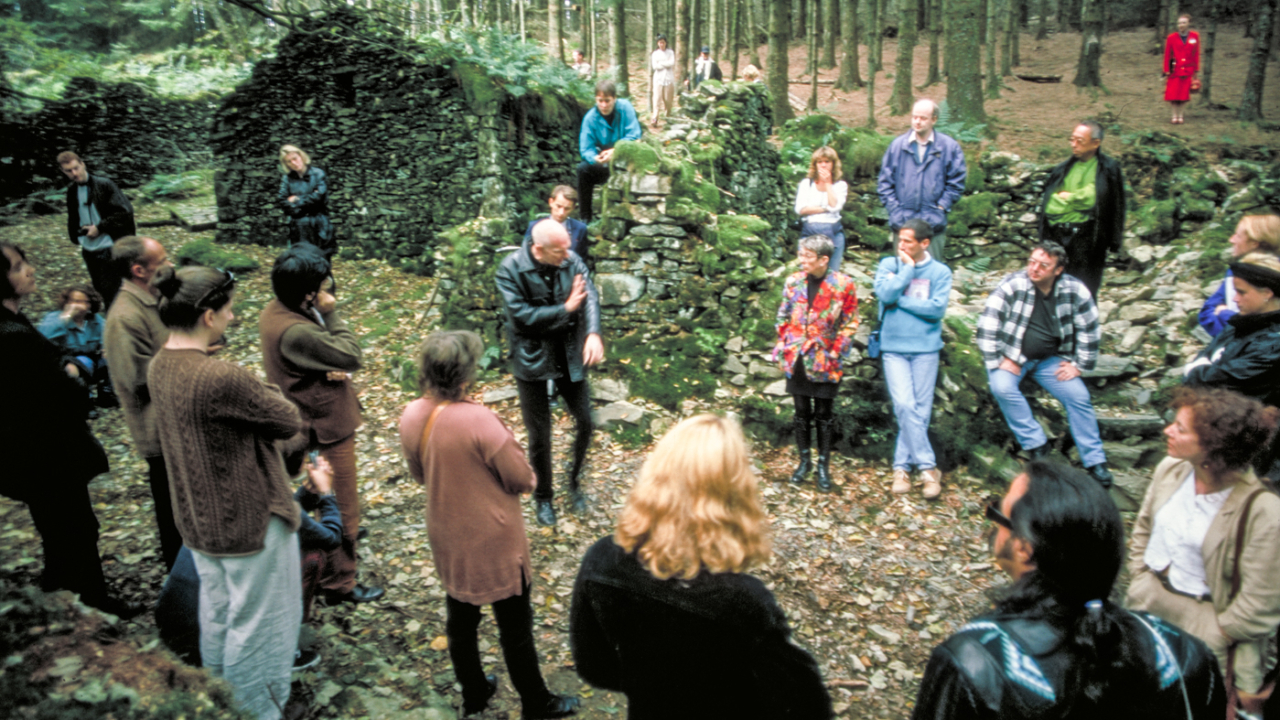
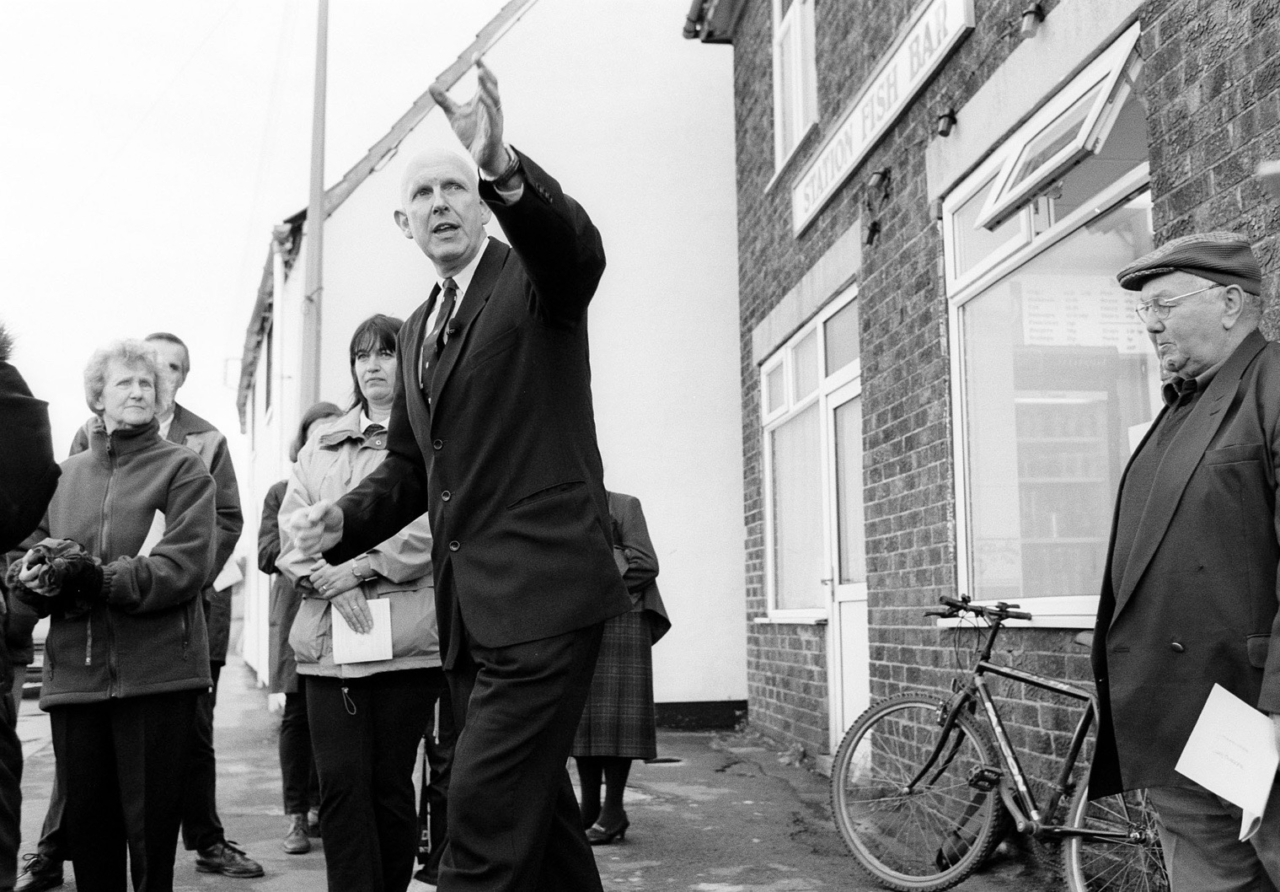
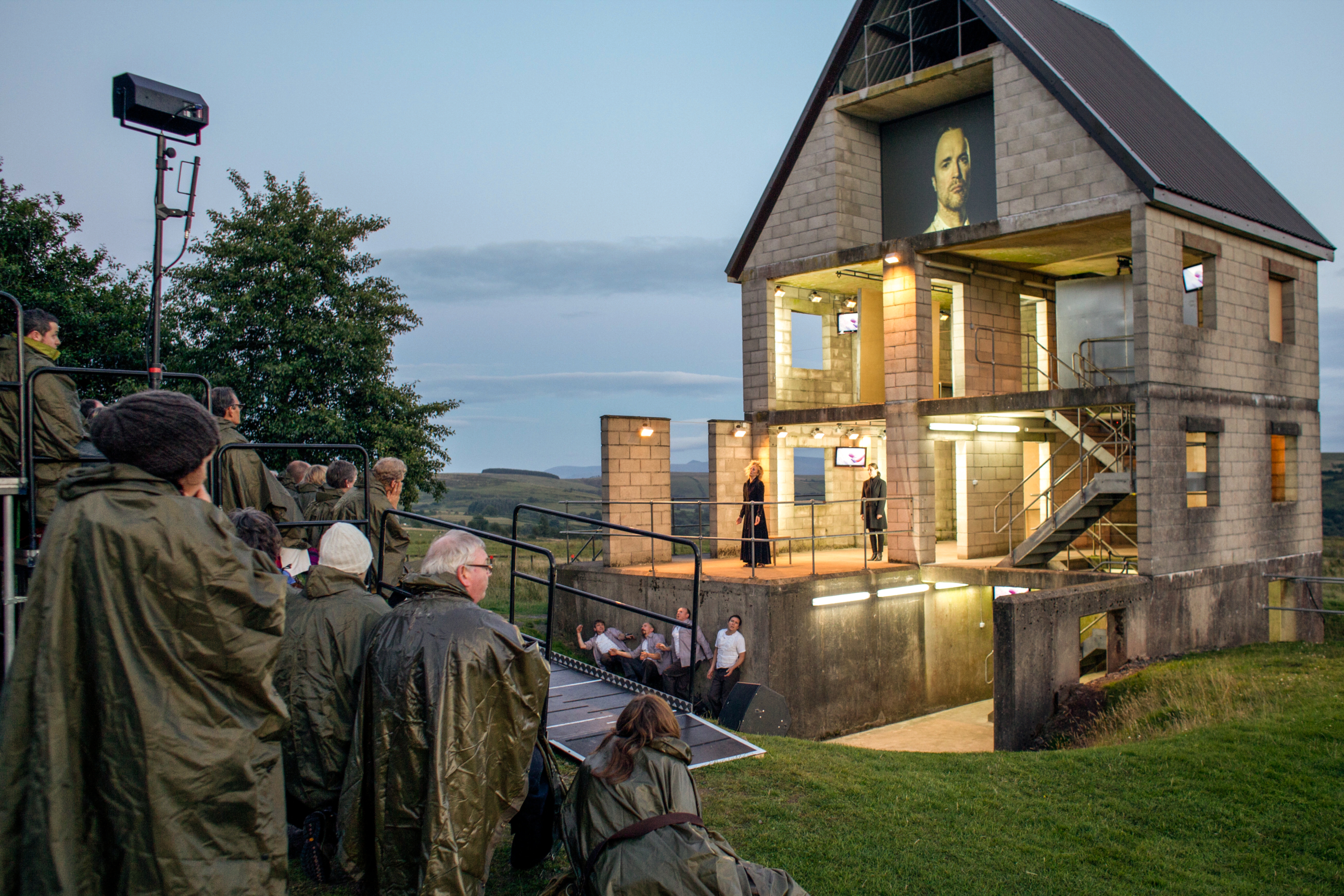
Mike shared a fascination with the legacies of the past, prehistory and antiquity, with what to do with them, not to discover and preserve the past, but to actualize and redeem forgotten hopes. We revisited and reworked ruins in an upland forest plantation of a community dispossessed of their farms by a colonial state (Esgair Fraith, our series of works in the 1990s). In another series Mike offered guided tours and orientations through signs and traces in the rural Lincolnshire of his childhood, and in ways that challenged the old ideology embodied in the concept of landscape. One early solo work of Mike’s in physical theatre was a wordless corporeal reincarnation of Antonin Artaud’s last writings (Lesson of Anatomy 1974, reperformed in 2014). In the spectacular productions of theatre company Brith Gof, set in a quarry, train station, and in abandoned industrial facilities, the early medieval Welsh epic Y Gododdin (1988 and 1989) was brought to life, and Prometheus returned to a post-industrial capitalism (Haearn 1992). Mike regularly faced up to another historical and troubling legacy, the canon of theatre literature. With National Theatre Wales he transposed Aeschylus’s play Persians from fifth century Athens to a military training ground in the Welsh hills in 2010. Shakespeare’s Coriolanus was combined with Brecht in a multi-media clash and promenade event in a pre-war aircraft hangar (National Theatre Wales, The Cultural Olympiad, and the Royal Shakespeare Company Festival 2012). His team produced a radically reimagined 8 hour recital of Homer’s Iliad in the industrial town of Llanelli in 2018.
Storm 2 Things Come Apart (2019) was a deeply researched model, graphic reconstruction, web site, and site-specific performance that dealt with the Cardiff 1919 race riots. Mike was again dealing with the gatherings of the body politic that so featured in many of his works. Multilayered media (projected imagery, multiple sound tracks, dispersed events) delivered a visceral confusion to the urban politics of Coriolanus. Polis was a series set in urban Cardiff focused on watching and being watched, event and report, forensic investigation in cityscape. I always found such works to be a vital counterpoint to my own researches and works that deal with the performative structures of the ancient Mediterranean city state. Gatherings of the membership of the body politic in assembly and council, in the army and on the city streets. Law courts, political speeches and eavesdroppings. Sovereignty, inclusion and exclusion. Techniques of the body – how to walk and talk in the city. And where of course, we find the earliest manifestations of western theatre.
praxis, poiesis, theoria
In theatre/archaeology Mike and I typically didn’t affirm allegiance to any particular body of theory. We never found it necessary to take theatre/archaeology, as theory, into the debates around object-oriented ontologies, new materialisms, Deleuzian process-relational philosophy, and such. We have been much more interested in getting on with things, rather than contributing to such academic debates that we have usually found too abstract, and ironically also, too ephemeral. Mike was very skeptical of the academic marketplace and its consumerism. There is too much fixation on celebrating the latest modish repetitions that claim radical originality.
This does not discount how inspiring we have found the various components and ongoing concerns of critical theory and more. Mike was such an avid, curious and eclectic reader, steeped in western modernist intellectual agendas since the eighteenth century, and especially in critical theory.
Mike realized, embodied, what so many merely talk about. In his vita activa, to bring to mind Hannah Arendt, Mike performed a deep deconstructive questioning of the category of the human, of corporeality. Performance design as an intervention in cultural politics, in ideas of nationhood, a transdisciplinary questioning of concepts such as landscape and belonging, urban dwelling, city and country, surveillance and social justice. An iconoclastic reworking of modernist tropes. An embodiment of the pragmatism of science and technology studies, reaching into techo-feminism and posthumanism. Performance and rhetoric as the fundamental basis of the making of embedded knowledge. And yes, the significance of process relational philosphy in the line of Spinoza, Nietzsche, Whitehead, Deleuze, Serres.
I have mentioned the pramatism of theatre/archaeology. We can call it a pragmatology, concerned with pragmata, things and things done. Getting on with things. We side step the distinction between theory and practice and instead reference the old concepts of praxis, poiesis, theoria. These are all activities – of doing, making, thinking. In using the old Greek terms we want to distance ourselves from current concerns, especially relationships between theory and practice, and acknowledge a troubled genealogy of the concepts we use to understand what we do and might do – think and reflect, act and make.
Without a heroic aspiration to definitive and unassailable, monumental work for all time. The creative pragmatics of the likes of theatre/archaeology is always tentative and experimental, the latest attempt in a genealogical chain that typically takes us back into the mists of prehistory. The experiences of the cyborg self, of body distributed through its artifacts and material culture, the ecologies that are human corporeality are not new to modernity. Closely relevant here are recent debates concerned with connecting arts and sciences, arts practice as research, research creation, scholartistry, drawing especially on the decades of anthropological, sociological and philosophical research in science and technology studies – the performance of making sense and knowledge.
It was only recently in discussing these concepts of praxis, poiseis and theoria that we made a connection with what can be described as the ergonomics of energy fields. In the work of archaeology and performance we manage and regulate sources and flows of energy: investing effort into excavation, displacing artifacts, conserving and arresting processes of decay; choreographing the skills and efforts of performers, maneuvering props and stagings. Our pragmatics of theatre/archaeology thus entails an ergonomics – the regulation and organization, the design of work (ergon) within fields of vital potential – constructing pasts, presents, futures – worldbuilding.
So what did Mike do in theatre/archaeology that many others only talk about? Let me illustrate with a few comments on critique, engagement and iconoclasm.
critical theory – experiences of modernity
As archaeologists we were very involved in the self-consciousness that came to the academic field in the late 1980s. This critique made a clear case of the deep investment of nineteenth century archaeology, and after, in colonialism, nationalism, and imperialism (I always bring to mind the crucial intervention of Bruce Trigger in this shift).
Our question was – what might be done with such self consciousness?
One answer we pursued started close to home. Colonialism, imperialism, nationalism always begin in the everyday, in everyday aesthetics. Mike and I took on the investigation and critique of the internal colonization of a fundamentally dis-United Kingdom in topics such as the appropriation of land and labour, the imposition of histories and metanarratives by the apparatuses of a nation state. Ours has been a project of uncovering intimate and oftentimes hidden or forgotten histories, exploring and deep mapping the borderlands of northern England and of rural Lincolnshire. Settling in Wales, Mike confronted the tensions through community and class between the industrial and urban south of Cardiff, Swansea and the valleys, and the rural north and west. Mike’s approach through performance involved anecdoted topographies and itineraries, scenarios in a barn, recounted gossip, street theatre in the city of Cardiff – an intimate and everyday aesthetics.
Another answer was to work with the fragments of mythic and conflicted histories – resonant traces that take us to counter narratives as well as simply foregrounding what is deliberately overlooked. As mentioned, in Haearn (Brith Gof 1992) Prometheus came to Wales. Mike brought Ovid’s Phaeton to Pontrhydfendigaid in the county of Ceredigion in 2018 (National Theatre Wales Storm 1 Nothing Remains the Same).
Perhaps the most distinctive tactic in this mobilization of critique is iconoclasm. For both of us this has not been about tearing down the monuments of the western canon of theatre, or of classical antiquity, or the grand orthodox stories of western enlightenment. Instead – facing up, confronting, juxtaposing, deflecting, defacing, contrasting, reworking. And sometimes this has meant going far afield – to a Welsh community in Patagonia, to polar explorers staging theatre in the Antarctic, to Japan to learn the art of Noh, to the archaeology of prehistoric communites in the northern isles, and for me to the heartland of the techno-utopian empire, Silicon Valley, at the western edge.
ontological theatre
The performative and pragmatist premise of theatre/archaeology suggests that in any project we look first for verbs rather than substantives and nouns. In the performed lecture Autosuggestion (2013) we asked “Just what is an automobile?” We answered by driving into the venue in Bill Barranco’s hot-rodded stinking-of-gasoline primer-paint ’56 Chevy and then reverse engineered the automotive experience though an exchange of personal anecdotes about cars (usually Mike’s) and responses (where I introduced comments, contexts, and contrasts). Nine sets of stories. This was the template that we came to use in some of our collaborative works – a dialogics (Bakhtin, yes) that seeks not to define conclusively but to circle and entangle, exploring processes and connections, seeing where things go in the event of performance, stopping simply when time runs out. Ontology as theatre, to follow Andrew Pickering.
So what is an automobile? It depends. Who’s asking? Why? To what ends? Where do you want the question to take you? (James and Rorty.)
Thinking through things, in an elision of poiesis, praxis and theoria – always in performance. Props, bodies, settings and stagings in dramaturgical, scenographic, choreographic mix.
In archaeology, working with remains tangible and intangible, as pragmatology, disentangling things in a mise-en-scène, examining instrumentality (automobiles) as mode of engagement.
And surely such ontological theatre is what we witness and share in the myriad of everyday environmental performances, the natural history of animals and insects, earth and weather, the geology and atmospheric liquidity in which we are immersed.
critical romanticism
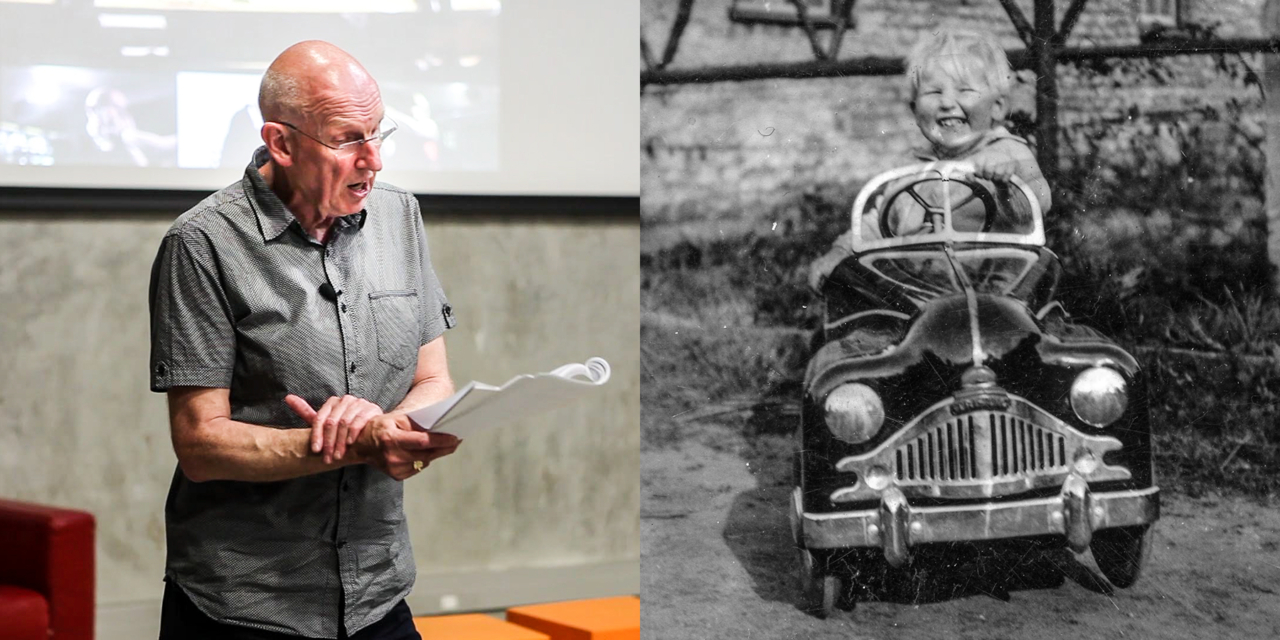
Mike was an avid bird watcher and natural historian.
In his theatre/archaeology we find chorography, what we called, with Cliff McLucas, “deep mapping”, a concern for engaging and representing local inhabitation, multi-species, heterogeneous ecosystems and their environments, and a revival of a forgotten genre.
Mike was adept at conveying the manners of folk, details and marginalia, character, the habitus found in the eddies of everyday gossip, in the discarded detritus on a workshop floor.
His theatre works often had a dark tone, grim in their physiognomy, visceral in their corporeality. While Cliff McLucas, art director alongside Mike in Brith Gof, took an architectural and structural approach to performance design, Mike started in the solar plexus.
What connects these features of his work? The roots of all are to be found in that complex disposition that accompanied the emergence of industrial modernity in the eighteenth century – revolutionary romanticism.
I find Mike’s extraordinary sensitivity to geology and natural history, alchemical, sense-based and not constrained by specialist disciplinary practice, in the works of antiquarian John Wallis, a favorite of ours, a cleric in eighteenth century Northumberland. Mike’s radical mobilization of archaic archetypes is reminiscent of William Blake. His grasp of the textures of everyday life is certainly what Scott aimed at in his focus on the everyday manners that shape historical experience. The cultural critique of Percy Shelley. Mary Shelley’s modern Prometheus. Wordsworth’s vitalism. Ann Radcliffe’s gothic terrors; Poe’s gothic forensics.
These are all features of a romantic poetics:
- local self-assertion as opposed to universal rationalising systems which may be termed arrogant and essentialist;
- an attention to the ordinary and the particular, to specific manifestations of life processes;
- an interest in the limits of reason and the irreducibility of experience;
- an interest in the darker and somatic aspect of experience in the sense of that remainder which always escapes the claims of a rational system;
- defamiliarising what is taken as given, revealing the equivocality of things and experience;
- reality conceived as dynamic flow, temporal and spatial process;
- an attitude critical and suspicious of orthodoxy, because of the impossibility of any final account of things;
- acknowledgement of the worldbuilding power of creative agency, the constitutive imagination;
- a hylozoic vitalism that recognises the life of things.
And the politics, an inclination towards practice, comes from that romantic philosopher-political-economist Marx: philosophers have so far only interpreted the world, the point is to change it.
In all, this critical revolutionary romanticism remains essential in our contemporary times of late modernity, of precarity and uncertainty, with the rising voices of those who would have us believe they alone have figured everything out.
concepts
corporeality and embodiment
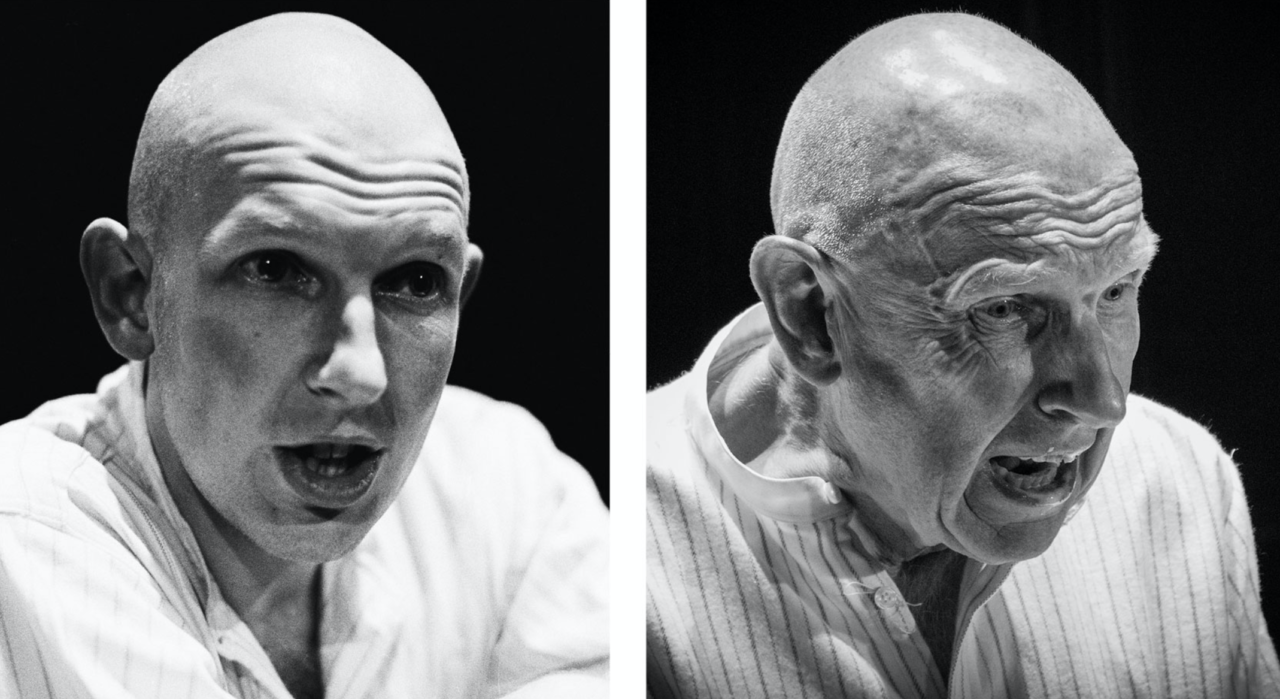
It was from Mike that I learned how significant a figure was Antonin Artaud, and not only to the history of modern theatre and performance. Much more. Artaud’s concept of body-without-organs (picked up by Deleuze and Guattari) places in parenthesis the configuration and containment of embodiment. The body precedes and surpasses containment and categorization. Distributed and dynamic corporeality – we touch and commune with atmosphere in our breathing. We ingest, digest and expel as waste food, and in so doing we are agents of ecological metamorphosis. In the prostheses and augmentations of tools and technology we have always been cyborgs, monstrous hybrids of flesh and artifact.
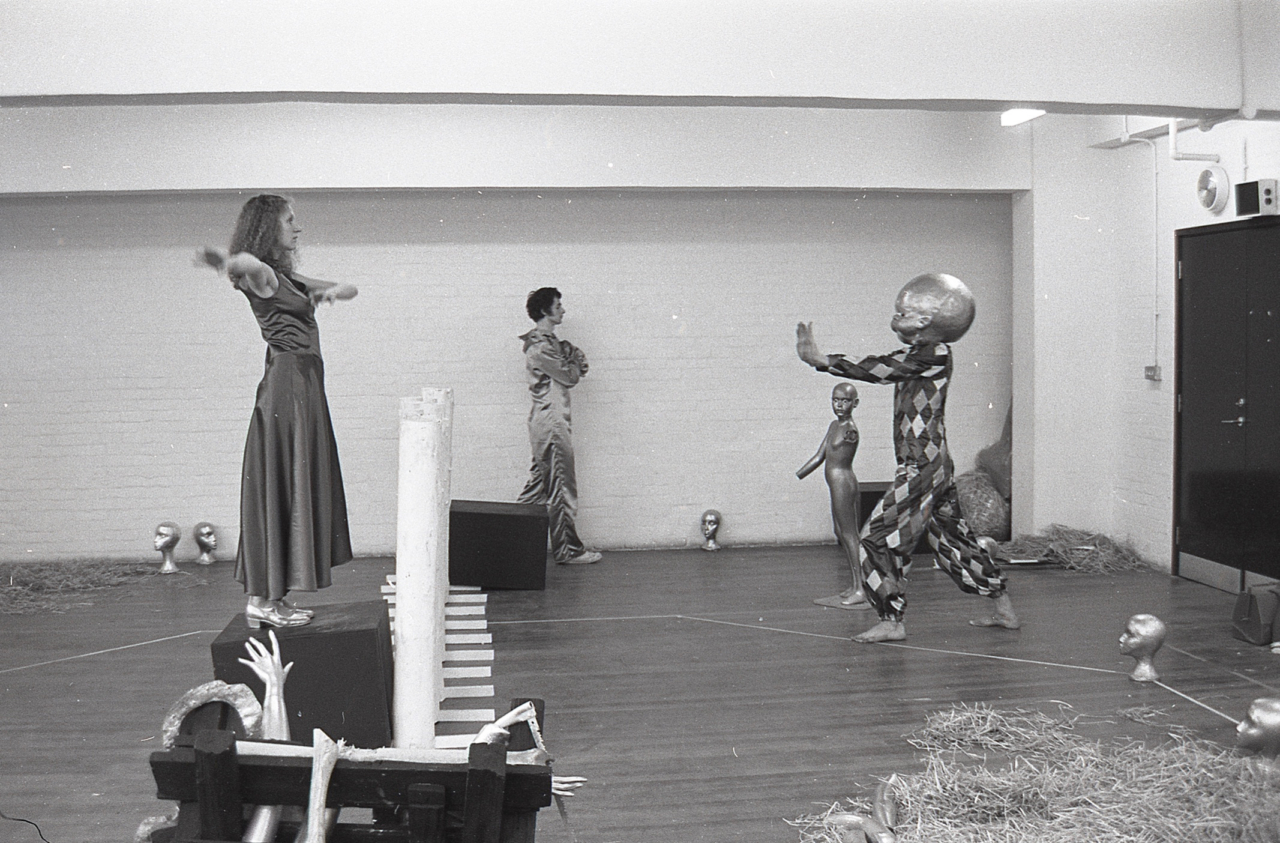
Artaud witnessed such a dispersal of self and body in the electroshock treatments of the asylum and in his theatre of cruelty – challenging audiences, conventions, and complacencies, with provocation, extremes. Mike’s physical theatre, developed in close study of Jerzy Grotowski, was edgy and often unsettling, sometimes violent.
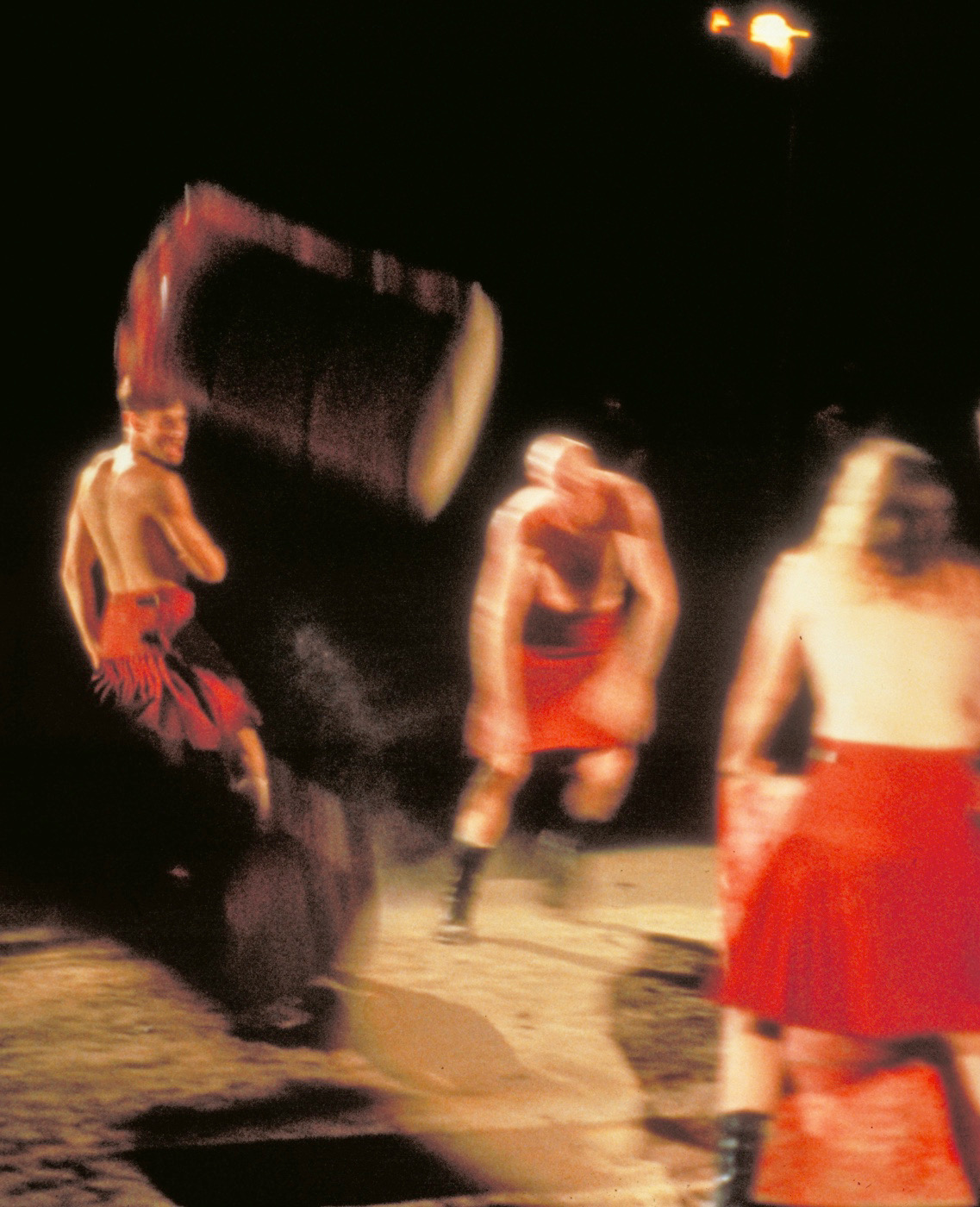
In our most recent reflections on theatre/archaeology we have been taken by the base materialism that connects body and landscape in the works of Jean Dubuffet – raw energetics in the construction of corporeality, truly bodies without organs. This line of thought and connection took us to the expression of distributed ecologies we find in the writings of Donna Haraway and Anna Tsing – what we construed as a pagan poetics.
body politic
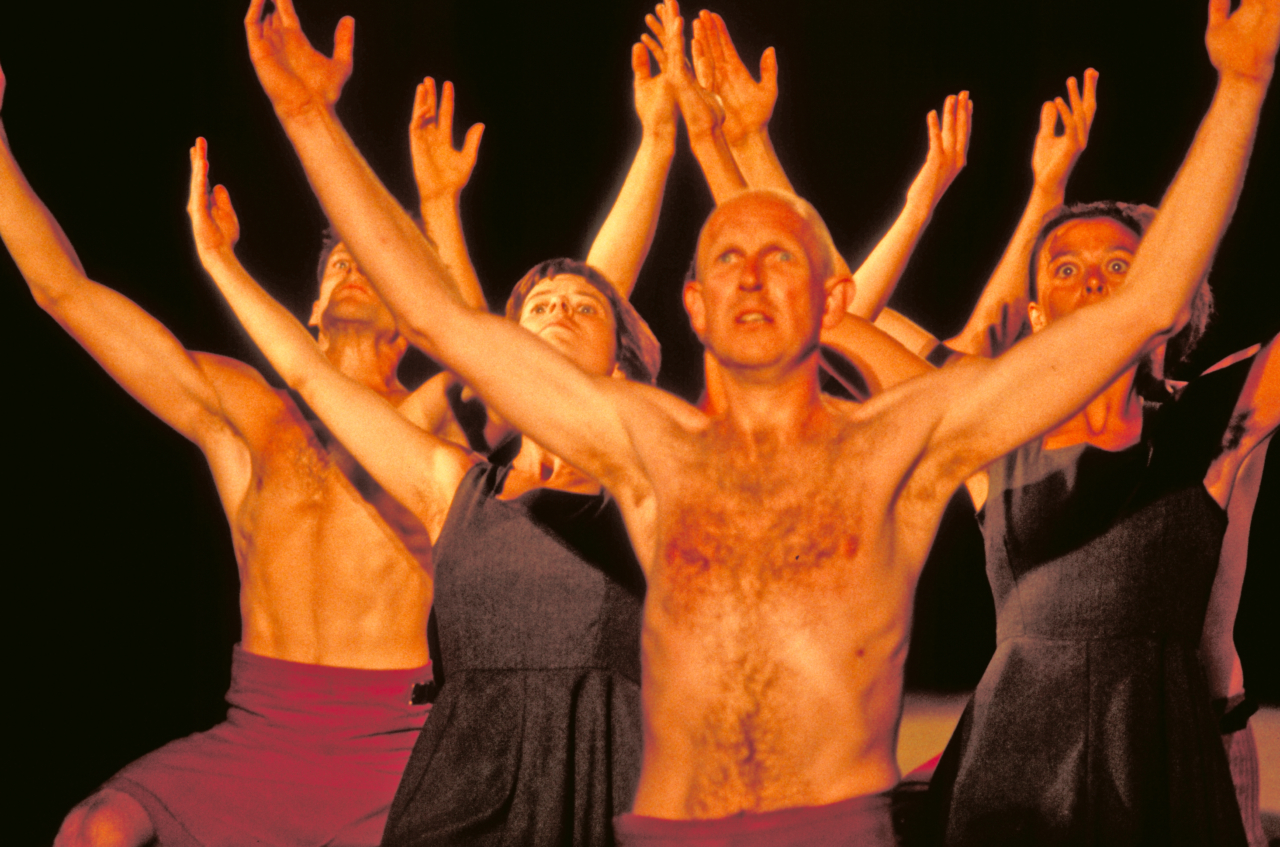
One historical manifestation of the distributed body, the dynamic of membership, of inclusion and exclusion, is the concept of body politic, and I’ve already mentioned how assembly and gathering regularly feature in Mike’s works. We are made to face up to myths of the polis, and witness again and again how body politic fails and falls apart. Mike’s iconoclasm was a deep questioning of performance in polis.
In this Mike was very conscious of processes of rhetoric and mediation, the mediaturgy in polis that combines voices and audiences, media forms and receptions, amplifications and suppressions, who gets to say what is distributed, who gets to just listen, or not hear at all.
noise and polyphony
In Coriolan/us the contesting voices of leaders and followers, the noise of the citizen body, is everywhere. Microphones and amplifiers, loudspeakers and earpieces, delivered speeches and eavesdroppings, what could be heard and not heard, in ones ear, blasted out across the theatral space of the polis.
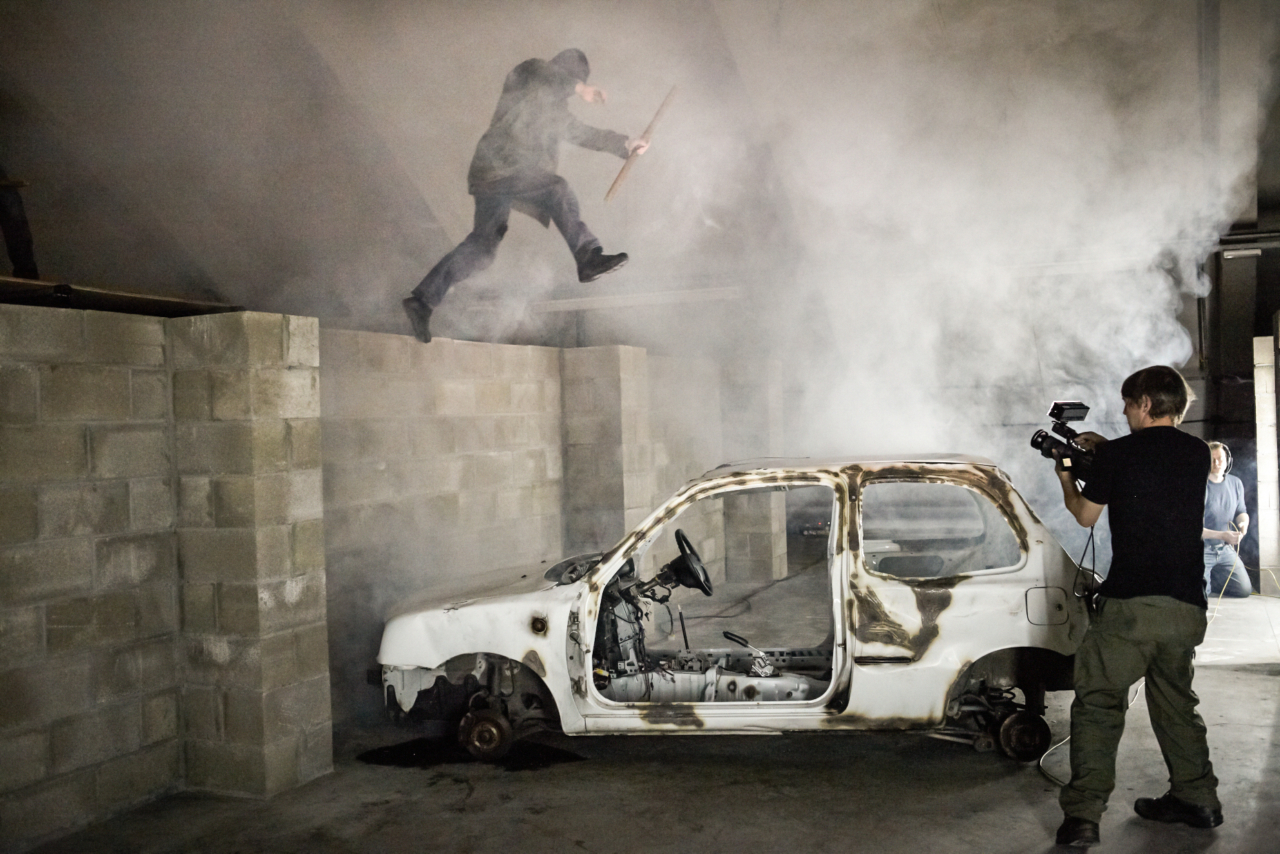
Noise is the essential medium within which we distinguish sense and signal. Noise and texture, multiple layered voices, have featured prominently in theatre/archaeology. In the gossip of a Lincolnshire village, in the forest ruins we might hear the whispers of forgotten ghosts, validate and witness the traces of marginalized experiences, speak them, make them manifest again.
It is an ongoing struggle not to be drowned out by the singular voice. And the alternative is not harmonious symphony, an alternative singular statement, but constant research, listening and attention, and rearticulation, restatement, reperformance.
chorography and geology
Everyday gossip runs in continuity with deep time, the life processes of rock, ocean and weather.
Mike’s chorography, his neo-antiquarian and predisciplinary attention to the question of landscape and inhabitation, took in the longue durée of land forms as well as intimate anecdotes and the unnoticed comings and goings of finches. Mike embraced that shift of temporal, spatial, and material sensibility that came with the discovery of deep time in Hutton’s geological unconformities in the last decade of the eighteenth century. Rock became liquid, stone soft and pliable, subject to raindrops and river flows that we see all round us now and actual. But deep time incorporates a scale of experience that is hard to comprehend in human terms.
Such an association of intimate chorography and deep mapping was why it seemed so right that Mike and his teams could bring Prometheus to an old steel works in Tredegar south Wales, Ovid’s Phaeton to Pontrhydfendigaid.
Performance = Geology. Sedimentation, layering and uplift, folding and faulting, metamorphosis and erosion. For Mike geology referred not just to land form and topography, but to a figuration that suggested a way of thinking of performance itself, and performance as indeed part of the agency of experience, worldbuilding.
worldbuilding
In the articulation of experience and agency, the noise of everyday life is the ground, the material and vital energy of worldbuilding. Lifeworld is created in the everyday, not by heroes who would wish only their singular voices to be heard, their orders and plans to be obeyed. This realization was one source of Mike’s wonderful humility.
The flow of everyday experience is the fount of creative potential. Our agency is our collaborative collective capacity to make a difference. So often it is suppressed and curtailed. Mike’s works acknowledged and celebrated the validity and veracity of everyday and often marginalized experience as well as its mythic multiplicity in ways that surpassed simplistic statement. Mike’s humility acknowledged that there is no end to the process of attending and listening. One might construct a scenario for a particular purpose and audience, but it never ends there. Mise-en-scène becomes mise en abyme. One story leads to another and another, absences generate presences, ghosts-in-the-mirror come back to haunt. We only find worlds within worlds.
What remains is the necessity of reframing, reimagining, speculation.
techniques – design and rhetoric
There’s no method in Mike’s theatre/archaeology. Think instead of the pragmatic fields of design and rhetoric.
performance design
Pax TV, the video that started our collaboration, mixed two classic components of media design – mise en scène and montage. In Bubbling Tom (2002) Mike told story scenarios, anecdotes, and memories in an itinerary around his childhood village. Mike regularly staged synchronicities – the layering of events. Tri Bywyd (1995), for example, combined three broken and independent narratives in one place, a ruined farmstead in a forest plantation. Deep mapping involves folded temporal topologies where an itinerary, for example, stopping here to look and listen, then there, and there, disrupts timelines in paratactical sequences of place-event.
What was going on in such composition and devising was a regular topic in our conversations. One answer, we decided, was that it is the work of design. Performance, as design, mixes dramaturgy, scenography, choreography, mediaturgy, as mentioned above. Mike had written much about the techniques in this process in the likes of his book Site Specific Performance (2010). He also, as mentioned, thought metaphorically and figuratively of performance design as geological process.
And more. Design projects need to be organized and managed. Here we looked to the way design foresight, as developed in the likes of Stanford University’s school of engineering and in studios such as IDEO, can help understand the melding of praxis, poiesis and theoria in project management. Broad concerns are with viability (does the project have the needed resources?), feasibility (is the project technically possible?), and desirability (will anyone be interested?). More particularly, the design process involves an opening brief or challenge, in a context of a program of funding, for example, or as an intervention in a debate or issue. Where you begin always informs the process of delivery of a work or an experience. In design foresight this process involves research, concept development, synthesis and application to the particular context of the project, ideation, modeling and prototyping, and delivery.
It struck us both how the forcing together of performance and archaeology generated such insights into questions of purpose and outcome in a creative pragmatics.
rhetoric
Another way of framing the pragmatics of theatre/archaeology comes with the concept and field of rhetoric, the art/science of persuasion, and, not incidentally, a constituting feature of the myth of the polis, as I have mentioned.
The traditional elements of rhetoric include research (inventio), arrangement of the parts of a work (dispositio), style, delivery, and production values, and documentation (memoria). Let me mention here a couple of the distinctive rhetorical moves Mike made in theatre/archaeology.
Cliff McLucas called it forcing. Bringing together two concepts, scenarios, events, findings, artifacts, places that bear no obvious connection and make the frictions generate insight. In rhetorical terms this can be parataxis, sequences with no implied connection, for example the stages in an itinerary, or katachresis, an assertion of connection when there is none. Gayatri Spivak and Homi Bhaba had noted a good while ago how katachresis can be a most powerful technique of disrupting master narratives by associating them with discordant voices.
Very apparent in Mike’s performances was ekphrasis. “Look at this here and let me tell you something about it!”. And Mike was such a poet in speaking of things – ut pictura poiesis.
narratio
Mike was a most accomplished storyteller. Narratio, narrative and storytelling, have always been recognized as a major component of rhetoric. With its emphasis upon pragmatics, upon the actuality of place/event, the work of performance, Mike’s theatre/archaeology made a critical and radical distinction between narrative, defined as the structure and grammar of story (plot, character, timeline, agency, viewpoint), and storytelling, the performance of narrative.
The distinction is critical because it creates the space, gap, disjunction, dissonance essential for acknowledging alternatives, discordances, counter narrative.
Mike’s works, epic and intimate, only incidentally used the strong narrative plots and dramatic arcs with which we are so familiar in Hollywood, and indeed in mythography. His storytelling was much more based upon scenarios, as Diane Taylor defined them, fragments of potential narrative, spaces of potential energy. Confronted with a scene, props, characters present or absent, snippets of evidence, hints and traces, and the expectations we might bring to the scene, we ask with Mike – “What could have happened here? “What might happen here?” One might associate this with Mike’s forensic attitude and interest – “at a scene of crime anything might be evidence” (echoes here of Benjamin’s comments on the photographs of Eugène Atget).
Even though we might listen to stories in Mike’s words, it never added up to an overarching narrative. We were always conscious of his voice, and that of others, in the placement of both (their site specificity). In these ways Mike’s work always seemed to interrupt any sense that he was presenting us with a representation, a theatrical illusion. This is also certainly what Brecht was aiming to achieve in his epic theatre, a suspension of belief in representation, interruption through what he called verfremdungseffekt.
beyond mimesis
One is not really meant to put oneself in the place of the performers in Japanese Noh theatre, to identify with their characters and actions. Mike went to Japan to train in the highly stylized and abstract techniques of this ancient theatre.
In foregrounding technique, praxis, emphasis in Noh is displaced from representation, from mimesis, mimicry of a reality-to-be-represented. We can apply such a shift of emphasis to the way we understand how knowledge gets made.
Orthodoxy holds that knowledge is about representation. That our words, imagery, equations, graphics somehow represent reality. If instead, we follow the premise and insight that we stage evidence and perform research in building knowledge, then Noh, among other forms on non-representative performance, offers instruction to even the likes of archaeology.
So what lies beyond mimesis?
Here we referred to the concept of eidesis (though we do define it somewhat differently, and we would argue more accurately, to that which you’ll find in a dictionary)
Mike was very fond of models. Physical scale models. As Connie Svabo points out, models are a means of getting a handle on things, ways of engaging with things, proxies in action, design tools. There is no need to ask the question of whether a model represents reality in some way. This misses the point. All is good if your model helps you act.
This purpose is captured in the concept of eidesis, defined as what relates to the processes of coming to know and act. Models are eidetic because they help you plan and act.
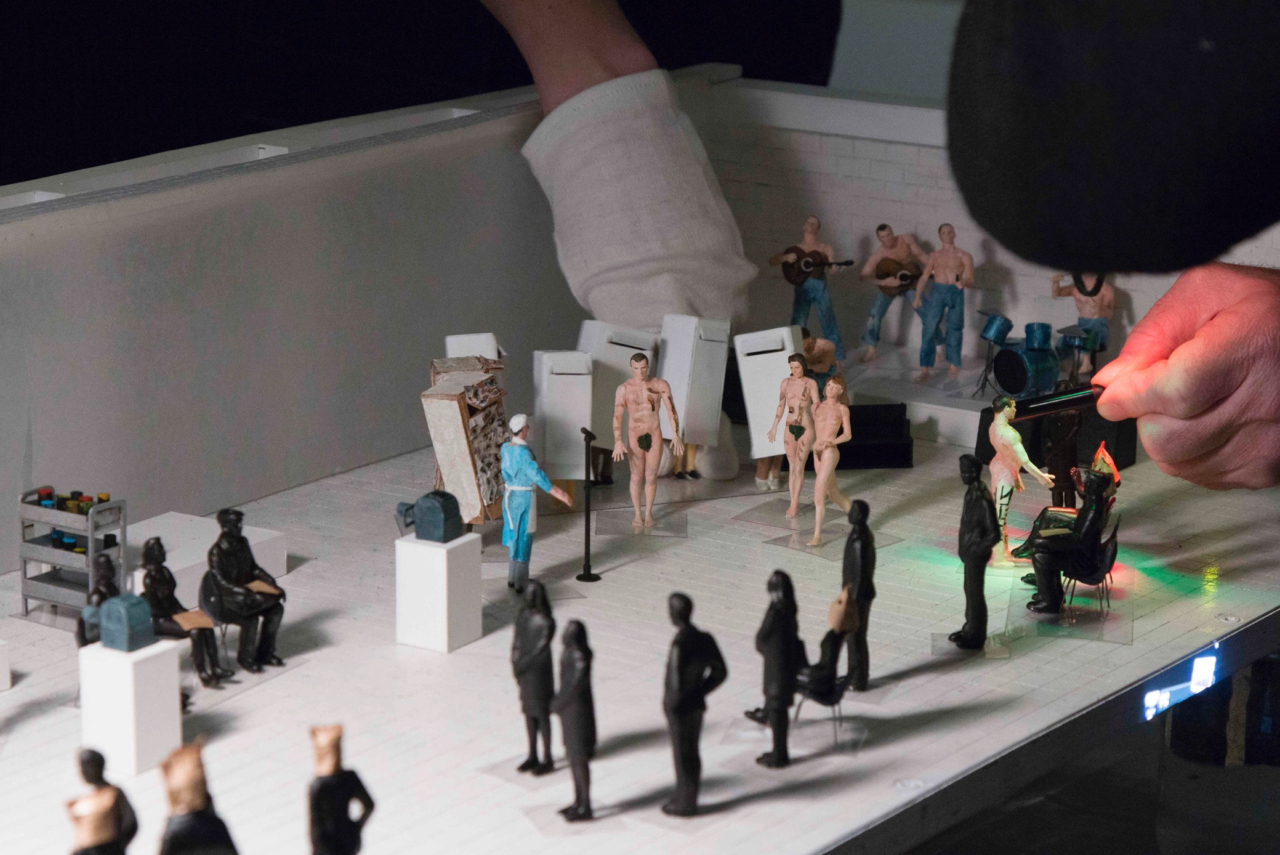
Models help you think through things, get on with things. They help you explore how you might build something. So models help with ergonomics, as defined above.
From the outset of our conversation about what was going on in Pax TV, we thought, appropriately, that theatre/archaeology was concerned with matters of documentation and archive. What was being documented, if anything, in that montaged mise-en-scène? What is the relationship of a catalogue of finds to the history of the site from which they were excavated?
in 2016 we helped host a conference in Antwerp focused on this core concern of theatre/archaeology – matters of scripting and authoring, archive and documentation. The title was Tracing Creation, and we welcomed Romeo Castelluci, Tim Etchells, and Jan Faber, Rebecca Schneider and Heike Roms, among others, to share their thoughts and experiences (forgive me for not mentioning all the members of the gathering).
What comes before and after the event of performance? We looked at sketch books and staging diagrams. And yes – the dynamic of mimesis/eidesis and pragmatic purpose were very much the topics of discussion.
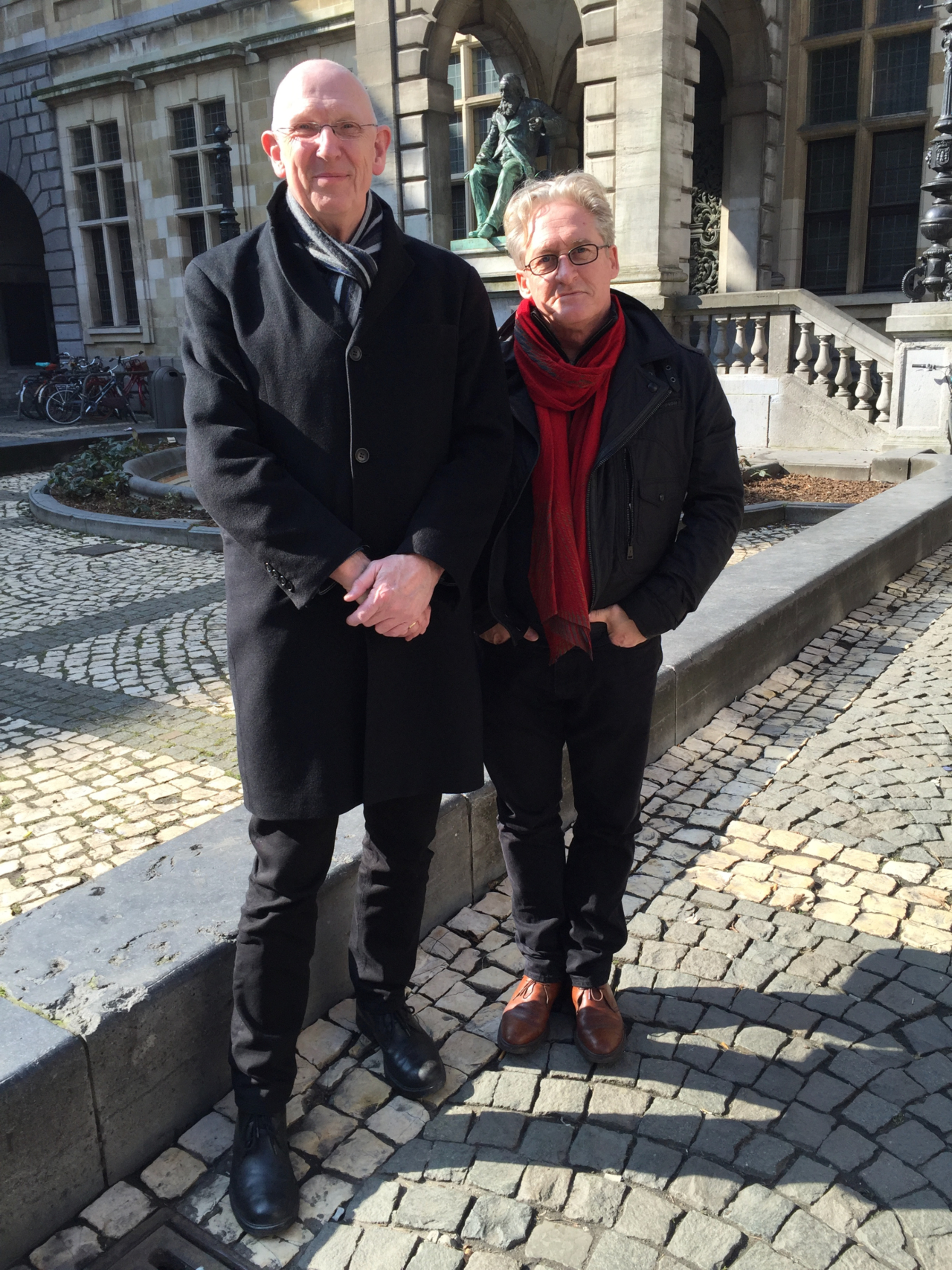
What is the relationship of a script, a diagram of a stage to a performance? The answer is a matter of pragmatics, choices made in processes of performance design and rhetoric.
archetypes and figurations
Mike managed to capture the complexity of performance design in a figure – a diagram of geological form and process.
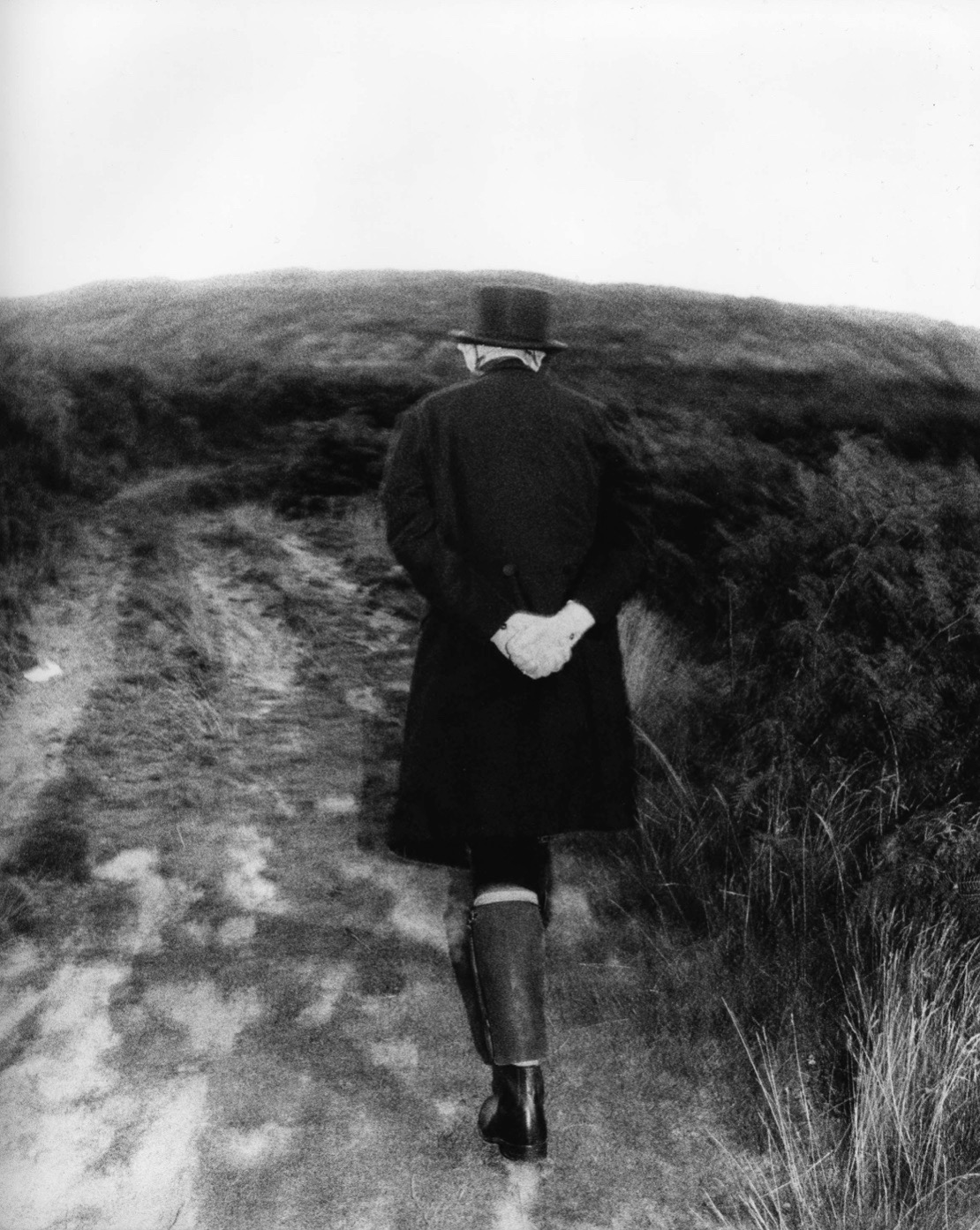
I see figuration, the construction and metamorphosis of certain figures, even archetypes, throughout Mike’s work. The angel, Hermes, the man in a suit on a street, Prometheus, an antarctic explorer, the farmer, the itinerant, Hobby Horse (a figure in English folk theatre), the wanderer, the forensic inquirer, the ornithologist (also Dubuffet’s géologue, I would say), the state official, the policeman. Sites include village, city, emptiness (Lincolnshire Carrlands and Antarctica, the black box of a stage), home.
Such figuration takes us, I think, into the mythic structures and the conflicted histories that we seek to understand and unsettle. In counterposing their shadows with flashes of light and insight, juxtaposing the empirics of experience and so turning the mythic forms into something else, we might undermine attempts to fix things, and instead to discover the importance of the constitutive imagination when we make no necessary pretense to be representing definitively the way things were, are, and should be.
dérive, détournement – nomadics
With a birds-eye view, our conversations and collaborations went all over the place, as I may have shown in this short tour.
This was all quite deliberate.
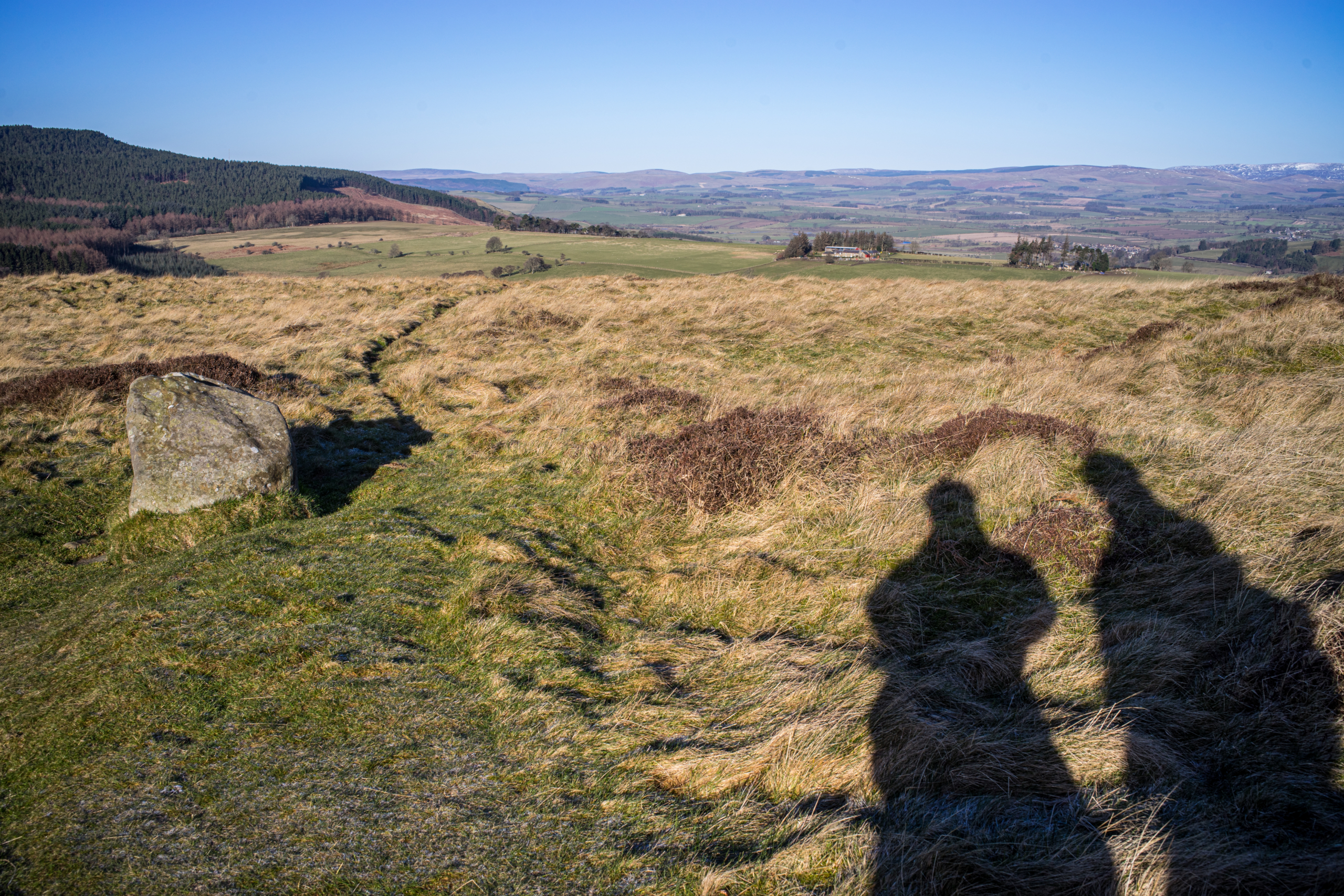
We rambled through archaeological landscapes.
We took week long trips to explore the darker recesses of European cities.
More figuratively, we were taken into the wandering so appealingly described by Rebecca Solnit, the kind of archipelago so creatively explored by Michel Serres. Seeking to find a way, regularly returning to favorite locales (the energy of nostos). In such an effort we don’t need heroes, merely care, close attention, and deep listening.
We looked for detours and digressions, border crossings and smuggling opportunities.
And we kept moving. It was always noisy. There was always too much stuff to take in. Things kept turning into other things.
This was indeed what we wanted to describe as an archaeological circuit, the energy field comprising encounter and engagement, gathering and sampling, mediation and metamorphosis.
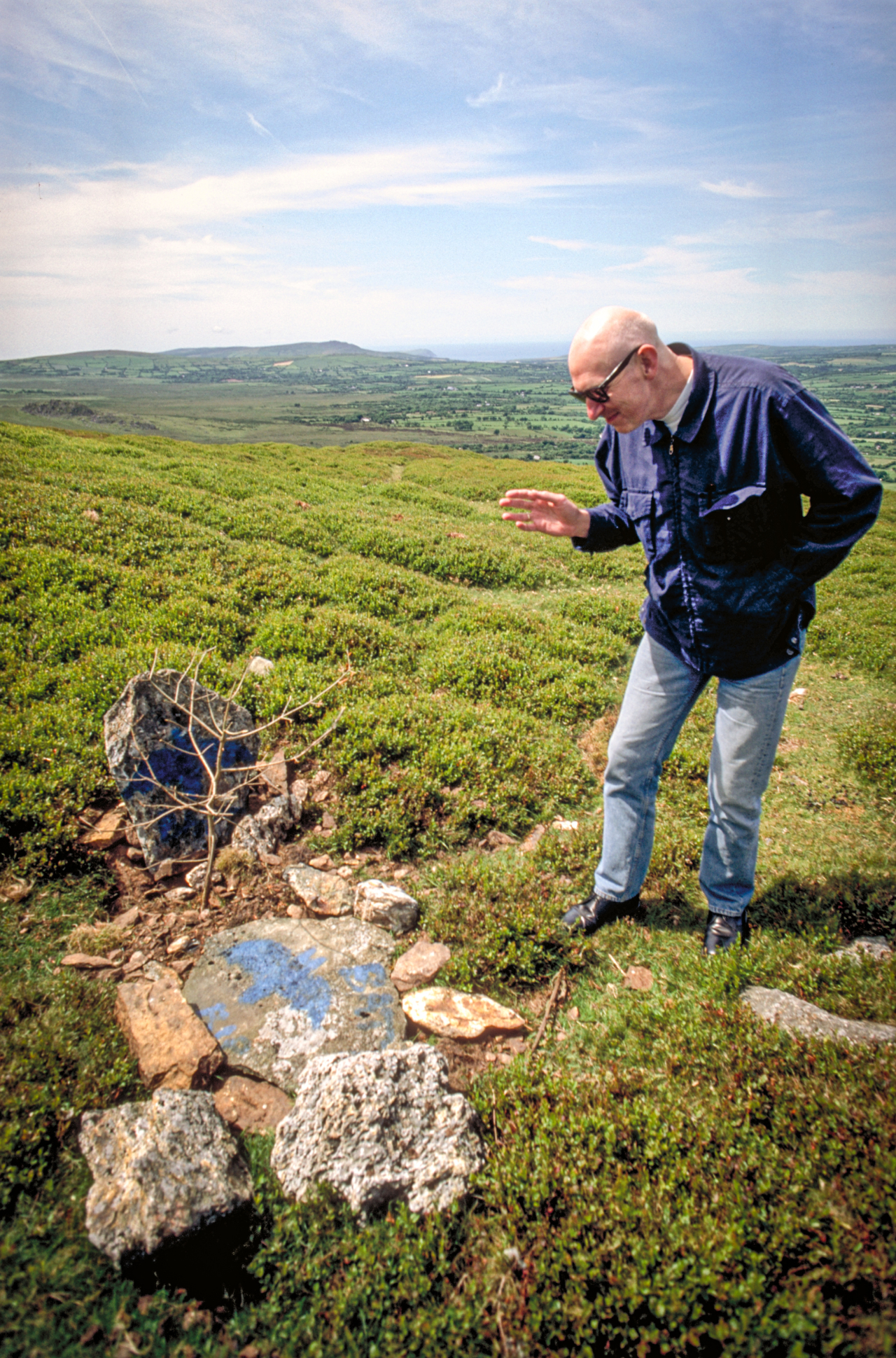
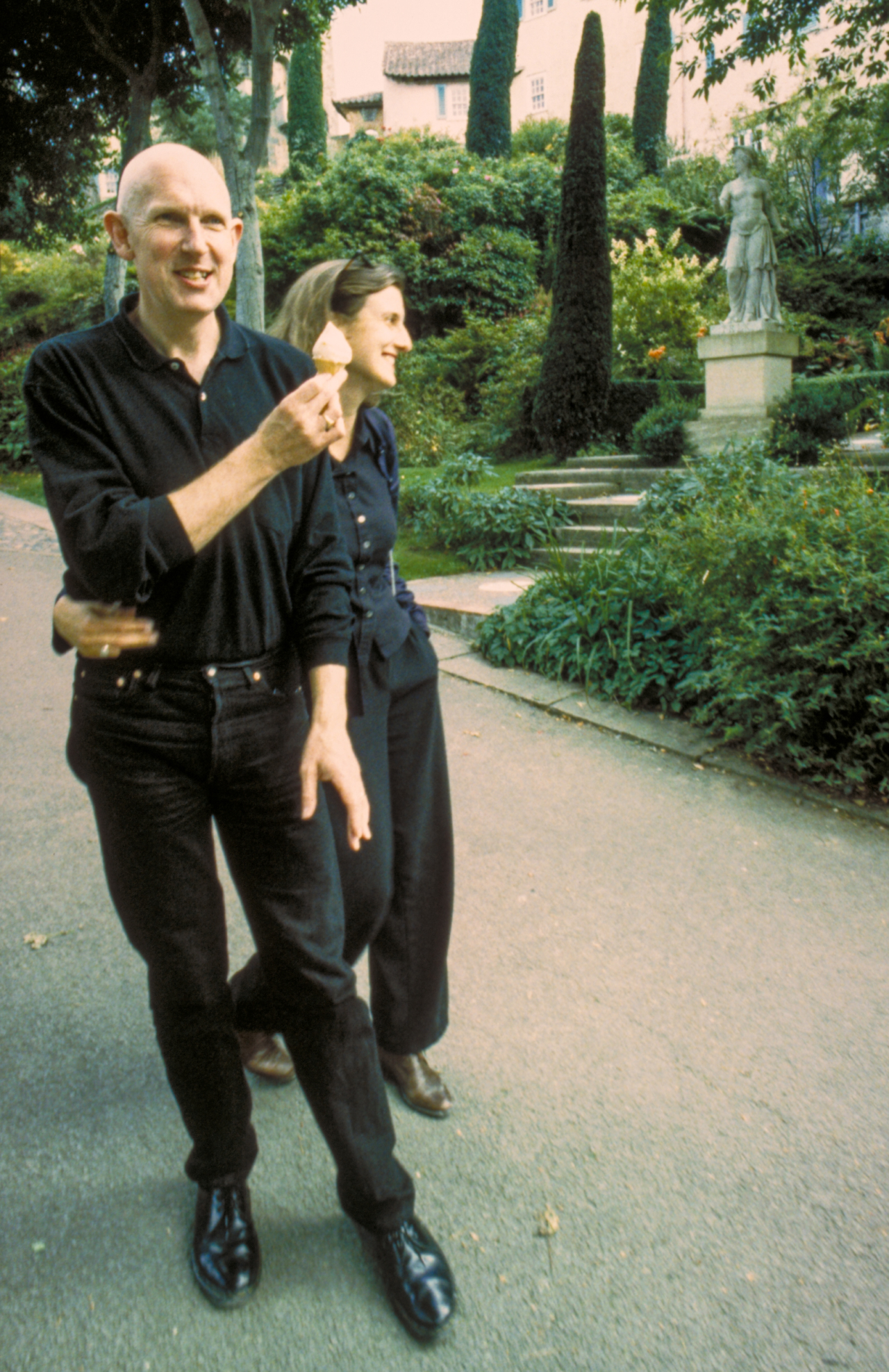
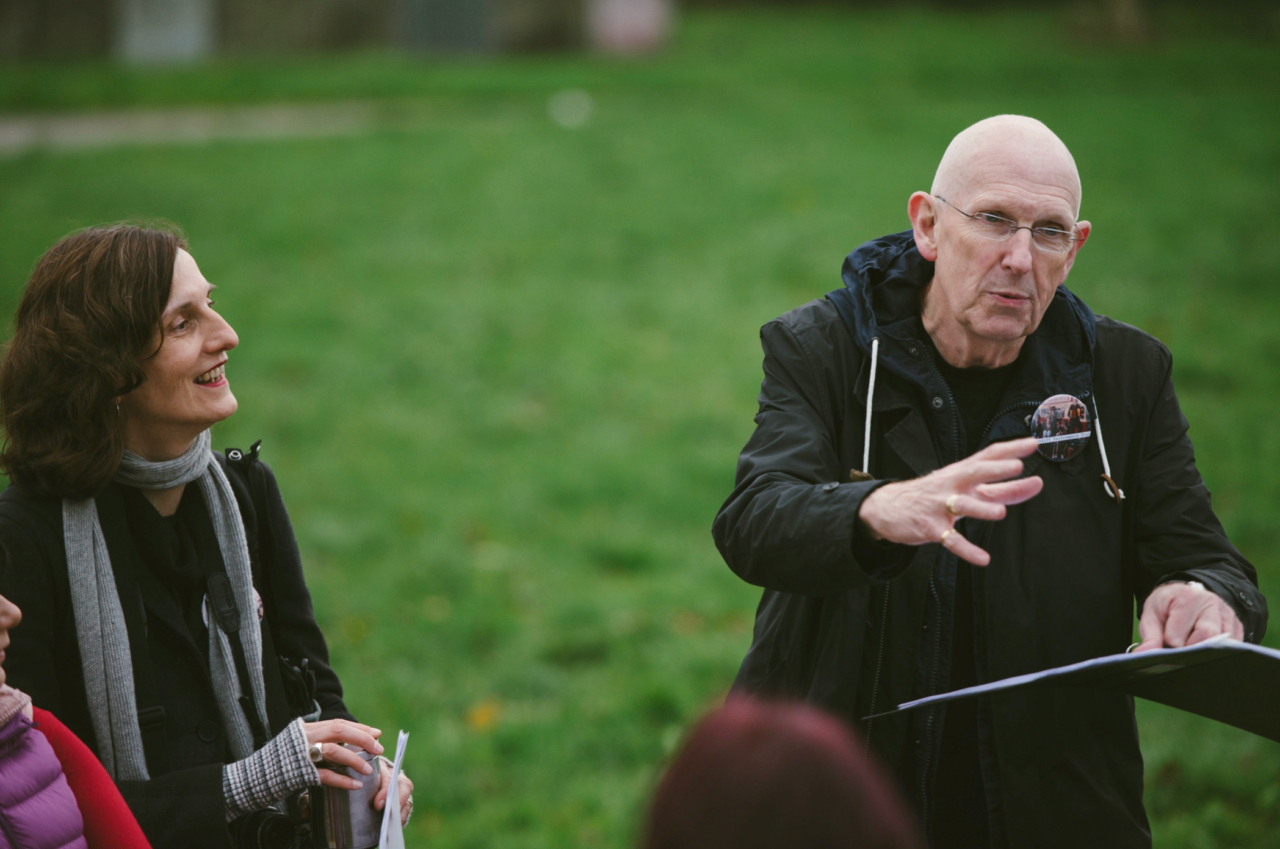
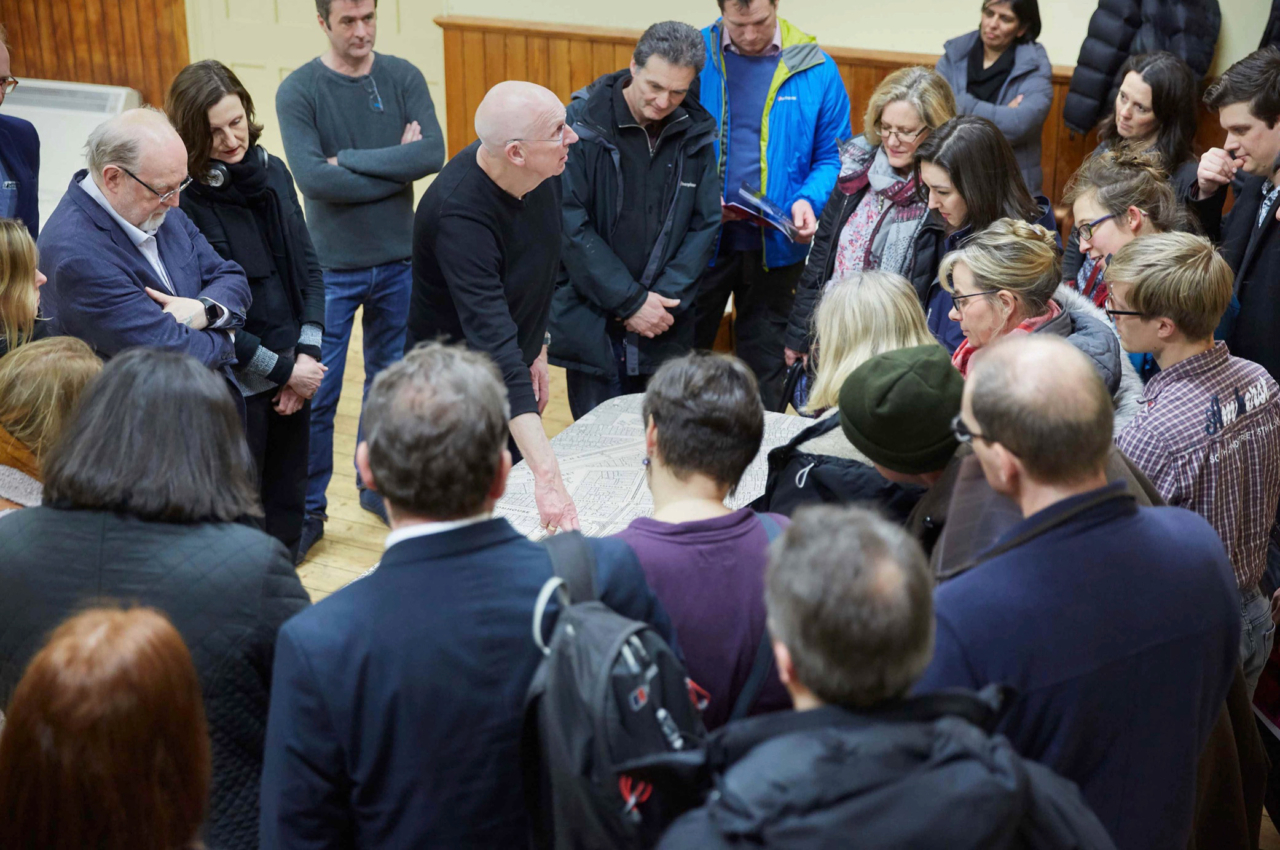
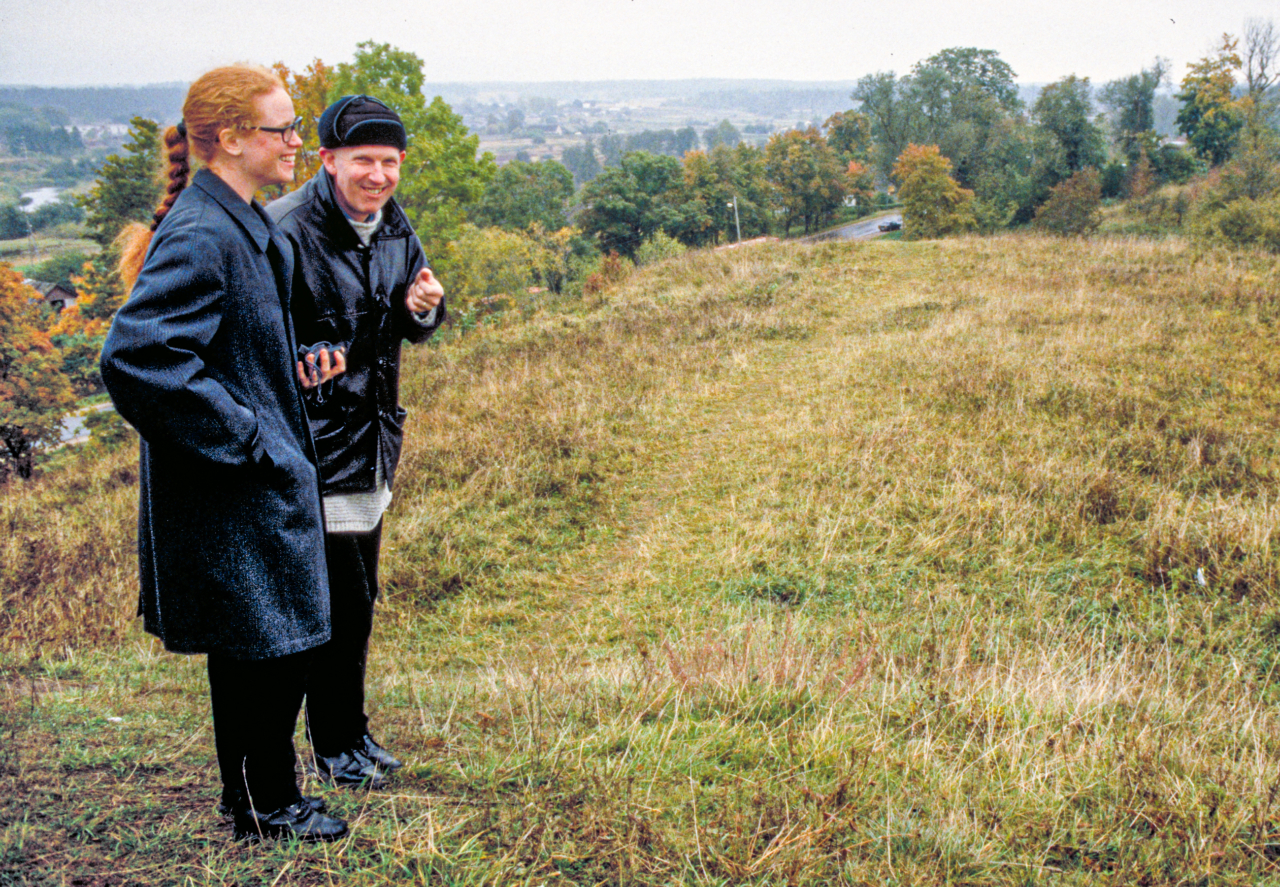
Mike has had such a wonderful influence on so many. I make a sentimental note that he might appreciate, even in its irony. The frontispiece of Thomas Percy’s Reliques of Ancient English Poetry (1769), one of the opening works of European Romanticism, and a favorite work of ours, shows a bard in a landscape under a quotation from Roman poet Horace: non omnis moriar, death is no end to poiesis. The conversation always goes on.