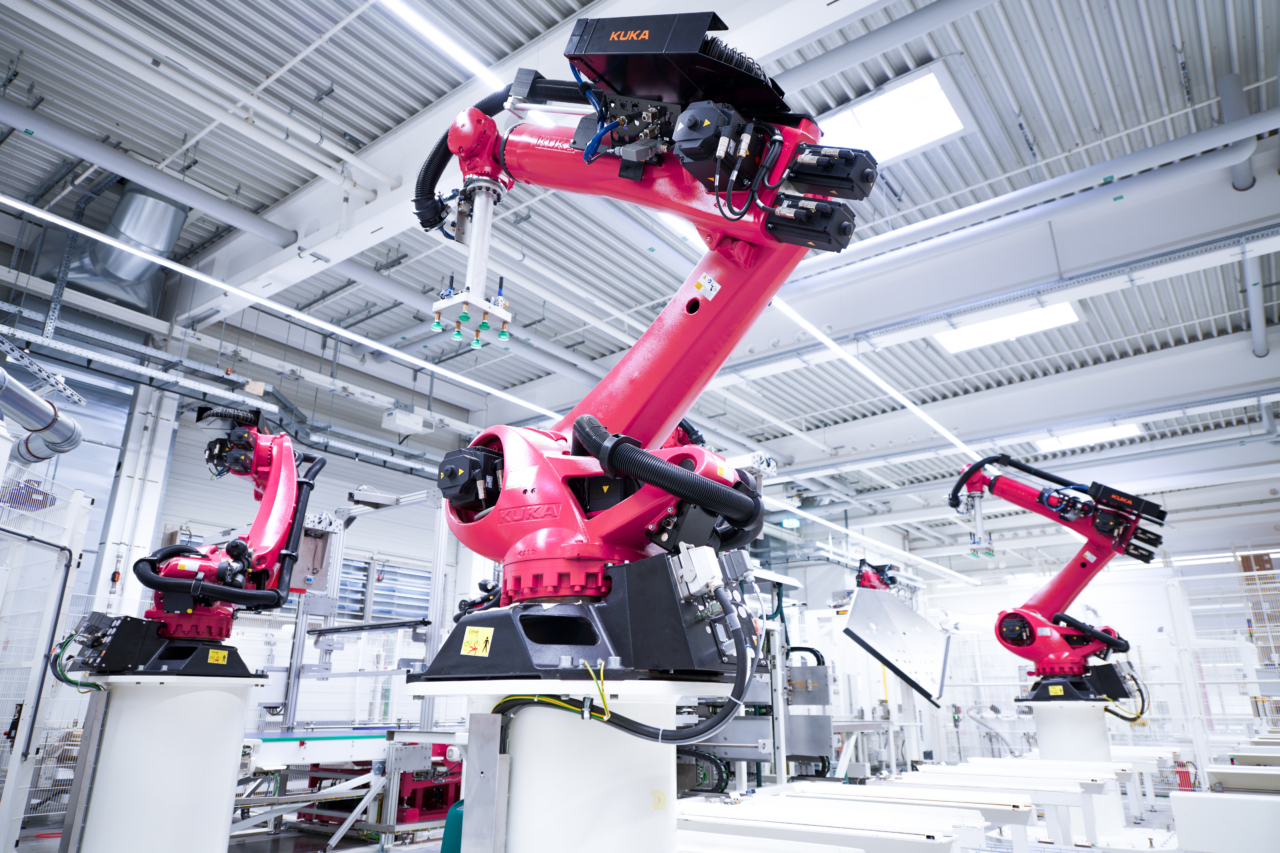
With Sabine (Remdisch) I recently spent time at Rittal’s plant in Haiger, Germany — by some measures the most advanced factory in the world manufacturing equipment enclosures for data centers — and I have been thinking about it ever since. What impressed me was not the automation as such. It was the coordination of temporal scales.
On the production line, robots work in milliseconds: sensing, adjusting, correcting at rhythms no human hand could follow. Around them, people work at human tempo — planning, maintaining, judging, intervening where judgement is needed. Automated vehicles thread the intralogistics at the pace of the day’s orders; a digital twin of the whole plant runs alongside it in machine-time; the delivery promise is measured in hours across Europe. And beyond the factory gates the horizon stretches further still: a large share of what Haiger makes are enclosures for the world’s data centers — the housings of the very computational infrastructure whose energy and water demands now weigh on climate policy, measured in decades, even millennia. A single object on the line participates simultaneously in the millisecond of a weld, the hour of a delivery, and the century of the biosphere.
This is what I mean when I say that AI is not a tool but a participant in heterogeneous ecologies of making. Nobody at Haiger polices the robots or demands they confess their contributions. Nobody pretends the people are incidental. The work is the coordination — different orders of agency, different speeds, different scales of consequence, held together by design, trust, and constant mutual cybernetic adjustment. It is Andrew Pickering’s mangle of practice at industrial scale, and it delivers — positively and negatively.
The academy could learn something here. While universities debate whether students may be permitted to think with machines, the world of making has simply got on with it — and its real questions are the serious ones: not whether to work with these new companions, but how to hold the milliseconds, the decades, and millennia together responsibly. That is a question worth teaching.
Rittal — a leading global supplier of enclosures and data-center infrastructure. €250M investment, some 250 networked machines, up to 9,000 compact enclosures a day, 24-hour delivery in Germany, and the 2022 Industry 4.0 Award and “Factory of the Year 2025”. [Link]
Digital Humanities — a zombie concept
This is part of my long-running commentary on the current state and future of the humanities, including what gets called digital humanities.
Nudged by a symposium at Stanford
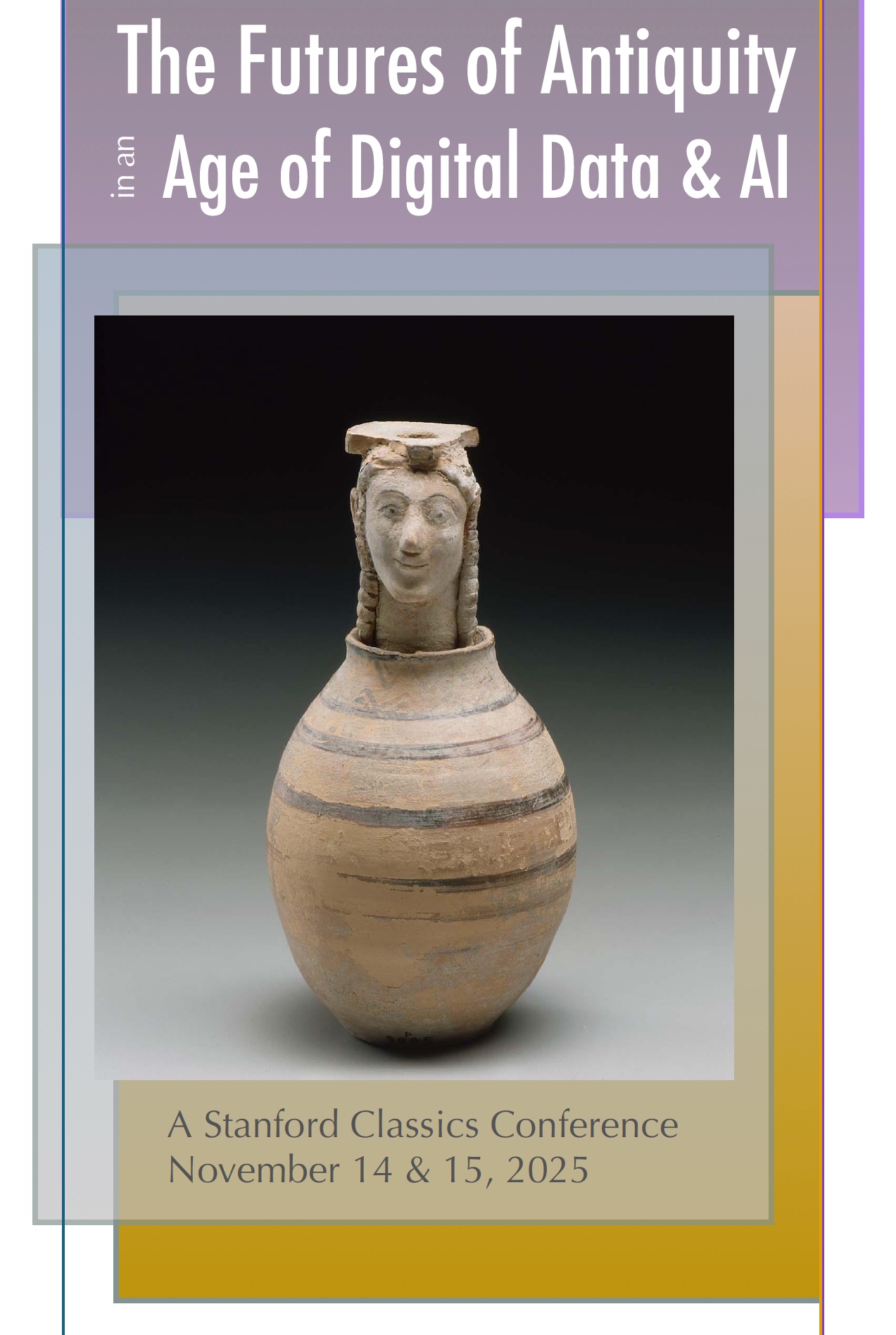
There was a symposium at Stanford last week (November 14-15) called “The Futures of Antiquity in an Age of Digital Data and AI”. Credit goes to faculty colleague Giovanna Ceserani for organizing this gathering to examine what so many are currently concerned with — the rapid rise of generative AI and the implications for the likes of the (digital) humanities.
I gate-crashed only a couple of hours — I wasn’t invited. But I was provoked enough by what I did hear, and by the program brief and paper synopses, to make this comment. What follows is not a direct critique of the symposium, but a sketch of critical matters concerning humanities and academic disciplines today.
Spoiler — there is no new digital future for the past — yet
The title asks us to think beyond what gets called digital humanities. I welcome this. So what’s new here? My answer — certainly not a new humanities for the future.
I do not think it is useful to conceive that we are in an “age of digital data and AI”. Nor are digital data, machine learning and AI, the future of the humanities.
Questions of the digital humanities are a symptom of how institutions manage knowledge under contemporary political and economic conditions.
I list these infrastructures for building knowledge that have been rolled out over the last three decades.
I make this case and then outline the key and pressing concerns of the humanities that remain largely unexamined in the kind of discussion I witnessed last week.
Here’s the conference agenda and schedule – [Link].
The conference was framed very explicitly around a double-sided question:
What can digital data and AI do for the study of antiquity?
What can antiquity and its study offer to the development, critique, and governance of AI?
The program text stresses that classics has a long history with technology, but asks what genuinely new knowledge digital data and AI have enabled, especially now that AI is reshaping how we research, teach, and imagine the ancient world. It repeatedly foregrounds:
AI as pressure on scholarly method and pedagogy (research, teaching, learning in the ancient world);
Antiquity as a resource for imagining AI futures (eg how ancient concepts of reason, prediction, governance, friendship illuminate AI’s roles);
A full “pipeline” of practice – from digitization of texts and images, to big-data analysis, to visualization and simulation, to heritage, ethics, and pedagogy. Panels moved from digitized literary texts, to material culture and history, to epigraphy/papyri, to heritage futures, to “AI between ancients and moderns,” and finally to philosophy and pedagogy.
The title — The Futures of Antiquity in an Age of Digital Data and AI — signals that these are big questions facing those who study antiquity — the future of the past being in question in this new (presumably) digital age. Central themes here are futures and newness.
I detect a strong emphasis on technical-methodological questions in an agenda of classic humanistic concerns: source/data quality and standards, building corpora of data and sources, bias and canon, archival selection, an interpretive hermeneutics of uncertainty, pedagogy and humanistic ethics, with newer topics of human–machine co-performance, and how to train/teach humanists in digital matters.
Classic(al) concerns, as I say.
I doubt whether such a technical focus manages to encompass the big questions implicit in the conference title — just how much is the “age of digital data and AI” affecting the humanities, given declining student recruitment, funding emphasis upon what get called STEM disciplines, culture wars around knowledge claims (eg implications of “colonial thought”), challenges to the ontology of humanities interests (eg a post-humanist critique)? Are we truly in a new age? Just how new is all this?
Let me step back and offer some answers.
Digital Humanities is not a disciplinary field — it is an institutional formation
What gets called “digital humanities” is not, and never was, a coherent intellectual field. It is best understood as an institutional formation: a convergence of funding mechanisms, administrative strategies, technical infrastructures, and labor arrangements that have reorganized how certain kinds of humanistic work are supported, branded, and made visible. The widespread claim that DH represents a methodological or epistemic rupture in the humanities does not survive even cursory historical scrutiny. What changed was not how humanists think, but how their work is infrastructured, managed, and accounted for.
The practices most often presented as distinctive of DH — corpus construction, pattern detection, classification, concordance building, mapping, modeling, editing, archiving — are not new. They are foundational to philology, archaeology, history, art history, linguistics, and anthropology. Humanists have always worked with structured data, formal models, typologies, and technologies of inscription. What digital systems introduced was scale, speed, and interoperability, not new forms of understanding. To describe this as the emergence of a new discipline is to mistake a change in material conditions for an epistemological revolution.
The mythology of DH solidified in the late 1990s and 2000s alongside major investments in digitization, tool-building, and cyberinfrastructure. New centers, labs, and grant programs — most visibly through entities such as the NEH Office of Digital Humanities — produced an administrative ecology in which DH became legible as a field. This legibility mattered: it justified funding, enabled new career paths, and provided universities with a narrative of innovation and relevance, project management focused on deliverables. But it also distorted perception. Activities that were already central to the humanities were re-described as novel once they were rendered computationally visible and administratively nameable.
This institutional consolidation brought with it a project-based logic borrowed from technoscience and grant culture: teams, deliverables, platforms, timelines, prototypes. These are not in themselves objectionable. But they have encouraged a shift in emphasis from method to technique, from conceptual work to tools, from theory to workflow. Visibility has become a proxy for intellectual advance. Dashboards, databases, and visualizations have come to stand in for arguments. In this environment, DH can present itself as the “future of the humanities” while quietly avoiding the harder work of articulating how knowledge is actually produced, interpreted, and contested.
Seen this way, digital humanities is not a disciplinary innovation but a rebranding of the humanities under new institutional, political and economic conditions. It is the humanities intensified and reorganized by digital infrastructures — nothing more, nothing less. The danger lies not in using digital tools, which humanists have always done in one form or another, but in allowing the institutional narrative of DH to obscure the deep methodological continuities of humanistic inquiry and to displace attention from the enduring theoretical questions that still define the humanities at their core.
“The Digital” and “AI” are zombie concepts
Much contemporary discussion does proceed as if we now inhabit an “age of digital data and AI,” as though this phrase names a coherent historical condition. It does not. It is a rhetorical convenience — a zombie concept that continues to circulate despite having little explanatory power, eating away at our capacity to think clearly about things. Framing the present in terms of “the digital” or “AI” exaggerates novelty, flattens history, and diverts attention from the forces that actually shape the conditions of research, teaching, and knowledge production.
Humanities scholarship has always been entangled with technologies of inscription, calculation, mediation, and automation. From writing and print to statistics, photography, film, databases, and cybernetics, there is no pre-technological humanities against which “the digital” can be contrasted. What we are witnessing today is not the arrival of something unprecedented, but the acceleration and consolidation of long-running trajectories: data construction, modeling, automation, and infrastructural dependence. To label this an “age of AI” is to mistake a phase of intensification for a civilizational break.
The appeal of these terms is not analytical but institutional. “Digital” and “AI” function as administrative signals: they attract funding, promise relevance, and align the humanities with dominant narratives of innovation emanating from the technology sector. But as concepts they do very little work. They obscure more than they reveal, especially when they are treated as causal agents — as if computation itself were driving historical change. It is not. The decisive forces shaping the humanities today are political economy, institutional restructuring, labor precarity, widening inequality, and populist challenges to reasoned discourse— conditions into which digital systems are inserted and by which they are governed.
To speak of an “age of digital data and AI” also encourages a displacement of responsibility. Structural problems facing the humanities — declining enrollments, funding priorities skewed toward STEM, managerial governance, culture-war pressures on knowledge validation — are reframed as technical challenges to be solved by better tools. This is a category mistake. No amount of machine learning will resolve the erosion of public investment in education, the making casual of academic labor, culture wars of competing conspiracies, or the instrumentalization of research under audit cultures. Technology here serves as a distraction, not a diagnosis.
This is why the concept of “the digital” has become something of a zombie: endlessly invoked, rarely interrogated, and incapable of accounting for the realities it is supposed to explain. The concept survives because it is useful to institutions, not because it clarifies thought. By foregrounding technology, we background the long-standing questions that actually matter: how knowledge is made, who it serves, under what conditions, and toward what futures. The humanities do not need to be saved by AI. They need to confront, once again, the enduring problem of how to think, interpret, critique, and act within a world structured by power, inequality, and historical inheritance.
What Digital Humanities avoids: theory, method, and the big questions
One of the most striking features of what passes for digital humanities is not what it addresses, but what it systematically avoids. Much DH discourse is preoccupied with tools, workflows, datasets, and technical capabilities, while leaving largely unexamined the deeper questions of theory and method that have always anchored humanistic inquiry. The result is a field that is busy, productive, and often technically impressive — but conceptually thin.
At the core of the humanities are long-standing questions about how knowledge is made and justified: interpretation and explanation, understanding and modeling, description and critique. These questions are not rendered obsolete by computation. On the contrary, they become more urgent as scale, automation, and abstraction increase. Yet much DH work proceeds as if methodological reflection were optional, or worse, as if it had already been settled by the availability of new techniques. Pattern-finding is treated as insight. Visualization is taken to be argument. Scale is mistaken for understanding.
This avoidance is particularly evident in the treatment of AI. Large language models, clustering algorithms, and image-recognition systems are often presented as if they were interpretive agents, rather than statistical machines that reorganize existing material. They retrieve, correlate, summarize, and simulate — but they do not explain, understand, or judge. Those acts remain human responsibilities, grounded in historically situated reasoning. When DH fails to articulate this distinction clearly, it risks reviving old positivisms under the guise of technical sophistication.
Equally absent is sustained engagement with social theory, political economy, and the arts as modes of knowledge. The humanities have never been isolated from the social sciences nor from creative practice, nor from the ontological and epistemological concerns of the hard sciences. Archaeology, in particular, has always occupied this hybrid space, working simultaneously with material evidence, models of social process, narrative interpretation, and speculative reconstruction. Yet DH discourse often reinstates disciplinary silos by focusing narrowly on technique and leaving untouched the conceptual frameworks that allow us to connect material and cultural forms, social structures, and historical change.
What is lost in this narrowing is precisely the humanities’ capacity to address big questions: what counts as evidence; how pasts are made present; how models mediate reality; how narratives shape understanding; how power operates through archives, classifications, and infrastructures. And the biggest of them all — just how are we to conceive of the human in a world of things, of other species, of non-humans? These are not ancillary concerns. They are the work of the humanities. When DH sidelines them, it becomes not an advance but a retreat — away from method, away from theory, and away from the intellectual responsibility to explain why any of this matters.
In short, digital humanities too often treats technique as a substitute for thought. Concepts follow tools, if they appear at all. But method does not emerge from software, and theory cannot be automated. Without sustained attention to these foundations, DH risks becoming an elaborate technical service layer attached to the humanities rather than a serious engagement with their enduring intellectual challenges.
A counter-genealogy: reflections on personal experience
The symposium nudged me to reflect upon my own experiences in matters disciplinary and digital. Here are a few words of orientation — a reminder to myself, as much as anything else, of a personal itinerary from classical studies to a contemporary archaeological sensibility.
If the dominant story of digital humanities is one of rupture and novelty, my own career traces a different genealogy — one of continuity rather than disruption, of method rather than technology, of practice rather than branding. Over more than four decades, my work has repeatedly intersected with new media, computational tools, and digital platforms. But at no point did these encounters pull me into a new field called “digital humanities.” They simply offered new materials and new conditions for doing what the humanities — and archaeology in particular — have always done.
After a very traditional grammar-schooling in classical languages I shifted direction, at the protest of my teachers, into the archaeology of classical antiquity. A bigger picture was what I was seeking, and one that reached beyond the elite culture-industry of then-and-now.
I am currently working with Gabriella Giannachi on the intersection of arts practice and AI, part of an extensive government-funded research network in the UK [Link]. In between I have explored GIS, VR and AR in learning, digitally-facilitated research collaboration (Web 2.0), augmented reality archives, hybrid analogue and digital media ecologies. In the last couple of decades most of this has been through my studio at Stanford and when I fronted Stanford Humanities Lab with Jeffrey Schnapp and Henry Lowood (up to 2009). Speculative fabulation. Theatre archaeology. Applied humanities. Design foresight and futures literacy, from Rotterdam to Aisin corporation. Scholartistry and Creative Pragmatics — active and hybrid learning beyond a sciences-humanities split — a series of projects with Connie Svabo and her lab at University of Southern Denmark [Link].
In the late 70s I explored the potential of statistical analysis of archaeological data associated with early farming communities in northern Europe — affirming patterns in large datasets of prehistoric mortuary practices: distributions of grave goods, spatial arrangements, demographic associations, and formal regularities. This was a computational humanities only made possible by the availability of high-end main-frame CPUs that could cope with the number of calculations involved in multi-variate analysis. The aim was never to replace interpretation with numbers. Statistics were lenses — ways of sharpening attention to structure and variation in material traces. Pattern-finding required judgment, contextual knowledge, and, above all, theoretical framing (structural-marxist socio-cultural modeling. Computation changed scale and speed, not the logic of inquiry.
The same is true of my later work with GIS. Geographic information systems did not introduce a new epistemology; they intensified an old one. Mapping is a hermeneutic and eidetic (pragmatic) practice. It directs attention, foregrounds relations, and encodes assumptions about space, agency, and causality. GIS taught me something elemental that has stayed with me ever since: digital tools reshape perception, attention, and workflow, but they do not think for us. They help us see differently, not understand differently.
This conviction shaped my approach when I co-directed Stanford Humanities Lab. We were explicit — and insistent — that SHL was not a center for “digital humanities.” It was a laboratory in the arts and humanities, embedded where appropriate in the social and physical sciences, and conceived as a studio for experimental scholarly practice. Our projects were not DH projects. They were humanistic projects that happened to use digital media: multimedia archives, collaborative platforms, performance-based interpretation, experimental reconstructions, and interactive models. We did not claim new methods. We made visible the humanities’ long-standing multimodality.
The same logic guided my work on collaborative platforms such as Traumwerk in the early days of Web 2.0. Before “platforms” became a managerial buzzword, this work explored distributed authorship, open commentary, and dialogic scholarship. Again, there was nothing fundamentally new here. Medieval glossators, early modern republics of letters, and nineteenth-century philologists all worked in commentarial traditions. Digital systems simply redistributed those practices across time and space.
My subsequent work in theatre/archaeology, archaeography, and arts practice as research pushed these commitments further. Performance, scenography, model-making, and speculative reconstruction are not embellishments to scholarship; they are modes of inquiry in their own right. They make worlds in order to think with them. In these contexts, method appears not as a formal protocol but as design—as the orchestration of concepts, materials, narratives, and audiences in situated projects. This concern with design connected with archaeology conceived as material-culture studies, and took me into design foresight, complementing direct collaboration with designers and artists.
Most recently, my engagement with AI and in another project with Gabriella Giannachi, has taken the form of what I call “archaeologies of AI”: treating intelligence, automation, and machine learning as cultural and historical phenomena, embedded in archives, infrastructures, and political economies. Once again, the question is not what the technology can do for the humanities, but how humanistic methods —interpretation, critique, genealogy, imagination — can clarify what these systems are, how they work, and what futures they help bring into being.
Taken together, this counter-genealogy shows something simple but often forgotten: the digital is a material condition of contemporary humanistic practice. New tools intensify capacities that were already there. They do not displace the need for theory, judgment, or responsibility. If anything, they make those needs more pressing.
Creative Pragmatics: method as practice, not paradigm
What this counter-genealogy points toward is not a rejection of abstract theory, nor a retreat into empiricism, but a different understanding of method itself. Connie Svabo and I have come to call this orientation Creative Pragmatics [Link]. It treats theory not as adherence to paradigms or schools of thought, but as a repertoire of conceptual tools deployed within situated projects. Method, on this view, is not abstract prescription. It is practice — designed, enacted, revised, and learned in the course of doing work under real constraints. In its transdisciplinary practice Creative Pragmatics transcends the regular distinction between arts, humanities, social sciences, physical sciences.
Creative Pragmatics draws on science and technology studies, design practice, archaeology, performance, and rhetoric. It starts from a simple observation: research does not unfold in the abstract. It happens in institutions, with particular resources, skills, audiences, technologies, and temporal horizons. Concepts are not detached explanations; they are tactics — ways of directing attention, framing questions, staging evidence, and making sense of what remains in the performance of knowledge. Theory is inseparable from mediation, from inscription, from the forms in which knowledge is made public and consequential.
Seen this way, the familiar opposition between humanities and social sciences, for example, collapses. In practice, both work through pattern-finding, modeling, interpretation, narrative construction, and critique. Both rely on judgment and imagination as much as on formal procedure. Archaeology has long exemplified this hybridity: it is simultaneously empirical and speculative, analytical and creative, explanatory and interpretive. Digital tools do not change this. They intensify it.
This is why the most important methodological questions raised by AI and large-scale computation are not technical. They concern praxis, thoughtful practice: how humans work with machines; how uncertainty, ambiguity, and interpretation are handled; how models are situated within arguments; how responsibility is distributed across human and non-human actors. Learning to use AI critically is not a matter of mastering software. It is a matter of cultivating judgment, reflexivity, and ethical awareness in environments saturated with automation.
Creative Pragmatics therefore places learning and pedagogy at the center. Research is inseparable from learning by doing. Knowledge is produced through projects, experiments, performances, and interventions, not simply through the application of tools. Futures Literacy [Link], in this sense, is not about keeping up with the latest technologies. It is about developing the capacity to orient oneself within changing infrastructures, data regimes, and media ecologies—to ask, repeatedly and critically, what kinds of pasts and futures are being made possible.
If digital humanities has a future worth claiming, it lies here: not as a field defined by technology, but as a space in which the humanities recover and renew their methodological seriousness. Concept comes before technique. Practice comes before branding. And method is understood, once again, as a creative, pragmatic, and fundamentally human undertaking.
What is the past to become?
The humanities are not in crisis because they have failed to adopt digital tools. They are in trouble because institutions have struggled to articulate what the humanities are for in a world shaped by accelerating inequality, extractive political economies, environmental breakdown, challenges to reasoned argument, and contested futures. Framing the problem as one of technology — of catching up with AI, data, or “the digital” — is a way of avoiding this harder reckoning.
Digital humanities does not fail because it is insufficiently technical. It fails because it was too easily institutionalized without a corresponding deepening of methodological and theoretical ambition. In many cases it substitutes infrastructure for vision, tools for concepts, and visibility for understanding. That does not make DH useless. It makes it incomplete — and in need of re-situating within a broader account of how humanistic knowledge is made, taught, and mobilized.
The question that matters now is not whether AI will transform the humanities. Of course it will, in banal and uneven ways, as all media do. The real question is older and more demanding: what is the past to become? How are histories, archives, and cultural inheritances mobilized in the present, and toward what futures? Who controls the infrastructures through which knowledge circulates? What kinds of judgment, imagination, and responsibility do we want to cultivate in students and scholars working amid automation?
Answering these questions requires intellectual leadership, not technical enthusiasm. It requires treating method as something to be argued for, practiced, and taught — not assumed to emerge automatically from new tools. It requires recognizing that the humanities have always been interdisciplinary, experimental, and engaged with technology, but never reducible to it.
If there is a future worth defending for the humanities, it lies in reclaiming this seriousness of purpose. Not in declaring new ages. Not in chasing zombie concepts. But in doing what the humanities have always done at their best: working critically and creatively with the remains of the past in order to imagine better, more just, and more thoughtful futures.
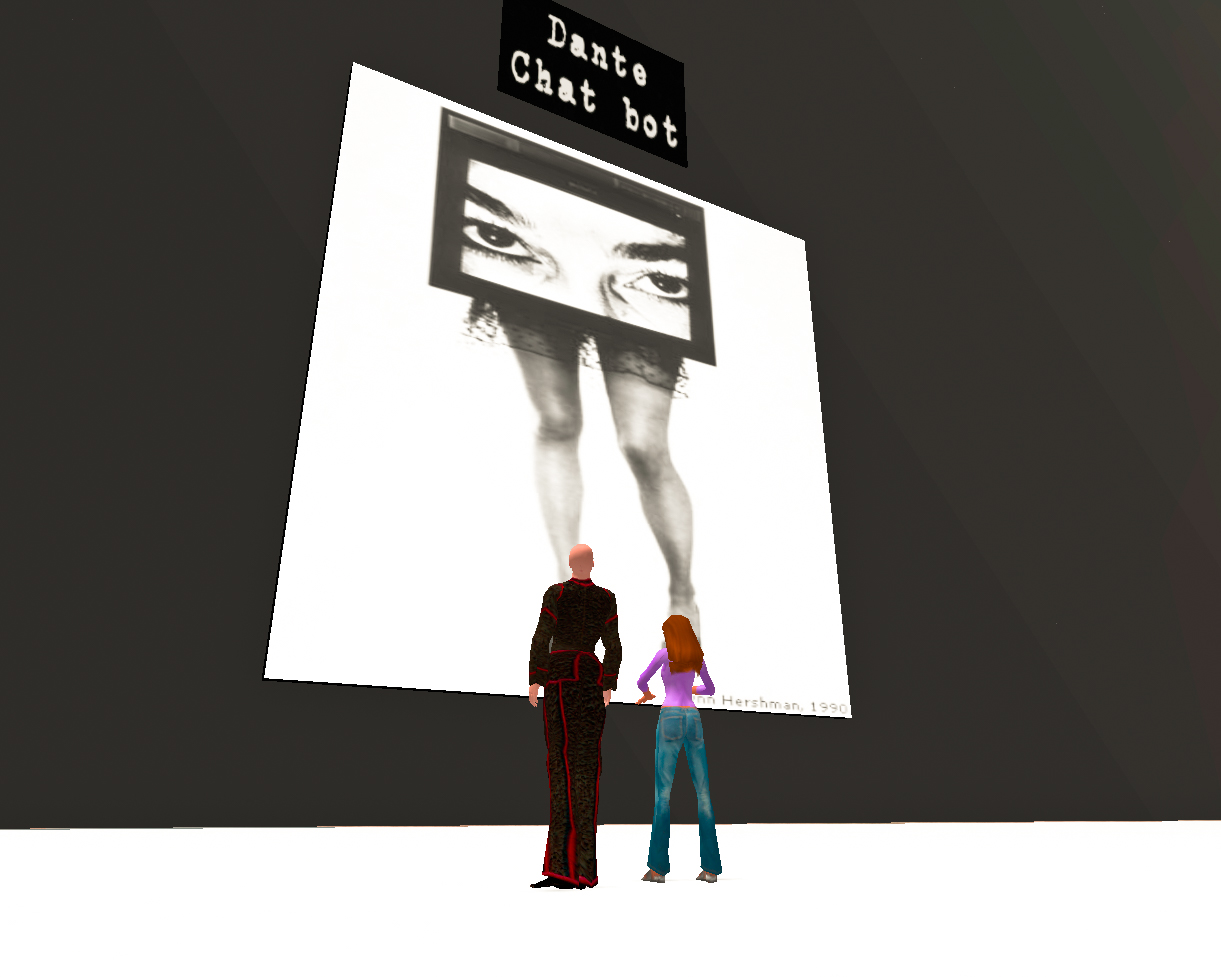
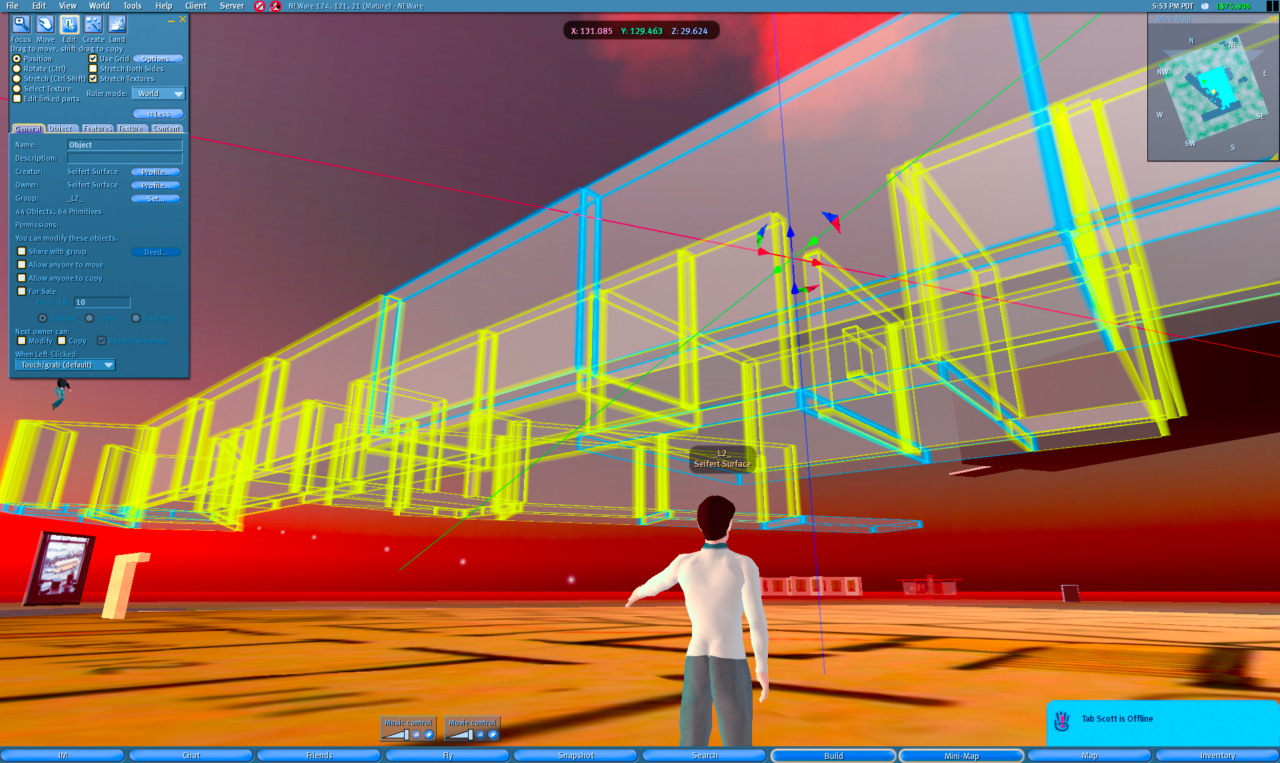
Animating the archive 2005. Life-squared — replaying Lynn Hershman-Leeson’s 1972 installation at the Dante Hotel San Francisco in the online world Second Life. Stanford Humanities Lab for the Presence Project (Arts and Humanities Research Council UK 2005–2009).
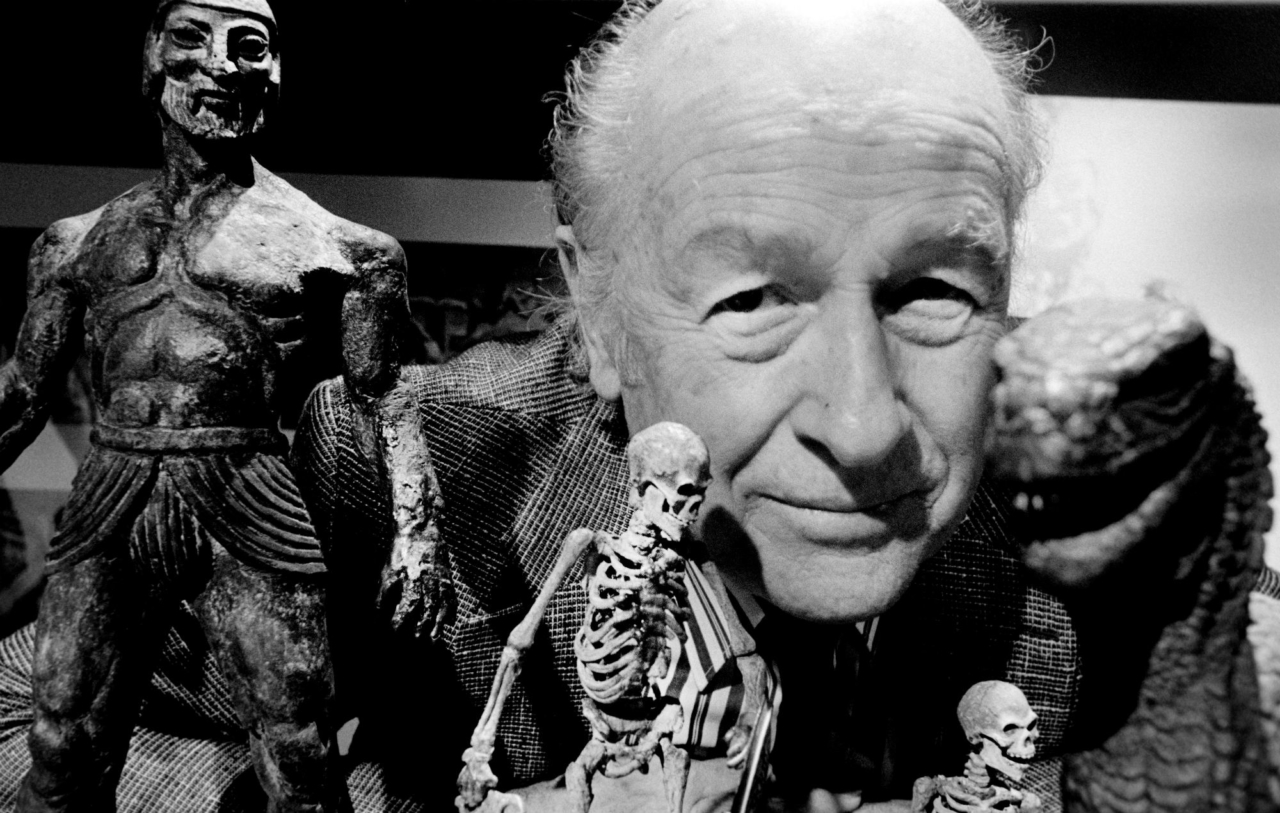
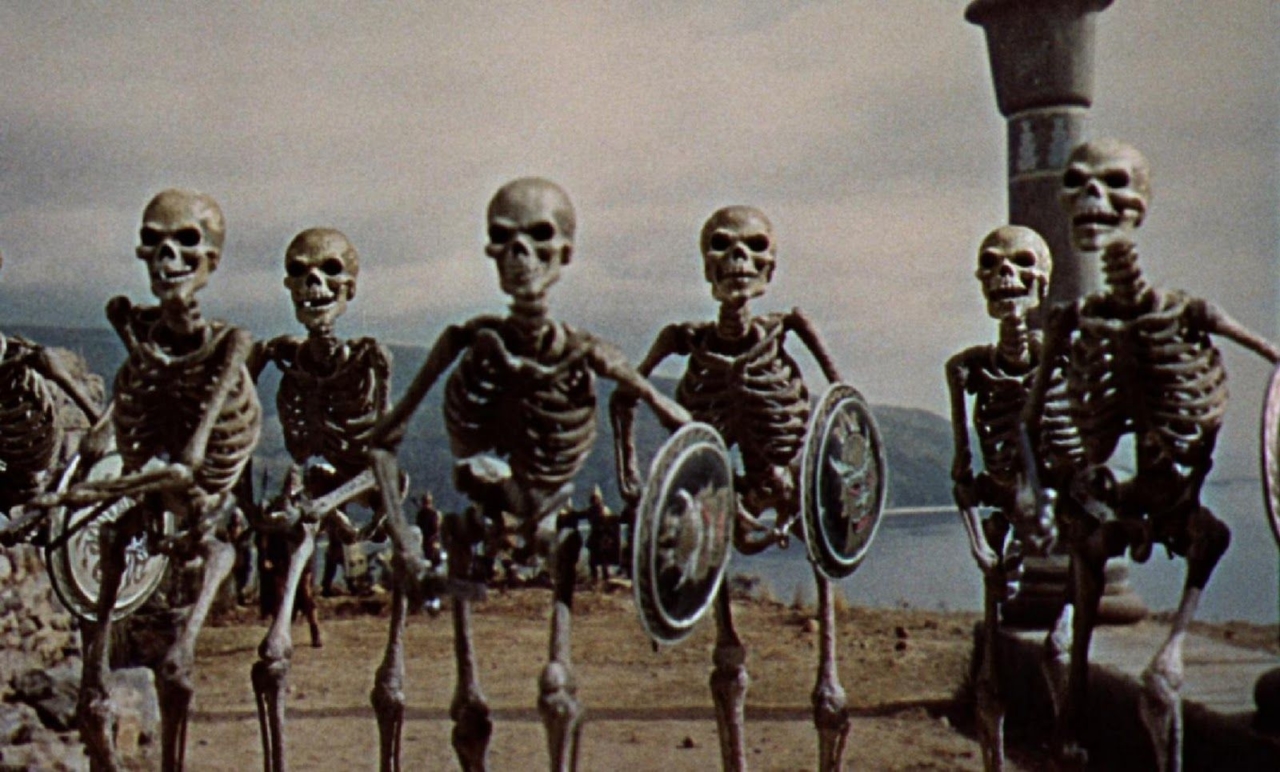
fictive realism – Ray Harryhausen’s model making
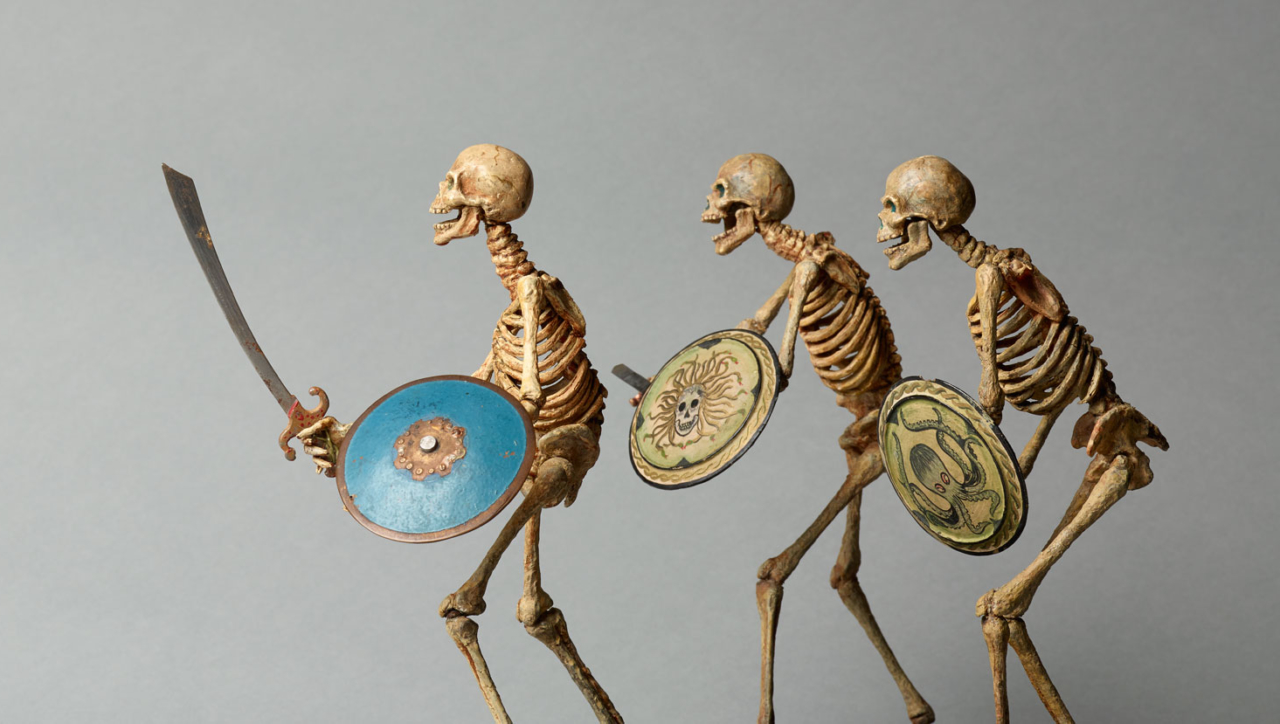
There’s an exhibition of the stop-motion animation of Ray Harryhausen running at Scottish National Gallery of Modern Art – [Link]. I vividly remember first seeing his magical movies in the 60s and 70s. The infamous fighting skeletons in Jason and the Argonauts (1963); Pegasus the winged horse in Clash of the Titans (1981). Paul Noble sent me a book about him a few years back – part of our conversation around world building and the fantastical. Mike Pearson and I have written much about reenactment and performative presence. And most recently Gary Devore and I have been exploring the crucial role of conjecture and the imagination in archaeology and history writing.
Harryhausen’s movies are not great works of art. The plots, dialogue and acting were often wooden. Why then is he rightly considered so influential and inspiring?
Because his models are so much more than special effects. They breathe presence and attest to our constant remaking of lifeworld. How does this work? Here are some lessons for those of us who would wish to reconstruct, remodel the past into a better future (see Futures Literacy – [Link]).
Computer generated imagery (CGI) can be remarkably photo-realistic, blending seamlessly with the way photographs capture the appearance of things. Stop motion animated models are not like this. They never quite blend in; and this is actually the source of their energy to evoke, I think.
CGI is the product of a quite different design process and mode of production. Here we might contrast naturalism and realism. Naturalism is the reproduction of the way the world appears superficially. Photography is good at naturalism, as is CGI. For many this is the objective of CGI and photo work, to reproduce the appearance of things.
We might use the concept of realism to refer to features of lifeworld that exceed appearance, relating perhaps to structure, or causation, to our relationships with experience. The rhetorical purposes of naturalism and realism are different. Naturalism says – here is the way things appear. Realism says – here is how things work, maybe, depending upon your interest.
Harryhausen’s stop motion animated models belong to worlds of fantasy. There is no attempt to deny this. One might say that their realism is about the power of narrative; they augment the ways one might imagine stories by offering versions of characters that do not occur naturally in everyday experience, like fighting skeletons or flying horses.
The realism of stop motion animated models is also that they acknowledge their mode of production. In CGI the objective is often to have the imagery fabricated by the computer blend in so one doesn’t notice where the fabrication begins or ends. The rhetorical purpose of CGI is to fool, to deceive. Harryhausen’s models don’t look “real”. More precisely, they don’t look “natural”. No one need be fooled. One admires the craft in their making. Trickster Harryhausen gets us to admire his skill and artistry.
In contrast, CGI can tend to an experience of alienation. The hand of the maker is occluded, by design. We don’t see, are not meant to see the connection between the CGI artist/engineer and the image on the screen. A gap, a fault or error in the naturalism (perhaps the fur of a creature doesn’t quite look as naturalistic as it might), might induce an experience of what gets called the “uncanny valley”. CGI figures can look creepy in their slight “imperfection”. Such a gap actually adds to the appeal of stop motion animation.
(Nick Park’s Wallace and Grommit series comes to mind here. Why would one ever want their world to be naturalistic? One is instead drawn into the extraordinary skills of trickster Park and his Aardman team through the medium and acknowledgement of how it works [Link].)
Ironically perhaps, when watching Harryhausen’s models, we suspend any final belief in illusion. We don’t commit to the fantasy’s naturalism, and don’t have to. The models invite one to believe and at the same time be aware of their fabrication. This is a kind of synchronicity [Link]. They are real and fantastical at the same time: both/and, interrupting the illusion while acknowledging it.
The models perform. They don’t naturalistically represent. One appreciates how Harryhausen made an armature (actually, his father took on this task), fleshed it out in latex, and ran the stop motion process, moving the model little by little, this way and that, building up the performance, and guided by his concept drawings and a storyboard rather than any precisely computed motion algorithm. Model performance is improvised.
And material. The modeled materials metamorphose, seem to come to a kind of fantastical life. Life is breathed into raw matter, metal skeleton, latex flesh, glass eyes. Prometheus moulds humankind out of clay.
If one appreciates this vitality, character, call it authenticity of the performing models, one might extend the argument and insights into realism and naturalism with a concept of selective fidelity. Hi fidelity naturalism is not necessarily as persuasive as low resolution performance. The most real and engaging may well be what doesn’t quite fit, where fidelity to the way we experience the world is partial, and we are drawn into the gaps to complete the world, the illusion. Such rhetoric affirms our agency and complicity, thereby adding to the sense of realism.
There’s something allegorical in this dreamlike quality of the animated models, their belonging to a kind of traumwerk within which we create worlds that bridge self and fantasy.
Here’s what I wrote recently about allegory as ontology:
There is a strong case to be made that allegory not only refers to ways of handling our experience of things, but also is an aspect of the way things are, their ontology.
With multiple aspects, incomplete, fragments, ruins, pointing to indeterminate, ever displaced and ever put off completion: this is the way things are.
Concepts of entropy and negentropy (negative entropy) point to the energy dynamics of our lifeworld, that, in the face of eternal transience, perpetual effort, the energy investment of negative entropy is needed to maintain things in constant re-creation. Hence the figurative emblem which one might find so apposite in modern times, the allegorical force of the face that is both skull and angel, death and redemption/rebirth [Link].
There can be no knowledge of such a world if we conceive of knowledge as a kind of description or display of the way things are. The quest for knowledge can deliver no full conclusive destination or possession because things flow, are dynamic, in constant creation and passing away, passing in and out of being. Any insight, understanding is always provisional.
Again, this is a performative model of coming to know the world, as we engage and act.
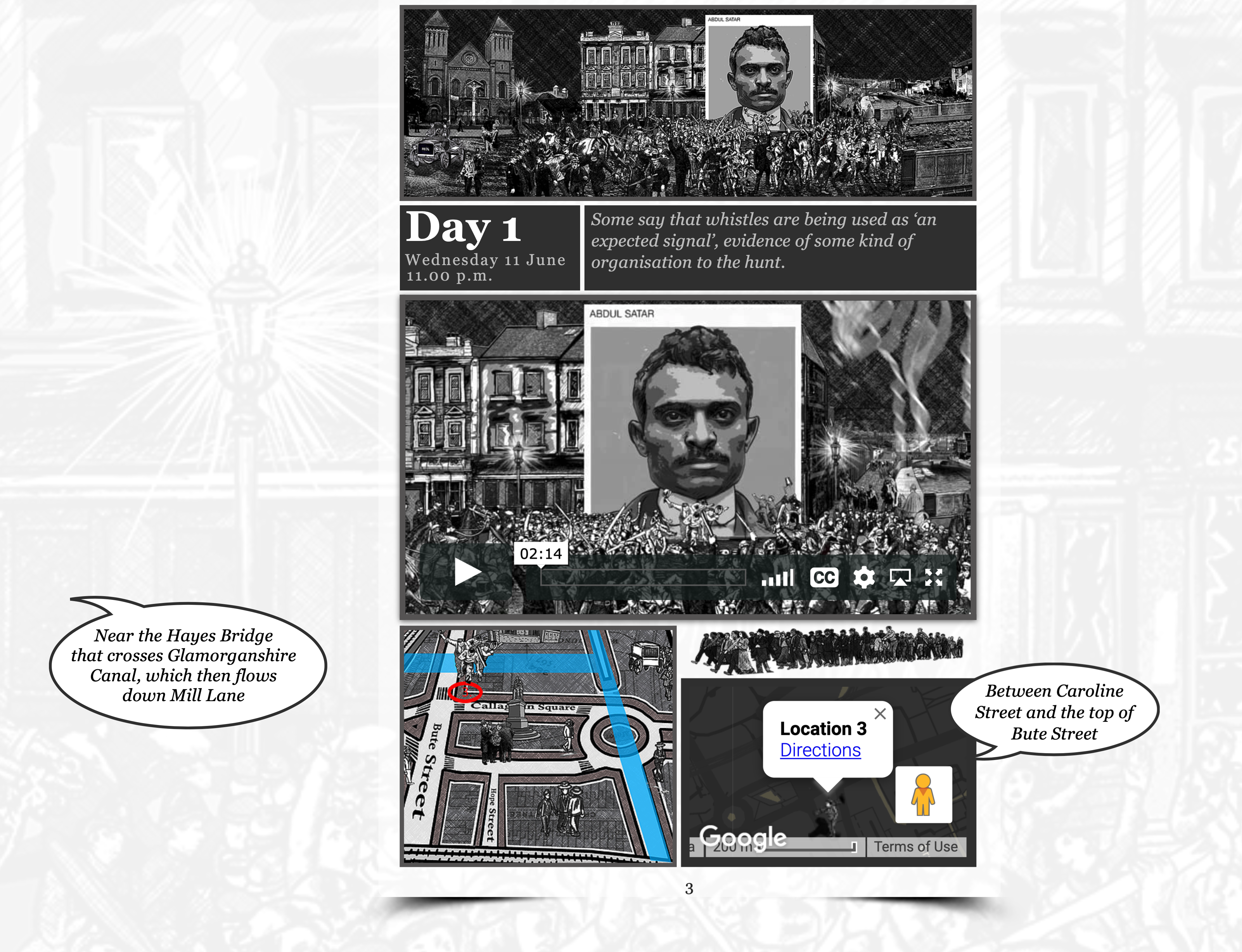
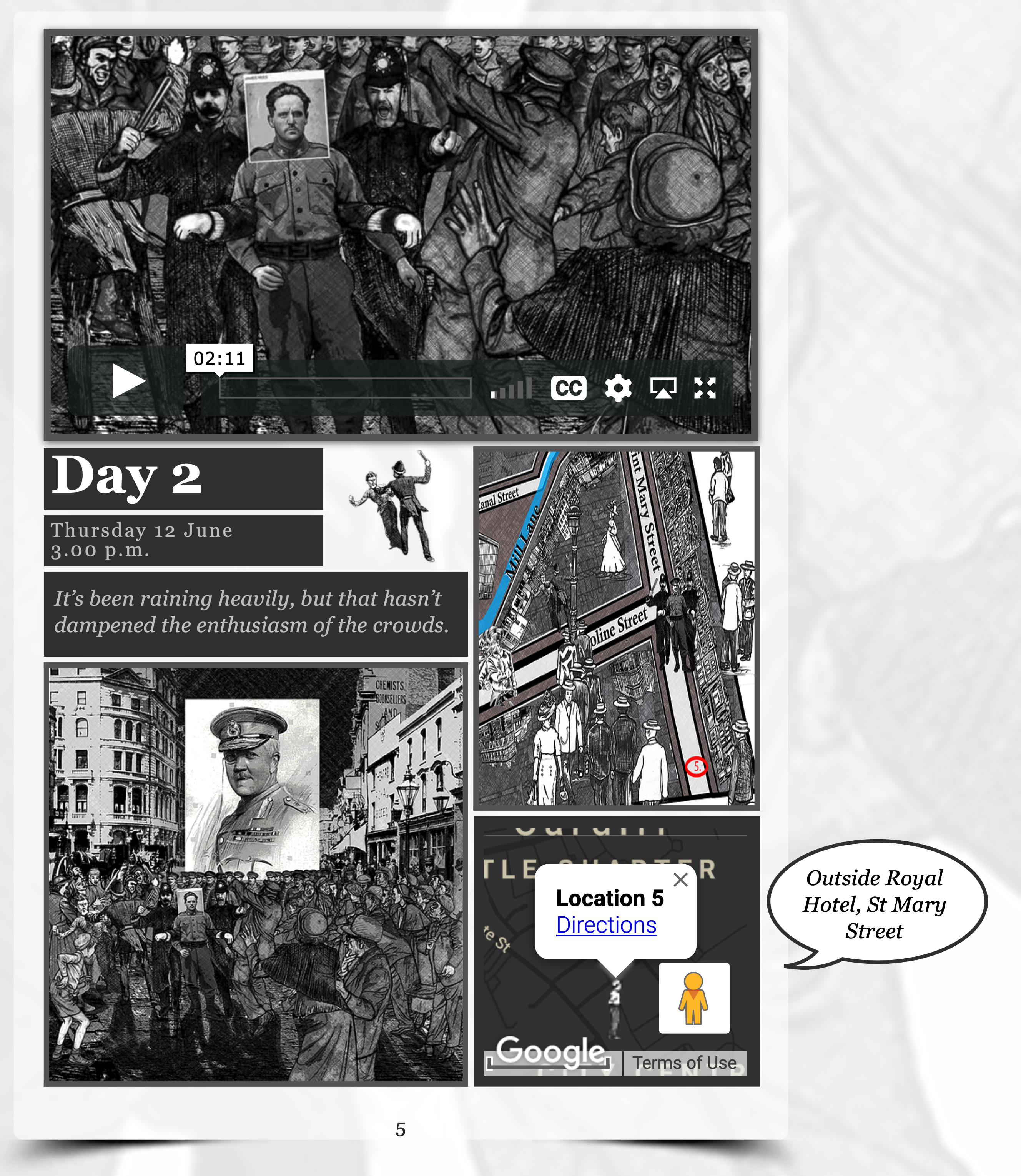
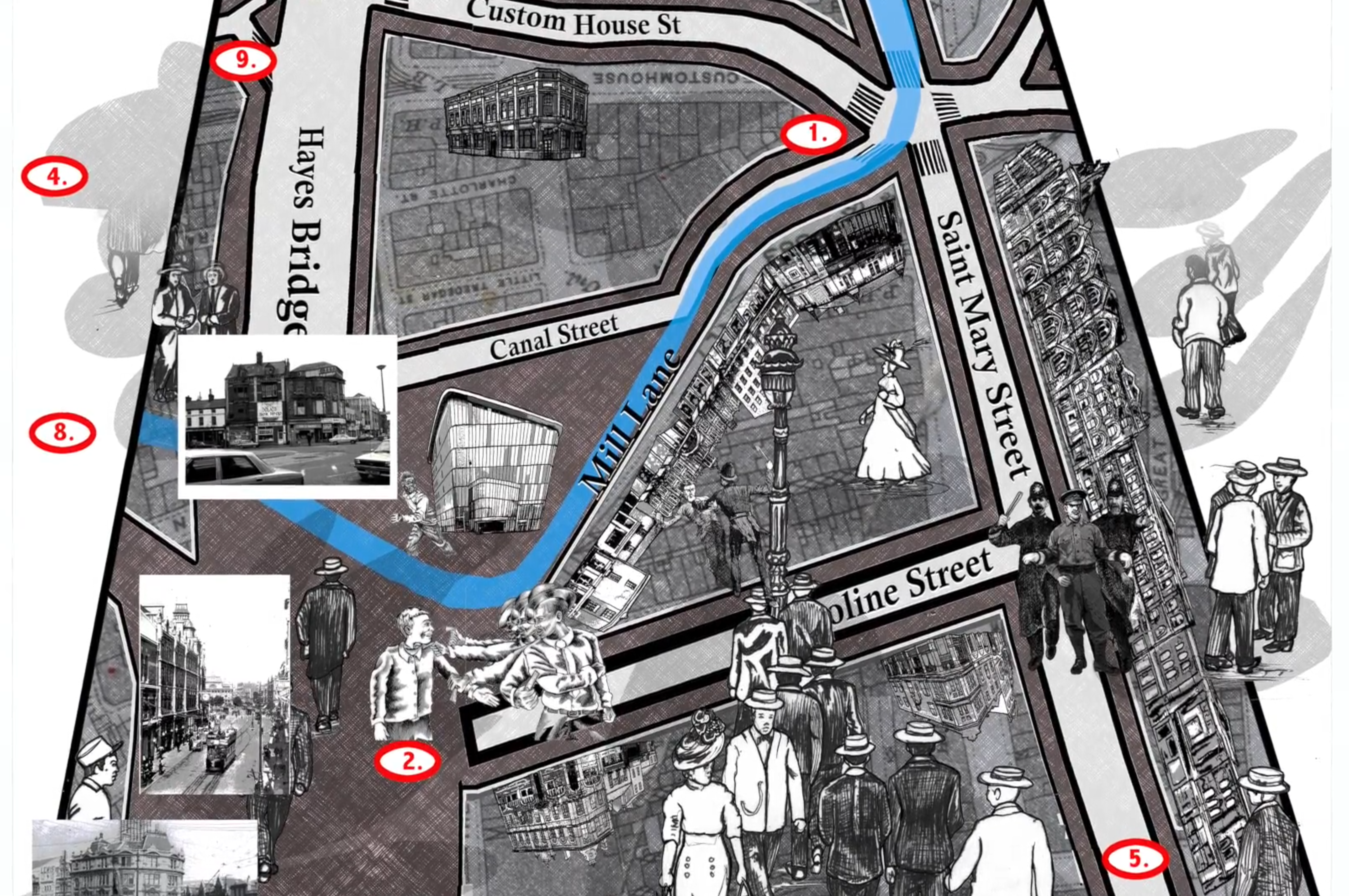
A team from National Theatre Wales, featuring Kyle Legall and Mike Pearson, have just published a powerful work of theatre/archaeology* in their series Storm, about the race riots in Cardiff Wales in 1919. It takes the form of a graphic novel with animated video and voice over.
Working on my text accompaniment to the guide to Paul Noble’s art work, on display currently at Museum Boijmans van Beuningen, has had me reflecting again on just how we might describe an encounter, in this case with a world of the imagination, a curiously enigmatic cosmopolis.
(As an archaeologist I am constantly encountering places, but aren’t they all so informed by the imaginary, both personal and cultural?)
While I chose a kind of glossary of an itinerary through Nobson (In Parenthesis [Link]), I have found it so appropriate to look again at the descriptive efforts of the English chorographers of the seventeenth and eighteenth centuries – how curate John Wallis, my favorite, described the county of Northumberland in the 1750s and 60s, its natural history and antiquities, with an attitude and style intimately human, observant of local detail, and almost alchemical in its appreciation of the qualities of place and the physical environment.
Paul draws in pencil graphite on an epic scale of minute detail, and shared with me one of the figures of his own encounter with Nobson Newtown – Mefisty. Me – fist – Mephistopheles – Mefisty is the product of Paul’s pact with graphite, laboring over drawings twenty feet high and as wide – labor that takes its toll on hand and wrist as graphite is manipulated into graphic form [Link].
This intimate engagement with an allotrope of carbon I find quite haunting – resonant too, of course, of all those mythical Promethean encounters with earth and clay.
For many years too I have been fascinated by another encounter with earth, clay and minerals – ceramics. I have documented this, and again the challenge of describing the ineffable, working in and on clay, but, frankly, with only limited success. My books and many papers on ancient Greek ceramics always seemed so wide of the mark – when I was very aware of what went into the design and making. (And now, over the summer, Helen is downstairs in the studio, working on her extraordinary experiments in studio ceramic terra sigillata [Link].)
Add to this some recent reflections, reported in this blog, on form and substance, Aristotelian matters of hylomorphism, the way form emerges to make sense (this being another central topic of Paul’s Nobson Newtown) [Link]. And how to document, to describe ruin through photography – [Link].
I suggested that we might connect an experience, of encountering a site for example, with an expanded notion of the aesthetic (beyond the typical association of the word with the arts). It is only through situated experience that we encounter things. Thinking, sensing, feeling, evaluating – this is the aesthetic. This is how I understand Kant’s transcendental aesthetic – that aesthetic elements are foundational for knowledge: only in space and time, that is through experience and intuition, can objects and places first be given to us [Link].
So I find myself returning to my earliest field experiences in the north east of England and my longest running project of offering a description of the English-Scottish borders from earliest times.
Photography, planning, mapping and other forms of graphical documentation have always been, for me, ways of working through such issues of documentation and description – photo work as much about photographic encounter as about the images produced. Planning and drawing because these direct attention. Attempts to handle the qualities of place and material artifact – quiddity and haecceity [Link].
This is less a matter of illustration, and more about the way setting up a photo (viewpoint, composition, color balance, contrast control, printing and surface), making marks (inkjet to technical pencil), manipulating pigment, is part of an encounter, a response perhaps, or a responsibility, even a calling.
Paul’s graphite (and now marble and clay and more materials) and Helen’s clays and oxides have shifted my attention to water, pigment, paper – any encounter with a landscape such as the English-Scottish borders needs to retrace the tracks of Romantic watercolorists.
And watercolor is precisely transparent – revealing every manipulation of pigment and water on paper.
Accent Arts, a fabulous supply store in Palo Alto, stocks a range of traditional pigment paints (Daniel Smith and Rublev) – remarkable materials, minerals and metal oxides and compounds that behave in very distinctive ways. Far from the definition of color we are so used to on screen (RGB percentages, whatever) or in print (CMYK et al).
How mark making is a design medium
– the practice defining the object. De-sign. How gesture, hand and instrument (brush, pen), maneuvering pigment in water upon a surface do not deliver representations or illustrations of anything in particular, though they are generated by close attention to both encounter and also the transformation/translation inherent in any kind of account or description.