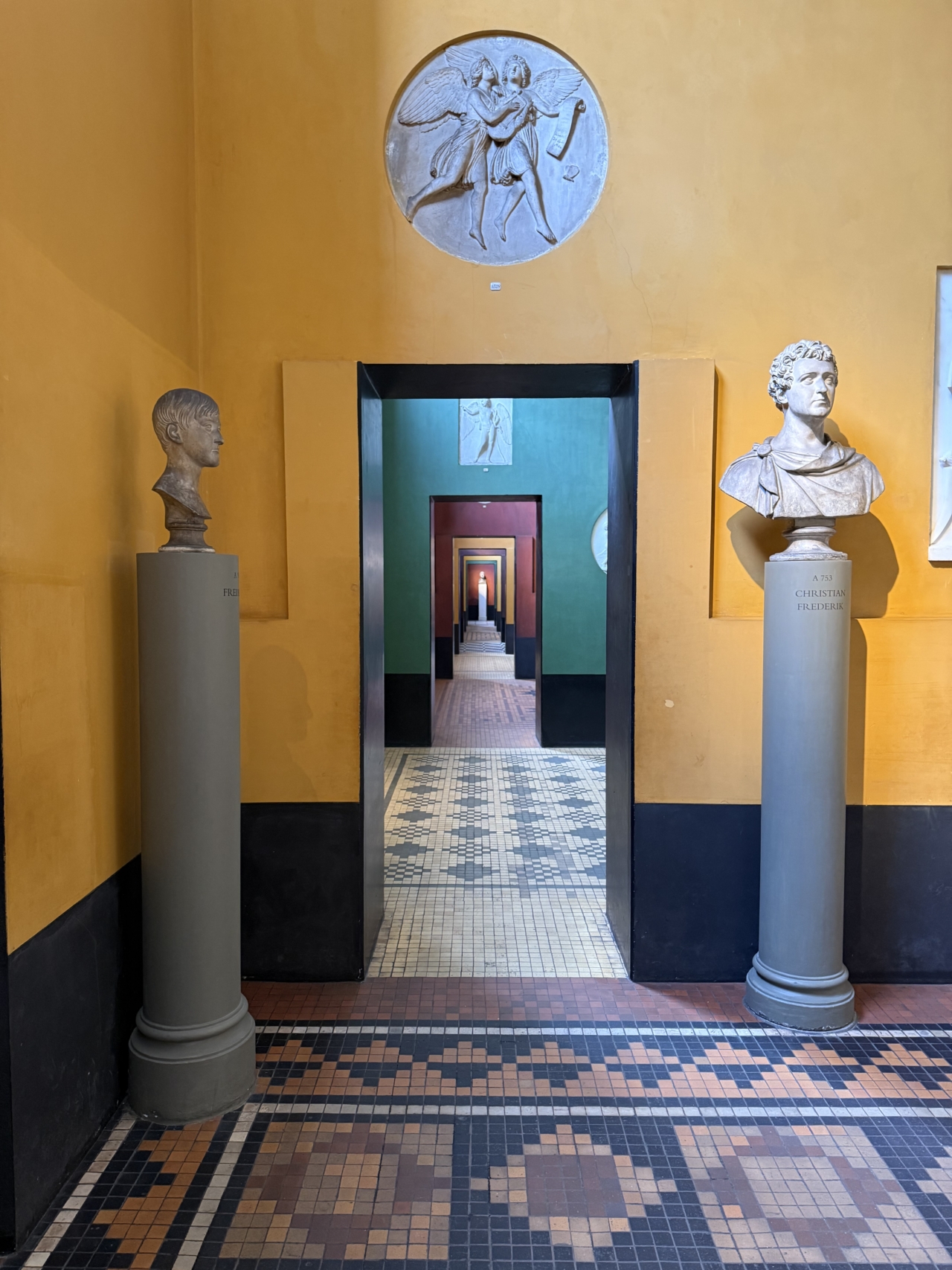
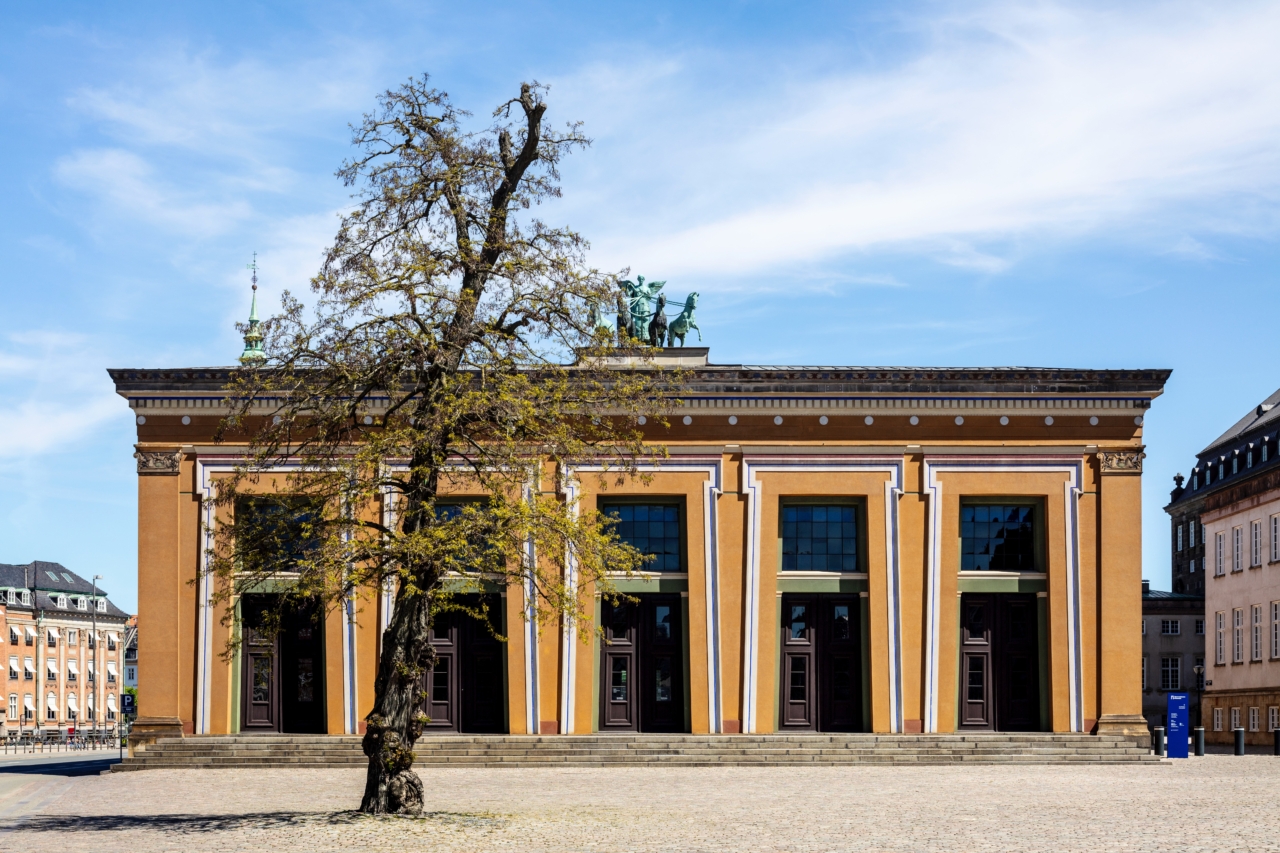
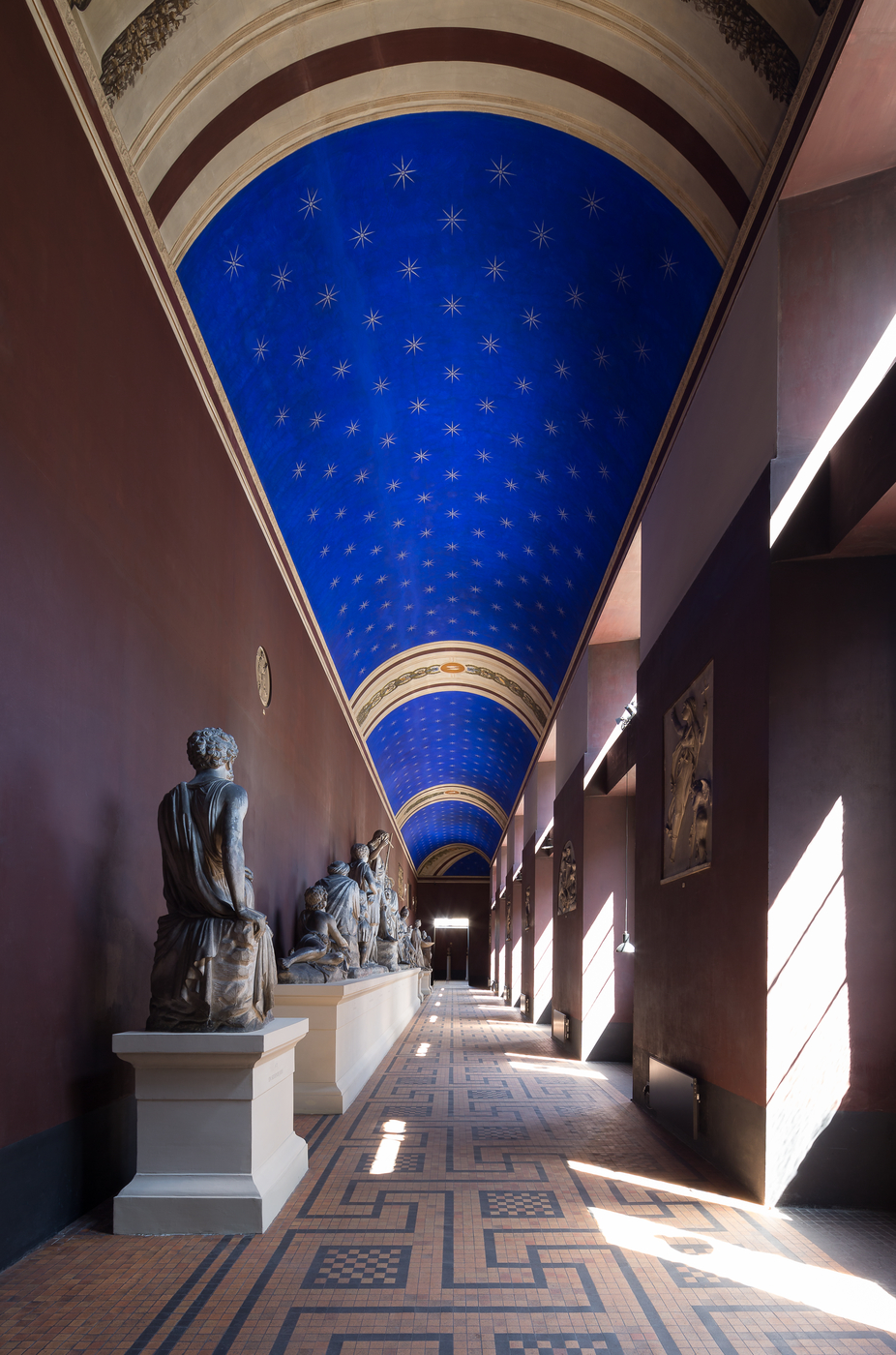
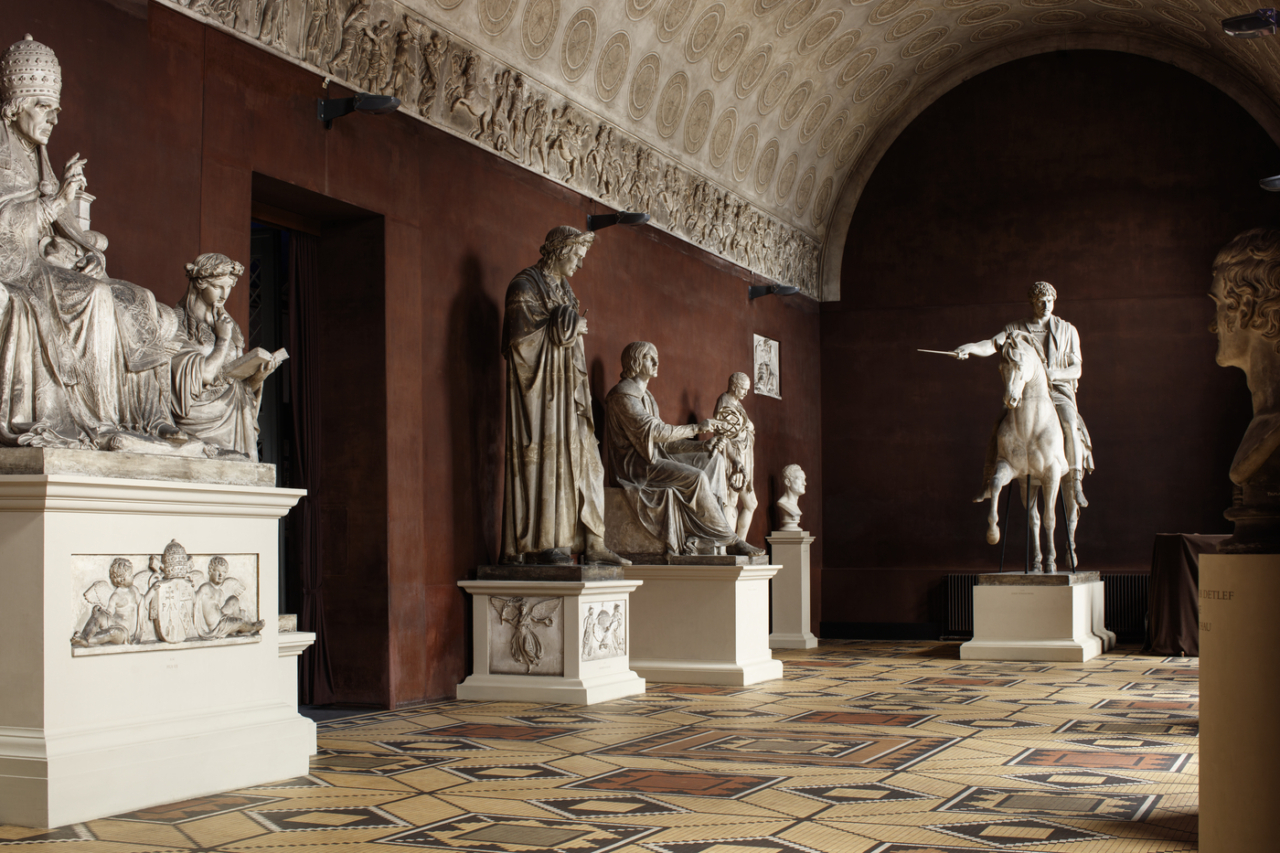
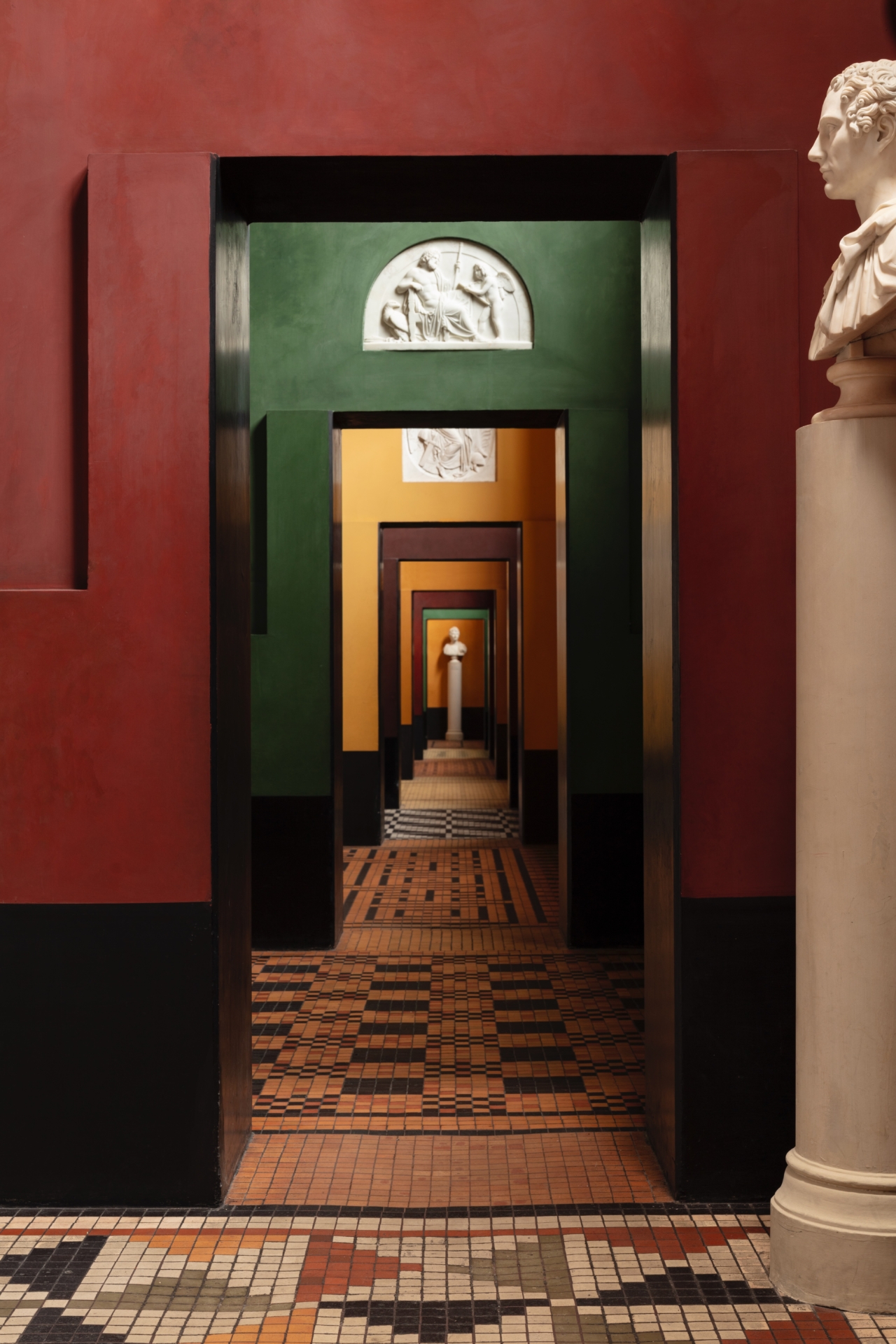
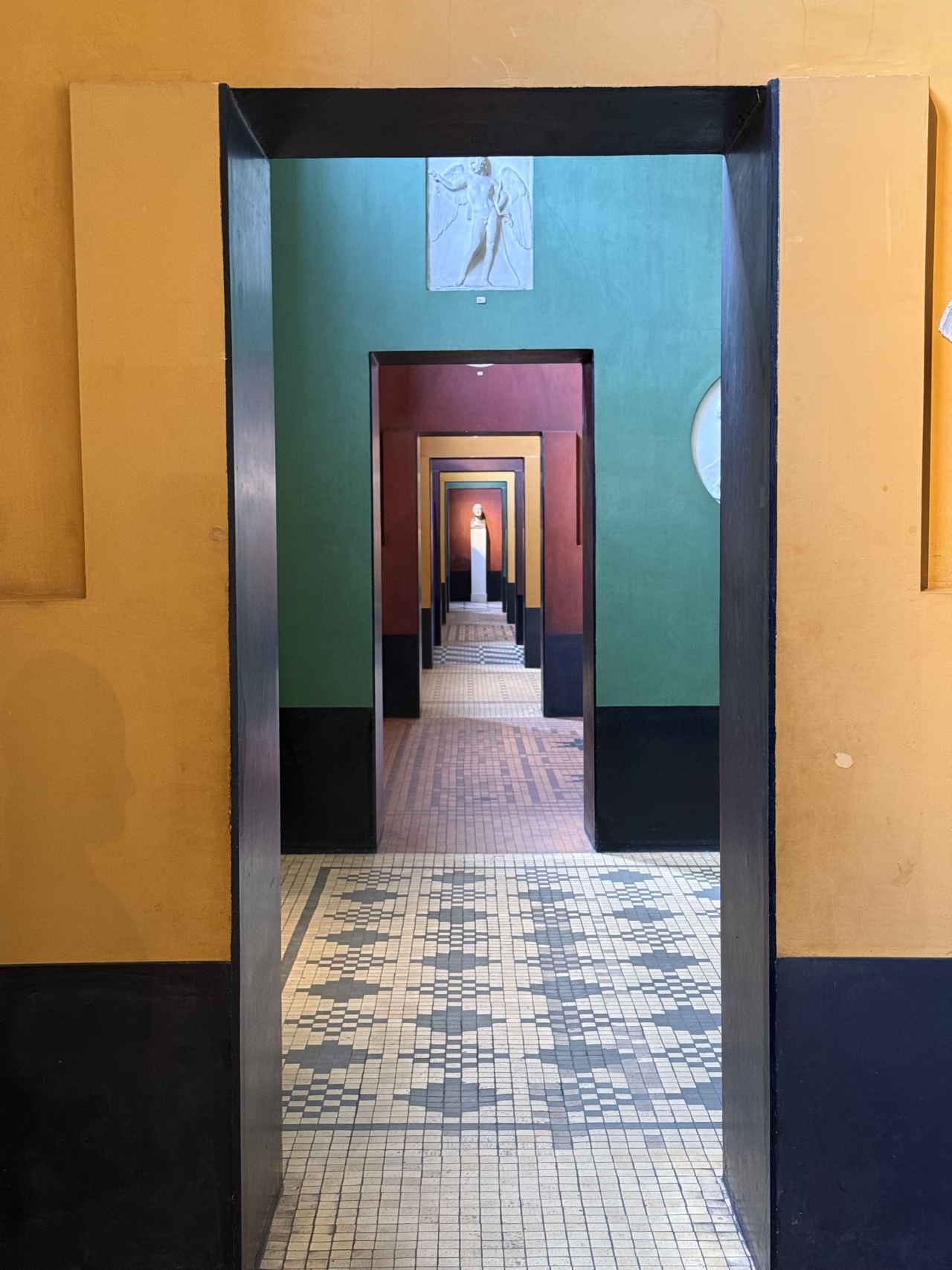
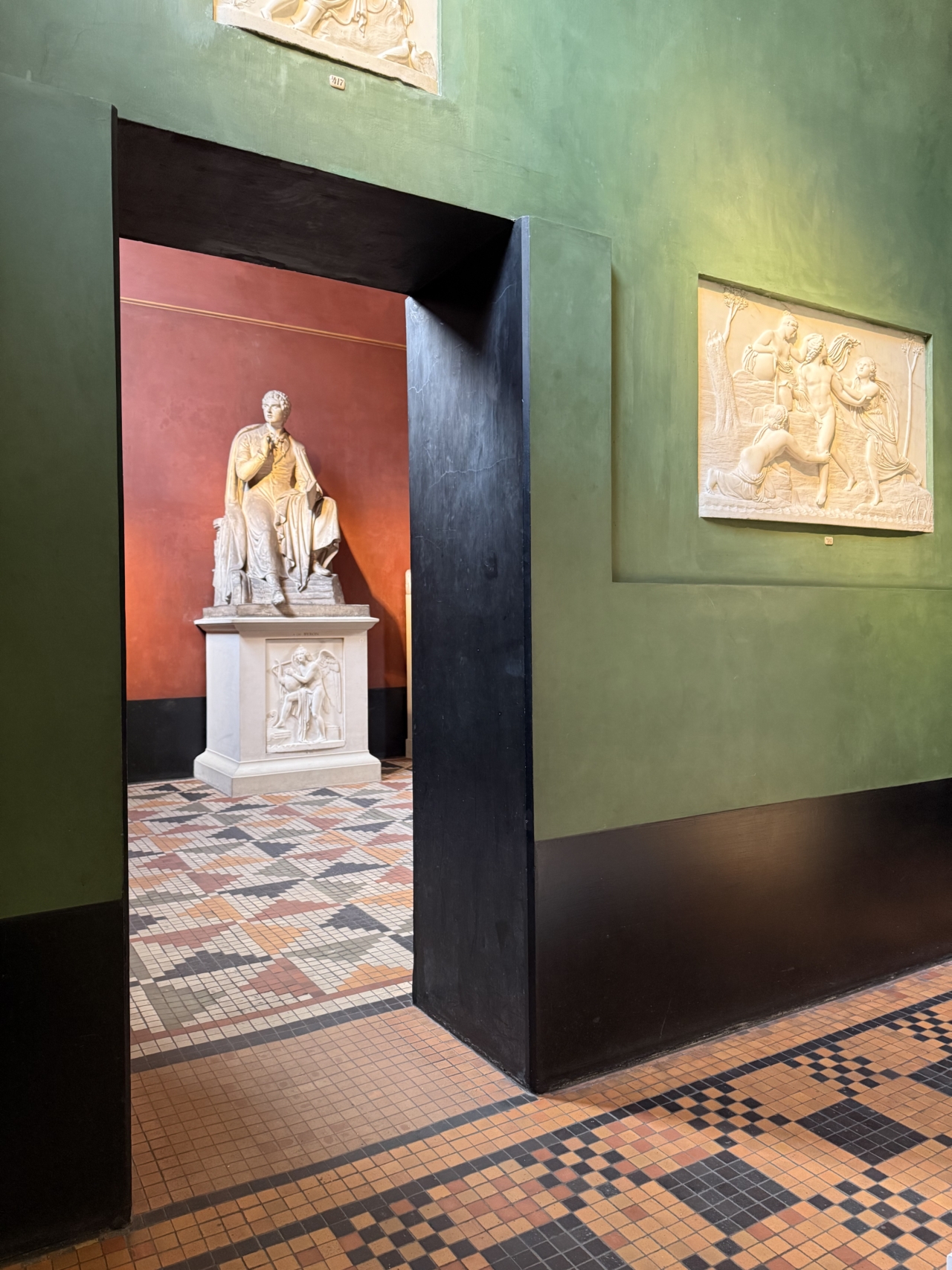
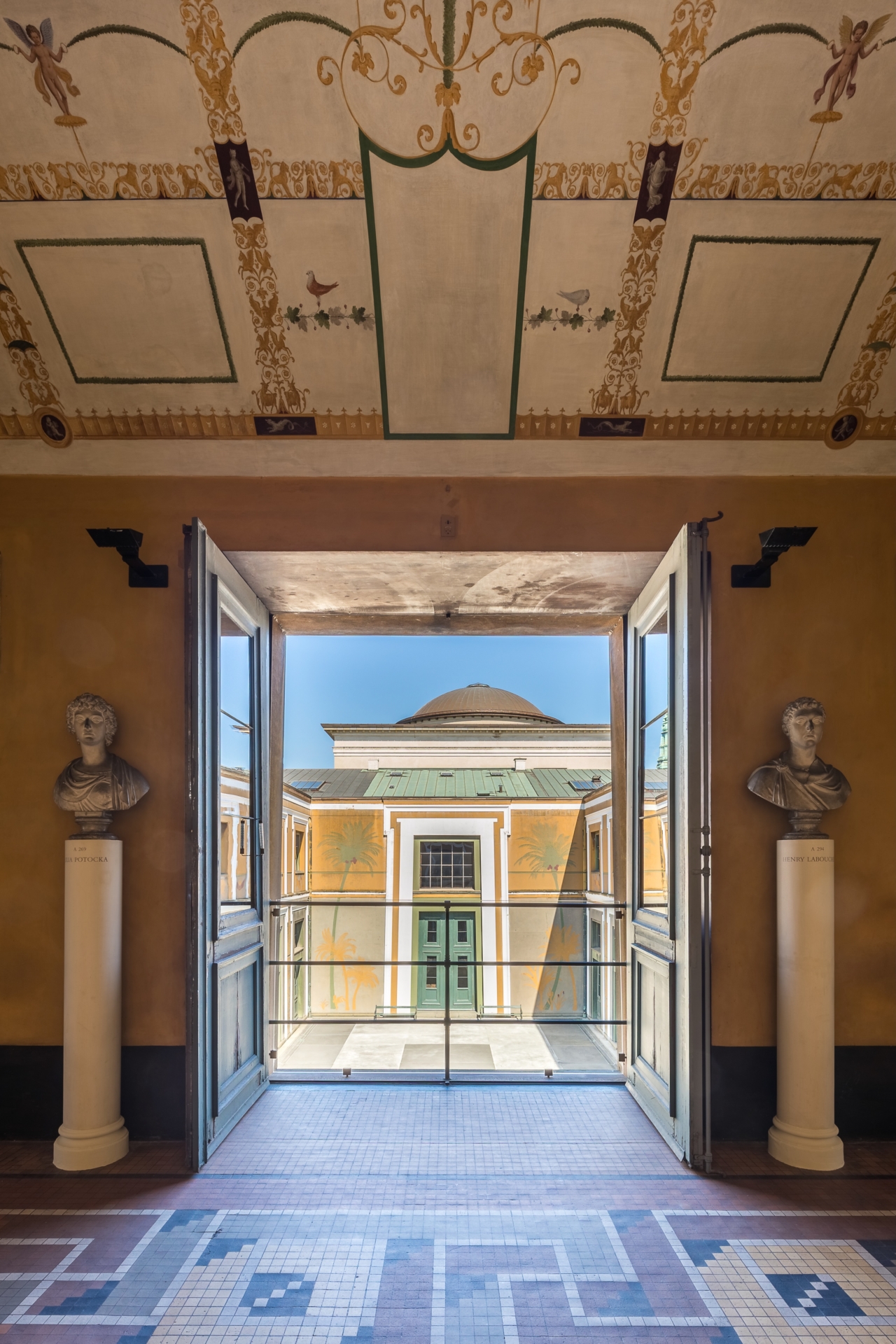
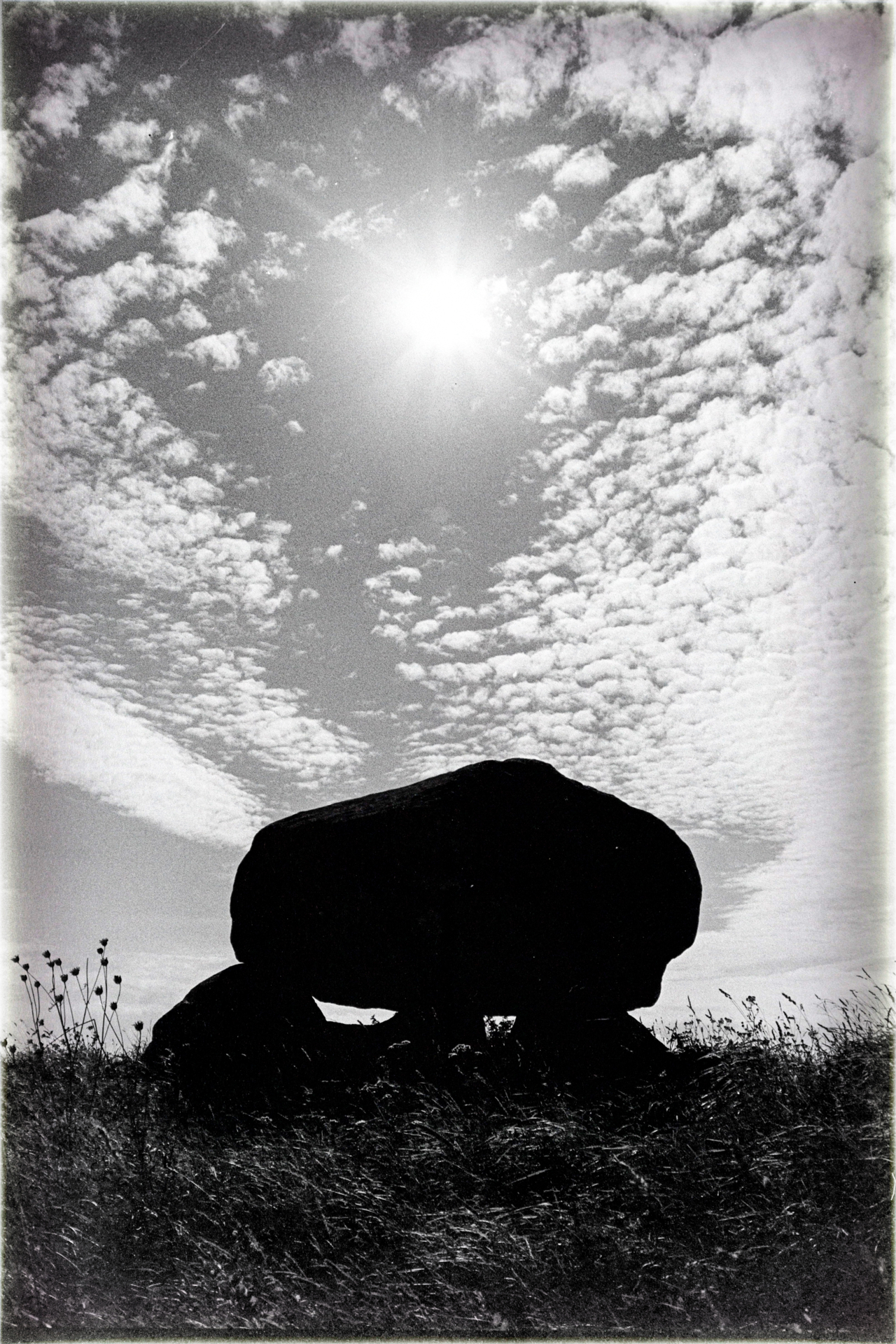
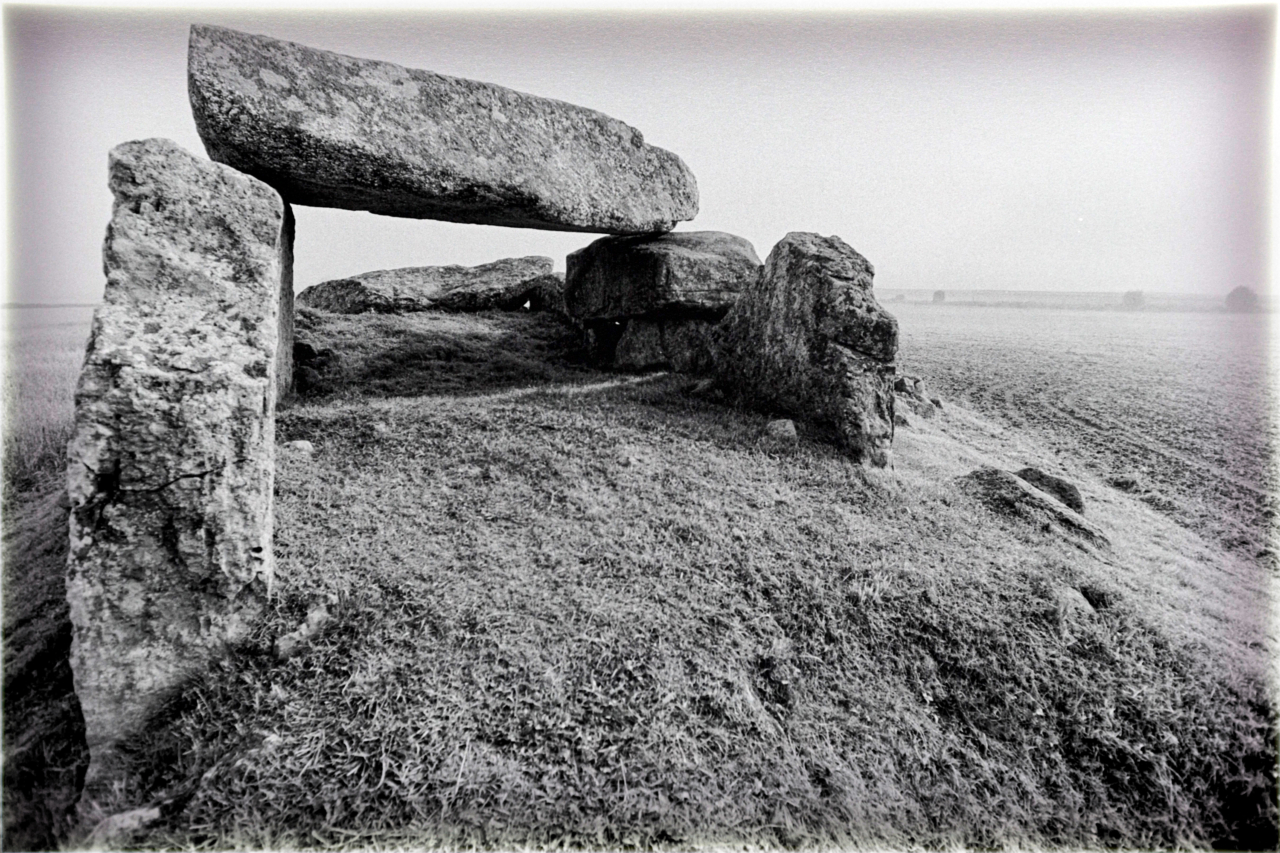
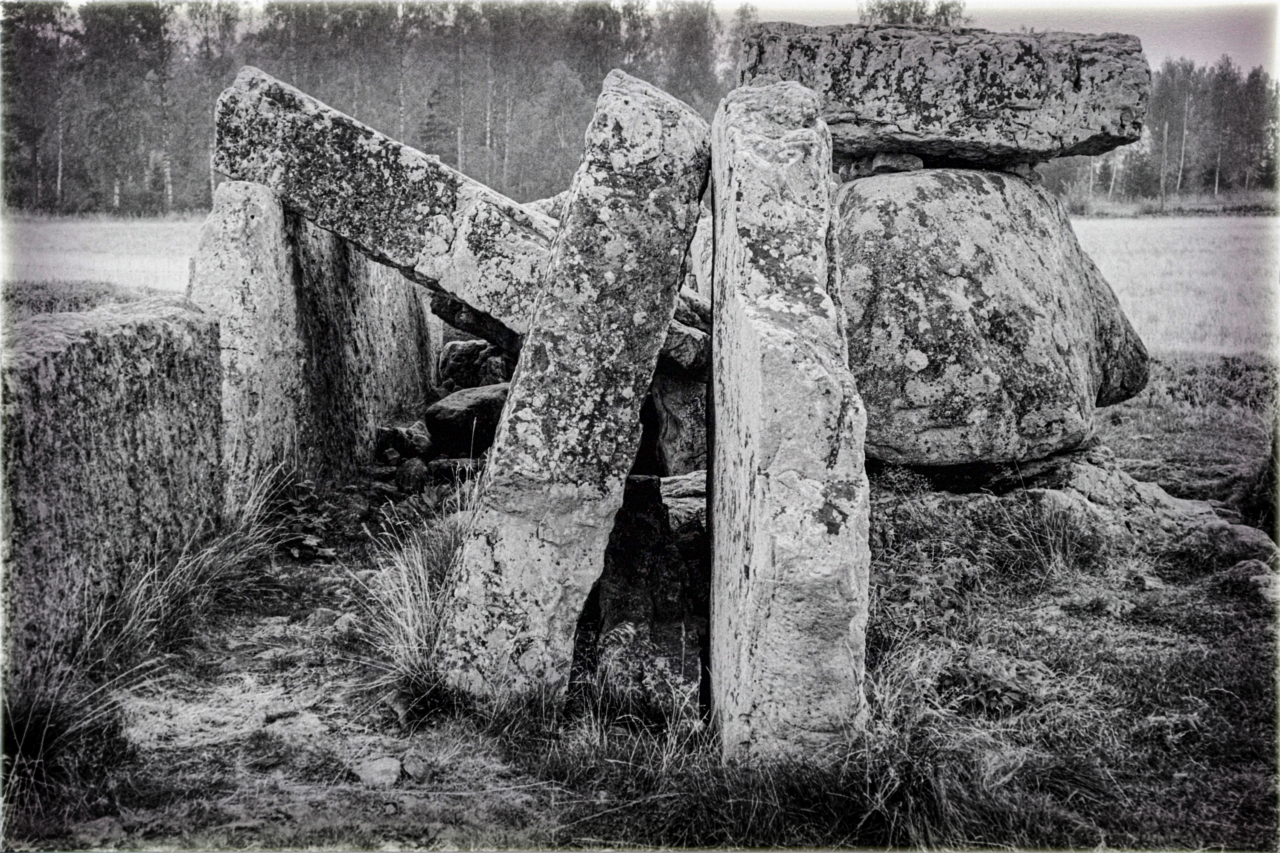
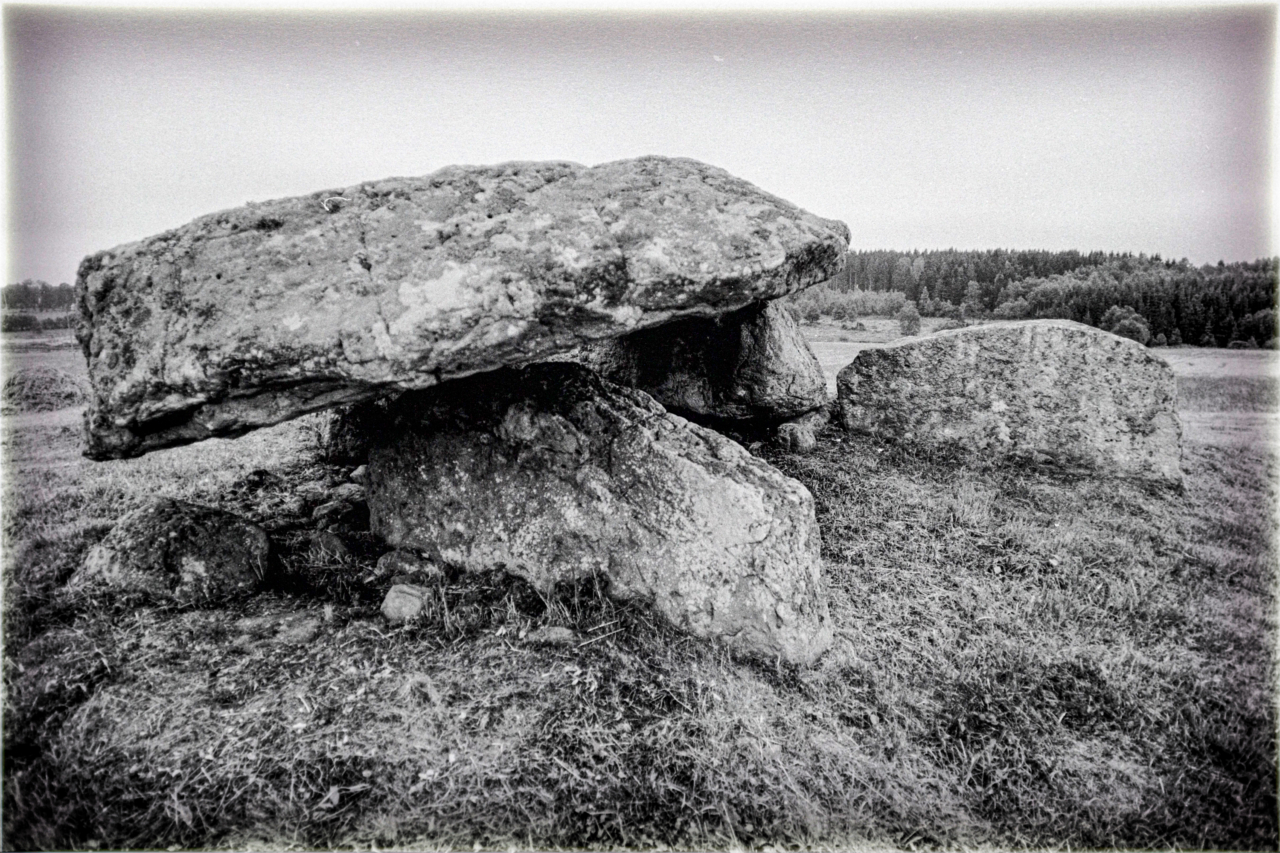
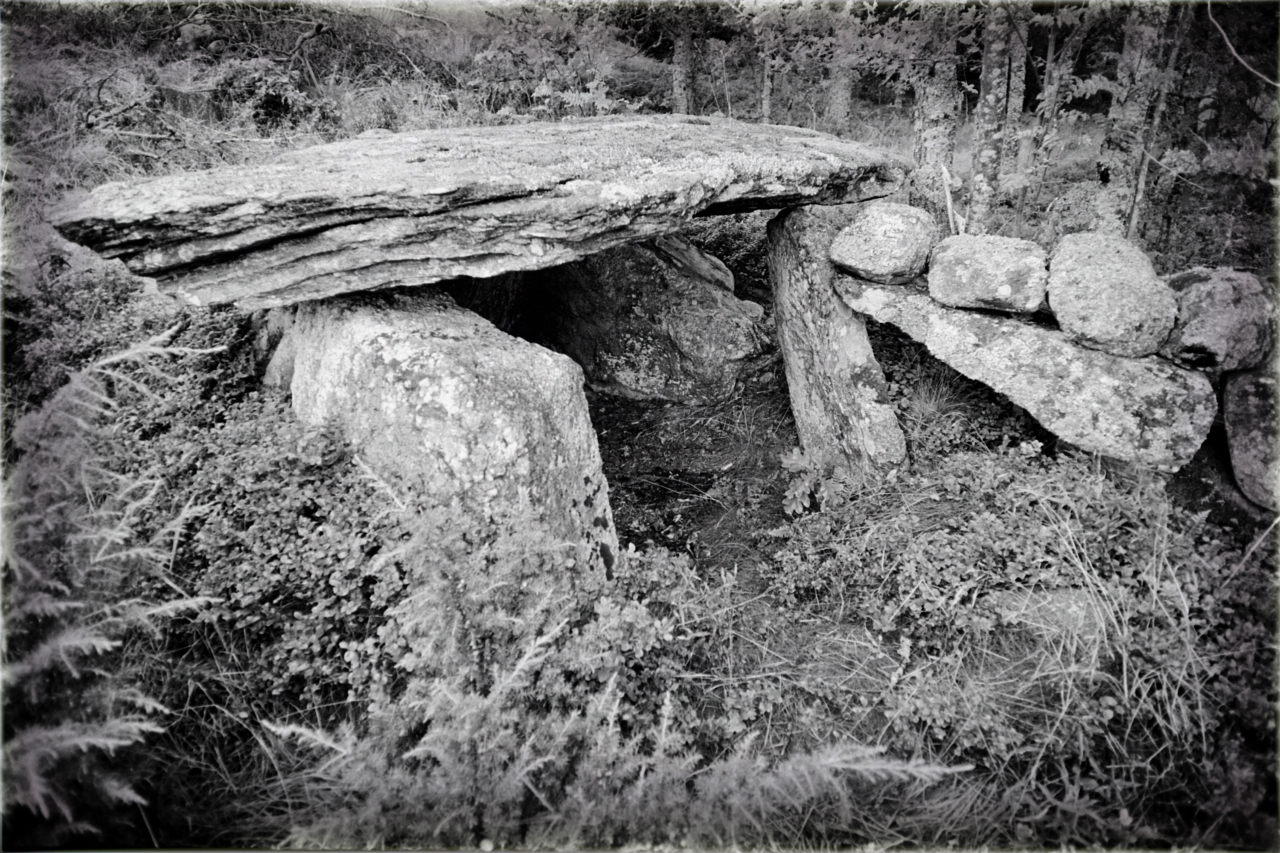
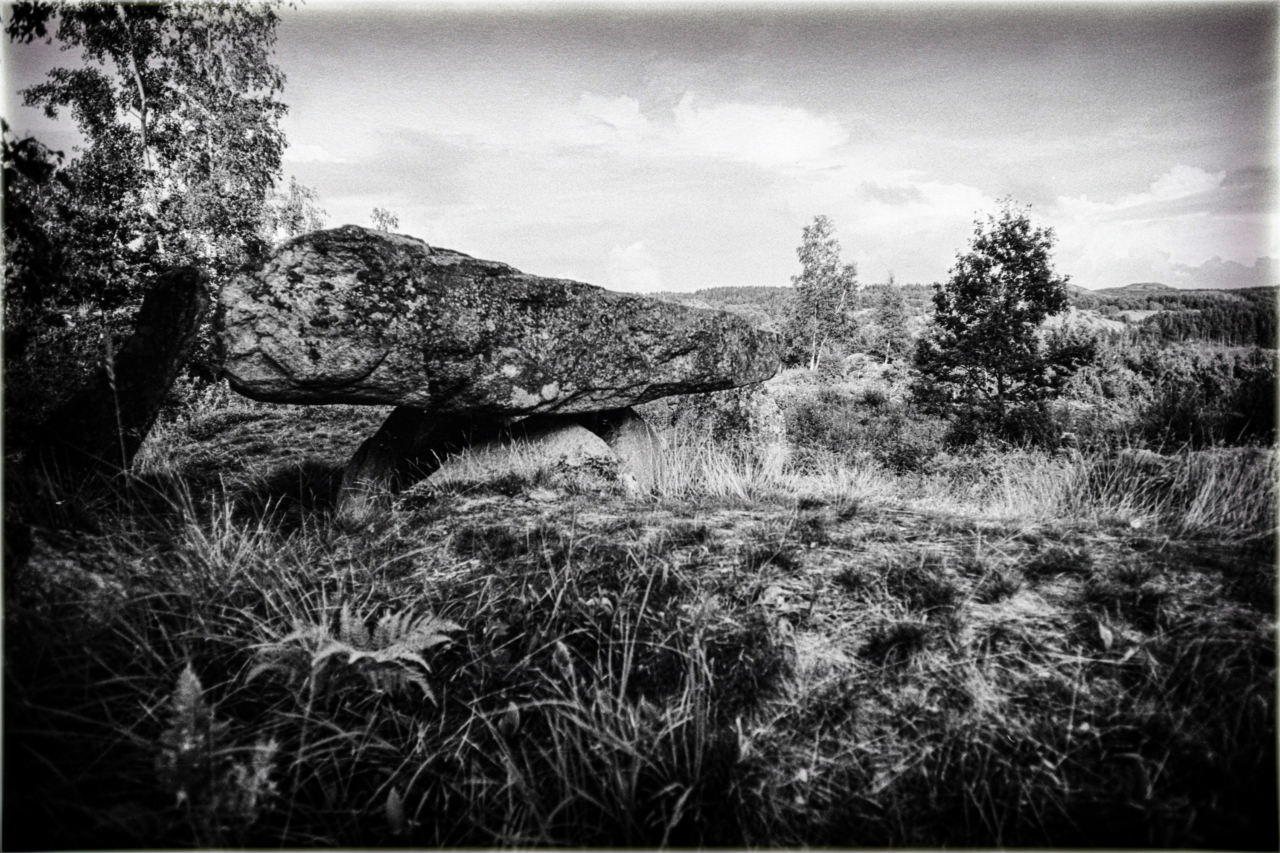
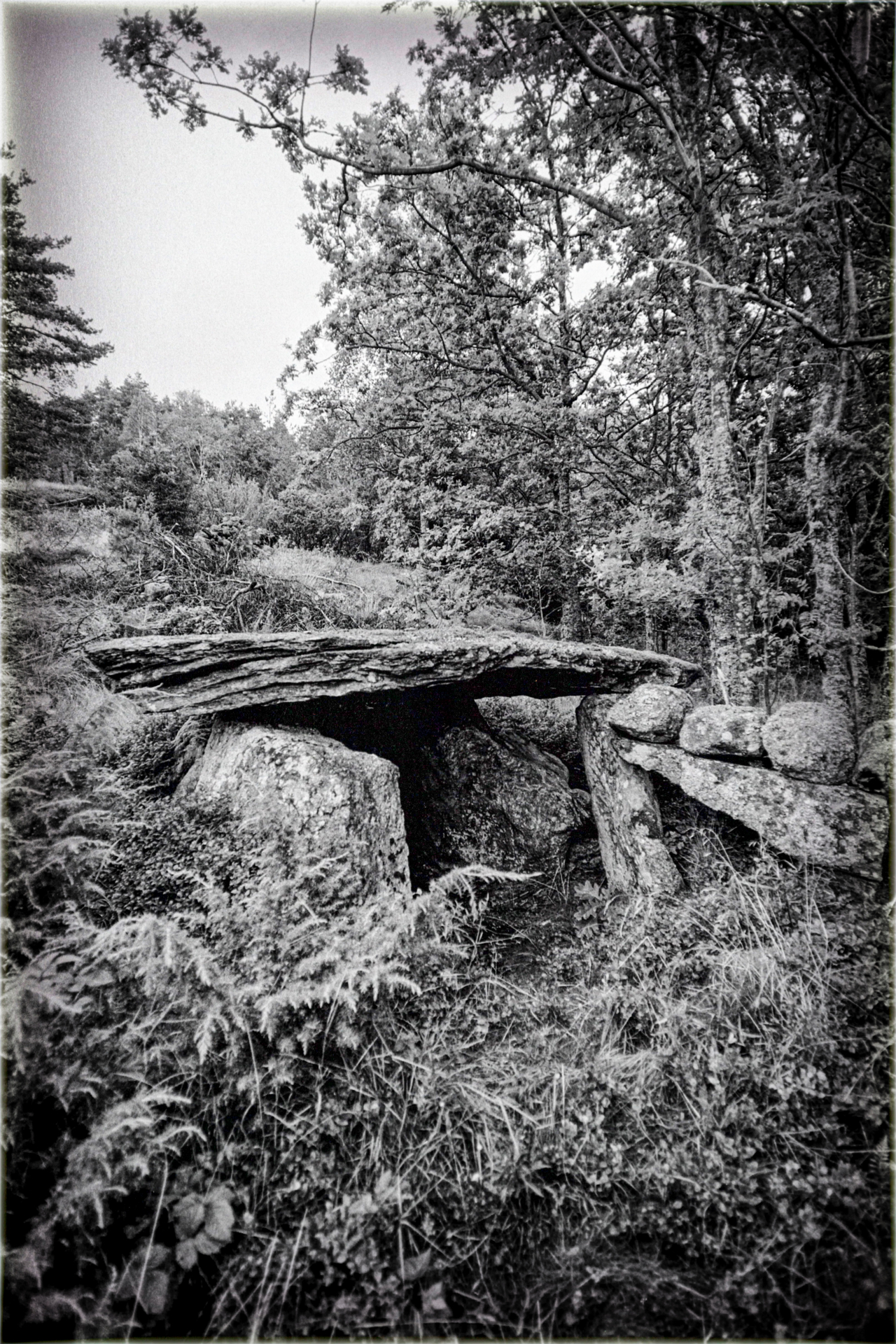
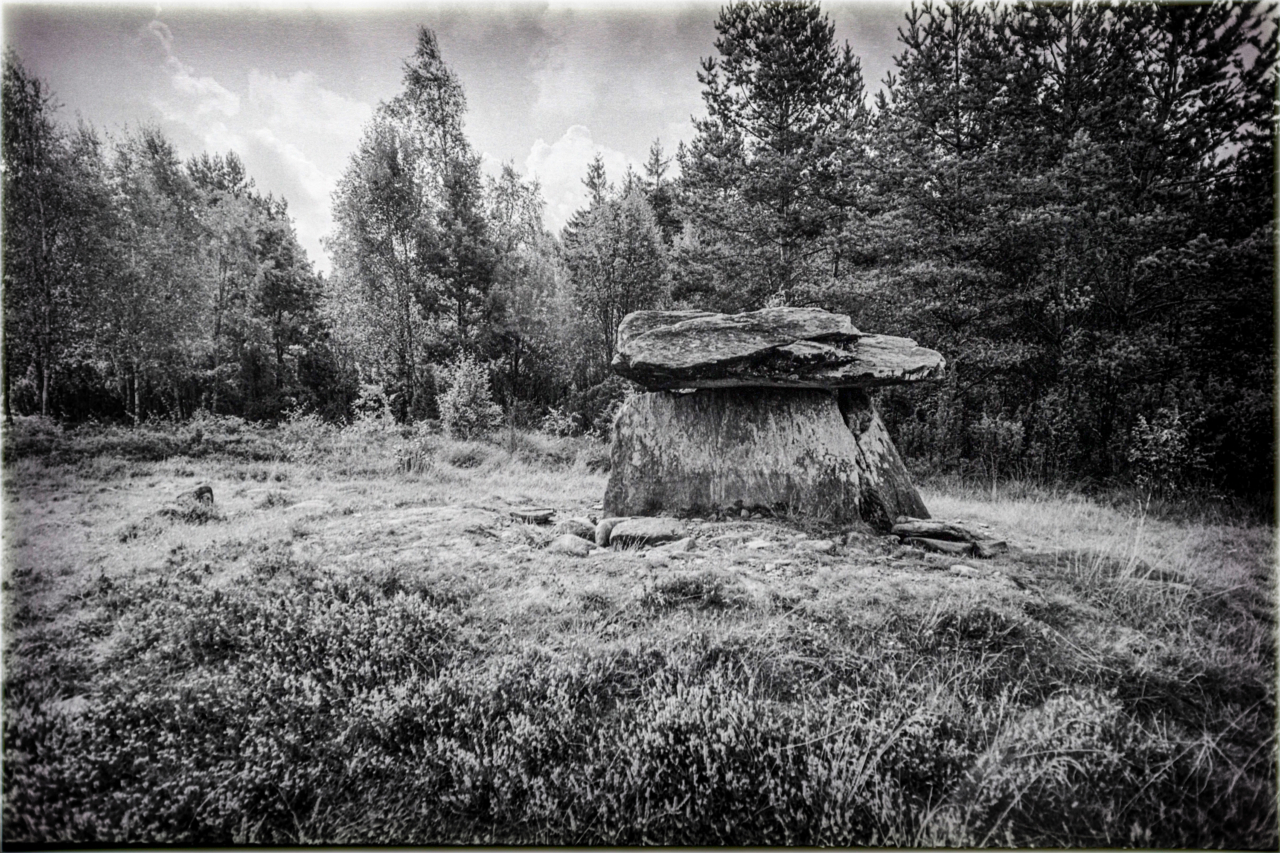
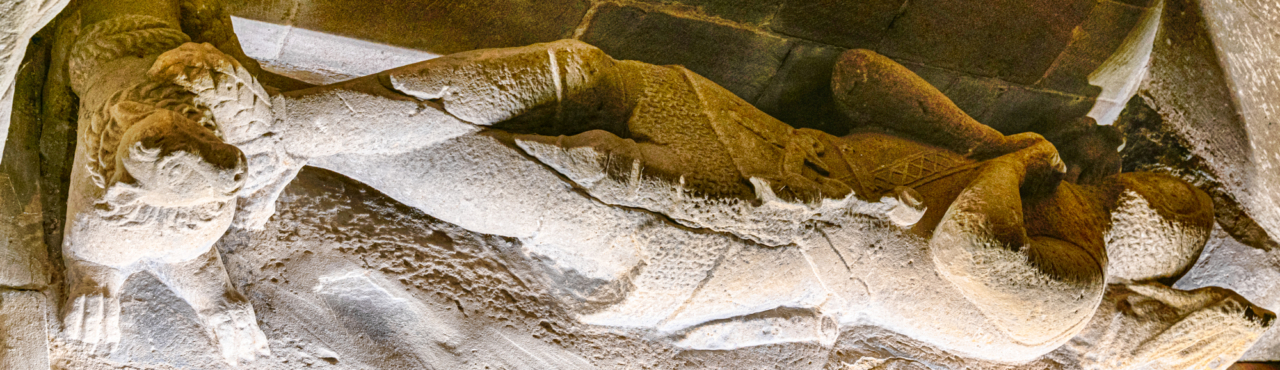
Visiting the Thorvaldsen Museum in Copenhagen [Link]. What an experience of archaeological theatre! [Link]
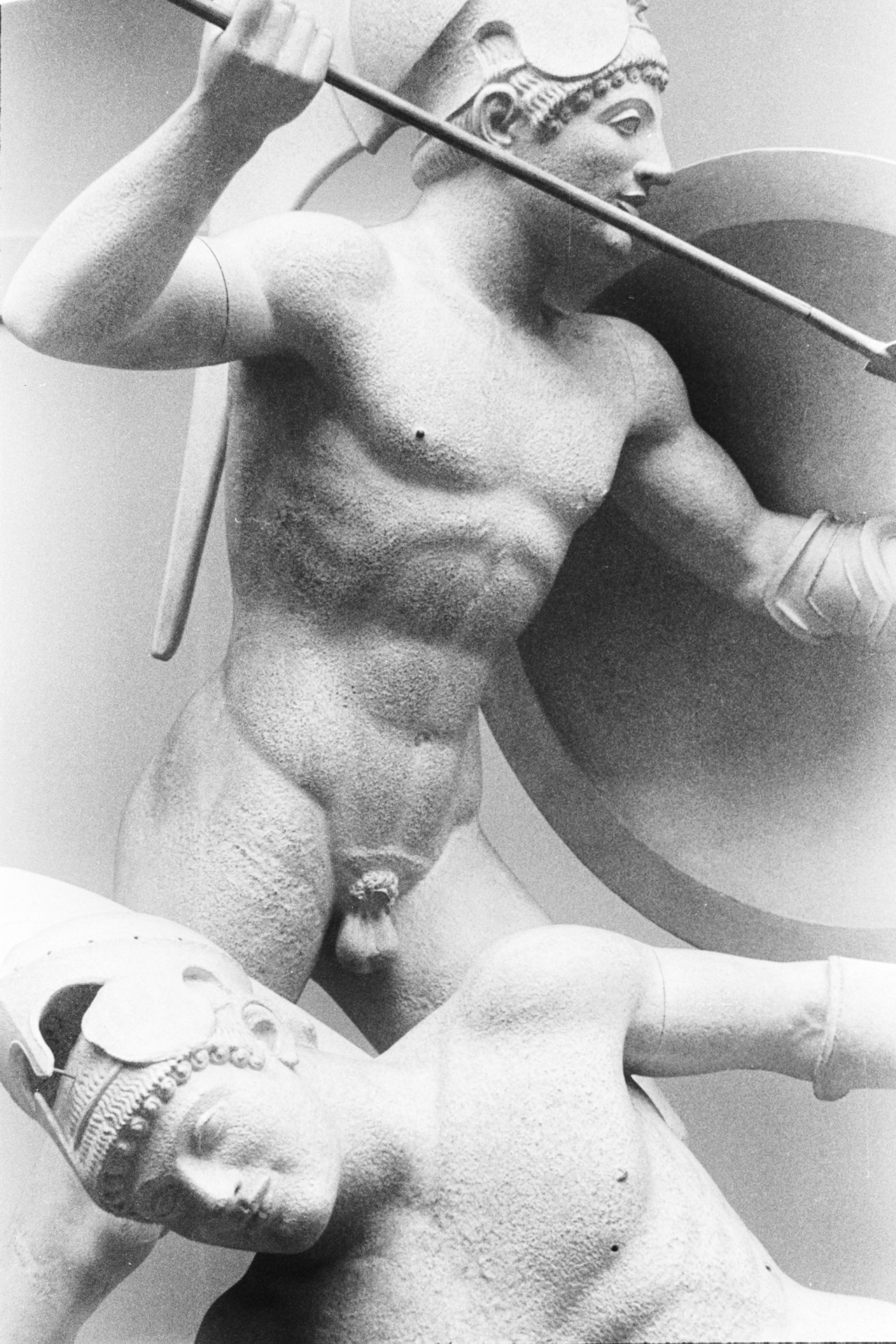
I discovered the work of Danish neo-classical sculptor Bertel Thorvaldsen (1770 – 1844) at the Museum of Classical Archaeology in Cambridge in 1977, when its collection of plaster casts of ancient Greek and Roman sculpture was still housed in my college Peterhouse. Classical antiquity on the doorstep! His restorations of the marble statuary from the temple of Aphaia on Aegina stood out, because they looked so clean and fresh.
The sculptures had been found by a party of young classical enthusiasts in 1811 — including Charles Robert Cockerell, an English architect on the Grand Tour (he later designed the Ashmolean Museum in Oxford), and the Prussian aristocrat Otto Magnus von Stackelberg, painter and antiquarian. They shipped the fragments out and they were bought by Ludwig, Crown Prince (later King) of Bavaria. He was realizing his dream of Munich as a new northern Athens and wanted the sculptures as a display of his acknowledgement of the perfection of Greek antiquity.
They look so clean and fresh because Ludwig commissioned Bertel Thorvaldsen, at the time the foremost Rome-based neoclassical sculptor, to restore the statues. Thorvaldsen seamlessly added new pieces to the sculpture fragments, posed them, may even have taken his chisel to the original marble. You can’t see the joins. They look as if Thorvaldsen himself might have made them, as a kind of experiment in his neoclassical style.
And, in the dim northern light of the museum in Cambridge – they looked so grey.
Thorvaldsen in the Museum of Classical Archaeology 1977.
Thorvaldsen’s own neoclassical sculptures were also monochrome. Bronze. Marble. Like the pure glistening white of Canova’s earlier work.
Ancient sculptures were painted in bright colors.
Thorvaldsen returned as an art celebrity to Denmark in 1838. He bequeathed his works to a new kind of museum, one devoted to a personality – himself. He endowed a gift to build and support its foundation. Helped by public subscription, the museum opened in 1848.
In extraordinary contrast, the architect Michael Gottlieb Bindesbøll designed a palace of color as the home for Thorvaldsen’s work.
The architecture of courtyard, corridors, chambers, halls, affords an extraordinary experience of color-and-place, color-out-of-space, in that museological performance of walking amongst a collection. Architectural spaces as active mediation.
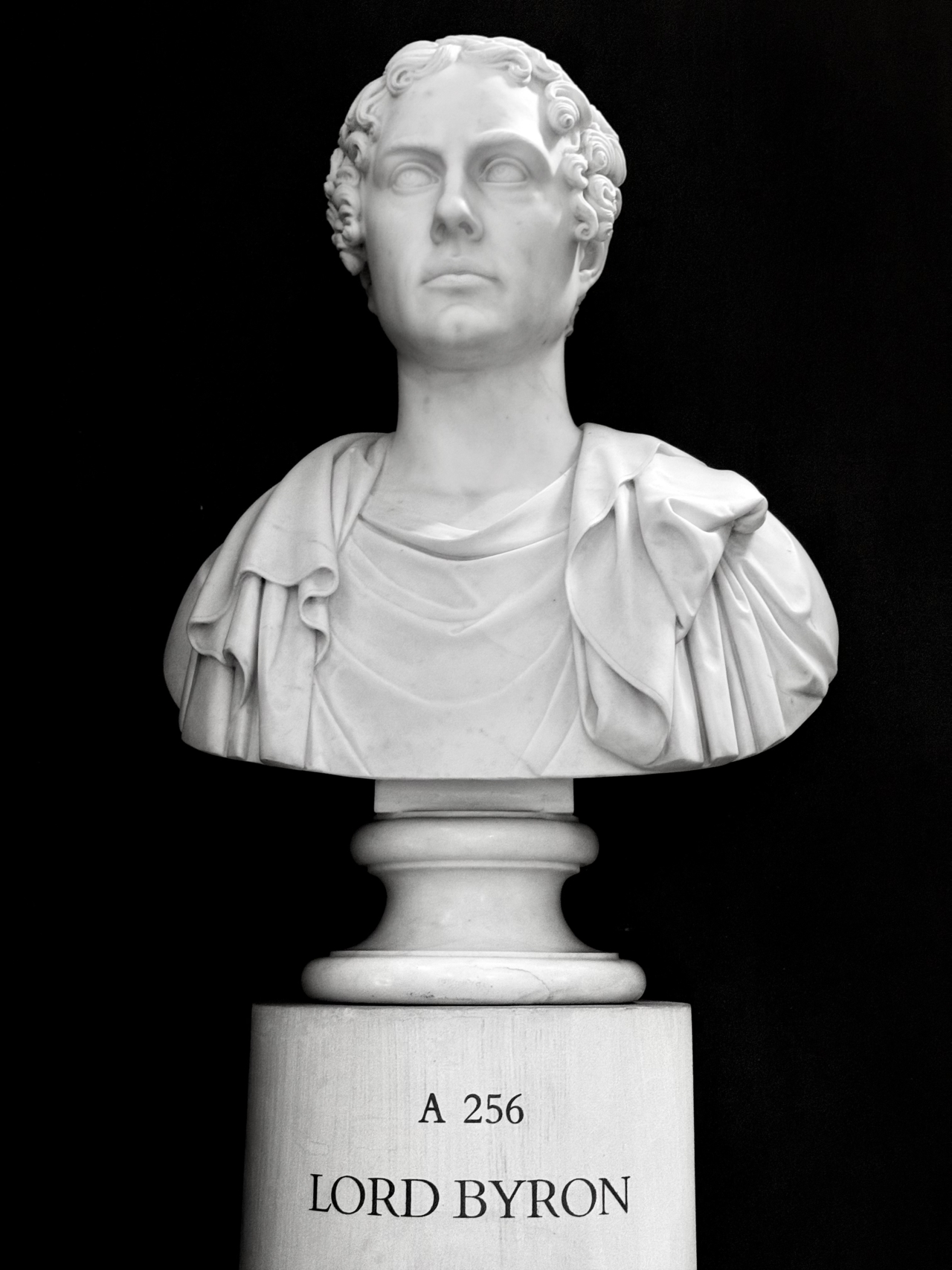
There’s a bust by Thorvaldsen of Byron in the museum. Another irony.
Here are some lines from Byron’s Childe Harold‘s Pilgrimage (1812-1818) (Canto XV)
“Cold is the heart, fair Greece, that looks on thee, Nor feels as lovers o’er the dust they loved; Dull is the eye that will not weep to see Thy walls defaced, thy mouldering shrines removed By British hands, which it had best behov’d To guard those relics ne’er to be restored. Curst be the hour when their isle they roved, And once again thy hapless bosom gored, And snatch’d thy shrinking Gods to northern climes abhorr’d!”
In Tilley’s Garden: figures in a landscape
Reflections on the work of Christopher Yates Tilley 3
This is Part 3 of a reflection upon the works of Chris Tilley, prompted by his too-early death in March 2024.
I want to do justice to the range and depth, the significance of his work in anthropology and archaeology. My reflections are based on memories, close collaboration, and deep reading of all his writing. His work, now finished, deserves close attention because it deals with matters of wide concern and in such a sophisticated way, dedicated to careful consideration — relationships with environment; respect and acknowledgement of diverse voices; developing secure foundations of knowledge, in experience, modes of engagement with the world, representation and report.
What follows is not an exposition of his ideas but a reflection upon them, something of an exchange of ideas as I unpack how I react. I do look back with hindsight and wish that the conversation that ended when we parted ways in 1993 had continued. I disagree with much of what Chris came to stand for. I do not think he has the answers. But he always got me to think more carefully.
Part 1 is about our collaboration at Cambridge, two academics provoked to set things right. In Tilley’s Garden: a Summer Long Ago [Link]
Part 2 presents some allegorical associations in something of a play with the mythmaking that I find quite endearing in Tilley’s anthropological archaeology. Mythographic Triptych (annotated) [Link]
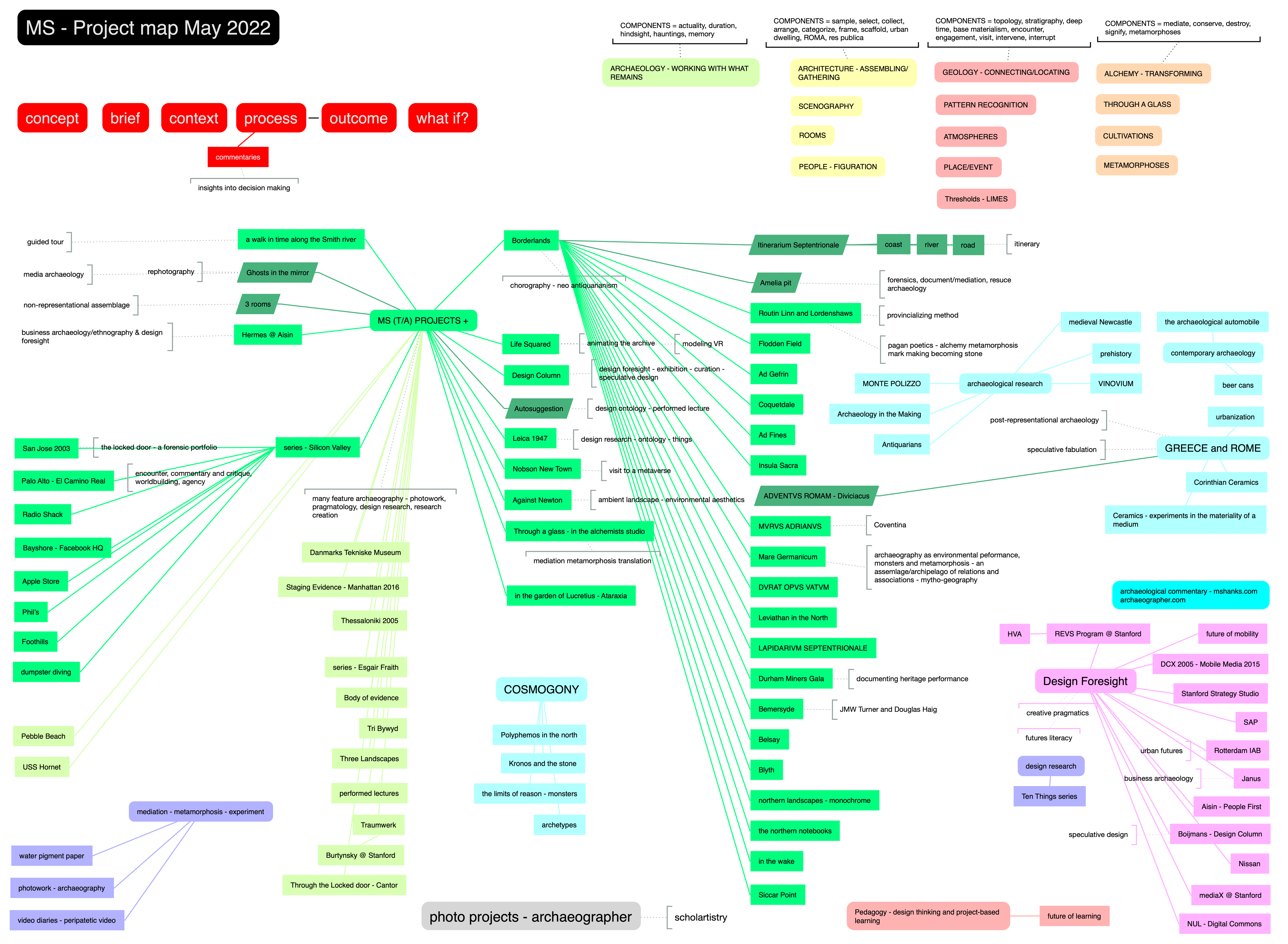
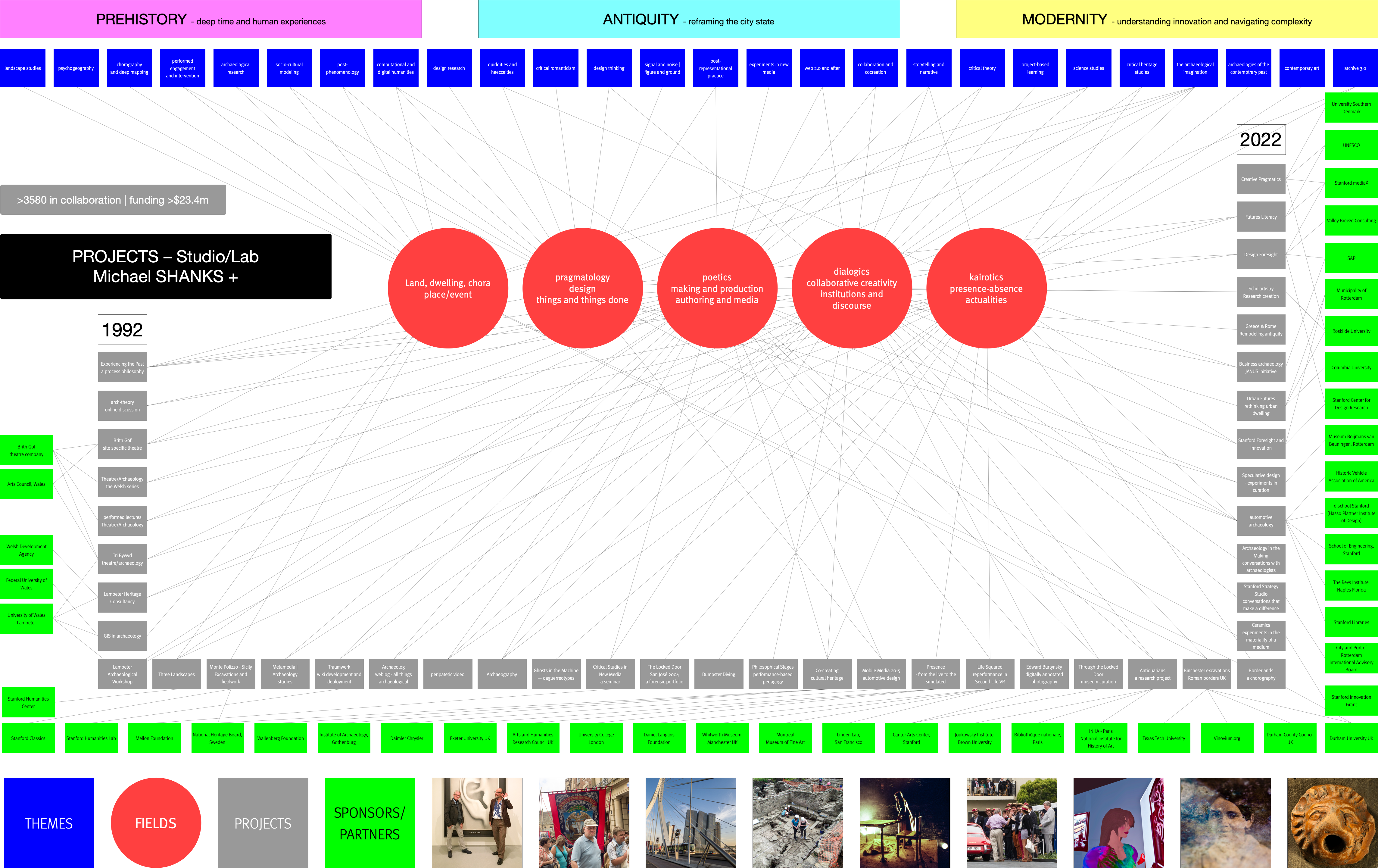
Part 3 is based on reading his work since we parted ways in 1993. I offer sketches of some personae in his scenario of experiencing landscape, and some features of a concept map within which his oeuvre might be situated. In Tilley’s Garden: Figures in a Landscape – [this post]
Part 4 is a celebration of Tilley’s humanism — valuing individual experience and autonomy, grounding in empirics and critical thinking, focus on life and presence, environmental secularism. I find his humanism most considered, even profound. I think this is what he left in most of us, certainly those friends, family, colleagues, students whom I have heard react to his death — quite a passion for life and the qualities of things. In Tilley’s Garden: Transcendental Experiences – [Link]
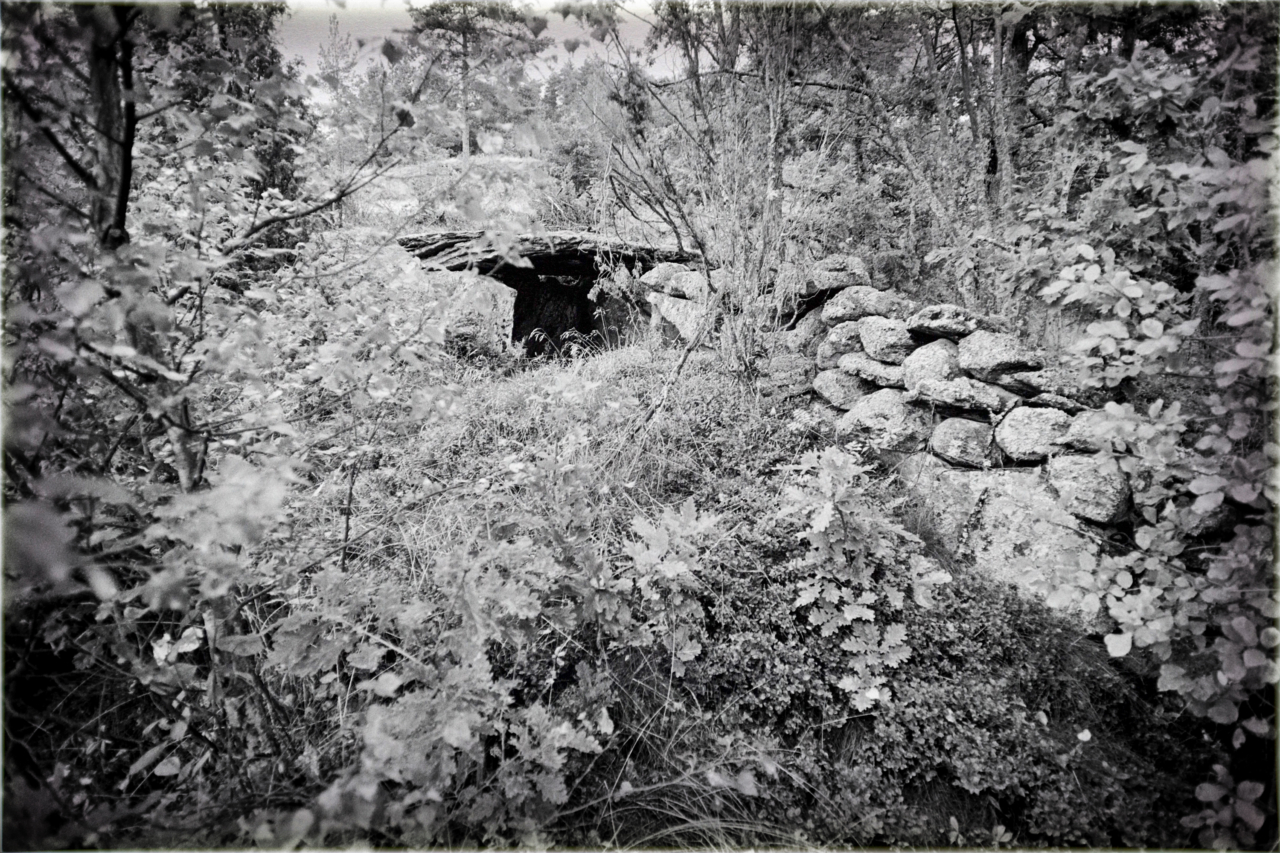
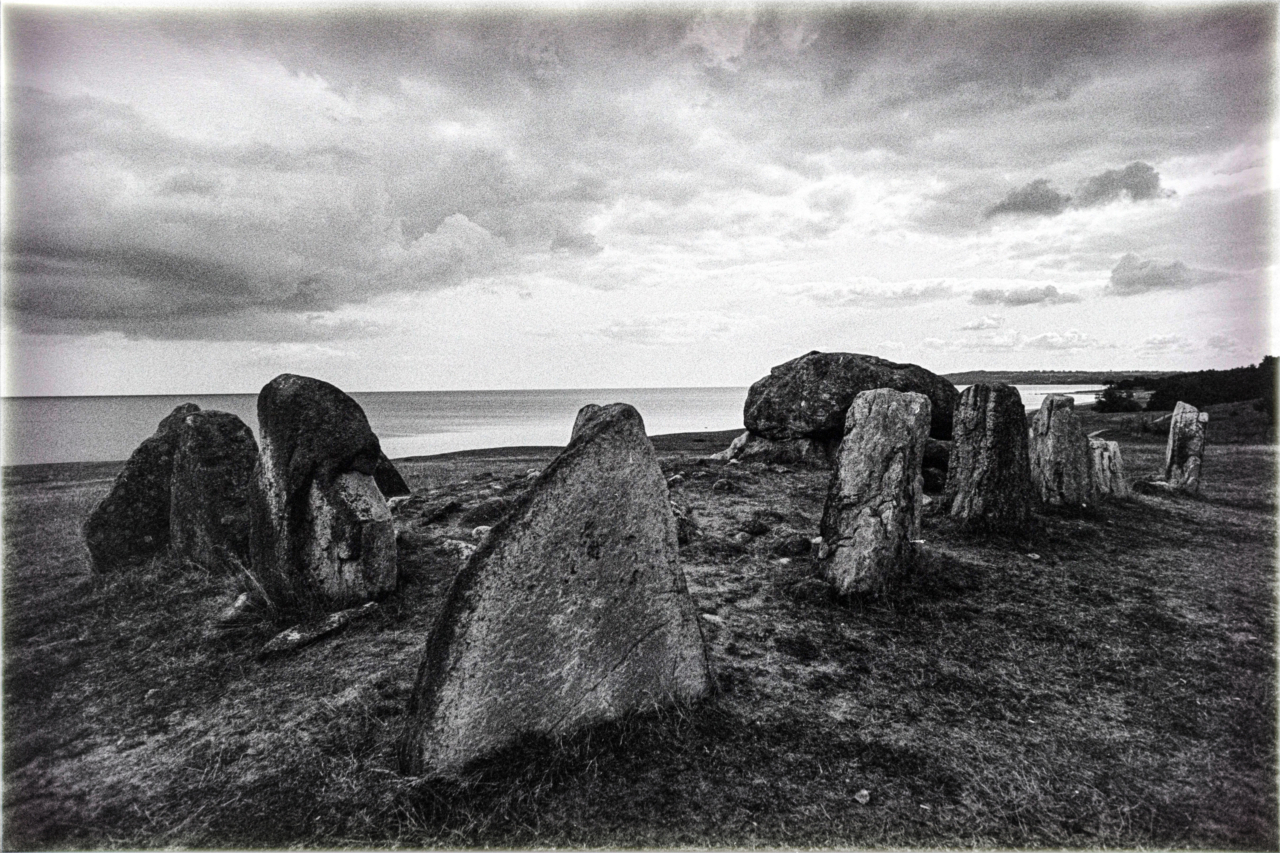
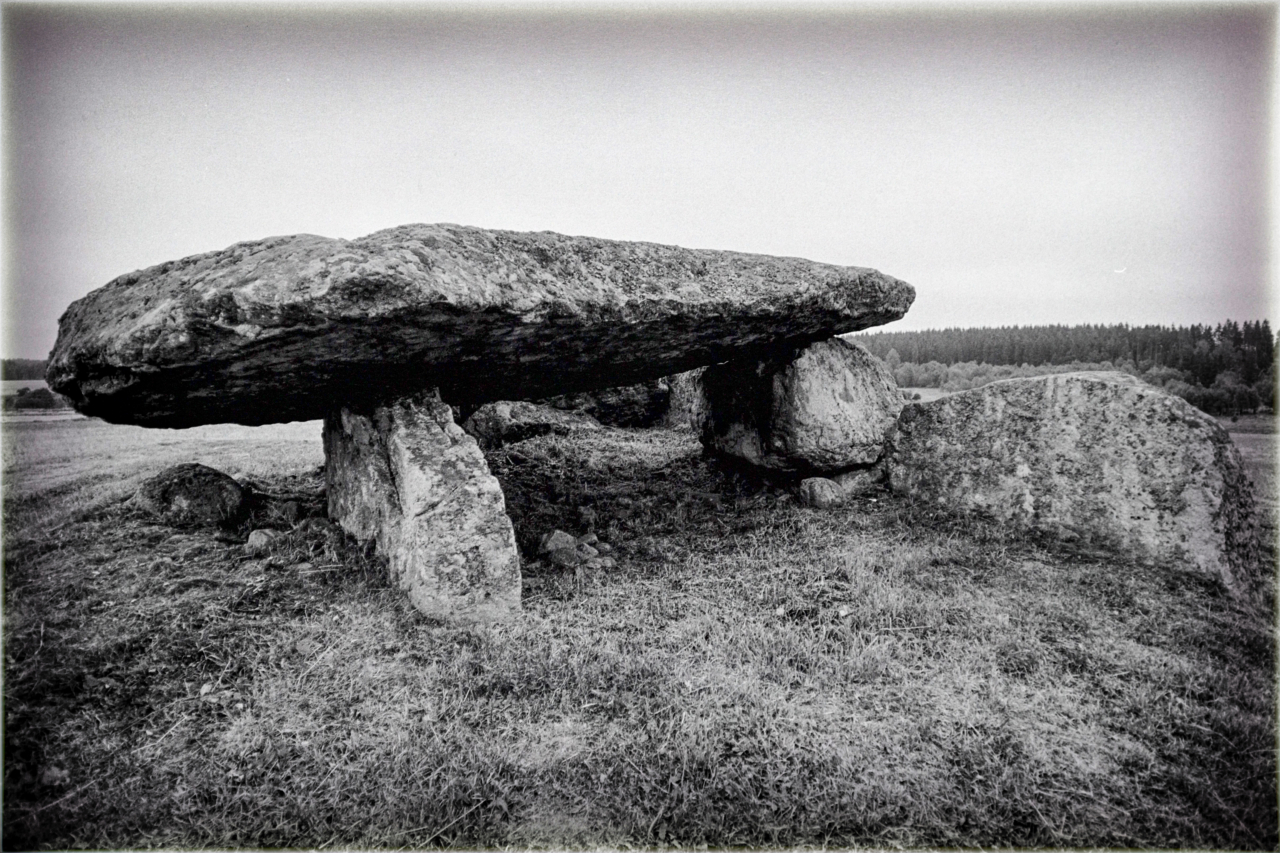
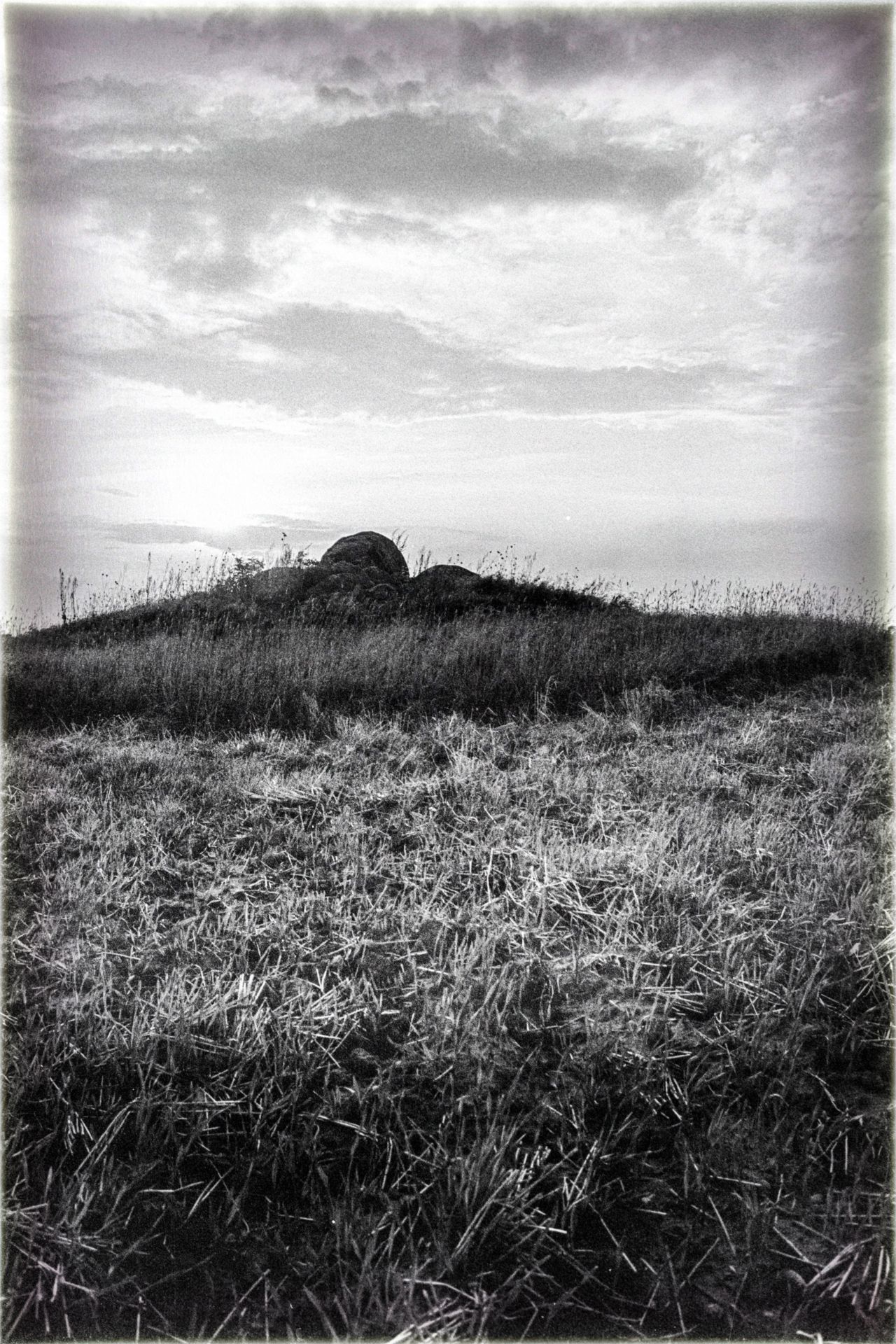
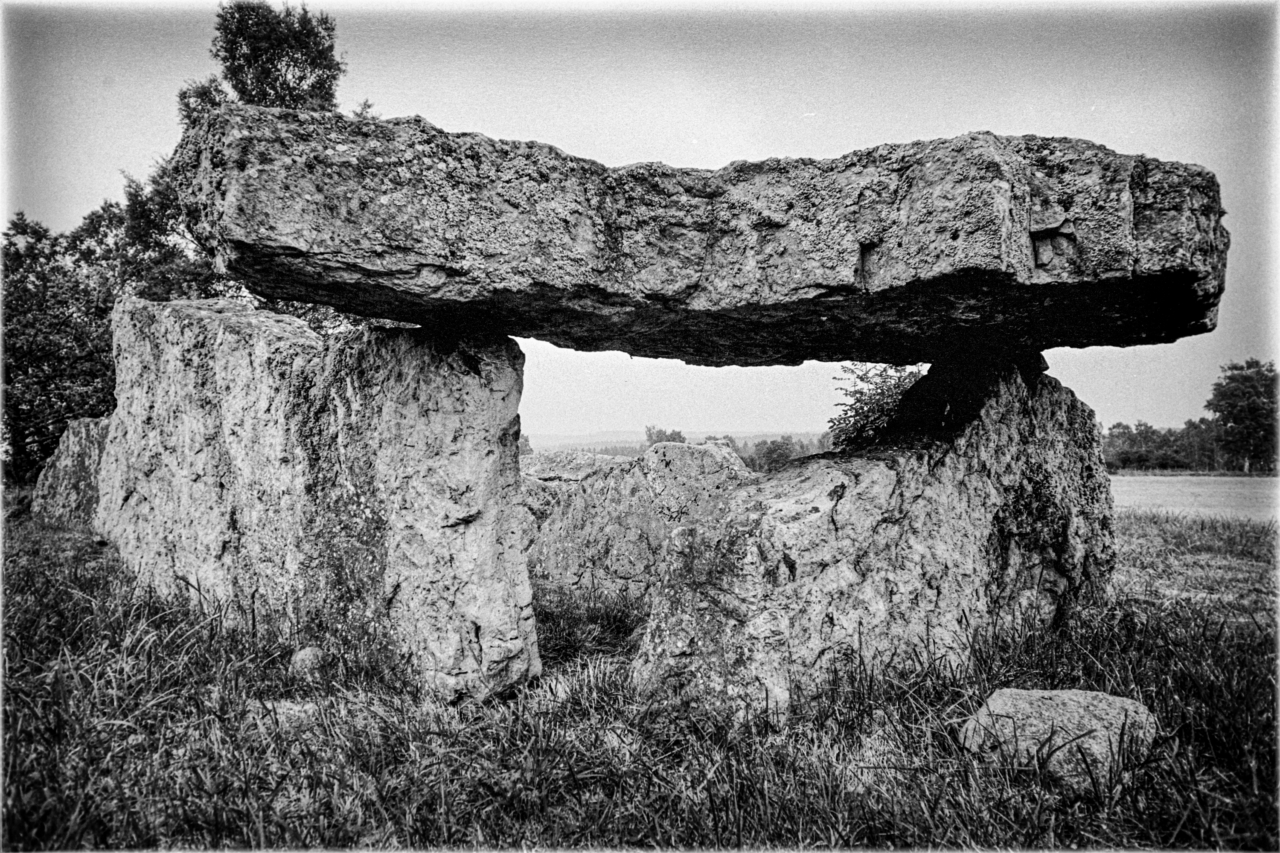
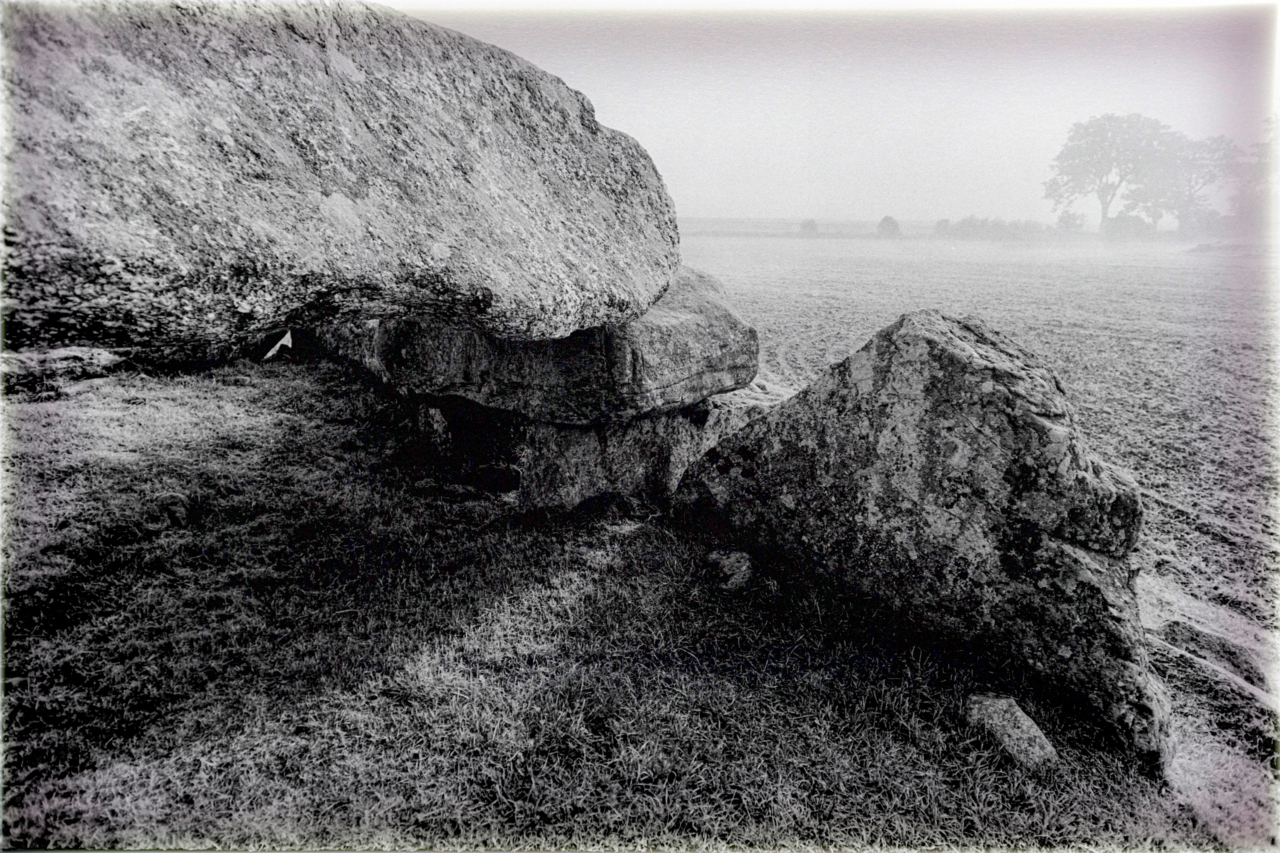
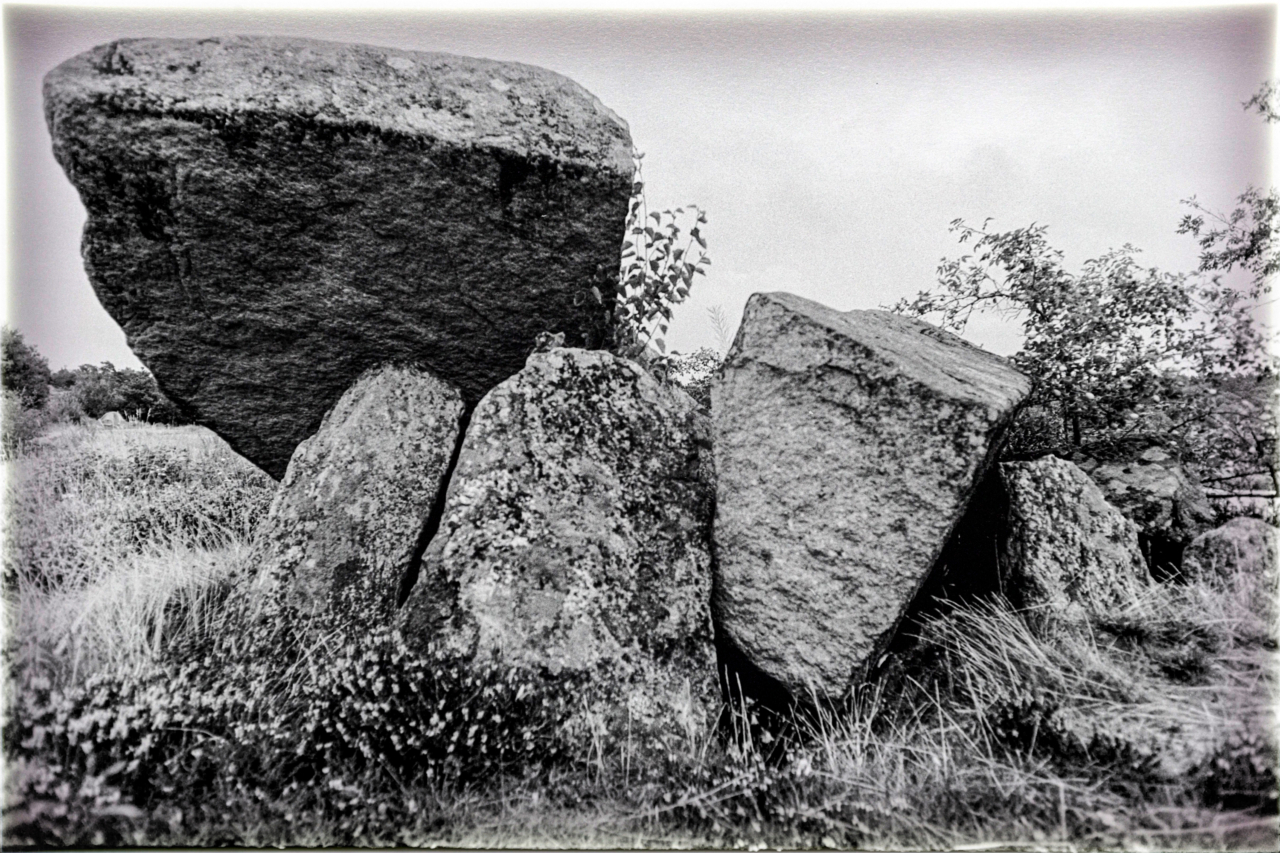
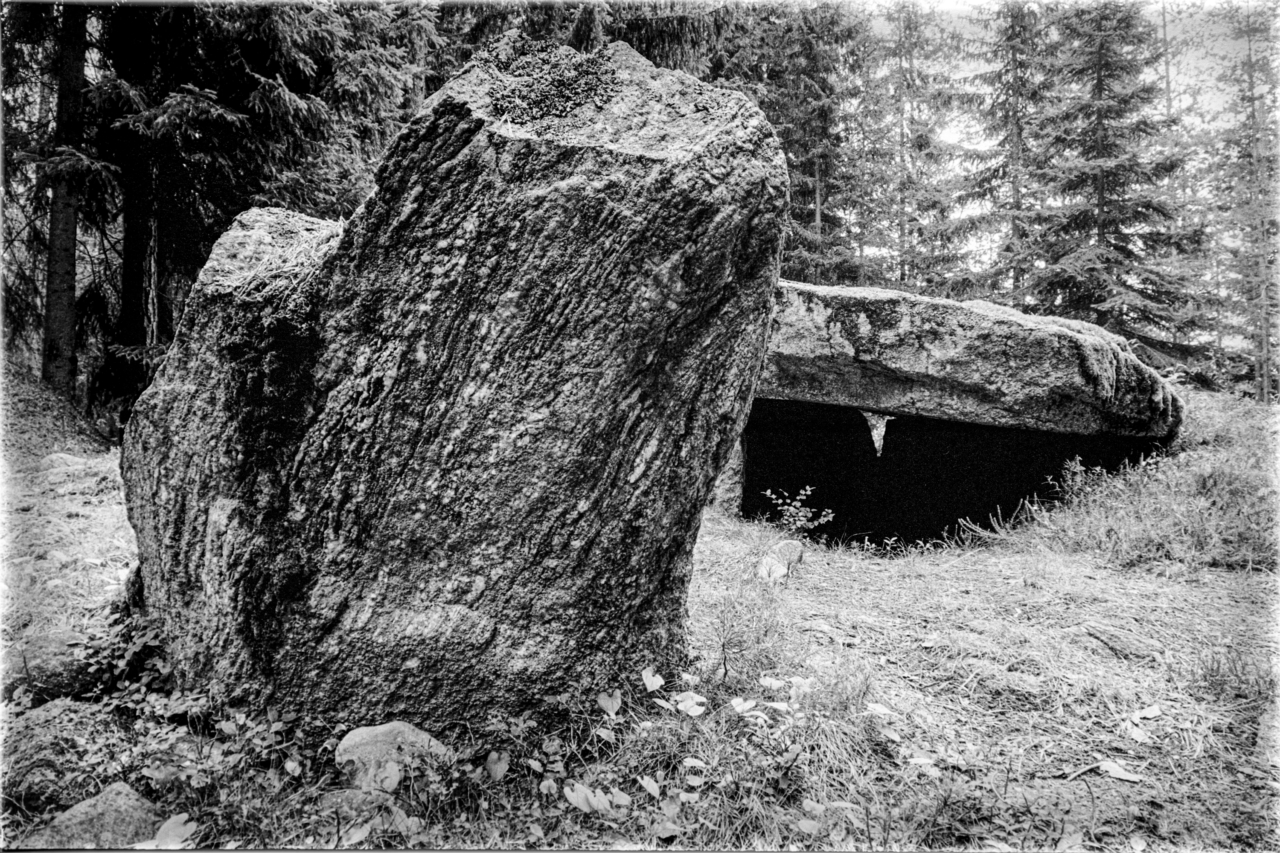
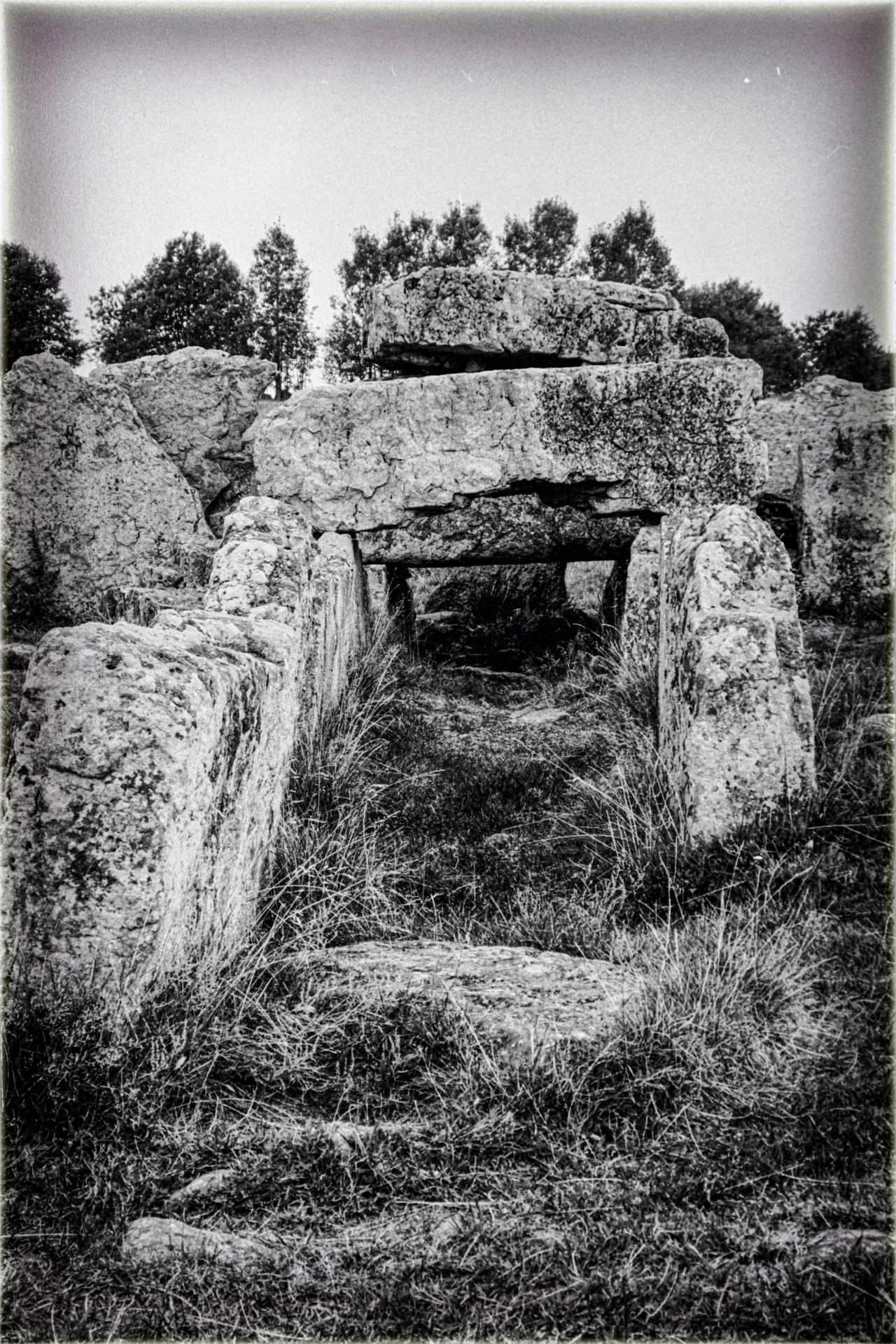
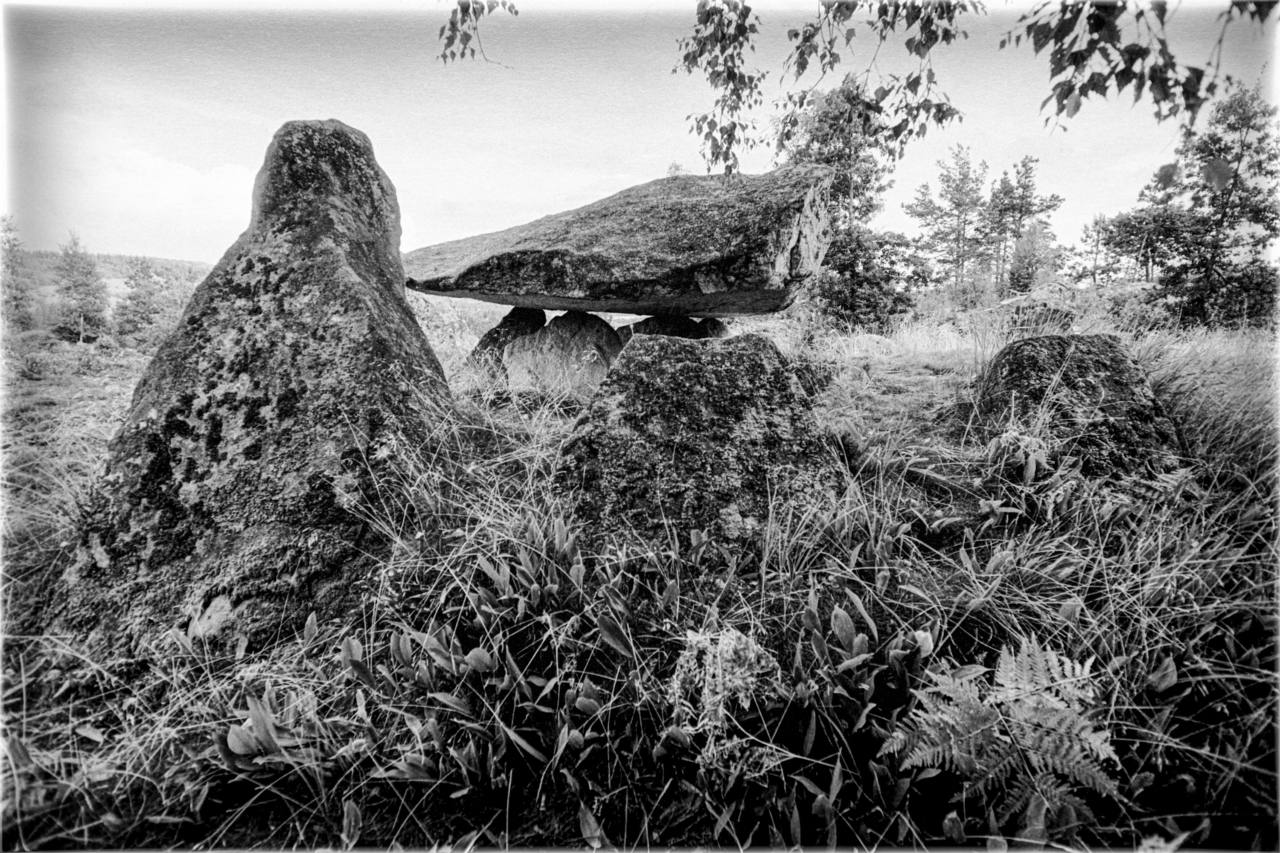
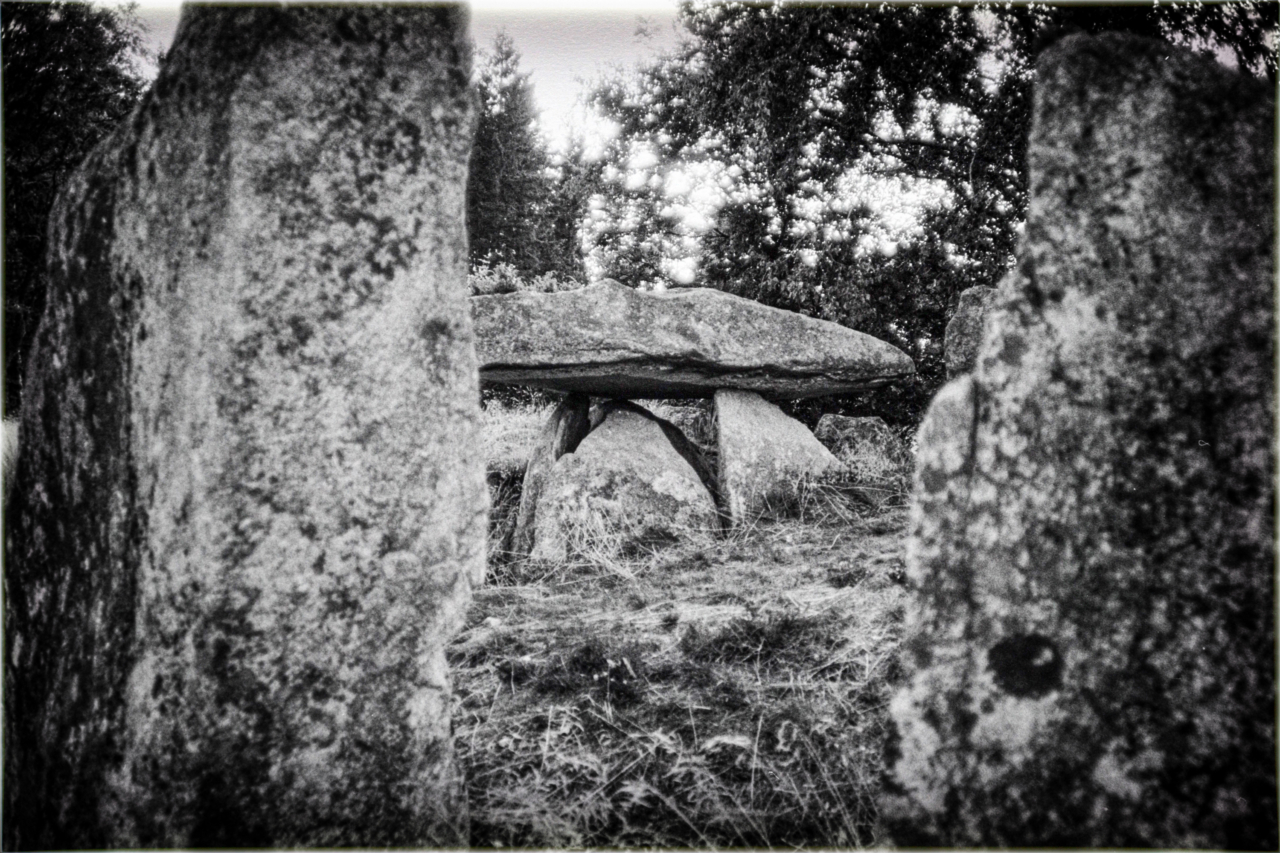
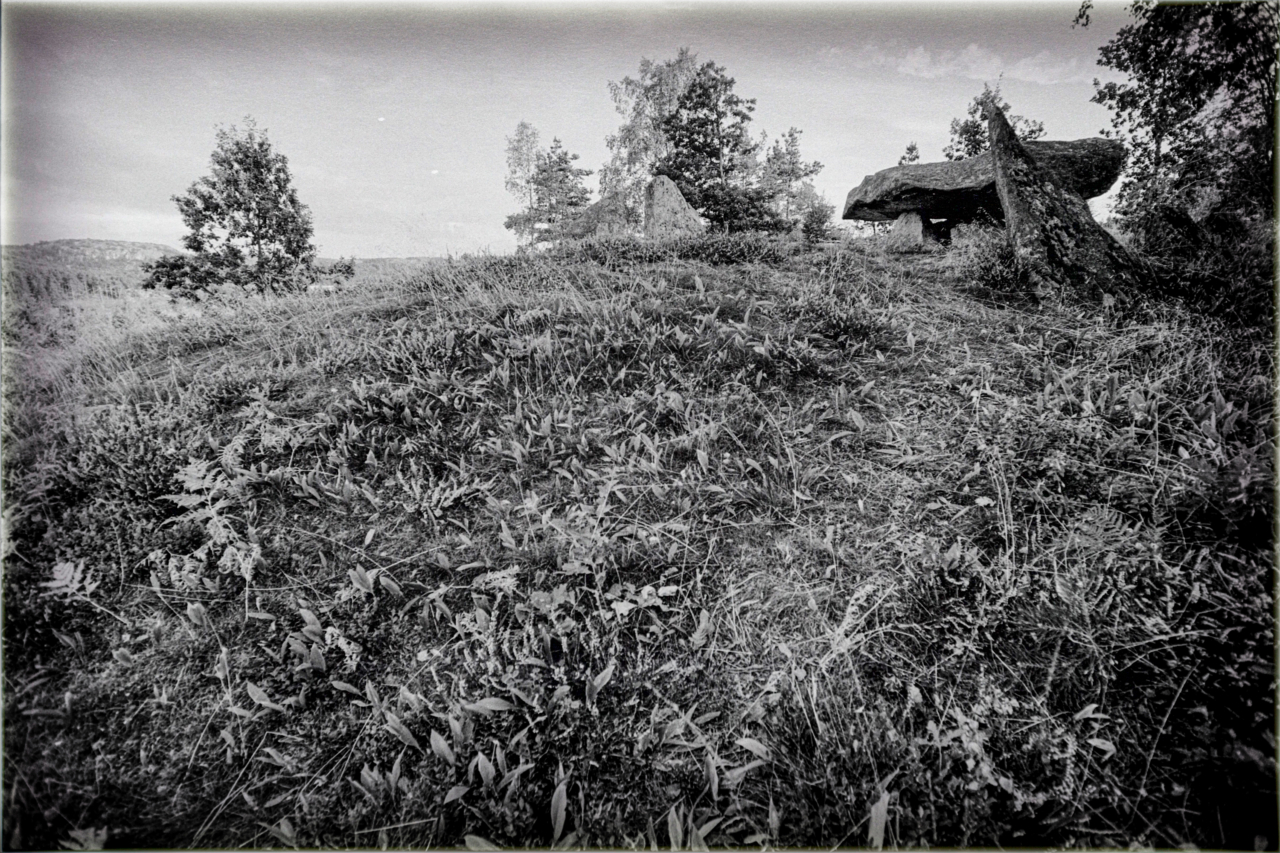
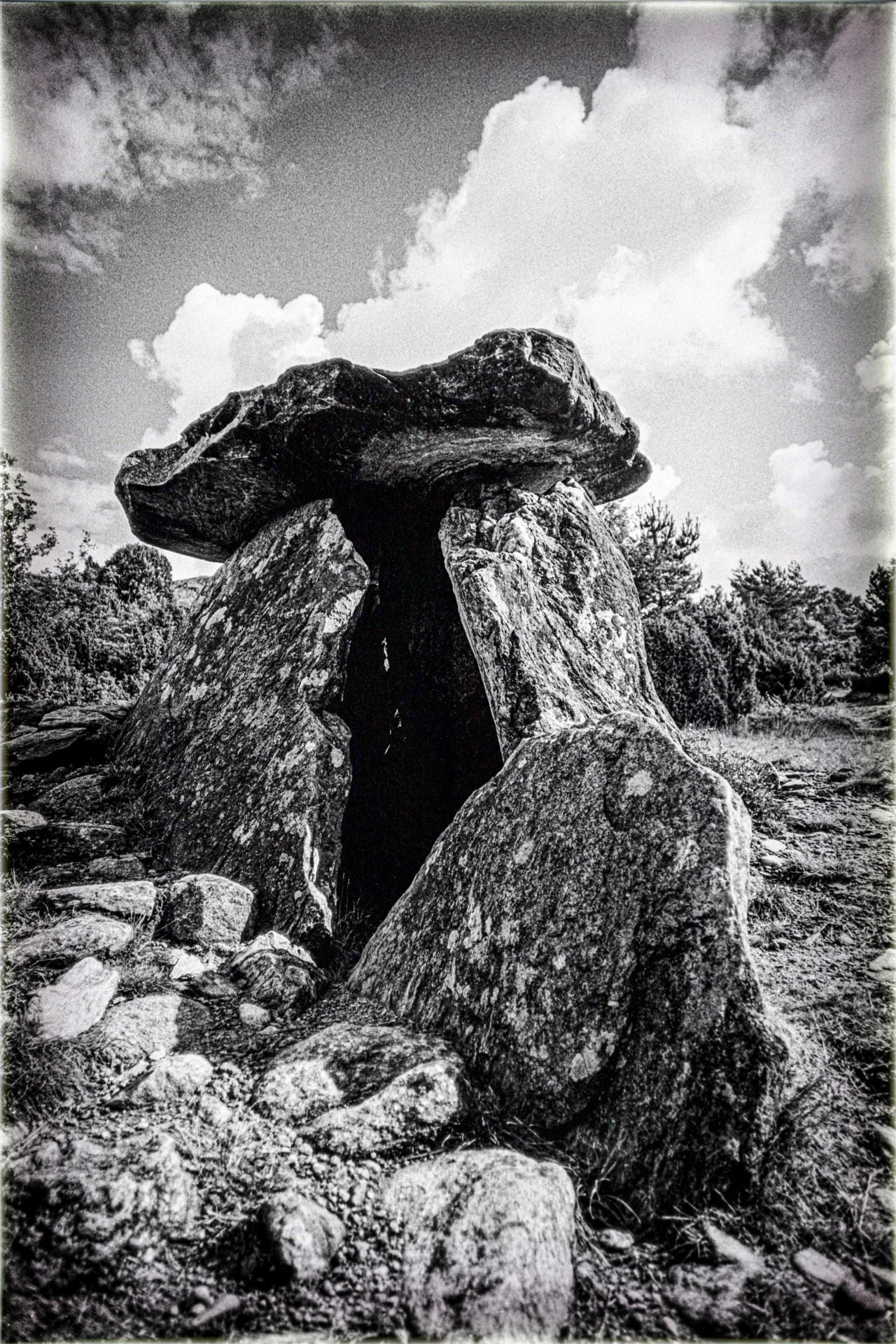
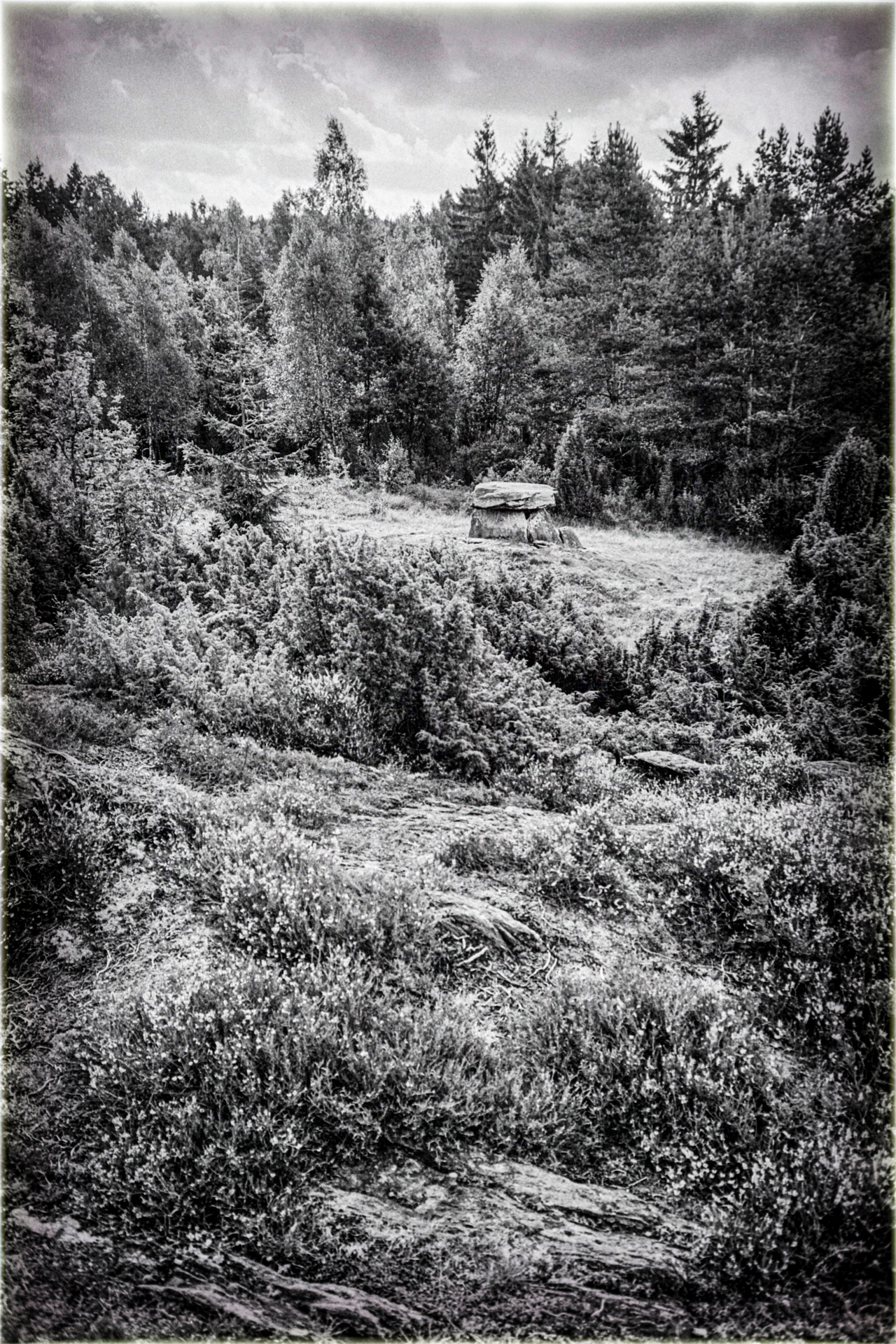
From the early 1990s Chris Tilley delivered an extraordinary series of case studies in the interpretation of ancient landscapes ranging across the prehistory of northern Europe, with passage graves and dolmens, carvings on bedrock, architectural constructions in earth and stone, placings in the land, and everywhere manifestations of genii loci, spirits of place, ancient comings and goings. He visited, revisited, and lived in these often evocative places.
He wrote of immersion, close attention to the flow of experience, awareness and mindfulness, time spent living with the prehistoric remains, in the footsteps of ghosts. He extended tropes of metaphor, metonymy, synecdoche into the material world as a fundamental property of things where this equals that, where the stones of a passage grave connect directly with distant mountains or a coastline.
He described all this as a phenomenology of landscape. His was a project in what we can call environmental aesthetics.
The constant flow of human experience is cognitive, sensory, emotional or evaluative. A phenomenology requires figuration — figures, subjects, selves, persons, bodies, however defined, to engage with the world, look and move through the land, see, touch, react, evaluate. Processes of figuration are needed that focus, condense, distill into a gestalt, into components with which we might work. And we do find different figures and characters, static and animated, statues, pedestals without statues, in the sunlight and in the mists of Tilley’s landscapes. Here are some of them.
Figures in a landscape
The anthropologist and the ethnographer
Over a couple of months in the summer of 1988, Chris and I visited many prehistoric sites in Sweden. We camped out, sometimes near farms and villages, and would regularly welcome locals who would bring some beer or wine to our campfire. We would talk about what we were doing. Chris never said it was archaeology, and always described himself as an anthropologist.
After the works we wrote together in the 1980s, Chris never used the word archaeology in a book title again, and rarely referred to his work as archaeology. He described to me his move to University College London as a welcome shift into anthropology and his post there involved considerable commitment to building up a field of material culture studies. This disciplinary positioning fits with the academic landscape in the US and the conventional four-field division of anthropology into social/cultural, biological/physical anthropology, linguistics, and archaeology.
More interesting with regard to Tilley’s work is the distinction, perhaps more French, between ethnology, ethnography, and anthropology, concerned with comparative study of cultures and societies, methods of field study, and characteristics of humanity, respectively.
Ethnology, comparative study of cultures, features in his reports on the fieldwork he made in Vanuatu in the 90s, especially looking at Wala canoes, and in regular references to case studies in the material culture of small-scale societies, as he described them. Foundations in ethnology and ethnography are a characteristic of the material culture studies promoted by the Department of Anthropology at University College.
Tilley consistently claimed over 30 years of fieldwork that his method of surveying sites, regions, topographies, through first-hand walking, noting in detail his engagements and reactions, was a form of participant observation — ethnography. He participated in the lay of the land and its features. Direct experience was, he insisted, the foundation for his studies and consequent interpretations.
So he titled a book An Ethnography of the Neolithic (1996); it might have as easily been called An Archaeology of Prehistoric Scandinavia. In hIs later edited collection London’s Urban Landscape (2019), Tilley framed a series of local studies of the contemporary city as direct ethnographic encounters with everyday life and culture, another way of telling of the city. He claims these studies are strong criticism of abstracted and distanced academic treatment found in orthodox urban geography.
Underlying Tilley’s ethnography was a considered conception of human experience. In a kind of anthropic transcendentalism, Tilley centered human experience upon cognitive, sensory, and emotional/evaluative aspects of engagement with the world that are embodied and shared by all members of the biological species. These features of experience are taken to precede and transcend cultural variation and diversity. This premise, deemed phenomenological by Tilley, was the foundation of his anthropology. As anthropologist, Chris bracketed matters of ontology and epistemology (what is the past and how might we come to know it?) in favor of first attending to, being mindful of cognition, and sensory and emotional engagement with features in the landscape.
It was this anthropic transcendentalism that meant Tilley could immerse himself in a landscape and claim a secure and direct somatic connection with those in prehistory who had walked and worked the land. This was his participant observation, his ethnography.
How does Tilley’s ethnography relate to this anthropology? A Tilley case study begins with descriptive detail of encounters in the land with topography and places, stones and architectures. Over the years more emphasis is given to descriptions of how one moves across a rock surface, along a pathway, with note taken of impressions. He talks of kinaesthetics and rhythmanalysis.
The piling up of empirical detail can feel unrelenting. One might wonder where Tilley is leading us in a thick description of a prehistoric building on Malta, in noting this and that. He certainly displays control of the empirics — he knows his stuff, of that one might be assured. But one might ask — so what? He has been there and has witnessed. One might call the style documentary or journalistic reportage. He doesn’t question or experiment with ethnographic style in representing experience. Tilley does not offer stream of consciousness, for example, or poetic condensation; photography, table, maps, and infographics are offered as self-evidently documentary, transparent in their representation.
Occasionally Tilley will make a comment, drop a hint where the features of his description are taking us (the rock has these distinctive qualities, the mountains are close by and are of a different rock), of where judgment might lead. And then he shifts persona to reveal what is going on.
The seer and the mythographer
One is in the landscape, attentive. The flow of experience can be unrelenting — impressions, noise, even cacophony. How might one filter, summarize? On what might one focus? There might easily be too much, excess.
Tilley notes patterns and regularities, or identifies what he considers to be significant features. He might note that the passage graves in a region are mainly oriented this way or that; their stone has these qualities; carved footsteps go up the rock surface, not across; menhirs mainly have a curved shape; when walking the path you see certain things in sequence. He may substantiate such observations with statistics and tables.
Then Tilley steps back and makes a proposition — this is a manifestation of a structuring principle, perhaps, of the existential contrast between the world of the living and the dead, he might say. His tour de force was in seeing elective affinities. The menhirs are root tubers or axes; the linear hilltop construction is a beach; the stones are honey or ochre; the monument is a mountain.
Drawing on Goethe’s novel about marriage, affiliation, attraction, Walter Benjamin used the concept of “elective affinities” in promoting the proposition that cultural objects and historical contexts are not arbitrarily linked but are instead drawn together through deep, underlying affinities. Such affinities are complex interplays of social, economic, material, and ideological forces. Just as chemicals combine based on their elective affinities, an early use of the concept, elements of culture and society combine based on historical contingency, ideological alignment, and, for Tilley, phenomenological qualities.
Whence does Tilley derive such affinities?
Some are deductions: in culture, and as noted by the likes of Lévi-Strauss, one may acknowledge the structuring principle of binary opposition; one may propose that an observed cultural pattern is a manifestation of a particular binary, such as life and death, sky and ocean, nature and culture, raw and cooked, whatever. Tilley may propose that a particular observed pattern is manifestation of the cultural universal of a rite of passage.
Here he may also deploy the rhetorical tropes of metaphor, metonymy, synecdoche: this equals that, applied to material properties, as well as text and communicative media. Tilley held that metaphor is the principal feature of material culture, and wrote a book about this.
The standing stone is an ax. Pebbles are a beach. A wavy line stands for water.
Tilley also worked abductively, through speculative reasoning based upon his accumulation of learning and his predispositions. Immersed in experiences of the land, looking out over from the monument to the pebble-banked beach, he sees an affinity. He jumps to a summary insight into an elective affinity and then reflects upon its validity and sense.
In this abduction one might describe Tilley as a kind of seer, an augur, diviner (as well as a connoisseur, as I will say below). One observes the sky, the intestines of a sacrificed animal, the casting of runestones, or simply the flow of experience, draws upon memory and learning, notes features and characteristics, and then posits significance. This points to that. In the cacophony, the noise of experience, Tilley found affinities and allegories, echoes and resonances. The affinities may seem at the limits of reason (a menhir is a root tuber!?), but he reasons through them rigorously nevertheless.
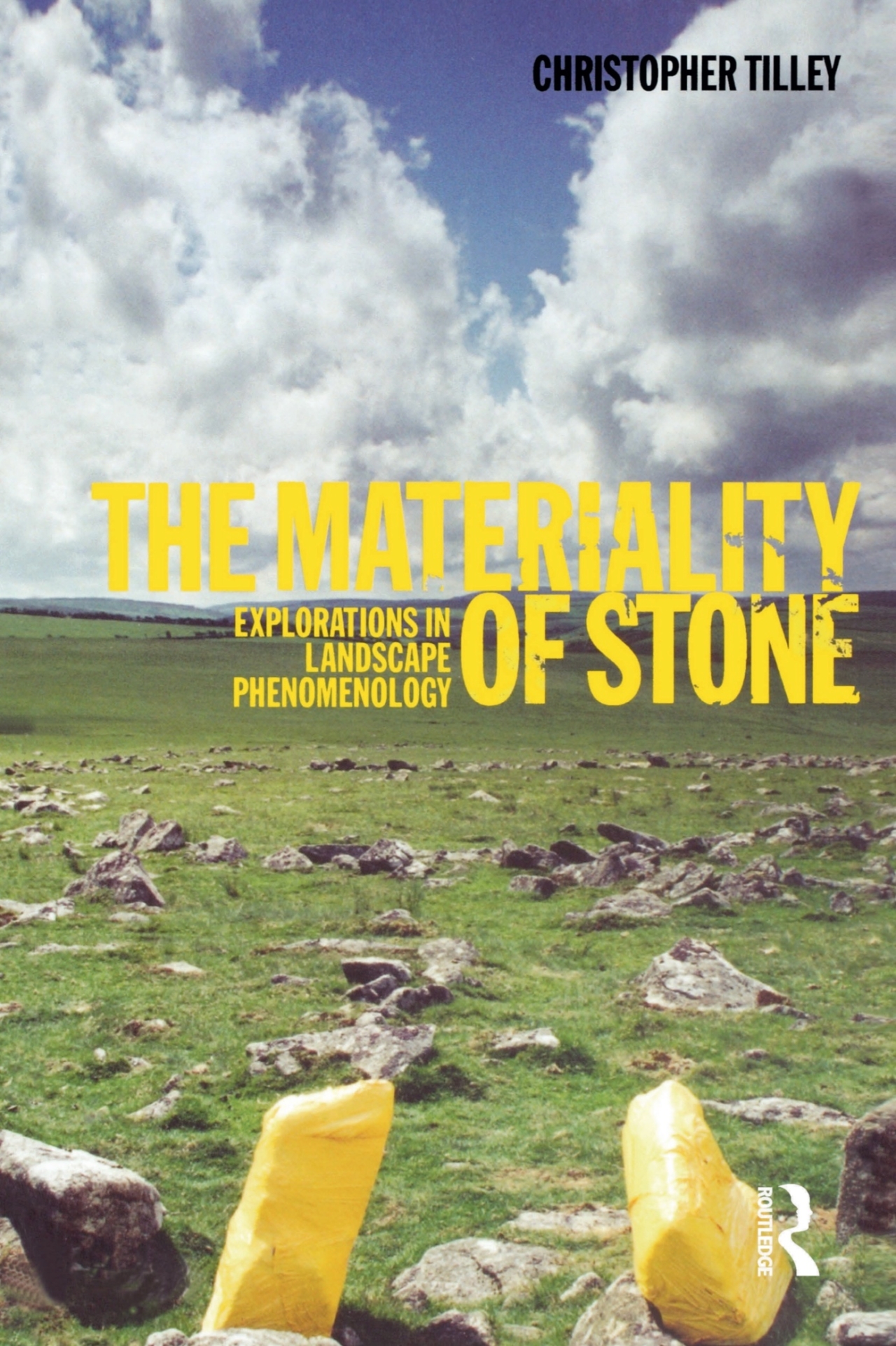
As he indicates in Materiality of Stone (page 145), Tilley does seem to have conceived of himself as part of a priesthood:
Archaeologists, such as ourselves, given permission, and allowed free access everywhere, become the new temple “priesthood” able to make up our own knowledges and tell our own stories rather than having to listen to those told by others.
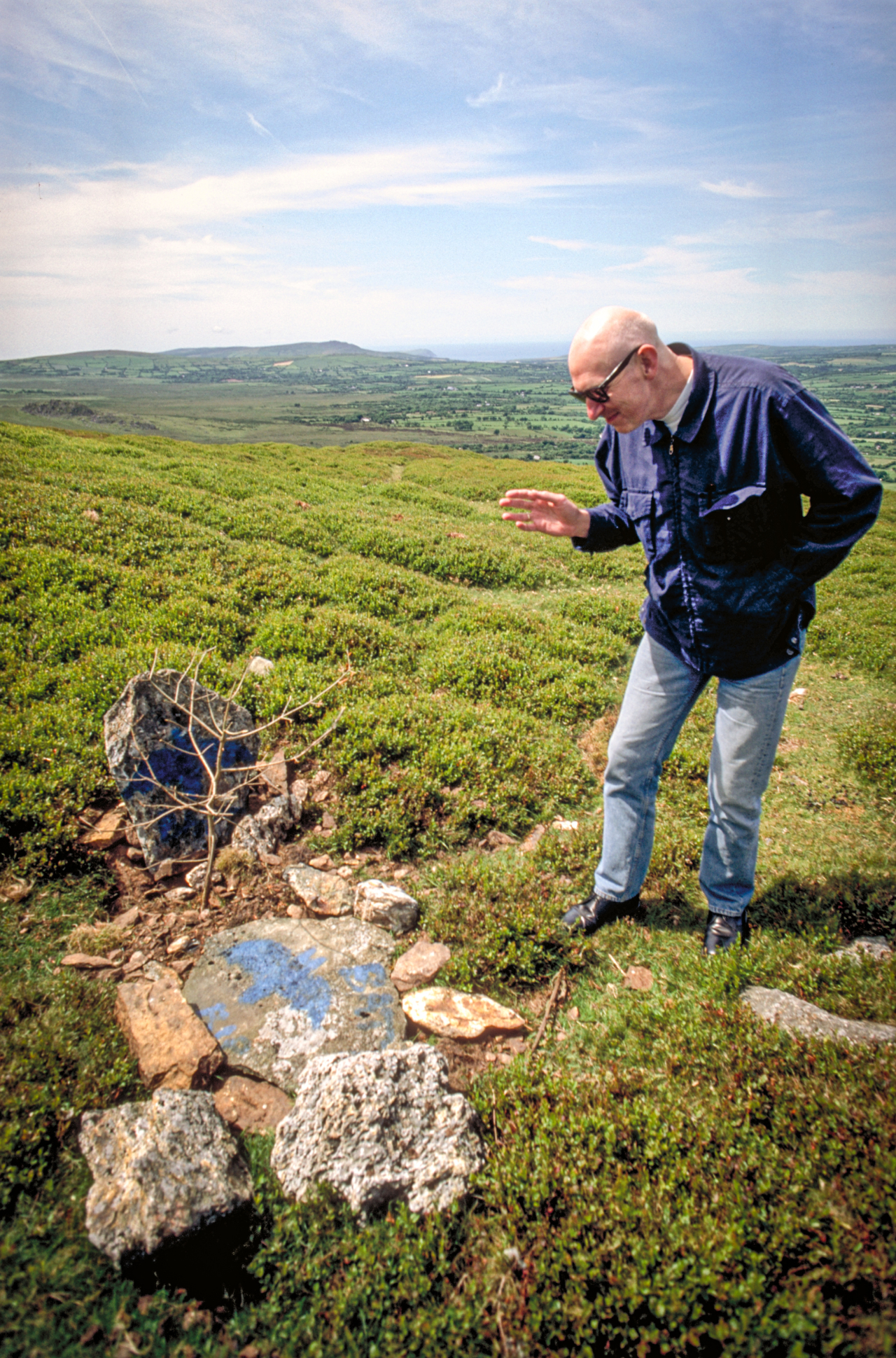
Wrapped and painted stones in a landscape.
And where might the affinities take us? From this speculative reasoning comes speculative fabulation, speculative mythography. Tilley makes his case studies reveal a theater of archetypes of character and narrative scenarios in prehistory. He writes of initiation and rites of passage; ceremony and procession; dance and song; cycles of lives and afterlives; shamanic journeys; ancestral connections; cosmological arrangements; secret and revealed knowledges; darkness and light; warriors and priests. Tilley was both seer and mythographer.
We might expect Tilley’s milieu to take in great sweeping landscape vistas, those familiar features of the sublime and picturesque, but his focus was intimate, local.
Garden, not landscape.
Let me give a more detailed example of this mythography, for it is such a key feature of Tilley’s accounts of prehistory.
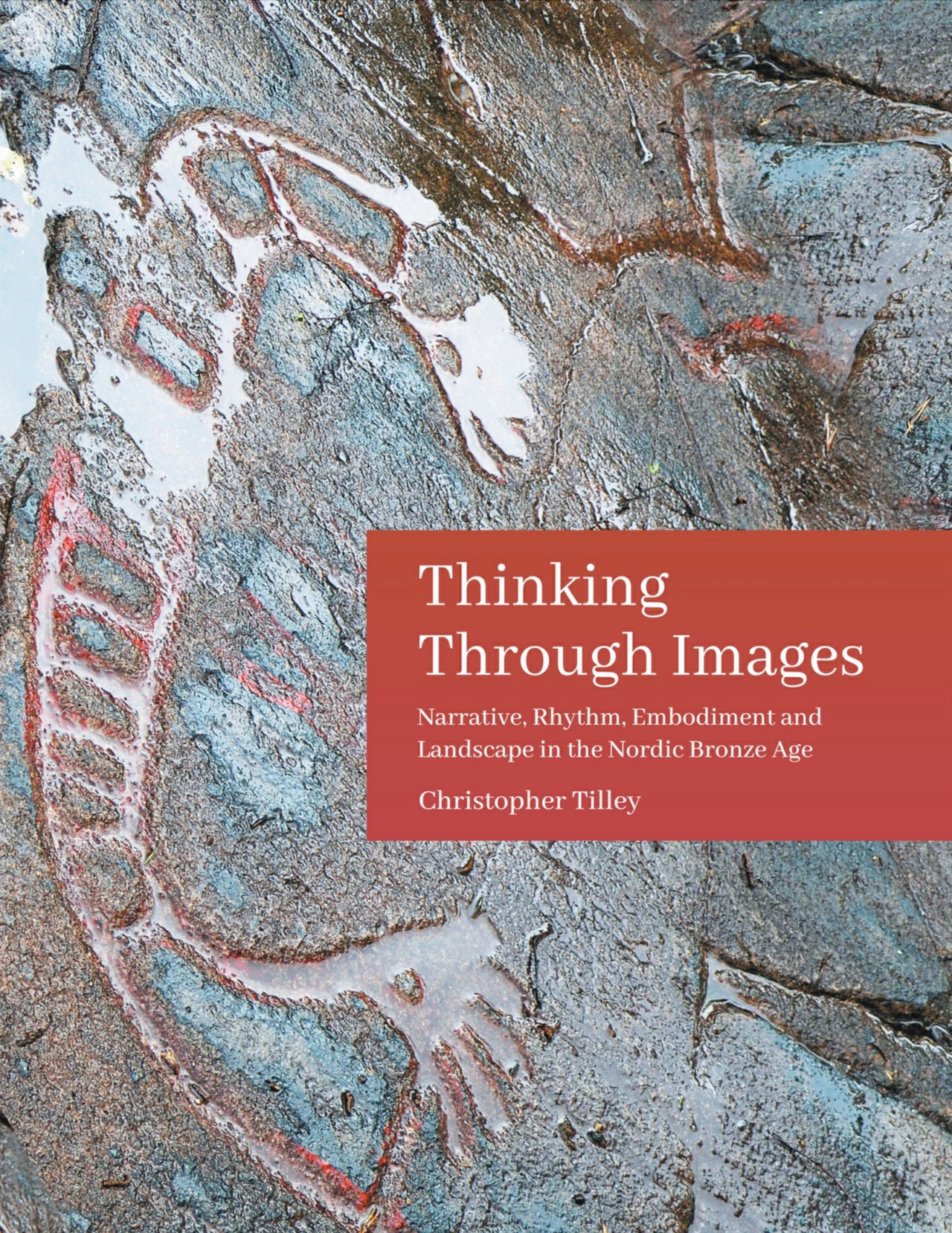
In Thinking Through Images: Narrative, Rhythm, Embodiment and Landscape in the Nordic Bronze Age (2021) Tilley returns to his fascination with rock art with a study of the site of Brastads-Backa in northern Bohuslän on the west coast of Sweden. The book opens with a prelude that captures his archaeological sensibility.
I have been bedazzled by the creative force and power of these images. They seem to offer unique potential for discovering, entering into and understanding an alien world so very different from our own. If an image is worth a thousand words, it is also worth a thousand artefacts. This is because we intuitively know that Bronze Age natives, like us, thought through images as a means of understanding and representing themselves to themselves.
He then offers one of his evocative detailed descriptions of the carving that appears on the cover of the book. I will quote some of it to illustrate Tilley’s prose and style of argument.
Standing on Rock 1 at Brastads-Backa in northern Bohuslän on the west coast of Sweden, below my feet there is an arresting image of a boat deeply pecked into the gently sloping granite (see cover illustration and Fig. 2.18). The image occurs in an area of the rock where there is a water flow running across the surface. The most deeply pecked and damaged areas in the centre are water-filled. This boat is one of 55 others on this particular rock but it is of unique form. The two prows, fore and aft, are in the form of upraised human hands. The central part of the inner palms of each have been left unpecked.
The right palm is slightly raised in comparison to the left. It is suspended on an upward curving arm that is also the boat prow, at the fore of the boat. There is no distinguishable left arm that stands apart from the gunwale. Rising above the right hand there is an almost upright extension of the keel line of the boat. The boat is depicted as if it is suspended on water rather than floating partly submerged. The entire hull is visible from the keel line to the gunwale. The two are connected by 12 struts set at irregular intervals. This boat is an arrested image. It has no crew, lacks a sail or a rudder or any visible means of locomotion. If there is motion it is implied.
Unlike the other boats on the rock, it has an unusual orientation. Rather than running parallel with and horizontally across the rock, its long axis runs from the south-east to the north-west up the rock surface. Almost all the other 300 or so images on this same rock are depicted so as to be seen from below looking up at them from the south-east side. In order to see this particular boat comfortably and from the right way up, or the usual visual perspective, you need to move across the rock to the right and then turn around in order to view it from the south-west side looking across the rock surface. The image, like many others on the rocks at Brastads-Backa, thus choreographs the movements of your body exerting its silent power and agency.
There are 30,000 recoded sites of rock art in Scandinavia. The meaning of the designs, their iconology, has attracted much speculation. Some motifs of the iconography such as ships, hats/helmets, birds, axes, animals, and wheeled vehicles are found far away too in the Mediterranean and Near East. Prehistorians since the nineteenth century have seen these as signs of global interconnectivity in the European Bronze Age, offering broad explanations of the iconography as manifestation of religious belief, ritual practice, common mythology, and the lifeworld of roving heroic warriors.
Tilley acknowledges the wide distribution of certain motifs, and points out that this overlooks the considerable variability that is so evident locally. Turn to the carvings themselves! Make them one’s concern, not the myths and stories one may hope they convey. This is what he presents in his study of the pecked rocks of Brastads-Backa. Tilley notes the specific arrangements and relationships of motifs as one physically encounters the rock surfaces in the landscape, noting syntagmatic chains (this then this then that) and paradigmatic links (this associated with that) — melodies and harmonies. He calls this kinaesthetics and rhythmanalysis, and says it is part of a narratological approach.
The seer (in Latin the VATES, the inspired poet) must attend scrupulously to the tiniest things that others will overlook in their preference for broad and generic, familiar and unchallenging accounts. Fresh and vital insight is grounded in the utterly particular. Tilley’s poetry, the mythography is the speculative leap through universal characteristics of human experience.
we intuitively know that Bronze Age natives, like us, thought through images as a means of understanding and representing themselves to themselves
Here then is part of his summary story of the pecked rocks of Brastads-Backa. Again, I quote at length to show Tilley’s mythography
… little was more striking and visually beguiling than the carved rocks themselves. I have already argued in Part I that they represented the real wealth of the communities in northern Bohuslän and were far more significant to the local people than any metal trinkets. They were the inalienable wealth of the local group. Processions and parades moving between the rock would have involved walking between them, dancing over the larger carved surfaces, wearing costumes and masks, playing music, holding banners and ceremonial regalia aloft. The people would animate the images and they would animate the people. Thus, the images were an active part of the parades and ceremonies and marked the processional routes taken through the landscape. Outstanding and complex carving surfaces with arresting images were emblematic of group identity and solidarity. They created the fame of the group in the eyes and minds of others made permanent and immovable in the local landscape …
… the images themselves, as much as the processions and ceremonies that were related to them were the centre of attention. The entire character, meaning and appearance of a carving surface might be altered by adding new and visually dominant images or inscribing others in new places. I have argued that this was the case in relation to the dominant ‘cobbler’ image on rock 1:1. This may be why carving surfaces often appear to us to be haphazard, chaotic and disorderly, lacking in structure. Experiencing the images on the rocks was almost certainly designed to be part and parcel of the transformation of the self, bringing about altered states of consciousness of the self and society. They were active in this process, both medium and outcome of identity construction in relation to others, important qualisigns of that which was valued. The processions and parades and ceremonies might mark the end of a process in which these images were brought alive and became animate …
… by stressing rhythm, beat, repetition, silence, pause and using musical analogies such as the notion of individual motifs as being somewhat akin to the sounds of instruments being played on their own with a singular voice, or in an orchestral crescendo of sound, I have tried to express, in an undoubtably primitive way, that might be better developed by others, two distinct ideas. The first is that the social experience of the rocks in processions and parades was accompanied by singing, the steady beat of drums, the sonorous sounds of lurs and not contemplative analytic silent mediation on their deeper meanings … above all this experience was celebratory and joyful and social, most especially in the case of the larger surfaces and panels on which many people would move and dance. The second is that the meaningful rhythms of the rocks seen in succession was related to the rhythmic movements of the people who experienced them, in the kinaesthetic and emotive responses of their bodies in relation to what they experienced and saw.
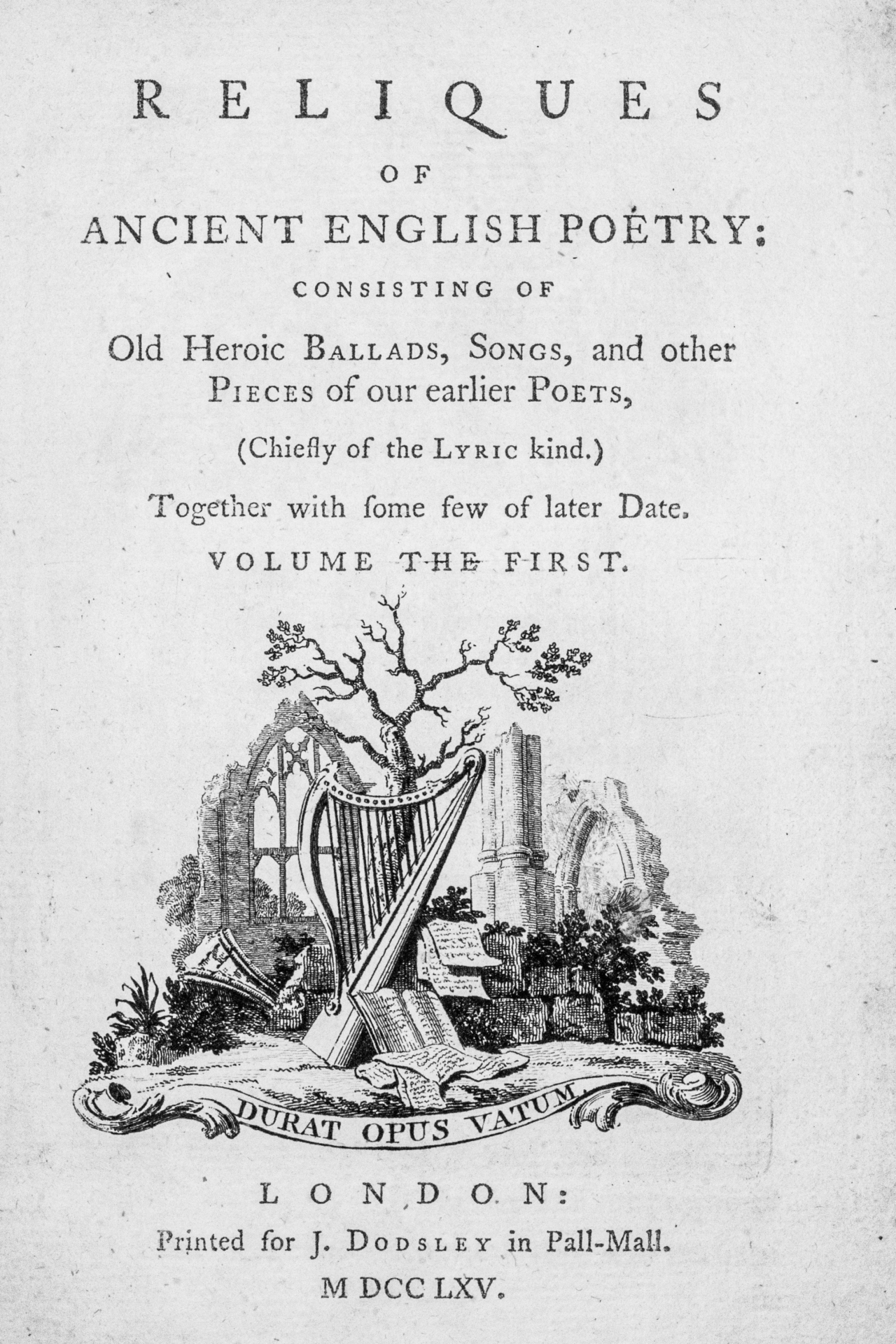
Title page of Thomas Percy’s collection of fragments of ballads, a landmark in European romanticism, as well as literary antiquarianism. The quote DURAT OPUS VATUM is from Roma poet Horace: amidst the material ruins of the past, texts scattered to the wind, trees in their last leaf, “it is the music of poets (opus vatum) that endures”.
The romantic and the transcendental humanist
Tilley was not unhappy to be associated with English romanticism, eighteenth century and after. He walked, like Wordsworth, attending closely to subjective experiences, especially of nature and the land, releasing wonder from the overlooked familiar, or what had gone unnoticed. In The Prelude, Wordsworth regularly condemns “habit,” “use and custom,” and “the regular action of the world,” asking us to experience the miracle of being in the most commonplace objects. There are certainly, at least for me, curiosities of resonance, in Tilley’s writing, with the English romanticism of Jacquetta Hawkes (I’m thinking of her universal anthropology Man on Earth, especially her account of Britain A Land, and the more poetic Fables and Symbols and Speculations). I sense there is something of Paul Nash’s mystical, mythical, English landscape in Tilley’s dimly lit stories-in-the-land, though the affinity is not so much with Nash’s paintings as with his more prosaic compilation, The Shell Guide to Dorset (so easily accessible now at Yale University online [Link]. Tilley never mentioned any of this.
American transcendentalists Emerson and Thoreau also come to mind with their disposition towards essential individual experience that connects with a universal unity between the human and the natural, a vitalism beyond culture/nature binaries, transcending time. Personal intuition is, for them, a critical source of knowledge and moral guidance; they advocate a life that aligns with one’s inner truths and the natural world. They share a critical view of societal norms and aim to explore and promote a more spiritually and morally fulfilling existence. So too, in many ways, Tilley. And he never mentioned this at all.
The antiquarian and the connoisseur
In 1988 Chris and I visited the rock carvings at Nämforsen in the company of the University of Lund’s library copy of Gustav Hallström’s Monumental Art of Northern Sweden from the Stone Age (1960). This is a big book, itself a monumental record of the site. It was quite a commitment to take it with us into the field. Of course, it was also indispensable, a documentary key to the “art of ambiguity” as Tilley called the site. The place is so difficult to take in because it overflows immediate experience. Here’s some of what he said about Hallström in his book Material Culture and Text (1991) — it is quite revealing:
“He transforms a disparate series of documents (individual rock carving surfaces) into a monument. That which is truly monumental is Hallström’s effort — …the book … the dedication, the supreme effort of will to complete it … despite failing health. Mobilized and compressed into a bound text, the rock carvings [are his] personal monument, his claim to immortality. This monument … is more like a gravestone … for it signifies a textual space that is meant to exclude its author: an object intended to be unmediated by a constitutive subjectivity.”
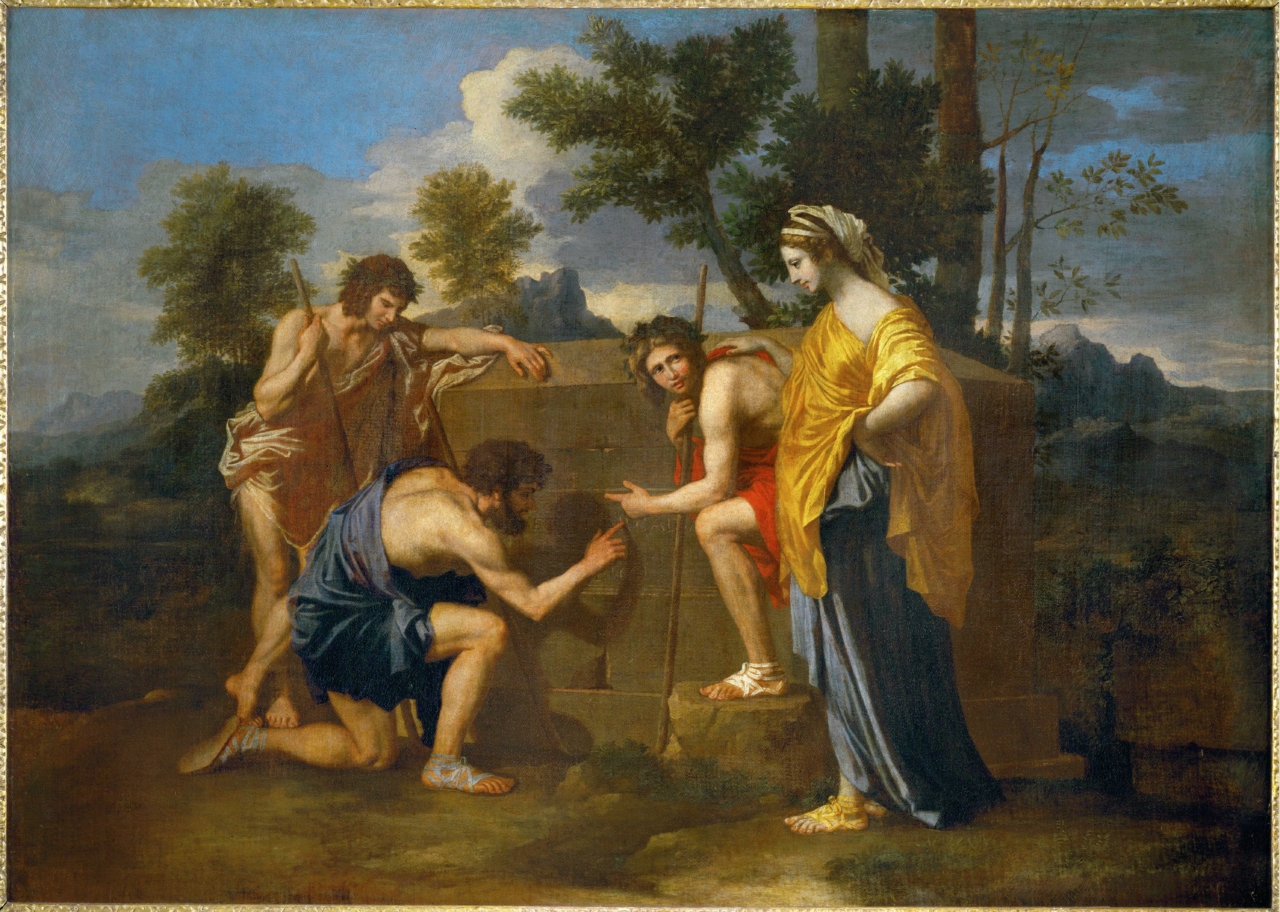
In Part 1 of this commentary on Tilley’s work, I recalled Poussin’s seventeenth-century painting of shepherds in an Arcadian landscape. They have found a monument in a landscape. Is it a tomb, a gravestone? Is it a pedestal of a statue since toppled and removed? An inscription reads, ambiguously, ET IN ARCADIA EGO — “I too [was/is/have been/will be] in Arcadia (the archetype of idyllic landscape)”. Just who is the subject? This is Tilley’s take on Hallström’s monument. And on Tilley’s own monumentality.
It was not just Hallström. In his collaborative work at Leskernick on Dartmoor, for example, another upland landscape in southern England, Tilley refers with great approval to the documentary work and speculative conjecture of antiquarian William Borlase (1696-1772).
I have found myself very taken with the eighteenth-century antiquaries of the northern borders between England and Scotland. Two voices come to mind when reading Tilley. Alexander Gordon was one of the first to center an historical argument (about Roman colonization) on a personal archaeological survey. In Itinerarium Septentrionale (A Northern Journey, 1726) one finds that same in-the-footsteps dogged documentation of monuments in the land as adopted by Tilley. While walking the land became a key component of archaeological field survey in the second half of the twentieth century, certainly, one might read in Gordon a similar personal and subjective commitment to present-at-hand experience found in Tilley’s phenomenology. A combination of personal experience and aspiration to authoritative account is very evident also in John Wallis’s Natural History and Antiquities of the County of Northumberland (two volumes 1769). Anecdotes run through his detailed commentary on stones, waters, plants, fishes, quadrupeds, eminent men; the second volume describes three itineraries through the land with special attention to antiquities and especially the ancient dwelling inhabitants (landowning families).
There is no reason to suppose Tilley read either Gordon or Wallis. I am expressing here an interest in the genealogy of Tilley’s praxis, not as in a history of ideas, but more in the way of dispositions, traits, and sensibilities. In this regard it is quite easy to see in Tilley the figure of the connoisseur. While often now associated with overly-refined high-cultural taste (an expert offering valuations of antique furniture or old master paintings), or with a myopic and fetishistic focus on precious (or not so precious) things, the connoisseur might equally be acknowledged simply to be one with deep and scholarly knowledge of a specialized subject, knowledge achieved through long personal commitment and interest. (Tilley dedicates his book on pebbles to George Carter, a local amateur archaeologist, and his granddaughter Priscilla Hull). Tilley’s connoisseurship was rooted in collections of experiences rather than of artifacts such as works of art, perhaps more like a gourmet (hence my description of him as an Epicurean of landscape).
While one might disagree with his evaluations of the experiences in which he dealt, there was little doubt that he had very carefully considered his judgments; Tilley knew his stuff, microscopically — god in the details.
Many voices
In my experience and reading, Tilley actually fits none of these personae, archetypes, these figures in a landscape. He was all of them, and none. He cultivated many voices. And there are other figures we might call forth in Tilley’s landscape, his garden.
So I am not wishing to categorize Tilley as a romantic or transcendentalist, or any of the other figures. My point is simply to give some shape to the processes of figuration, as we might call them, in his phenomenology. These are fictional characters in the theater of his research. I have argued elsewhere, (in a 2023 essay on Social Theory and Archaeology and in the 2013 book Archaeology in the Making), against using summary categories, especially those that come with the suffix -ism, to understand how research and knowledge-building works. Tilley’s work shows that it is much more interesting, much more grounded than -isms allow.
Let me continue with the metaphor of figures in a landscape and outline a suite of matters and topics, concepts with which they are concerned in the drama of building archaeological knowledge.
Antinomies and aporiai, digressions and deviations
The concerns of these figures in a landscape are shaped by a semantic field of troubled concepts — foundational, tactical, ontological, methodological. They include: humanity and experience, materiality, design, landscape, body, performance, mediation and representation, and temporality.
Tilley and I parted ways on how to navigate this field. He cut a decisive and clean path for-all-time through these concepts. I have found instead irresolvable tensions and antinomies, dead-ends and no-way-through aporiai, deviations and necessary digressions, questions in pragmatic, local, always temporary decision making.
Here are some features of a concept map.
Humanity and experience
Tilley’s anthropology was one of universal humanity in cultural diversity. I have connected it with a transcendental outlook, though Tilley never named it as such. He certainly affirmed the unity of humankind and maintained the validity of comparative ethnology that might juxtapose canoes in Vanuatu with prehistoric structures on the south downs of England. He asserted connection not through analogy or empathy or socio-cultural modeling, but through the concept of a shared phenomenal field, as Merleau-Ponty called it, shared embodied experience.
The question must surely be raised of the implication of power and agency in the relation between universal and particular, global and local, indeed of the validity of the anthropological project of ethnographic fieldwork, of participant observation (shared experience). Did Tilley ever step back and reflect on a question such as — how might I account for and validate my competency in bracketing out my individual locatedness (in life cycle, history, culture, society) in order to identify the universal, intersubjective pre-reflective components of experience in a walk through an English landscape, in a visit to a village in Vanuatu, or in a London neighborhood? To whom is one accountable in such an enterprise? To what end? For whom?
In his work on pebblebed heathlands with Kate Cameron-Daum he performs ethnography on a suite of stakeholder interests and records their accounts of experiences in the landscape, witnessing diversity. Much of this concerns different modes of engagement — through military maneuvers, cycling, riding, walking one’s dog. Stakeholders are presented as categories or character types and we read descriptive accounts of women riding horses, soldiers crawling over pebbles.
How are such accounts related to the experiences themselves — the prereflective phenomenal field? Tilley asserts the validity of experience, but never reflects critically on how it is to be shared, other than through being present, being there. Tilley made much of the importance of living with landscapes, on-the-spot, monuments in reach and visible out-of-the-kitchen-window. Anything else will involve re-presentation and loss of immediacy, mediation, translation into word, image, whatever.
In the end therefore one must trust the witness, Tilley himself, or his collaborating colleagues, who wrote the accounts. Above all, in contrast to witnessing, one must seek to replicate authentic experience in order to achieve inner, secure, gnostic insight, that will for-all-time remain ineffable, asserted, not-to-be-spoken-of.
I emphasize this last point. Tilley’s phenomenological gnosis involved direct insight that is typically hidden from casual experience and does not come from external institutional teachings. Gnosis can be esoteric, even exclusive, in that it typically requires exceptional preparation and resources. You will need to refine your phenomenological sensibilities, buy or rent a house in the heathland and go native, become inhabitant for a year or two, that one might witness the landscape in depth and first hand.
In Leviathan and the Air Pump: Hobbes, Boyle, and the Experimental Life (revised 2017) Steven Shapin and Simon Schaffer explore debates in the seventeenth century around the integrity of knowledge production. Robert Boyle stood for experimental method, where controlled modes of engagement with the workings of nature, and involving machines such as his vacuum pump, would generate experiences that trustworthy gentlemen scientists could witness and report to the world. Political philosopher Thomas Hobbes, in contrast, looked for natural law and viewed experiments as the artificial, unreliable products of an exclusive guild. Tilley too was appropriately concerned with the conditions under which reliable knowledge might be produced.
This comparison with debates over the role of intellectuals in public life and the problems of social order and assent in Restoration England should show that I am not intending to be negatively critical in this assessment of Tilley’s ethnography. What may be called gnostic intuition is easy to relate to a most common feature of scientific reasoning that Charles Peirce called abduction. This is not the place to explore the ways that academics and administrators from liberal democracies might pursue knowledge of others in small scale societies past or present, in developing nation states, or however the object of knowledge is construed. I have no definitive answer to these matters of how we build knowledge other than to say that I have found pragmatist science studies (and I would include here that of Shapin and Shaffer) the source of most fruitful insights — we are indeed part of what we seek to understand, and knowledge is an achievement, struggled for, worked for, riddled with contradiction, messy, complex (as outlined in my book Archaeology in the Making).
More important is that Tilley took an informed stand on these critical issues. Recalling our conversations in the 80s and early 90s I suspect that his anthropic universalism owes less to an existential phenomenology of the likes of Merleau-Ponty, and more to a Marxian concept of species-being — the human capacity to labor and make unalienated lifeworlds in ways that transcend mere physical survival to include dynamic processes of cocreation, connection, and self-realization. This would connect Tilley’s project with internationalism, seeking global solidarity in shared experience of contemporaneity, rather than a concept of transcendental humanism, seeking an escape into a reverie of individual experience.
Was it Kristian Kristiansen who remarked that to combine Marxian materialism with phenomenology was a rather tough challenge!?
Here again, however, I am resorting to abstract -isms to try to throw light on complex intentions in an academic life lived most thoughtfully.
Materiality
Just what is a monument, a tomb, a dolmen, a grave? Just what is a canoe or a house? Tilley addressed directly these great questions of ontology. The basic answer is that it depends — on context, on connections and relationships, on dynamic processes of making, using, consuming, maintaining, curating, discarding. It depends on experience.
For Tilley metaphor is a structuring principle concerned with connection and affiliation that cuts across material form and signification — this might equal that. He placed this principle at the heart of his contribution to that subdisciplinary field of anthropological material culture studies that has become so associated with his academic home at University College London. This has been a major contribution to anthropology.
Much is to do with challenging the duality of mind and matter by exploring the contexts and relationships of things, what I have suggested are, to Tilley, elective affinities. This was the core of his phenomenology focused on the embodied materiality of experience in the flux of sensory, cognitive, evaluative engagements and relationships with things, and with any other elements in a phenomenal field.
And the materialities in his work can shine vibrantly, if not so much in the prose and photography of his writings, then in the extraordinary aura of the sites he studied and evoked. Certainly this was my experience of copresence with Chris in the land in those field outings of the 1980s described in my first commentary on his life work. I am nudged here into anecdote, which I suggest is a feature, if suppressed, of Tilley’s ethnography. My memory throws up times spent with a fierce critic of Tilley’s, Andrew Fleming. We spent a few afternoons in the 90s with David Austin, another vital presence-in-the-land, out in west Wales, in and around Tregaron and Cors Caron, its bog. I recall impressions, pre-reflective yes, distributed across walking pathways, slipping into chilly streams, railway tracks floated on peat, Andrew and David’s noticings of ditches and leats, material palimpsests of entangled features, and Sunday lunches in the 13th century Talbot Hotel, with its elephant buried in the backyard.
Assemblages of experience and memory, presences and absences. One can truly appreciate the vitality of material presence, witnessing, dynamically, so much that is lost, absent. At least this is how I take Tilley’s insights.
Design
I have never understood why Tilley’s anthropology of material culture made no mention of design, as concept and praxis. This point is definitely one where we parted ways. Design — the envisioning, planning, making, of objects, systems, experiences, encompassing purpose and functionality, makers and users, aesthetics, technical and material considerations, and matters of realizing goals, of team building, community organization, project management. This is material culture!
There are several strands to my own adoption of a design-based outlook. I immersed myself in the world of studio pottery as part of my research into ancient ceramics. The craft/art/design nexus was central to my collaboration with those studio potters in the 80s and after and to the performance design of Brith Gof, the arts company with whom I worked from the early 90s. A move to Stanford in Silicon Valley brought an encounter with what gets called human-centered IT design thinking. I ran studio with some wonderful designers in our school of engineering as well as expanding the archaeological imagination into design consultancy for several large manufacturing corporations as well as the city and port of Rotterdam. This is modern material culture studies, as pursued, kind of, by some of Tilley’s colleagues at UCL such as Danny Miller. Applied design archaeology. Most significant is the growth since the 90s of an explicit focus on experience: when asked what he does, David Kelley, founder member of design consultancy IDEO and colleague at Stanford, replies “I design experiences”.
I find no indication that Chris showed any interest in such expertise. What reason was there for this missed opportunity, as I see it? Was Tilley concerned to “swim in the lane” of anthropology (and archaeology) and not stray? Did he not want to look closer to home at cases of industrial design? Was this too much of a distraction from the heathland?
Landscape
For me the biggest black hole in Tilley’s garden is the core feature — the concept of landscape.
He upheld a clear definition of what he meant by landscape — basically human dwelling and embodied place-making. It seems that was enough, because I can find no inspection in his work of the genealogy and semantic range of the concept that qualifies his narrow definition. For me such inspection is critical to maintaining the life and vitality of a concept, its valencies, inflections, affordances, affinities pertinent to particular local use and pragmatic mobilization.
Why did Tilley not unpack the associations of the concept of landscape with long histories of property ownership, with the environmental aesthetics of the picturesque and sublime, of rational improvement of agriculture, of shifts into rational modern extractive agribusiness? Human geographers and art historians have been spreading such critique of the concept of landscape for decades. In a world so troubled by the effects of centuries of application of an extractive and proprietorial disposition towards landscape, how can one adopt such a neutral definition?
Tilley has an article in Barbara Bender’s edited Landscape: Politics and Perspectives (1993). Many of the contributions deal with a critique of the concept of landscape, though mostly in its cultural associations and not its association with certain configurations of political economy. Tilley presents his case for a phenomenology of megaliths and in so doing makes reference to modernist and contemporary artwork associated with land and environment (Hepworth and Moore to Smithson, Heizer, and Long). His purpose is not to question the concept of landscape, which most if not all of the artists were doing, but to assert that they too were like the people who built the megaliths — expressing a universal human concern with place-making. For Tilley, these artworks can help us achieve phenomenological insight into sculptures in the land.
Tilley worked with Bender and Sue Hamilton on Stone Worlds: Narrative and Reflexivity in Landscape Archaeology (2007), their fabulous and fascinating account of excavations at Leskernick on Bodmin Moor in south west England. They present diaries and team deliberation, poetry and experiments with photography, and there is discussion of arts-based approaches to the mediation of archaeological experiences of the prehistoric remains in the land. The project’s topic that equates landscape with experiences of place-making is given context. I will have more to say about this remediation below. Here I note that focus remains on achieving phenomenological insight into experiences of engaging with prehistoric places. The experiments with wrapping stones Christo-like with painted cling film, or of flagging lines of sight, are not to question the concept of landscape, but to heighten material engagement.
I have spent much time studying antiquity. I might reflect upon the diverse experiences in Graeco-Roman antiquity which might be associated with Tilley’s concept of landscape. The Roman pagus, the chora of the city states, Pindar’s geopoetics, pastoral idylls of Hellenistic Alexandria, cadastration, slave latifundia, Horace’s rural retreat, systems of surveyed roads, Pompeian wall painting, Virgil’s farming manual in verse (Georgics), rural shrines, Hadrian’s Wall and the limes, all convey engagements with land that are not at all reducible to the one-dimensional concept of landscape as dwelling and place-making.
Again, Tilley was well-informed and I take this as a deliberate decision on his part to plot a particular route through the complex concept field that includes landscape and its cognates. Observations such as these about antiquity seem not to have mattered to him. They are secondary manifestations of an existential and transcendental quality of human-being-in-the-world. As Tilley and Cameron-Daum wrote (2017, page 7):
“landscape provides, we argue, an existential ground for our embodied being”
I conclude that Tilley could ignore critique of the concept because he was pursuing a transcendental phenomenology of consciousness of experience, including emplacement — free of experiential content, pre-reflective, immediate. “We are in their footsteps.”
Perhaps I am unable to pull off the phenomenological epoché that would bracket off any considerations, assumptions, beliefs about the actual world (what we have inherited and been taught) to uncover the structures and essential features of conscious experience — how objects are experienced, the relationships between the experiencing subject and the experienced objects, and the intentional (directedness) nature of consciousness. Perhaps I am confusing what is experienced from how it is experienced.
Such questions and thoughts are, for me, distracting and misplaced. I don’t want to achieve a phenomenological epoché. Why would I want to be an “insider” such as Tilley and Cameron-Daum aspire to be in the Devon heathlands? Insiders require others to be treated as outsiders. The concept of landscape is not neutral, nor existential, nor transcendental, and I am far from being alone in arguing this. The concept field that includes landscape is a critical component of an exclusively proprietary view of land — “this land is my land, experienced by my own people, pictured in the ways we appreciate, not yours, except on my sufferance.” How do I know this? It is embedded in my experience of particular landscapes, experiences reported by many others, and not in a commitment to a transcendental and essential human concern with place-making and dwelling.
Yet Tilley and Cameron-Daum deny that this experience of mine can be authentic, primary, or immediate (2017, page 9):
“The landscape may be regarded in various ways as nature, habitat, artefact, system, a problem, as a source of wealth, as ideology, history and so on. Why people might describe it in these very different ways relates to their point of view and their interests and values, so inevitably the landscape seen from the ‘beholding eye’ means something radically different for a property developer, a local historian, an earth scientist, an artist and so on.”
Beauty is in the eye of the beholder! Who adjudicates any disagreement? Only the phenomenologists who are sufficiently sensitized to the existential grounds of human being to recognize reality? But they are not able to express or represent this reality directly, because words and images compromise direct experience of dwelling-in-the-land.
Chris’s MO was often to be blunt and combative. Let me follow suit, with a little humor.
I will be blunt. Tilley’s landscape is a zombie concept.
What is a zombie? The living dead, hanging on, refusing to pass on, taking living form, but dead, and seeking out the living that it might consume our brains, thoughts, and turn us zombie too. The walking dead. Zombie concepts do the same — take from us the capacity to think fresh, vital, living thoughts, by propagating and infecting us with ideas that should have given up the ghost long ago.
With landscape restricted to existential experiences of dwelling and place-making we are actively prevented from asking and exploring awkward questions of who gets to own, use, dwell, and experience the land, and under what conditions.
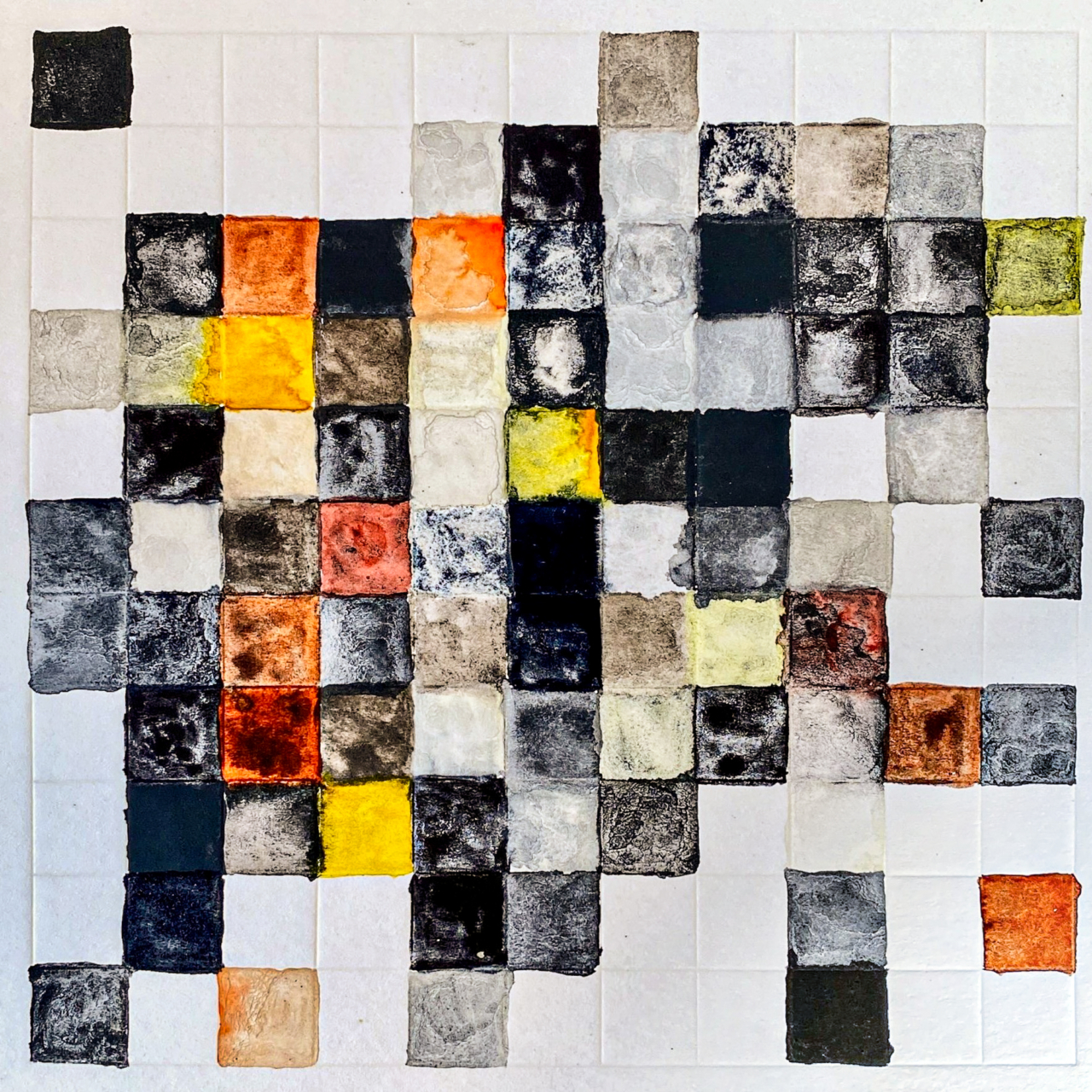
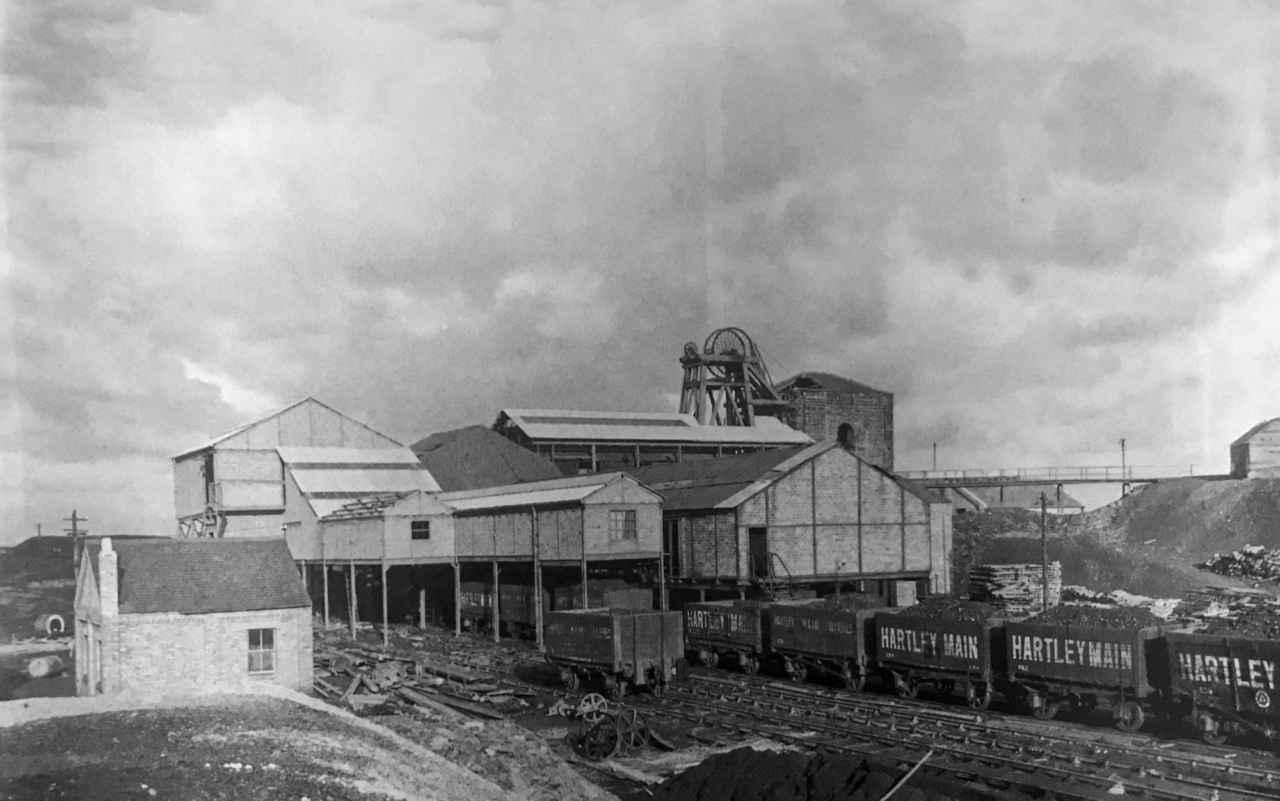
Sampled landscape — mineral pigments from a colliery slag heap, Amelia Pit, Shankhouse, Northumberland. (The heap burned underground for decades – hence the reds through to white ash.) All traces of the colliery and mining village have been demolished and landscaped. There is nothing now to be seen.
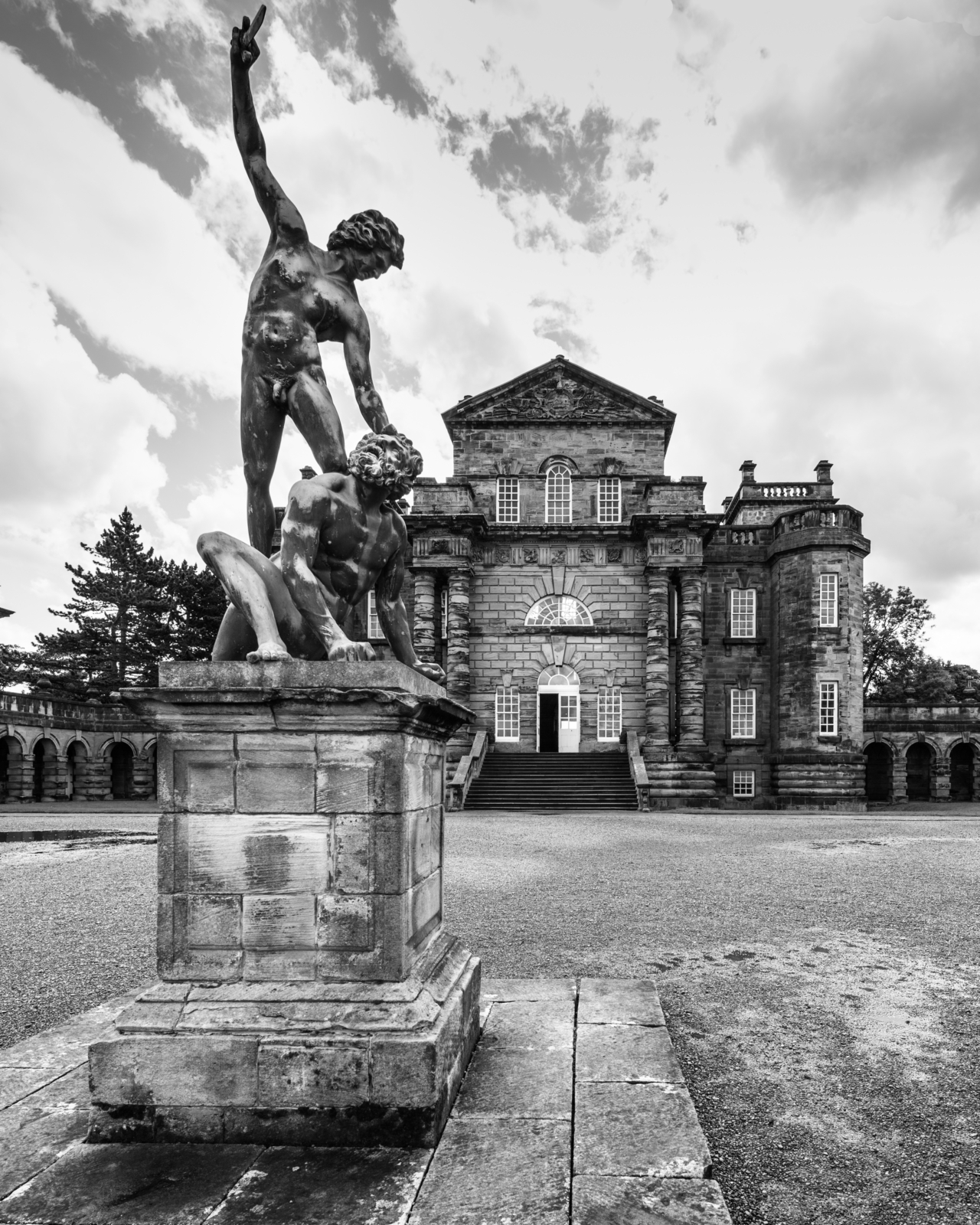
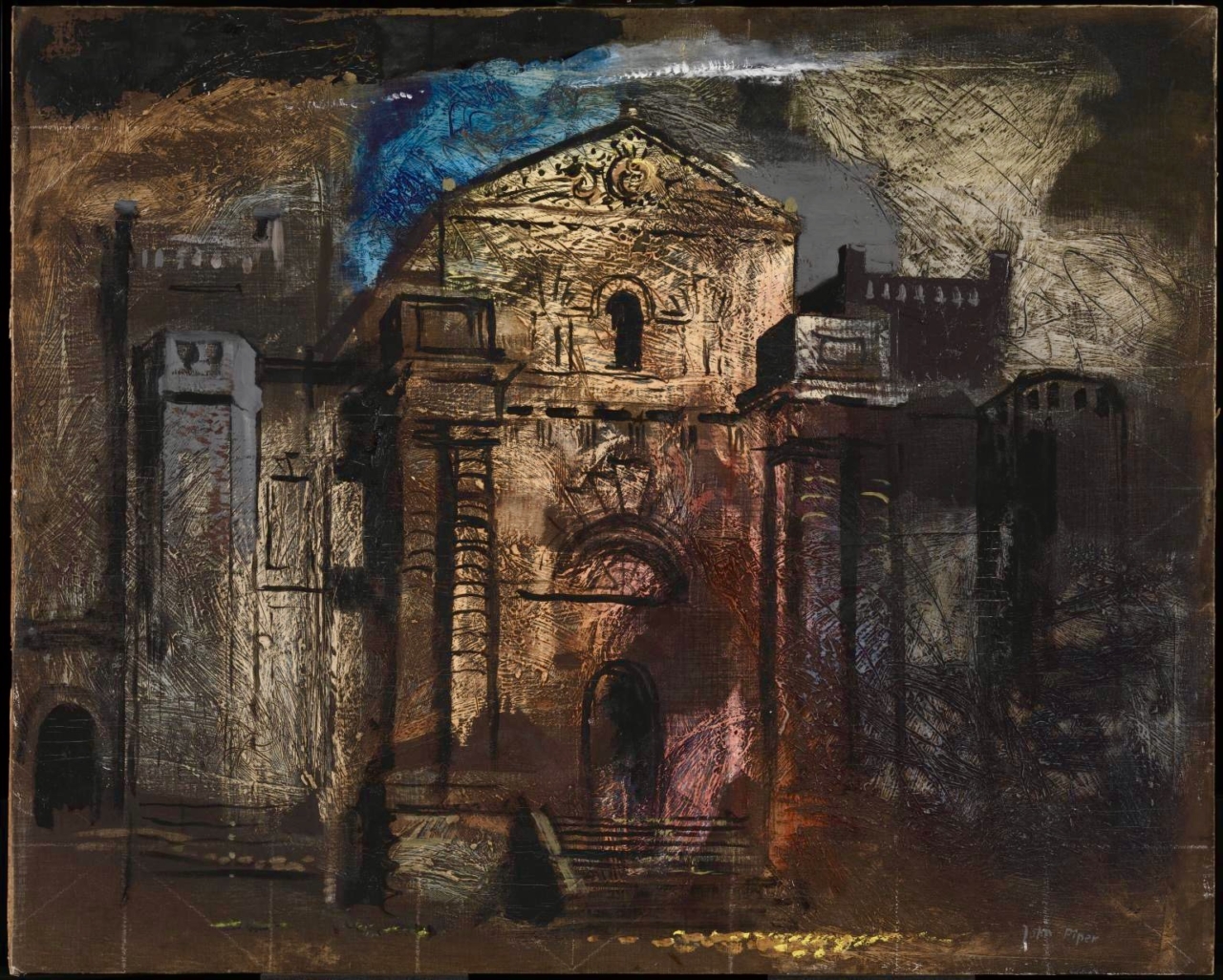
Monument in a Landscape: Vanburgh’s eighteenth-century Seaton Delaval Hall, intervisible with what was Amelia Pit. In the care of the National Trust. The house was built for an admiral of the Royal Navy who had done well out of Empire. The Delaval family owned a lot of the land in this part of the north-east coal field and extracted as much industrial wealth from it as they could, while curating their landscaped estate.
Seaton Delaval Hall. John Piper 1941. In the Tate Gallery London.
Amelia Pit Shankhouse Northumberland c 1938. Hartley Main was the company that operated many of the collieries on the Delaval land and beyond.
Body
A team member of theater company Brith Gof was an extraordinary performer — transgender Dave/Lyn Levett who had cerebral palsy and limited control over their gestures and movements. I will never forget seeing them play the role, in a 1993 Brith Gof production, Arturius Rex, of King Arthur carried back mortally wounded from Camlann, the last battle, by two retainers. The stink of a last meal of sardines in a claustrophobic room of retreat. Their condition should, we might presume, have prevented intentional expression and communication. This was far from the case. Arthur, hero and monarch, compromised in his somatic expressive presence by wounds, by cerebral palsy? No — liberated!
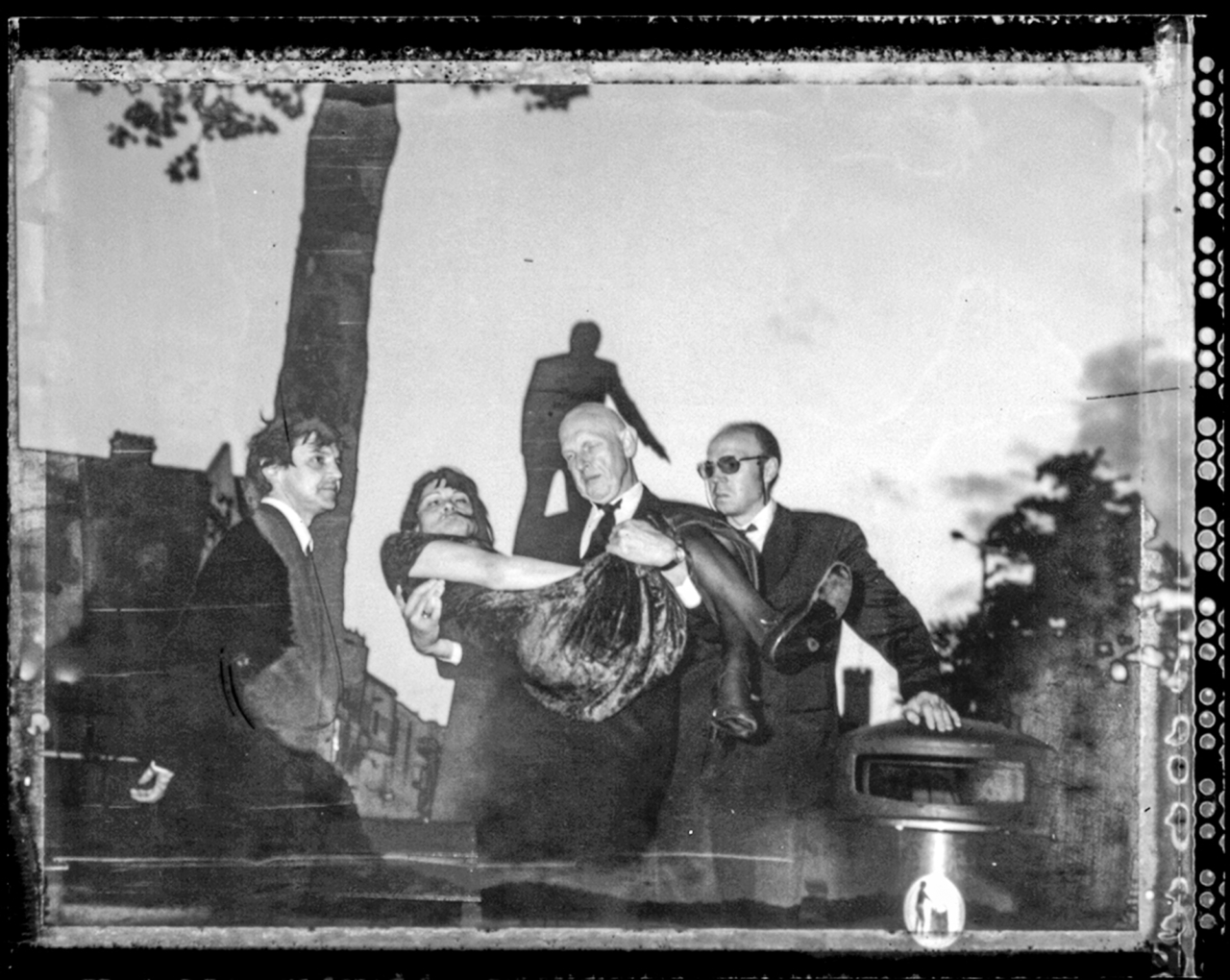
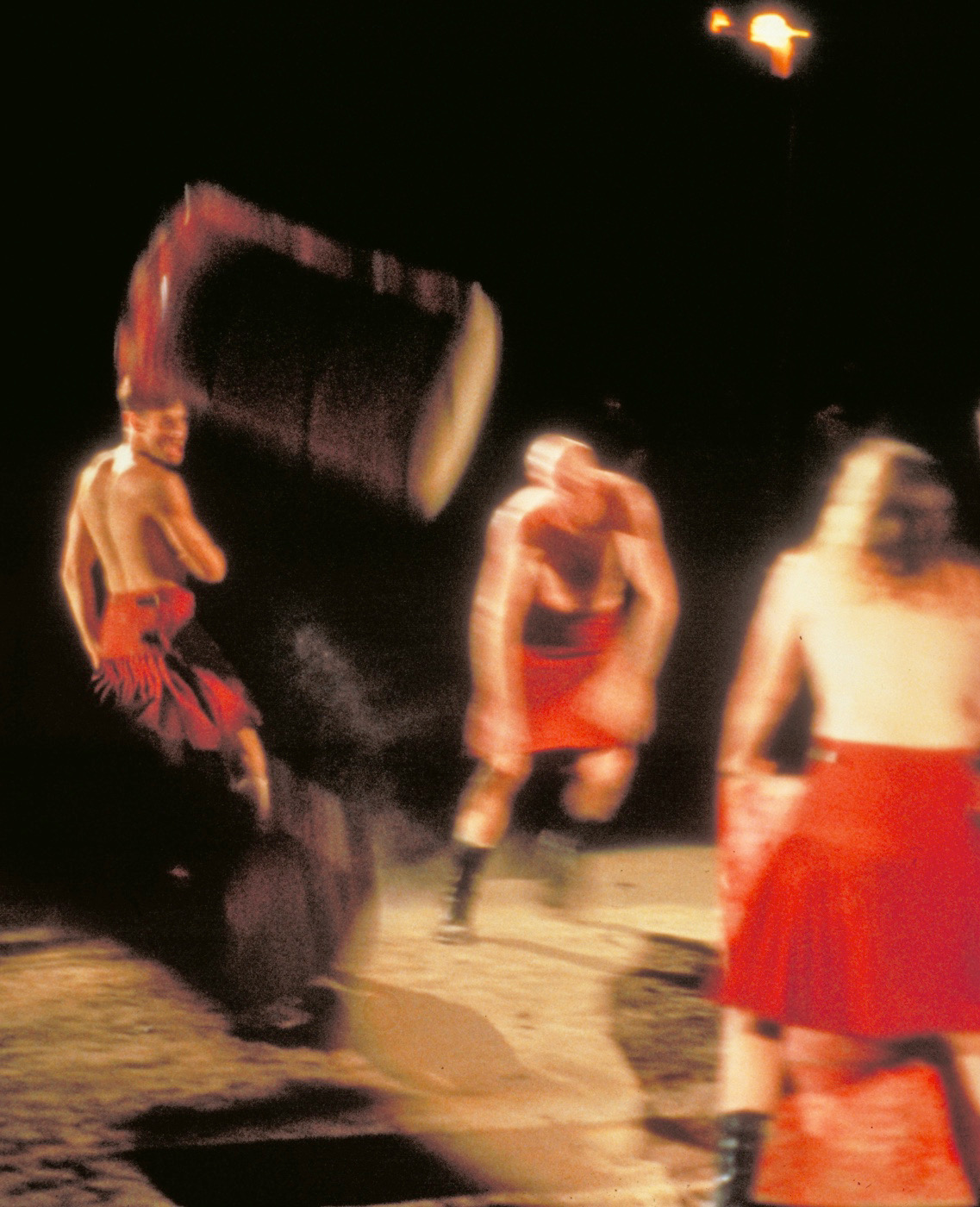
Later in Carrying Lyn (2001) Brith Gof’s Mike Pearson, Mike Brookes, Richard Morgan, and John Rowley carried Lyn Levett through the streets of Cardiff on the weekend of a Welsh rugby international — aggressive masculinity on show on the streets. Reactions and responses were taken up by photographer Paul Jeff through the polaroid instant back of his large format photojournalist’s Speed Graphic [Link]. Walking across Cardiff? In whose footsteps? Whose transcendental body-for-all-time?
Differently embodied – Carrying Lyn (through the streets of Cardiff) Brith Gof 2001.
In my research into the corporeality of the warrior male in antiquity, and in Mike Pearson’s recapitulations of works by Antonin Artaud, we became fascinated with the disrupting concept of “body-without-organs”. Questioning the concept of body as unified structure, we instead stripped it of its hierarchical organization of organs, rejecting the traditional interpretation of the body as a functional and structured entity, thinking, sensing, feeling. BwO — existing monstrously in a state of pure potentiality, devoid of imposed functions and roles, where no part has more significance or control over another. Pre-reflective yes, and fluid, like an egg, holding futurity. Distributed — to be yet enclosed and defined as an agent of experience — not given, but futured.
Tilley’s bodies are able-bodied and eternal, when none of us are, except transcendentally. Dave/Lyn Levett burst open the body of shared experience in movement, gesture, expression, displacement, unexpected and yet recognisable, enigmatic and deeply touching. The concept of BwO, growing out of Artaud’s experiences of mental illness and mental health institutions, is an antidote to a spurious and repressive normality — this is what you existentially are and what you might experience.
I do so credit Chris for bringing focus on more-than-cognitive material engagement. Again, however, he seems to have wanted to stop short of the consequences of his premise, to stick with his transcendental phenomenology.
Performance
Tilley’s bodies do move through the landscape, across and between, over and through its monuments. The moving body, animated in performance, the performative body is such a great feature of his phenomenology. In this regard he writes of kinaesthetics and rhythmanalysis.
And then again Tilley, to my frustration, stops short, shuts down any exploration, any experiment. He knew how much the development of the concept of performance owed to the anthropological studies of Victor Turner, Eugenio Barba, Erving Goffman, Richard Schechner, Barbara Kirschenblatt-Gimblett. As well as a host of articulate performance practitioners.
Was his reticence to explore a matter of confidence? Perhaps a recognition that we are all limited in our capacities to act on what we know and believe, what we might want to achieve? Life is too short.
Perhaps he held an unshakable confidence that his phenomenology was the only method and that there was no need to argue the case, only assert it. He didn’t need to debate concepts like landscape, or practices like performance, because they were, for him, secondary abstractions from immediate experience of things themselves.
Mediation and representation
How might one represent experience, given its pre-reflective character (according to the phenomenologists)? How might one document performance, kinaesthetically, in rhythmanalysis? Before and after event and engagement.
These are central questions of mediation, of translation, of metamorphosis, of metaphor in Tilley’s phenomenology. Given what I have been arguing, one might easily anticipate what I am going to say next. These matters are secondary to Tilley and so he could ignore them.
The collaborative work Stone Worlds (2007), discussed above, does try out some tools and techniques for raising awareness of the ways one might engage with sites in the land. We hear conversations and see different kinds of engagement, not just walking, excavating, mapping, photographing, but also setting markers in the land, wrapping stones in painted plastic to reorient perception, using frames and grids not just for surface recording, but door frames set up vertically to facilitate viewshed analysis.
It is in Tilley’s two books about pebble landscapes, results from fieldwork undertaken between 2008 and 2012, that we gain deepest insight into the primacy he gives to direct experience over media and representation.
In an Anthropology of Landscape: the Extraordinary in the Ordinary (2017), written with Kate Cameron-Daum, we are presented with an ethnography of stakeholder interests in this landscape, with interviews and surveys and some psychogeographical mapping representing a diversity of experiences. Again emphasis is placed on participant observation and reporting or witnessing, with stakeholder interests categorized as heathland managers, Royal Marines, environmentalists, quarry managers, cyclists, horse riders, walkers, artists, fishermen, model aircraft flyers (more figures in a landscape). And emphasis upon becoming an “insider” — Chris and Kate lived in the healthlands themselves for the duration of the research. The ethnographic accounts are of great interest, and we can engage with all manner of experiences of the heathlands.
The prose is academic reportage, and we can forgive this perhaps. The words of the ethnographic informants, and their mental maps, are lively and give good sense of different experiences of the heathland. Though I do bring to mind Alice Oswald’s extraordinary poem Dart (2002):
This poem is made from the language of people who live and work on the Dart. Over the past two years I’ve been recording conversations with people who know the river. I’ve used these records as life-models from which to sketch out a series of characters — linking their voices into a sound-map of the river, a songline from the source to the sea. There are indications in the margin where one voice changes into another. These do not refer to real people or even fixed fictions. All voices should be read as the river’s mutterings.
I truly like Tilley’s take on pebbles, their vitality, valency, multiplicity. And in the thousand pages of the two books there is so little experiment, exploration, play with re-presentation.
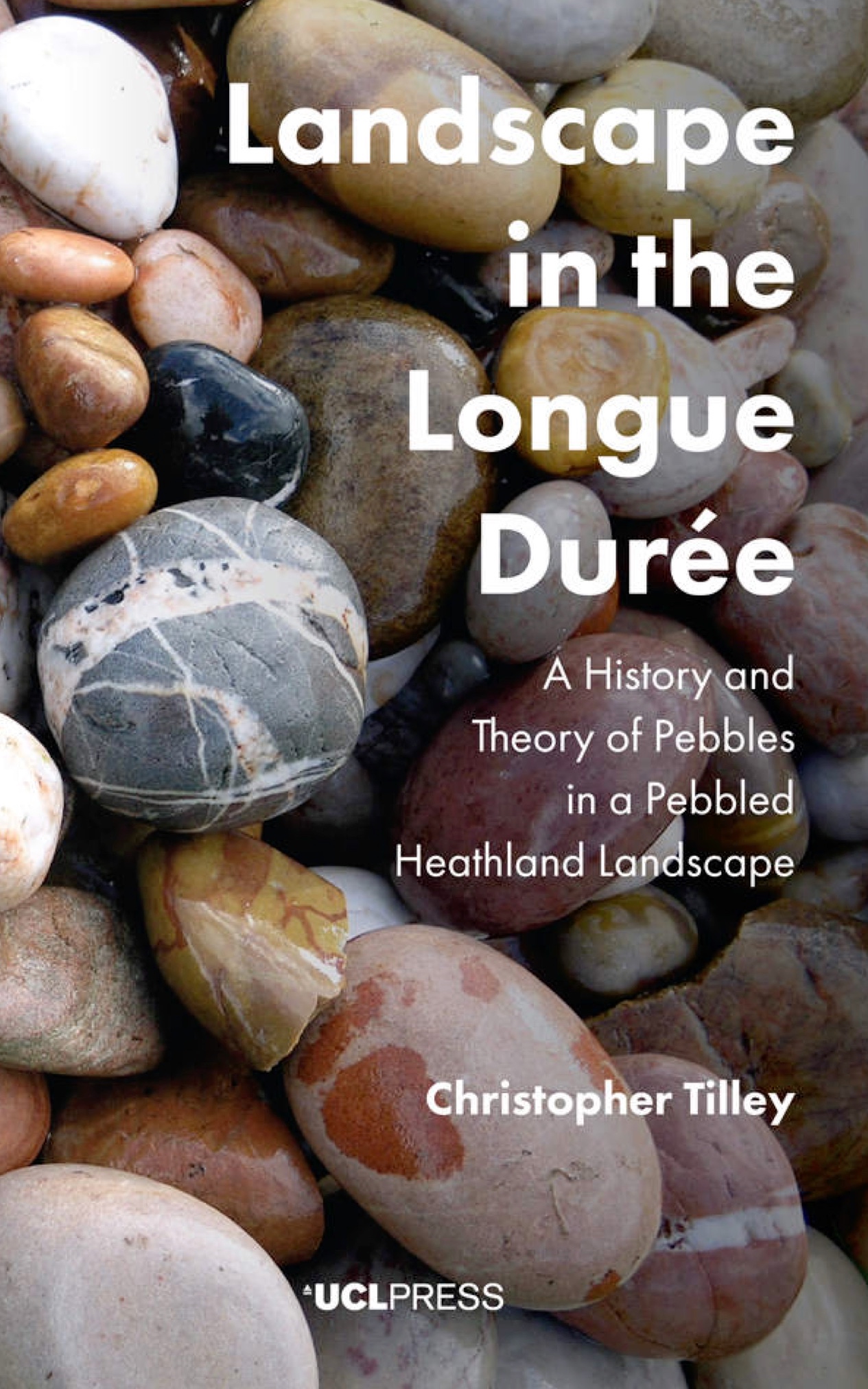
Here is Tilley’s definitive statement on representation. It comes from the book Landscape in the Longue Durée: a History and Theory of Pebbles in a Pebbled Heathland Landscape (2017 page 34):
A stress on materiality … insists that what we need to study is the real rather than representations of the real. What this means is a return to the things themselves, in the case of this book pebbles in a pebbled landscape. We do not base our knowledge on their pre-existing representation in a field of discourse constituted by the abstractions of texts, maps, photographs, plans, GIS analyses and so forth. In this respect synthetic archaeological texts and indeed a great body of the research represented in the Annales school are built solely on representations of representations, providing only a simulacrum of the real, or in other words a copy of a copy of something that never really existed in the first place.
On these terms all of his books are abstractions from what really and literally matters. Am I wrong in finding this Platonic elitism profoundly ironic? A thousand pages to witness the ineffable, inexpressible reality of a pebblebed landscape beyond representation?
Tilley rolls out that slogan from phenomenologist Edmund Husserl — “return to the things themselves”. Can a media communication event not be a real material thing? What of the thousand pages of the account of pebbles? What of non-representational mediation, such as performative and eidetic statements that effect change and perform work-in-the-world rather than just signify, communicate or represent? Plans and models enable the building of aircraft and bridges. Data centers consume 3% of global energy production, and this is set to rise to 6% by 2026. What of such materialities of communication and media that are explored in media ecology? These are hardly matters secondary to real experience “of the things themselves”. All these questions beg for approaches that do not uphold a separation of the real and the represented.
Temporality
Re-presentation involves temporal shifts. In the actuality of our archaeology, many temporalities mingle. Tilley appropriately acknowledges the fluid and multiple temporalities of archaeological engagements with ruins, remains, traces in the land (this is very evident in his books about the pebblebed heathlands). There are percolations, currents and eddies, synchronicities, displacements, losses and recoveries, erosions and durabilities. The multiplicity of archaeological temporality was of key concern to us when we were writing together in the 80s, and it is such a defining feature, surely, of engagement with landscape.
Is it that emphasis upon immediate presence that brings Tilley to curtail the intermingling, the palimpsests, by separating them out analytically, and chronologically? Royal Marines crawl across the pebbles of a deep-time geological substrate, while archaeologists pass them by on the way to a prehistoric monument. He regulates the temporal fluidity of such engagements in a landscape to suit his mediation, the presentation of a project in a book — most, if not all of his narrative is chronologically ordered according to conventional archaeological periodization. He doesn’t follow one’s typical experience of landscape as multitemporal, all times commingling. He sorts out messy time, just as the different activities of people on the heathland are categorized neatly — horse riders, bicyclists, artists … .
There’s nothing wrong with this, and I could say the same of most of Tilley’s navigation of the semantic field that I have just mapped. I am frustrated that he could be so dogmatic and sometimes unreflective in his choice of clean and clear route from material trace through human experience to matters of representation and embodied perception. Nevertheless there are so few archaeologists and anthropologists who have taken up such a range of concepts in a toolkit for working with the reconstruction and actuality of the past. He was committed enough to his anthropological project to make accountable choices, and defend them.
And at the heart was an undeniable humanism. I’ll turn to this in my final commentary.
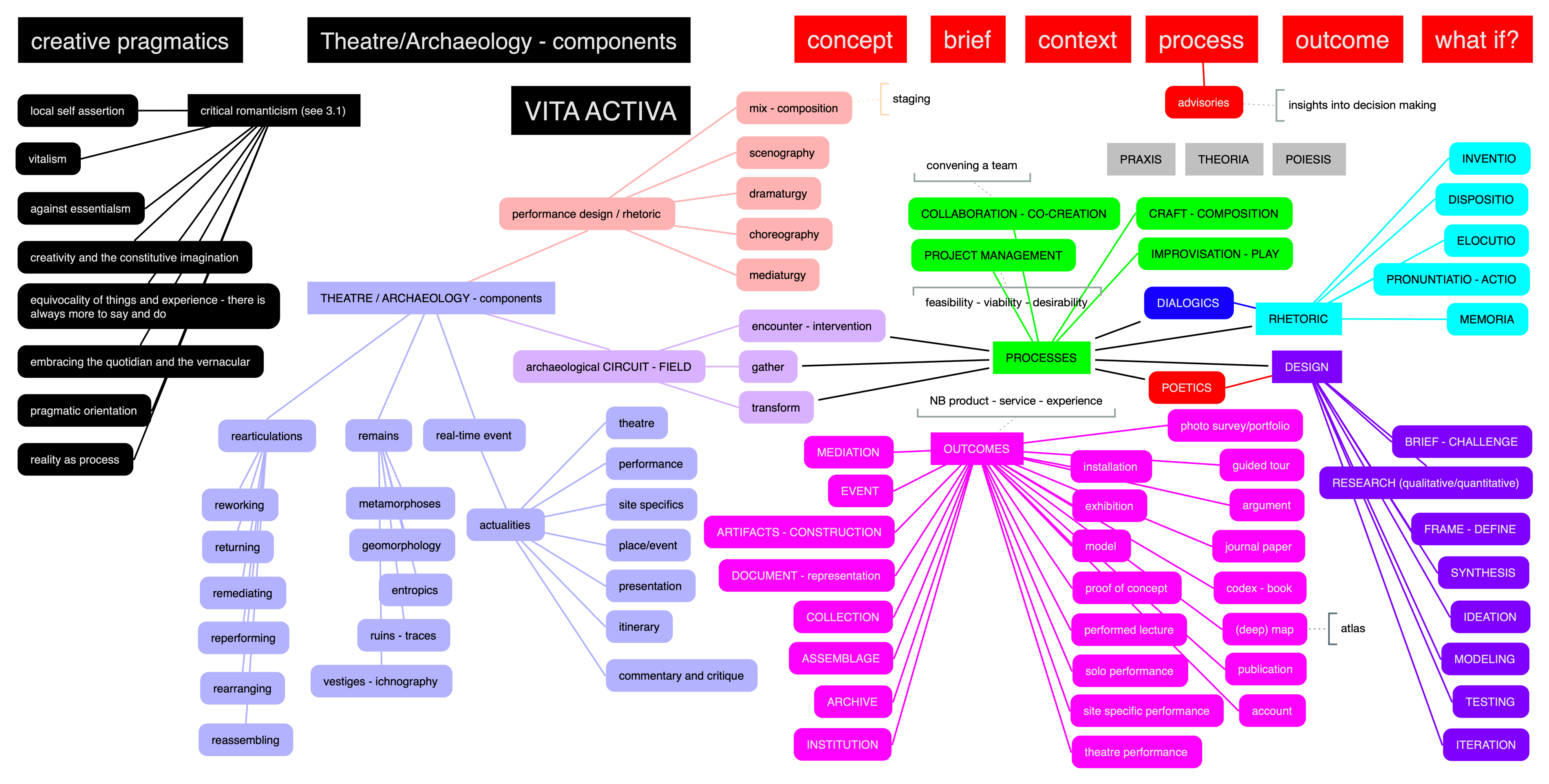
Chris Tilley – mythographic triptych (annotated)
Reflections on the work of Christopher Yates Tilley 2
This is Part 2 of a reflection upon the works of Chris Tilley, prompted by his too-early death in March 2024.
I want to do justice to the range and depth, the significance of his work in anthropology and archaeology. My reflections are based on memories, close collaboration, and deep reading of all his writing. His work, now finished, deserves close attention because it deals with matters of wide concern and in such a sophisticated way, dedicated to careful consideration — relationships with environment; respect and acknowledgement of diverse voices; developing secure foundations of knowledge, in experience, modes of engagement with the world, representation and report.
What follows is not an exposition of his ideas but a reflection upon them, something of an exchange of ideas as I unpack how I react. I do look back with hindsight and wish that the conversation that ended when we parted ways in 1993 had continued. I disagree with much of what Chris came to stand for. I do not think he has the answers. But he always got me to think more carefully.
Part 1 is about our collaboration at Cambridge, two academics provoked to set things right. In Tilley’s Garden: a Summer Long Ago [Link]
Part 2 presents some allegorical associations in something of a play with the mythmaking that I find quite endearing in Tilley’s anthropological archaeology. Mythographic Triptych (annotated) [this post]
Part 3 is based on reading his work since we parted ways in 1993. I offer sketches of some personae in his scenario of experiencing landscape, and some features of a concept map within which his oeuvre might be situated. In Tilley’s Garden: Figures in a Landscape – [Link]
Part 4 is a celebration of Tilley’s humanism — valuing individual experience and autonomy, grounding in empirics and critical thinking, focus on life and presence, environmental secularism. I find his humanism most considered, even profound. I think this is what he left in most of us, certainly those friends, family, colleagues, students whom I have heard react to his death — quite a passion for life and the qualities of things. In Tilley’s Garden: Transcendental Experiences – [Link]
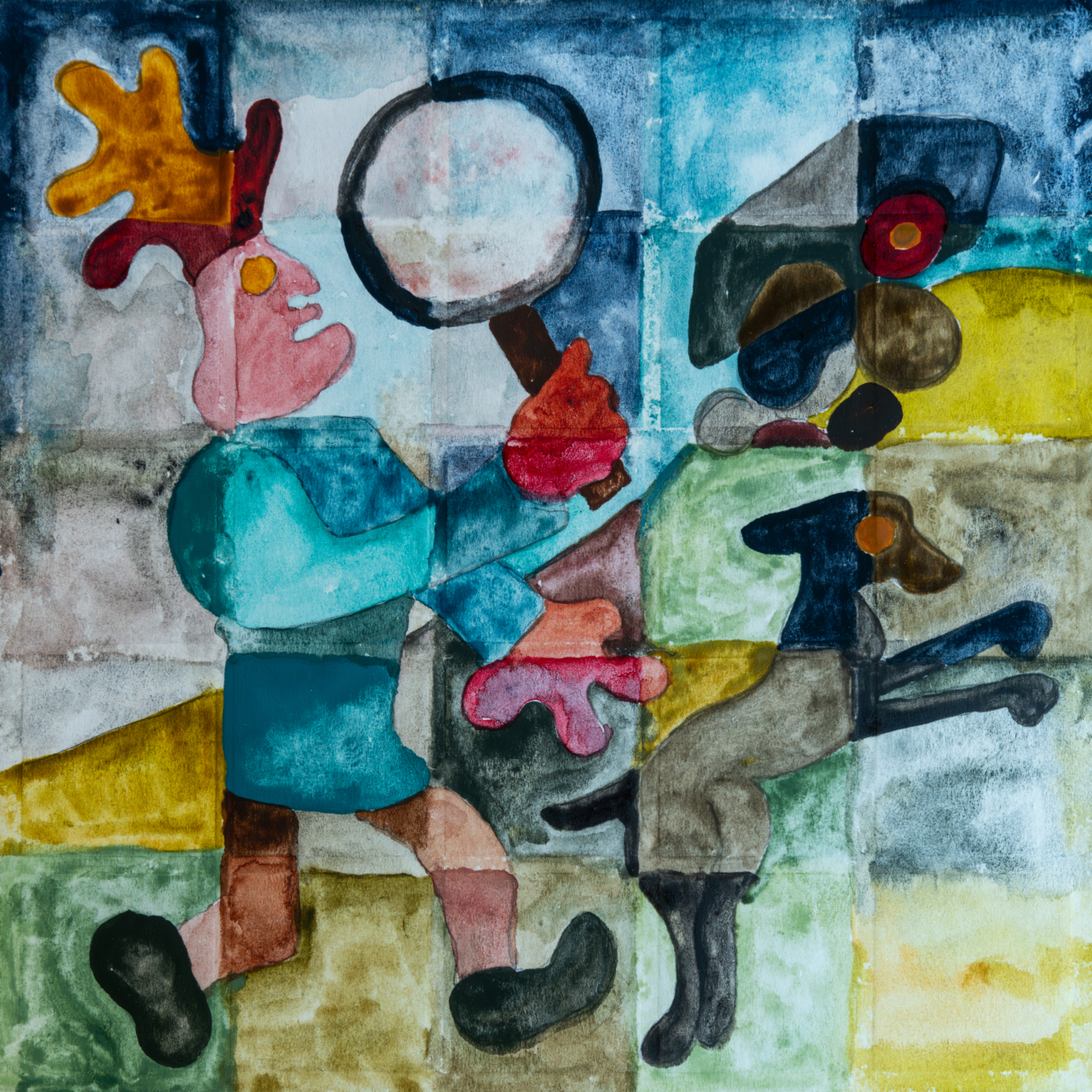
Tilley in the north – with glass – magnifying glass, Claude glass, dark mirror?
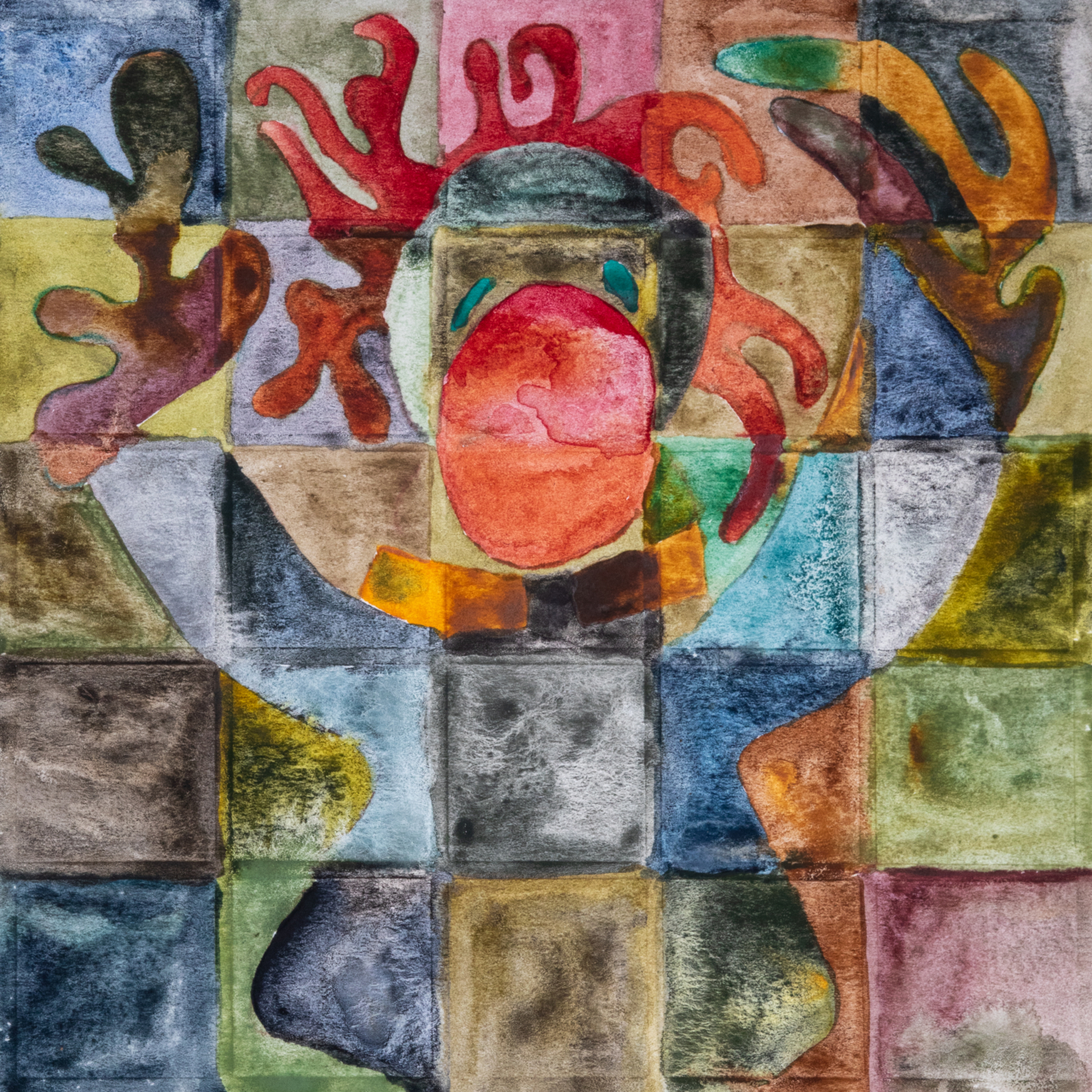
Thomas of Erceldoune, the Rhymer, Thomas the True, poet and prophet who could not tell a lie. 1292 Scottish Borderlands. Favorite of Walter Scott, inventor of the historical novel — Wizard of the North.
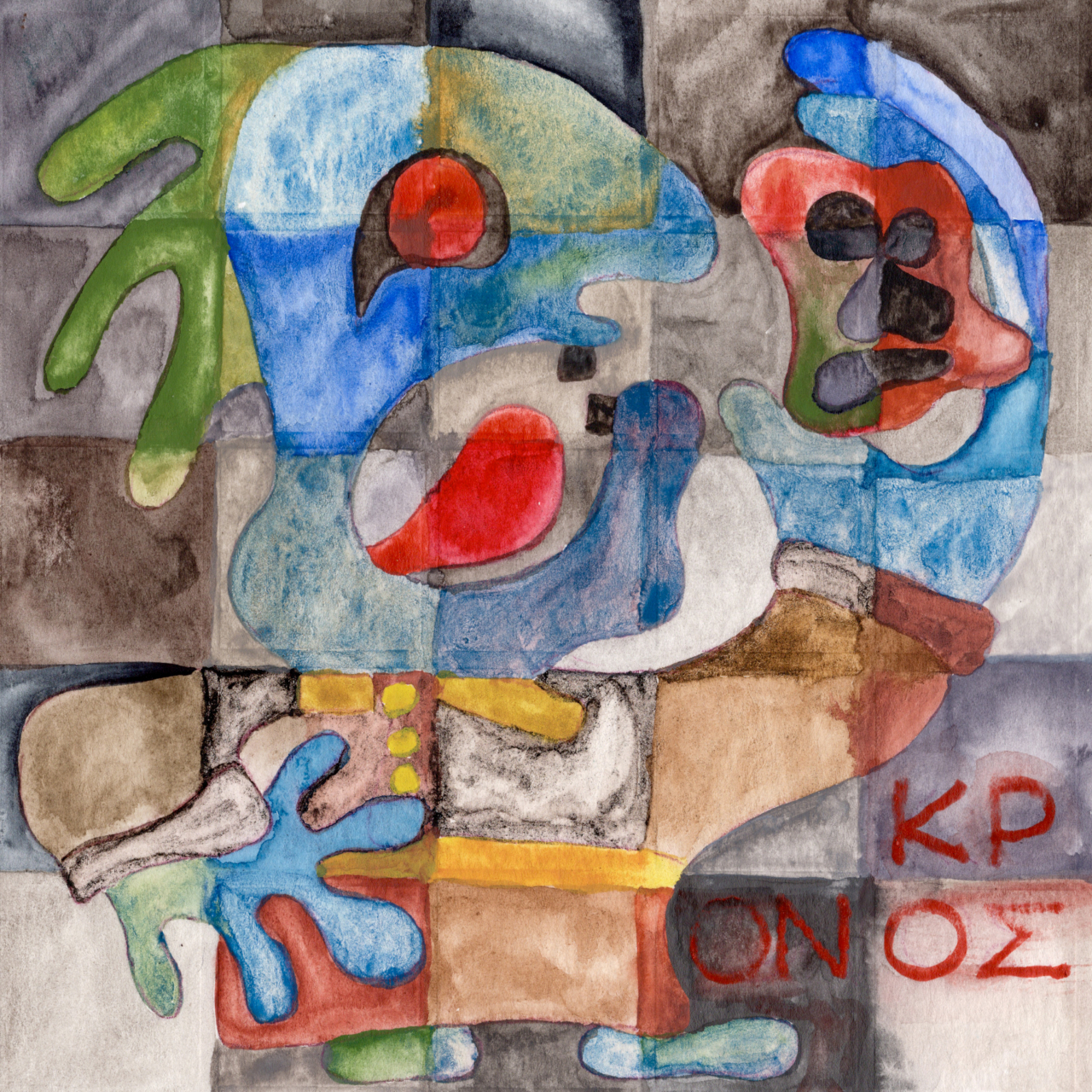
Kronos, titan, who consumed his children in fear that they might one day overthrow him. When he demanded his new son, his wife Rhea handed him instead a pebble. He ate it, mistaking it for a human form.
(Click on an image to view the gallery full screen)
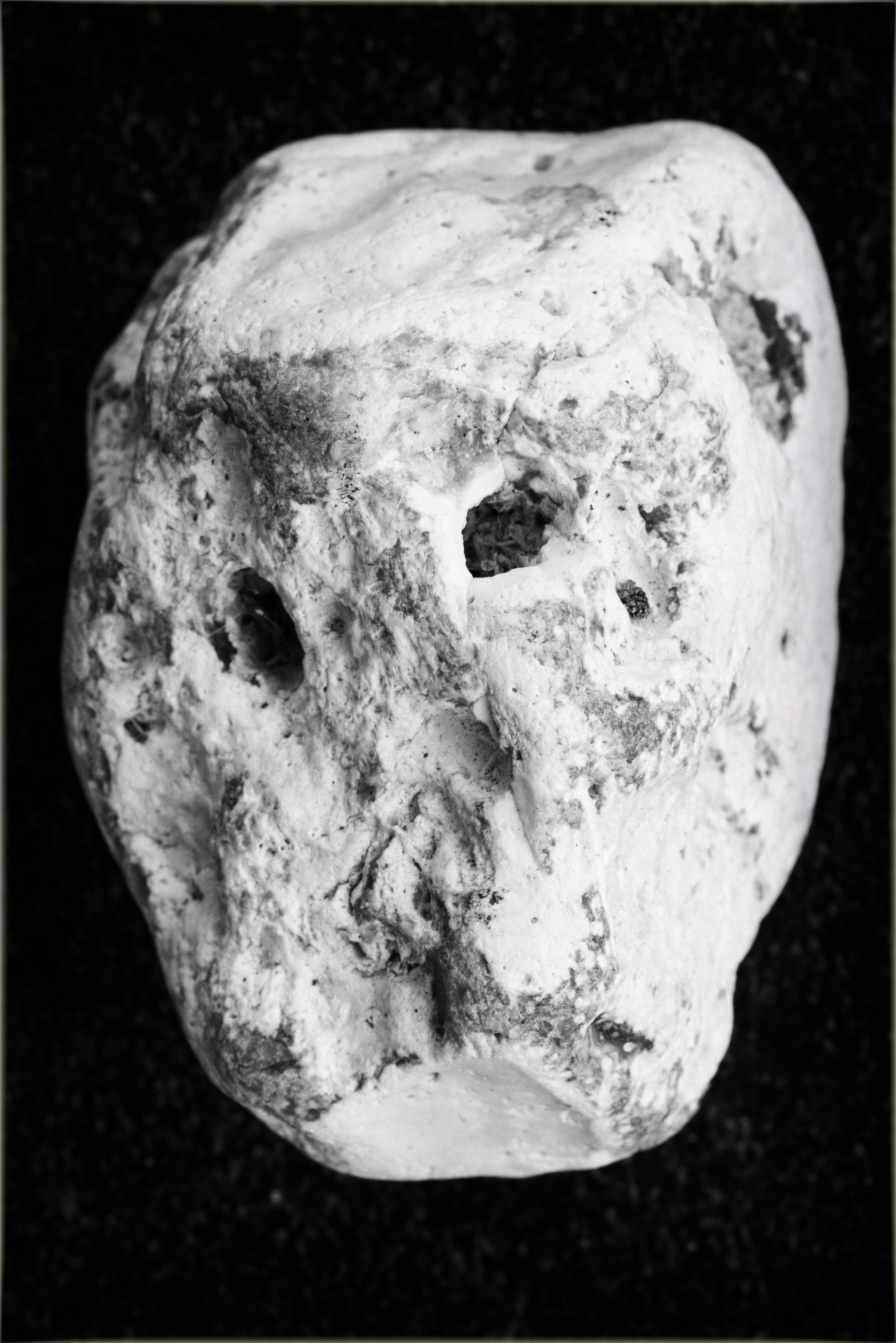
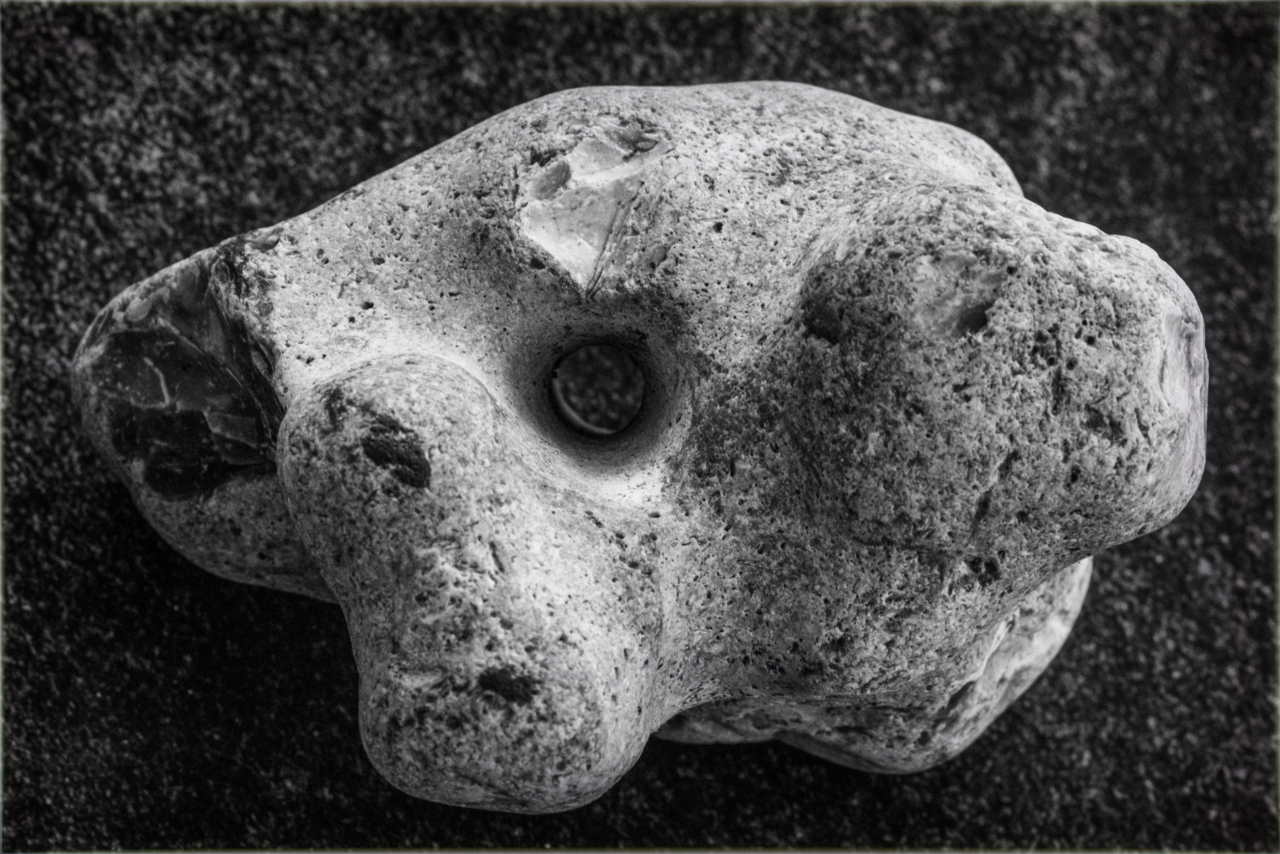
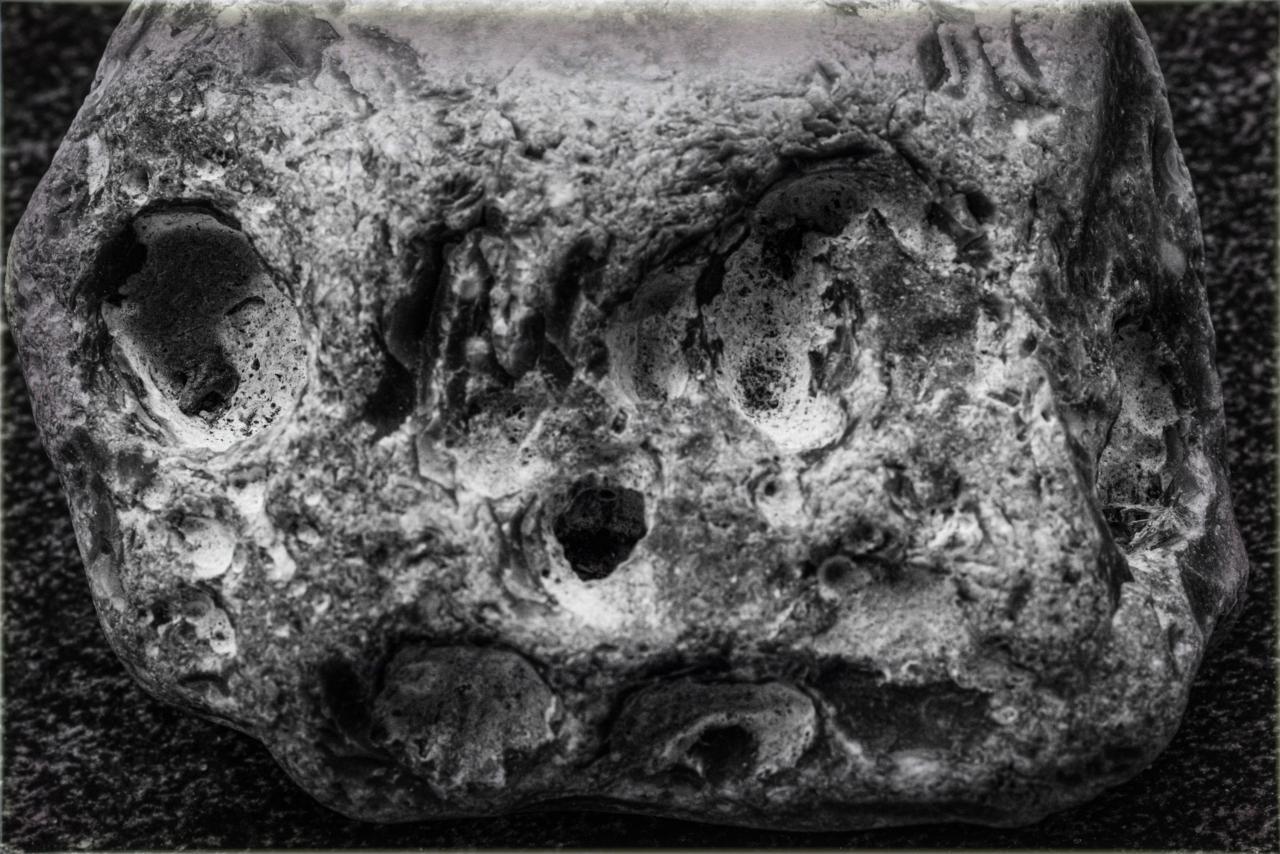
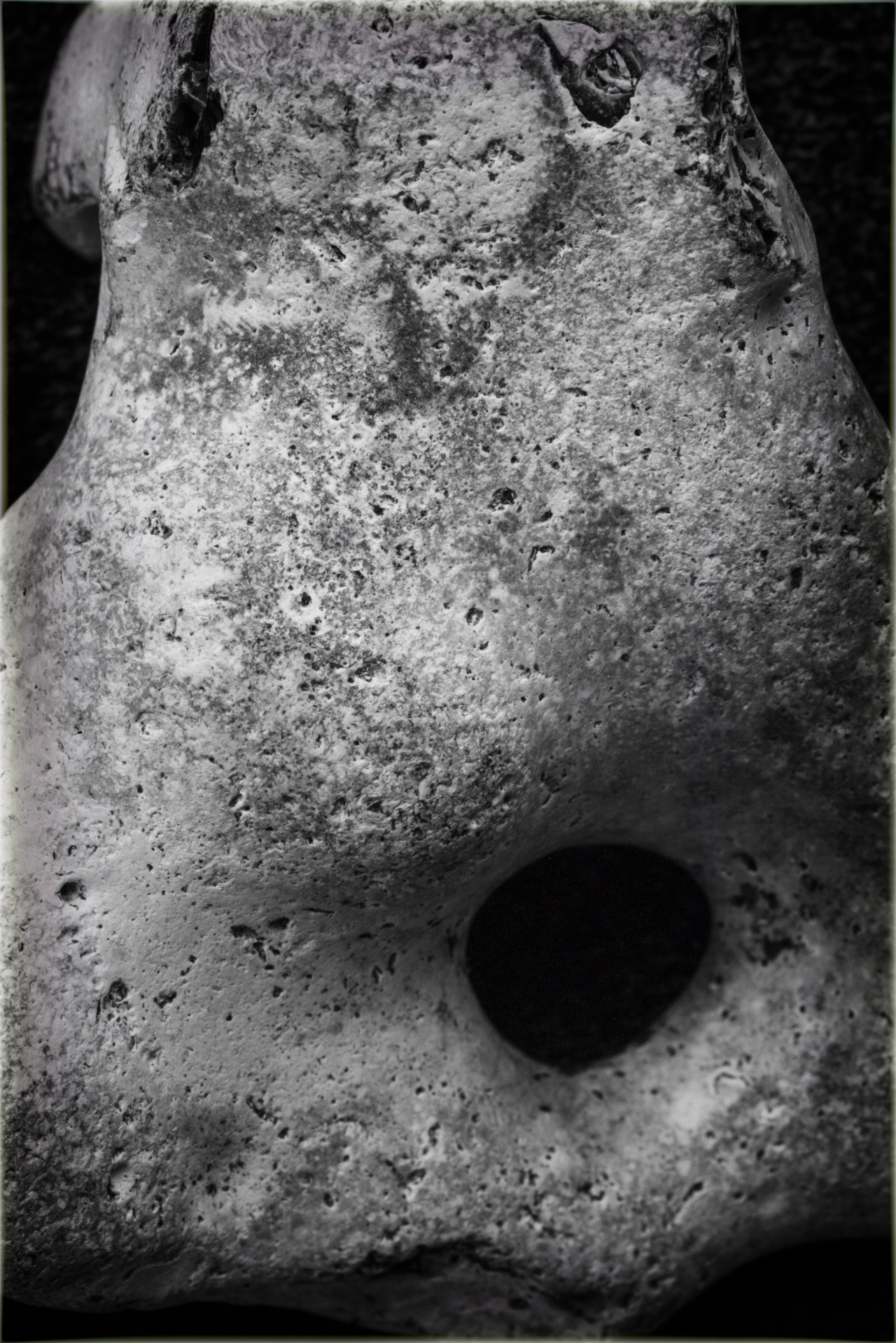
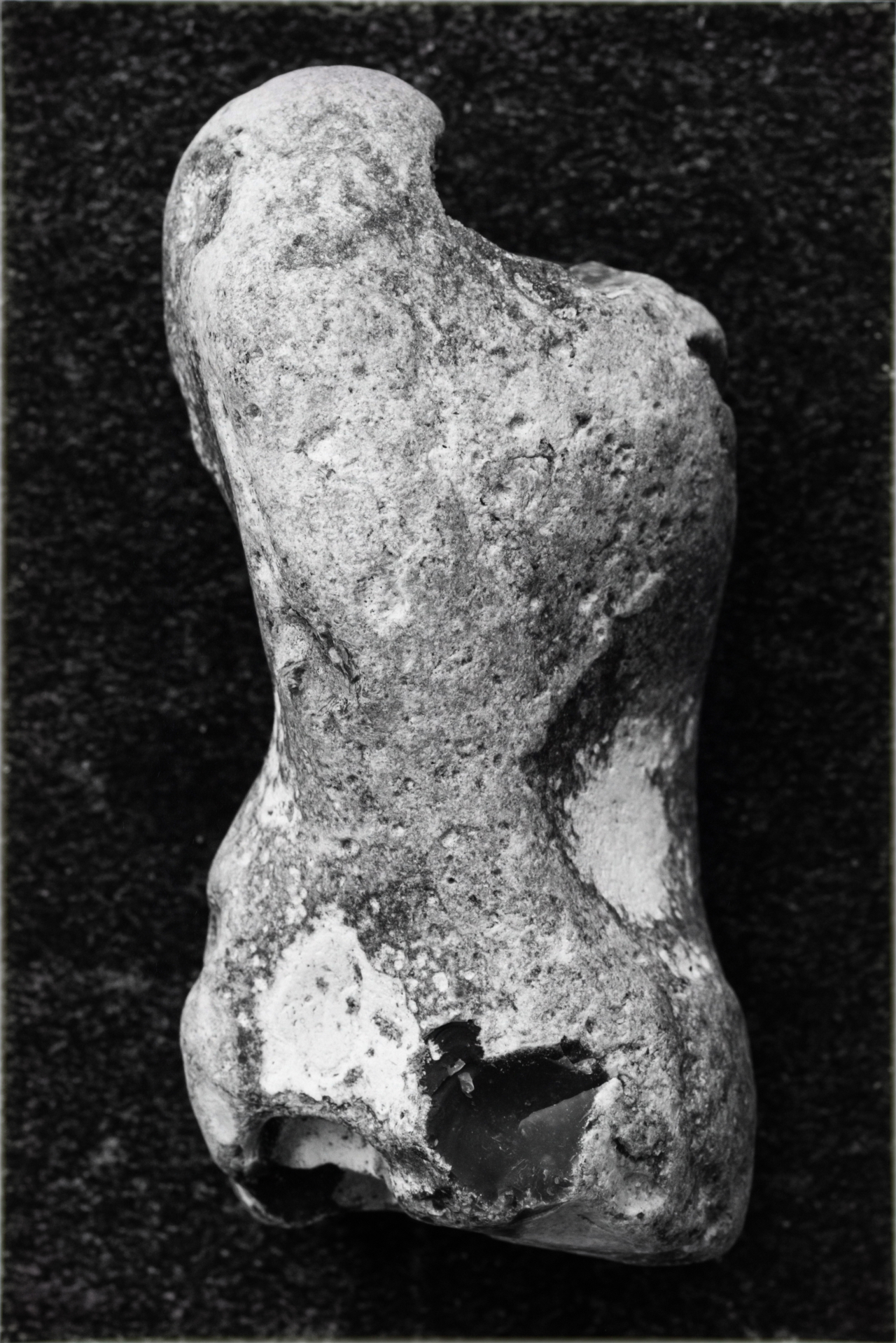
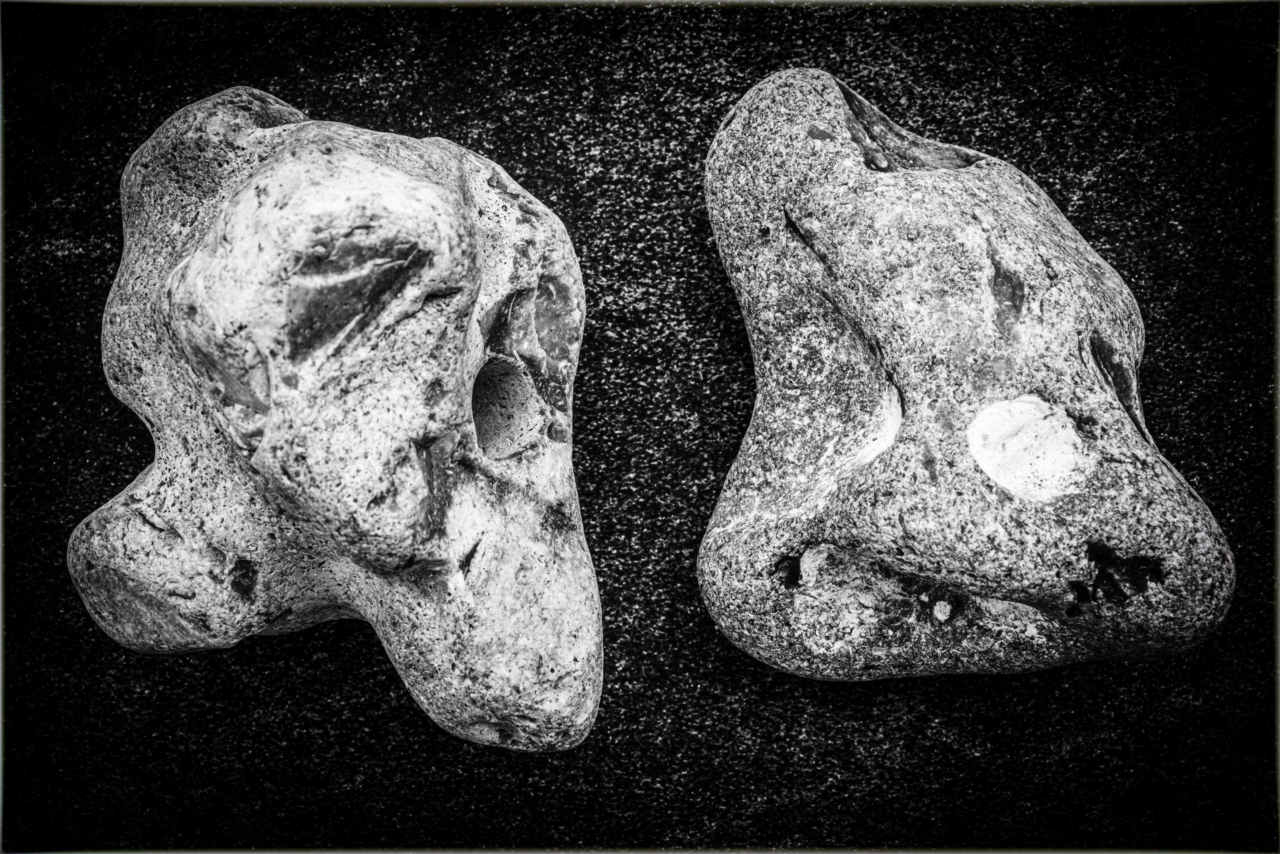
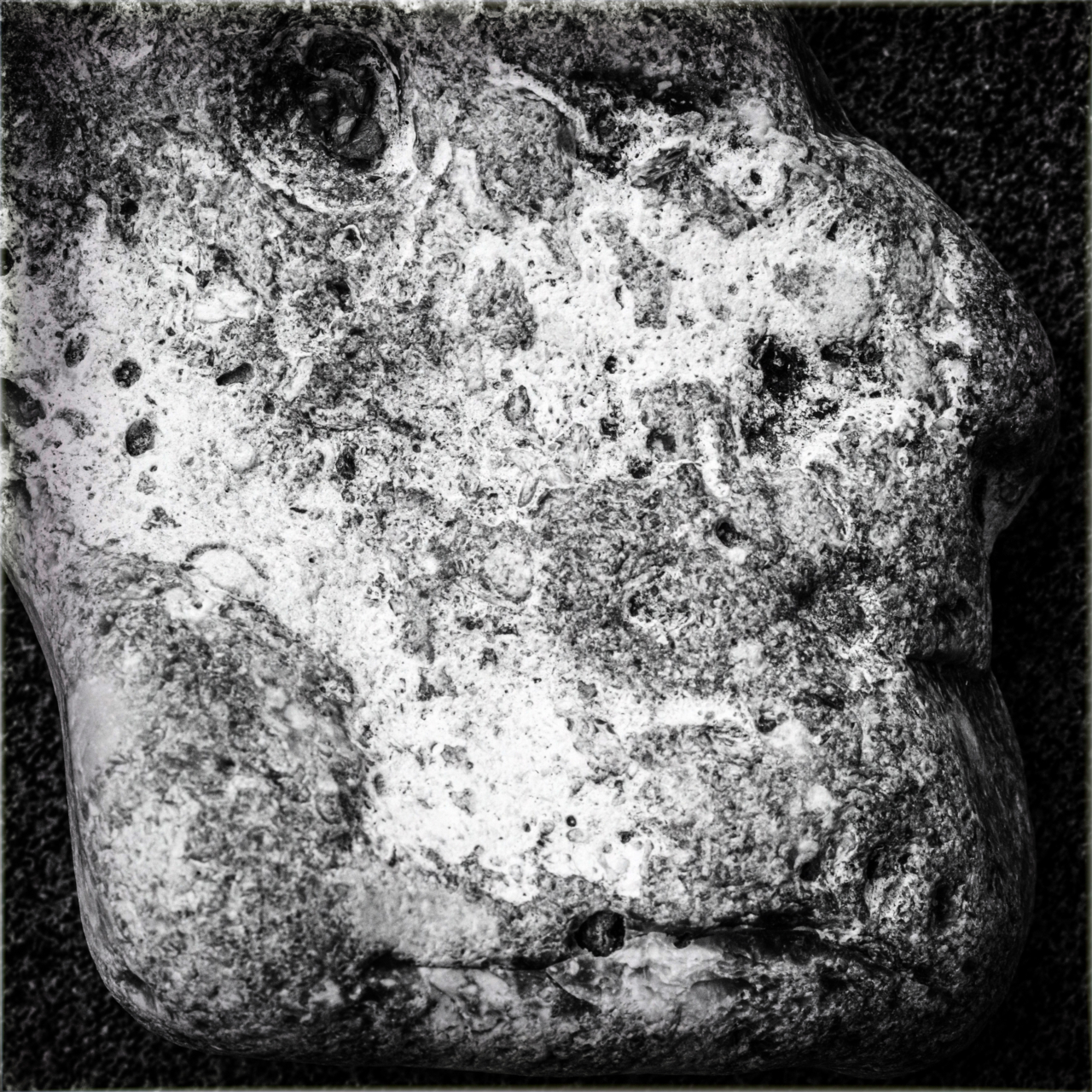
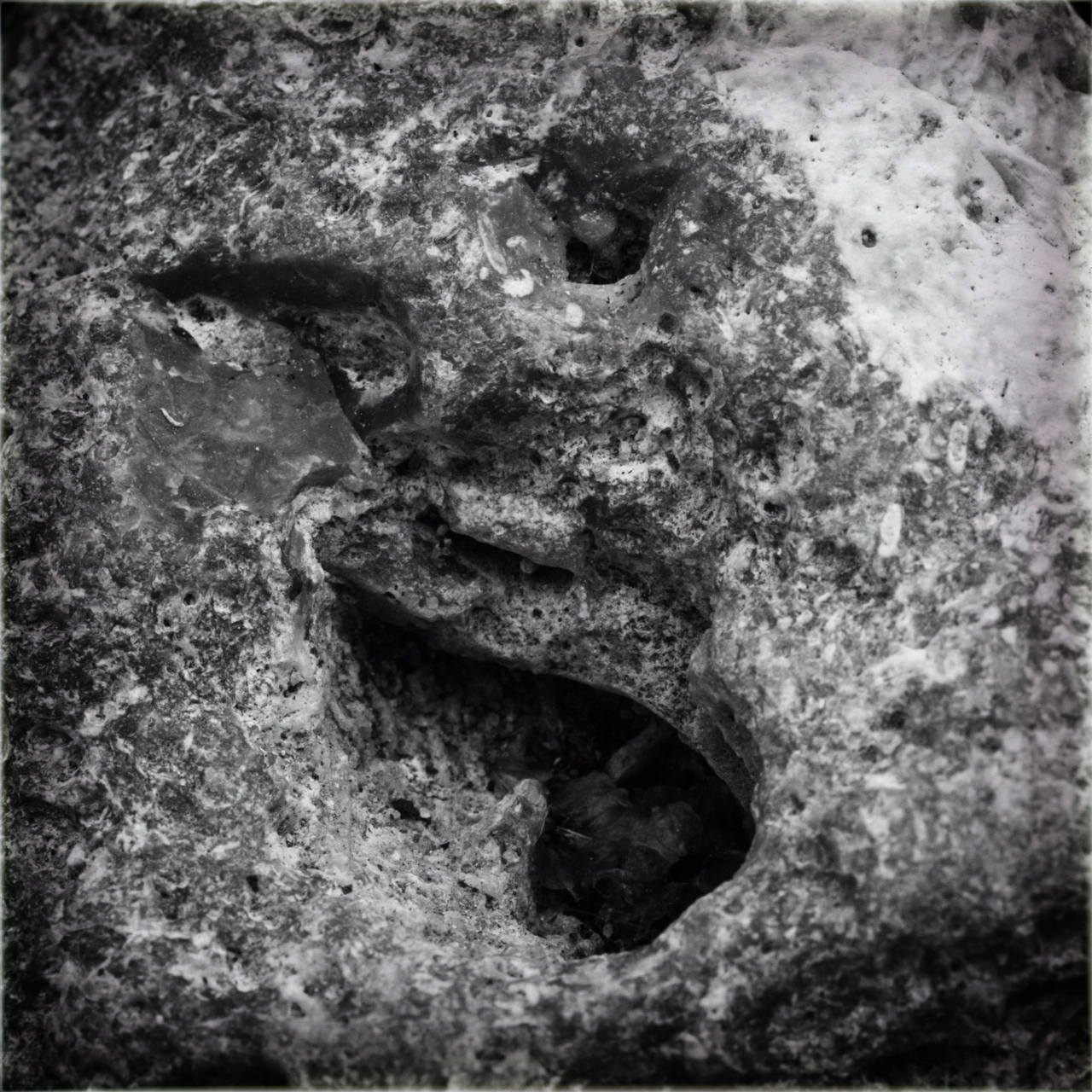
Pebbles from a northern beach, Nyborg Strand, Fyn, Denmark. What do you see, what can you make out in the dark mists of stone textures? Pareidolia. Signals and noise. Figure and ground.
Signs are taken for wonders. “We would see a sign”: The word within a word, unable to speak a word, Swaddled with darkness.
T S Eliot, Gerontion, 1920.
In Tilley’s garden – a summer long ago
Reflections on the work of Christopher Yates Tilley 1
This is Part 1 of a reflection upon the works of Chris Tilley, prompted by his too-early death in March 2024.
I want to do justice to the range and depth, the significance of his work in anthropology and archaeology. My reflections are based on memories, close collaboration, and deep reading of all his writing. His work, now finished, deserves close attention because it deals with matters of wide concern and in such a sophisticated way, dedicated to careful consideration — relationships with environment; respect and acknowledgement of diverse voices; developing secure foundations of knowledge, in experience, modes of engagement with the world, representation and report.
What follows is not an exposition of his ideas but a reflection upon them, something of an exchange of ideas as I unpack how I react. I do look back with hindsight and wish that the conversation that ended when we parted ways in 1993 had continued. I disagree with much of what Chris came to stand for. I do not think he has the answers. But he always got me to think more carefully.
Part 1 is about our collaboration at Cambridge, two academics provoked to set things right. In Tilley’s Garden: a Summer Long Ago [this post]
Part 2 presents some allegorical associations in something of a play with the mythmaking that I find quite endearing in Tilley’s anthropological archaeology. Mythographic Triptych (annotated) [Link]
Part 3 is based on reading his work since we parted ways in 1993. I offer sketches of some personae in his scenario of experiencing landscape, and some features of a concept map within which his oeuvre might be situated. In Tilley’s Garden: Figures in a Landscape – [Link]
Part 4 is a celebration of Tilley’s humanism — valuing individual experience and autonomy, grounding in empirics and critical thinking, focus on life and presence, environmental secularism. I find his humanism most considered, even profound. I think this is what he left in most of us, certainly those friends, family, colleagues, students whom I have heard react to his death — quite a passion for life and the qualities of things. In Tilley’s Garden: Transcendental Experiences – [Link]
It seems appropriate to call it a passing, the death of Chris Tilley in March 2024. We worked together so closely on archaeological theory from 1979, when we met at Cambridge, until he left University of Wales Lampeter in 1993, where we were both faculty elements in an experiment to create a new kind of academic amalgam.
We spoke little after this, parting ways. Nevertheless our diverging paths retained concerns that we shared from the outset of our collaboration. I have been reading again all of his writings. What follows is the beginning of a reflection on these crossings and convergences, as well as the antipathies that led to the parting of ways.
And amalgam, yes — such close collaboration and then a quiet but nevertheless ongoing, implicit conversation.
The home for the rest of Tilley’s career was University College London. He was a key figure there in building up a school, one might describe it, of material culture studies, while pursuing what he called a phenomenology of landscape, and for which he became well-known. His ethnographic scope took in examples of material culture in small-scale non-western communities (he traveled to Vanuatu, for example), but the many case studies, the detailed surveys of prehistoric sites, monuments, and rock art in the British Isles, Ireland, France, and Scandinavia, are the heart of his body of work.
His methodology of intensely-focused visits-in-person, meticulously documented passing-through perambulations of prehistoric remains-in-the land, always led to observations of previously unnoticed affinities, where he might liken an upland linear construction to a pebble beach visible on the coast below. Such metaphorical affinities were the foundations of scenarios with which he summed up such engagements with prehistory — in-the-footsteps ancestral processions through the land, local and secret knowledges regained, initiation rites, shamanic associations, embodied inhabitations then-and-now.
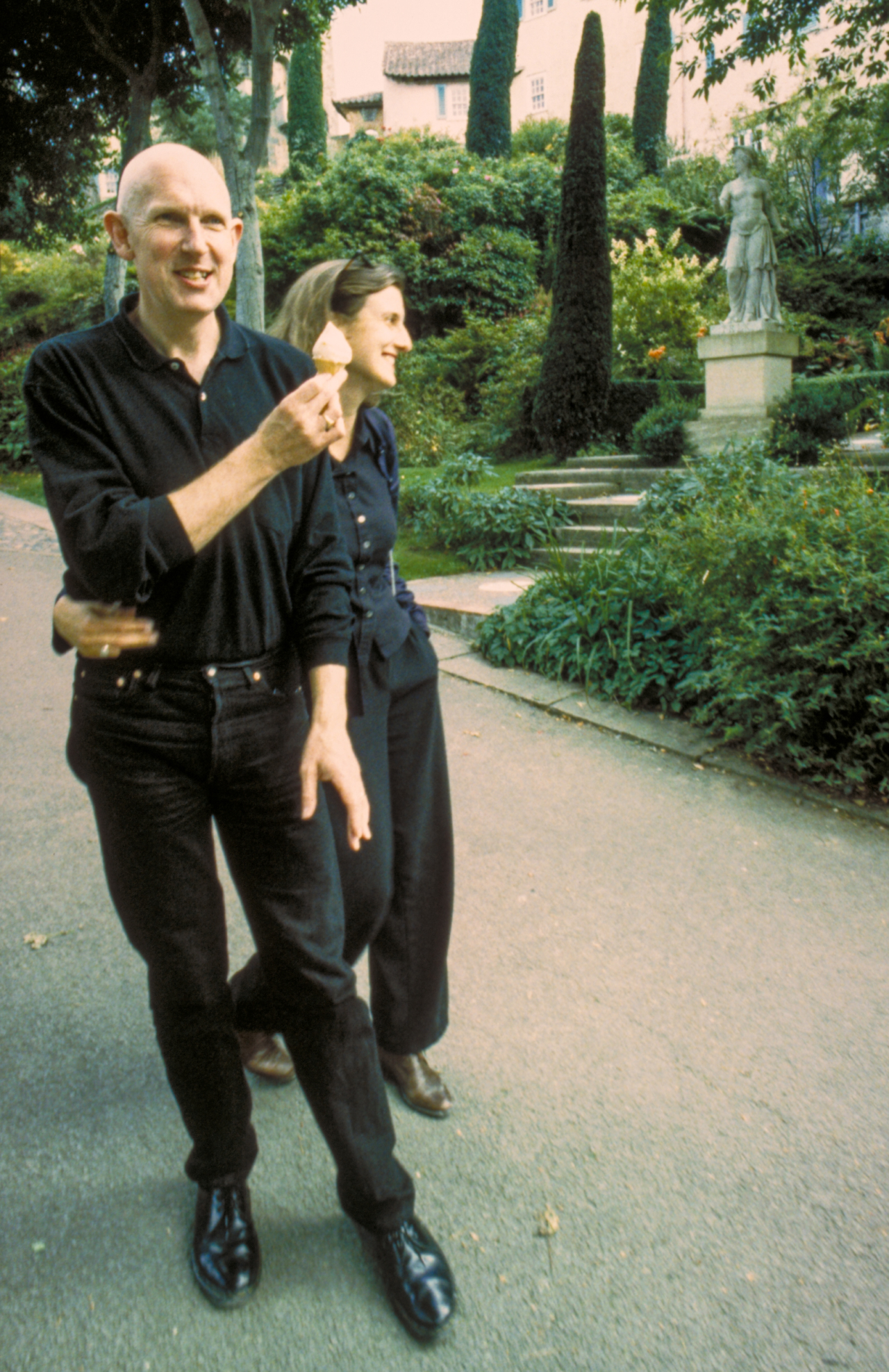
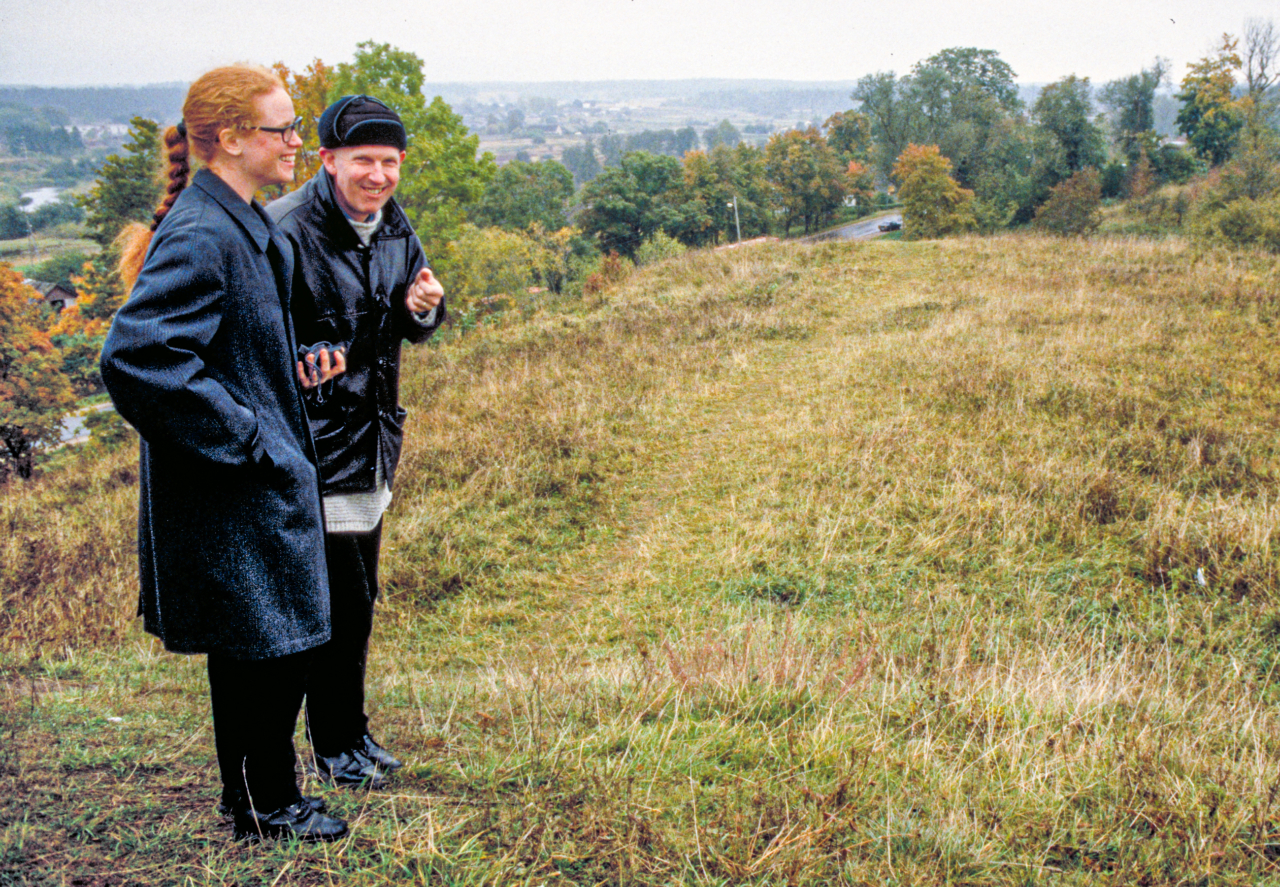
Looking through his many landscapes studies I am taken back to the summer of 1988, most of which I spent with Chris in Sweden. With hindsight and reviewing the copious photowork I pursued in that field trip, it is clear to me now that I saw him there and then in his element, in a milieu that he cultivated for the rest of his life.
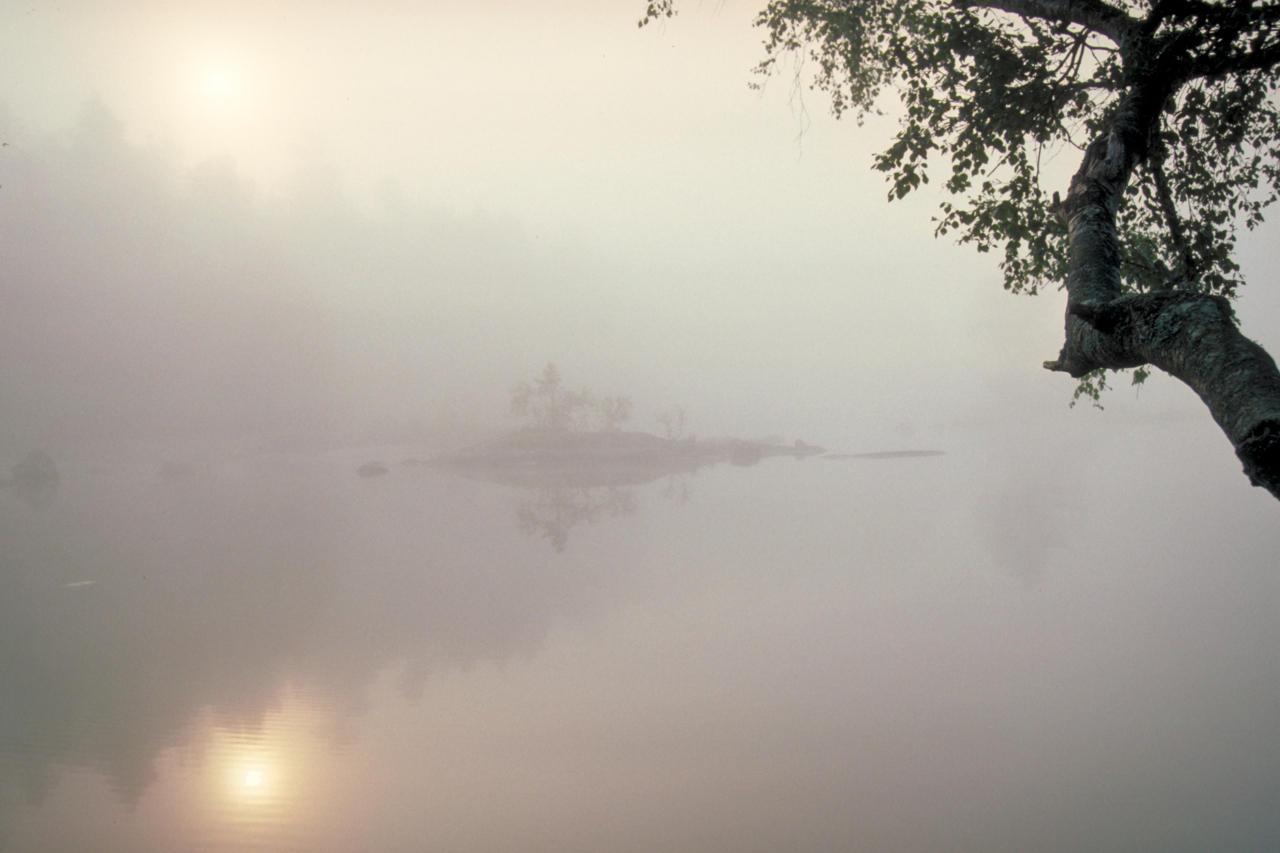
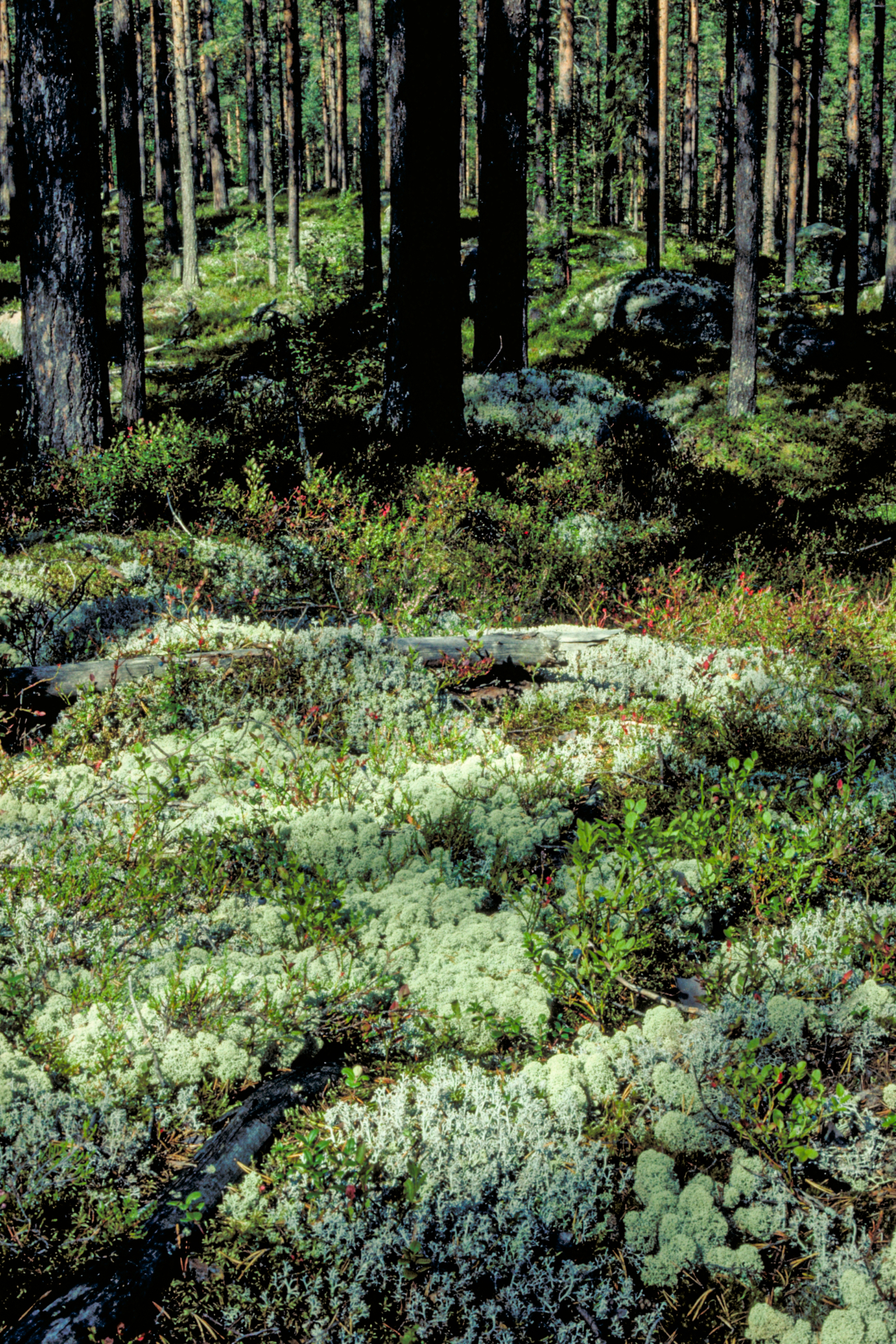
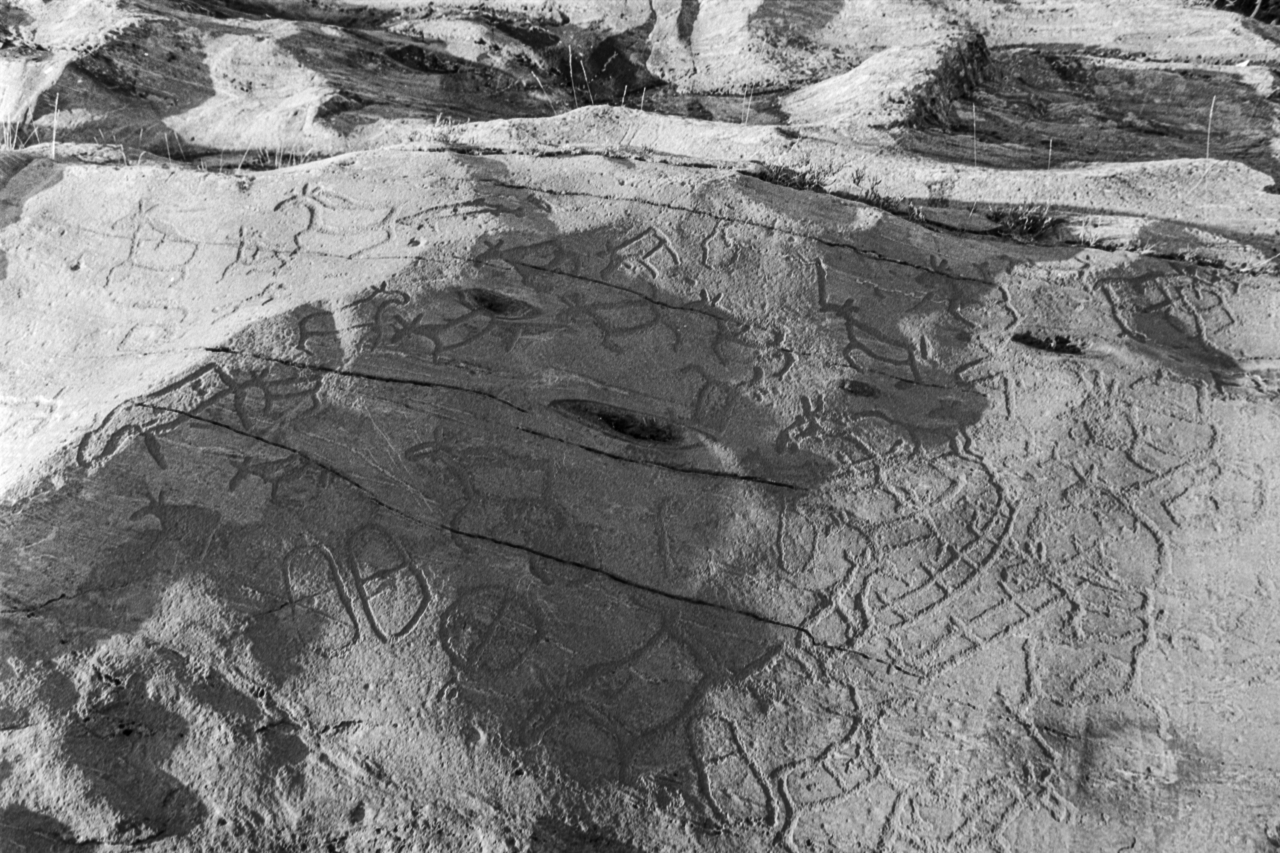
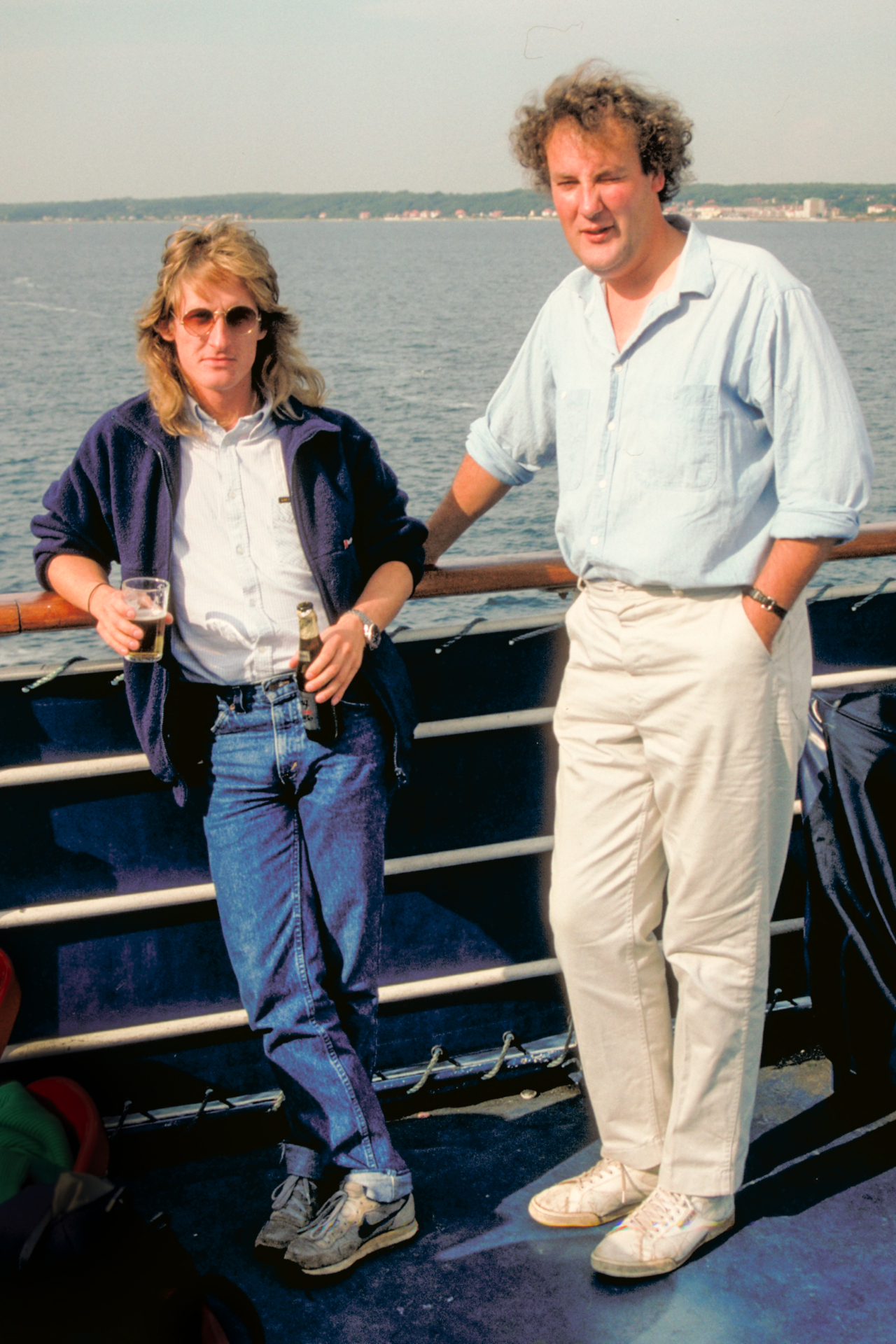
Textures and atmospheres of Sweden — with Chris Tilley in 1988.
archaeology in the academy
Our fieldwork in Sweden in 1988 was in the wake of the publication in 1987 of two books we had worked on since 1980 — ReConstructing Archaeology (Cambridge University Press) and Social Theory and Archaeology (Blackwell Polity).
These have been taken as part of the roll-out of a post-processual archaeology, a package of theory and methodology that challenged the precepts of a processual “paradigm”. Such a supposed roll-out is regularly now featured in stories of the history of archaeological thought. Tilley and I never saw our project in those terms.
Both of us had been inspired by David Clarke, Fellow of Peterhouse, the small Cambridge college. He died in 1976 before Tilley and I met there. We both appreciated his open and generous, exploratory and visionary attitude, and his aspirations to improve archaeology as a disciplinary field in a Cambridge of the 1970s that was quite tense and competitive. Well-established interests in an archaeology focused on economy went back to Grahame Clark and Eric Higgs, taking in many younger researchers such as Geoff Bailey, Paul Halstead, John O’Shea, Peter Rowly-Conwy, Marek Zvelebil, Glynis Jones, Jim Lewthwaite — these were just the ones that taught me as an undergraduate. Ian Hodder arrived in 1977 and was supervising the research of, among others, Chris, Mike Parker-Pearson, Henrietta Moore, Danny Miller, Mary Braithwaite. There were many others. Faculty such as Glyn Daniel, John Alexander, John Coles were lost in all the intellectual energy, with nothing to say to us. They seemed small minded, parochial, outmoded, irrelevant in contrast to the vigor of debate over a pint in the Anchor, the Mill, the Little Rose, the Eagle, the Granta, or over dinner in college hall.
Tilley and I benefited from the institutional separation of college and university. This was a critical and dynamic aspect of our experiences of academic community. Socializing and what can be called collegiality came before university department and disciplinary alignment. We both found free space to explore our interests without obligation to curriculum and faculty, or disciplinary norms and expectations. As an undergraduate, I skipped lectures and faculty supervision, actively encouraged by my tutor at Peterhouse. Chris pushed his doctoral research in prehistoric archaeology in new directions.
We were immersed in classic social science debate over theory and methodology, and as applicable to an anthropologically oriented archaeology. Bookstores (Heffers and the radical bookshop on Silver Street), and libraries (Haddon and University) teemed with fresh debate around a turn to theory in the social sciences and humanities. What concepts for explaining and interpreting prehistoric societies? What role for quantification and (hypo)thesis in building reliable, meaningful knowledge? It was an intoxicating atmosphere.
In 1979, as part of the research for my undergraduate dissertation, I coded a principal components analysis in FORTRAN IV for the Cambridge mainframe computer (I recall it well – an IBM model 370-165!) along with a program to plot results (thanks to Tim Dixon), and ran the copious data from some neolithic mortuary deposits through both. Chris was very taken, as I was, with the patterning and correlations that emerged, and so we expanded the analysis to include sites in Sweden, where he had started his own research. We interpreted the clear evidence for selection and manipulation of body parts in a socio-cultural modeling of power and agency derived from structural-marxist theory, applied to pre-capitalist modes of production, and relying heavily on the concept of ideology. This was the beginning of our research collaboration that lasted for a decade.
A long-postponed and acrimonious confrontation with my examiners Stuart Piggott, Glyn Daniel, and John Alexander over my research dissertation in 1980 threw the end of my undergraduate days at Cambridge into deep shadow. I left to join an archaeological field unit in the north of England. Chris moved to Lund in Sweden for his research into prehistory.
I was angry at what I experienced as exclusion from the academy where I believed I might make valuable contribution, and from a distinctive standpoint, one that had been acknowledged by my college. My background, what in the US we now call first generation low income, prompted me to see this as a matter of class culture. Glyn Daniel’s only comment on my work, as he sipped from a glass of red wine, was “you have a strange accent — where is it from?” — he knew well-enough that I had a north-eastern working class accent. Stuart Piggott looked imperiously out of the window and said “You seem to have a vague interest in the history of archaeology — my history”. To my complaint that the system of examination involving short essays written in response to trite questions was merely a measure of one’s skill at writing short responses to trite questions, John Alexander responded “Then, as a student of the Classics, you should learn to write like Tacitus.” Glyn Daniel, as head of department, had told Chris bluntly that a doctoral dissertation on theory could not qualify as research at all and would therefore receive neither institutional nor financial support. Chris became increasingly combative in his stand for open research rigor and against unreflective disciplinary orthodoxy and academic cronyism. We committed to adversarial research and publication. We would not be marginalized. We would not suffer archaeological fools.
In celebration of Bill Rathje’s and Mark Leone’s notion of an “archaeology of us”, we pursued for a year a study of modern material culture (beer packaging) and associated this with more prehistoric studies, examinations of social science methodology, and of museum curation and the heritage industry, the actuality of archaeology. Chris was taken with hermeneutics (philosophical phenomenology, with which he is so associated, came later). I was fascinated with the New Left as intellectual activism, and rooted in the very twentieth-century experiences of western Marxism. This was what we presented in ReConstructing Archaeology. Another book, Social Theory and Archaeology, written in parallel, was based upon seminars and discussions offered at Cambridge, amplified into a critical review of social archaeology, the project to explain and interpret prehistoric societies and cultures. We received great encouragement from sociologist Anthony Giddens, editor and instigator of a new imprint, Polity Press, dedicated to theory in social science.
Our enterprise was not to create some kind of new archaeological paradigm, post-processual, or whatever. It was to pursue what David Clarke had called a critical self-consciousness in our academic archaeological practice, thoughtful archaeological praxis. The methodology adopted in the case studies of ReConstructing Archaeology was regular social scientific, involving empirical exploration through concept and proposition/thesis, quantification, categorization, accounting for data variabilities and regularities in models of socio-cultural process that especially took agency into account, cognitive structures, and people’s capacity, or lack of capacity, to effect change in their circumstances.
We embraced the “linguistic turn” taken in the humanities — a disposition, ongoing in the 70s and 80s, to identify and make sense of semiotic structuring in acts of communication, in cultural phenomena such as image making, myth making, narrative and performative storytelling, in everyday life, because this was part of an opening up of disciplinary orthodoxy to fresh angles of approach and understanding. Our study of neolithic mortuary practices, for example, involved a model of corporeal signification — body as metaphor, metonym, synecdoche — an archaeology of the body in which people of the past acted on and through their conceptualization and understanding of their material and immaterial bodies. Manipulating bones — in passage graves and long barrows, in feasts and rituals of excarnation.
In one of the first long reviews of our two books in the journal Antiquity Kristian Kristiansen called them “The Red and the Black”. ReConstructing Archaeology had a stark black cover. That of Social Theory and Archaeology was deep red with an image of gothic melancholy and ruin. We took Kristian’s naming as an astute and flattering reference to Stendhal’s critique of class culture in modernizing France — the 1830 novel The Red and the Black. Kristian’s Marxian perspective held that the key to our work was critique. Critique — this is what touched a raw and supporating nerve in archaeology. This is what so rankled some of our fellow archaeologists — our repeated and substantiated claim that we were not sufficiently and critically self-conscious of what we were doing as archaeologists. We are not neutral detached scientists, but embedded, committed, contemporary, even if we pretend otherwise.
Here again our concept of critique was well-founded and long-standing — critique, after Kant, if one wants a genealogy, is reflection upon the conditions under which one might construct sound knowledge. My own standpoint was that of the immanent critique associated notoriously with the Frankfurt Institute of Social Research and after, rejecting the search for a fixed outside from which one might offer critique and correction. Donna Haraway describes this as “staying with the trouble” — there’s no escape from the mess. In contrast, it was on that summer itinerary in 1988 through prehistoric Sweden that I realized Tilley’s was a transcendental critique of contemporaneity. For Tilley the fixed point, the prima causa, was anthropic and thereby shared corporeality, the embodied experience of landscape, of things.
Moreover, with hindsight, Chris increasingly had less and less to say in the way of critique. While there were gestures of broad criticism of the contemporary world in his later writing, and his method stood as implicit critique of much that was claimed to be knowledge building in archaeology and anthropology, it was the transcendentalism that, I suggest, stands out most markedly in the many case studies of being-present-in-the-land. I will have more to say of this in a later reflection on the personae and archetypes in Tilley’s phenomenology.
Our two books drew on the sociology of knowledge after the likes of Kuhn and Foucault to argue that knowledge is a verb, that science is something people do. To reiterate, our enterprise was to further critical self consciousness in social science and the humanities. We wanted better building of knowledge, more secure, edifying, rewarding, enchanting, apposite, pertinent to matters of common and pressing concern. Acknowledgement that archaeology is not the discovery of the past, but the temporal percolation of past, present and future, to use the phrasing of science studies philosopher Michel Serres.
Bruce Trigger, among many others, accused us of corrupting science with politics, claiming that ours was an irresponsible hyper-relativism, whereby everything that can be said of the past was relative to present context, to standpoint, to politics, and thereby groundless.
Far from this, we were actually seeking more firm foundations for knowledge, accepting that knowledge of the archaeological past is not something revealed to us, discovered, observed in neutral and abstracted detachment, but worked for. This is the all-too-present experience of the academy — seeking funding, dealing with policy and debate, managing projects, navigating career paths, forging networks. This premise that knowledge building is an active process is now well accepted and affirmed through decades of research in the field of science and technology studies. It is commonplace now that science must account for its place and role in society, must deal with proponents and detractors, and not hide behind an argument that the value of knowledge is simply self-evident.
Trigger promoted an essentialist great man account of the progress of archaeological thought in his magnum opus A History of Archaeological Thought, first published in 1989. I suggest that it is his account that is irresponsible, and literally, in his own terms. At best Trigger affirmed that archaeology is affected by ideologies such as nationalism and colonialism. In this regard, in Trigger’s reading, Tilley and I were simply foolish apologists for an ideology of “postmodern relativism”. But actually it is his kind of story of archaeological thought and ideology that absolves archaeologists of their responsibility to account for what they do. This is Trigger’s irresponsibility — to seek and justify a gated community of scientists cut off from the contemporary, absorbed in their fantasies of a past-in-itself.
a summer long ago
1988. We were taking in reactions to the two books. I was planning a return to Cambridge, shifting from prehistory to take up a critique of classical antiquity. I had been traditionally schooled in this bastion of cultural elitism, and had taught classical languages in high school; I needed to work through this legacy.
Our affirmation that archaeology is what archaeologists do nudged us to undertake a field project. I had spent two years in urban excavation in the north east of England. Unit director Barbara Harbottle, such a professional and thoughtful mentor, had encouraged me to build up skills in site and finds photography and drawing, in site and architectural surveying. I was eager to tie these competencies to our theoretical precepts. Tilley was at home in Sweden. We decided I should join Chris there for the summer.
Our itinerary was ambitious — to visit as many as possible of the megalithic dolmens and passage graves in the south and then head up north to the rock carvings of Nämforsen, Näsåker, Västernorrland County, on the Ångerman River. We would explore future possibilities in an immersion in prehistoric landscapes. We would document, debate, discuss in an empirical dialogue with sites and monuments. We had a magnificent meal of crayfish poached in dill with home-grown potatoes from Tilley’s garden. And then we set out.
Before the outing to the stones
Chris was completely at home, and literally, with “Allemansrätten”, everyone‘s right in Sweden to camp anywhere for a few nights. And we did. Copious quantities of his exceptional home-brewed ale came with us on this heady exploration. His local knowledge was extraordinary. He knew where to camp, from previous visits. He was an expert in mycology, the mushrooms of the northern forest. He brought rakes for harvesting berries from the forest floor. Chris was at home, in his milieu. This was what he loved doing. This was obvious and it was infectious.
We talked of archaeologies of the body, of consumption and expression as we walked the land. We revisited our readings of our favorite theorists over campfires and smoked fish. We lit candles in cup-marked megalithic slabs in twilight. We clambered over carvings on rocks in dry rapids, examining and documenting every detail.
Tilley was an epicurean of landscape, a foraging connoisseur intent on achieving an intimacy with the land and its prehistory. I recalled afternoon trips we had taken together, driving out in his Hillman Imp to Coe Fen near Cambridge — inspiring escapes to calming vistas of east-Anglian skies. His undergraduate research had been published in 1979 with the title Post-glacial Communities in the Cambridge Region. It was subtitled Some Theoretical Approaches to Settlement and Subsistence. What is striking about the book is less the exploration of predictive economic modeling, mainstream in the Cambridge of Tilley’s undergraduate years, but rather the depth of familiarity with the archaeological sites and finds, and the desire to offer an ecological setting for the foraging and farming communities. He admits that the evidence is so meager that it can sustain no inferences or conclusions at all. The theory and methodology of his study are completely divorced from the fieldwork data. Yet he offers over a hundred pages of description of plants, animals, topographies, geologies, subsistence practices, maps and charts, as well as an introduction to palaeoecology. A labor of love.
For Tilley the concept of landscape was a fulcrum of such an engagement — life-on-the-land and environmental communion. Tilley’s was the ultimate contextual archaeology — situated, connected — being-there. There was a sense of comfort, of being at ease, at one in a milieu. I suggest that this is the ataraxia of the Epicurean. The philosophical Epricurean is not a hedonist, a devotee of pleasure. The garden of the Epicurean is a microcosm where one might realize a balance in the inexorable and conflicting flows of life energy. Not a resolution of (dialectical) flux, but a cultivated third-space of calm acceptance — ataraxia. Cultivation of the garden involves active intervention in the life of things — this was Tilley’s fieldwork, his gardening. This was Tilley’s humanism.
Lost in the lichen — somewhere in Sweden on the road heading north, 1988.
Chris and I shared a fascination for the qualities of things (megaliths, mushrooms, carved rock surfaces, berries, lichens, lakeshores, plowed fields) as we moved through vast landscapes (800 miles of forest), simultaneously intimate (a two-person tent pitched in a forest clearing by a 5000 year old dolmen). But I did not feel any sense of ease in that summer of fieldwork. Chris knew where to find the best mushrooms for supper. He had maps and plans of the dolmens, passage graves, rock carvings. I struggled with finding a documentary aesthetic adequate to our purpose, of which I was not at all sure (how were we following up on our years of research, where was this fieldwork leading?). I was more concerned with media and modes of engagement, by whom, for whom — viewpoints, framing, camera lenses, photographic film, and yes, those maps and plans.
I look again now at the photowork from the survey — an archive in my studio/lab of maybe a thousand black and white negatives, some color transparencies. I was experimenting with the genre of landscape photography in relation to landscape art, from seventeenth century to contemporary — matters of gestalt, of texture and resolution, of perspective and vanishing point, and yes, of how to convey, mediate, re-present the qualities of things and of experiences. For me the concept of landscape has always held an awkward and compromised relationship to ownership and inhabitation. I could not associate the concept of landscape with presence, with being-there. And certainly not with authentic insight.
Such a trope of the authentic witness came to dominate Tilley’s later landscape studies — an insistence that one could only know a set of prehistoric rock carvings by being-there, being co-present. He thought that inhabiting, living in a landscape was a key to understanding. Land, in my upbringing in the north-east of England, was always owned by a petty aristocracy who lived in grand houses that overlooked, in the distance, workers’ housing, colliery pit-heads every few hundred yards, and the ubiquitous slag heaps that came with extractive industry — a different kind of alienated engagement with land, mediated through property ownership and somewhat in tension with Tilley’s immediacy.
Chris never discussed mediation such as photowork with me. He wasn’t at all interested in the craft of image making, of documentation — as part of experience, in the wake of experience, or indeed as its precursor. We never discussed the history, the genealogy of engagement contained in the concept of landscape. This topic bugged me more than the evening mosquitos of the Swedish forest.
Anxieties of influence – Arcadia 1637
Nicolas Poussin’s 1637-8 painting Les bergers d’Arcadie depicts four figures inspecting a stone structure in a rural landscape. A finger traces an inscription — ET IN ARCADIA EGO. It’s a puzzle, a riddle-figure. We need to supply a verb and suggest a subject — “Even I am in Arcadia”? Is this a ruin, a tomb, a pedestal missing its statue? Is this scene even in Arcadia — the archetypal rural idyll, garden of Eden? Are these the words of the interred, or of the absent statue? Is this death speaking — a reminder that even in Eden life ends? Who are these figures-in-a-landscape? Are they really the shepherds of the title?Two of them wear the wreaths of victors in the games. Who is the female figure, to whom another seems to be looking for comment or insight? She is not dressed as a shepherd. Who witnessed this scene to paint it, or is it fabulation, invention, speculation, allegory? In which case whose work, and for whom? Who actually was Nicolas Poussin?
UT PICTURA POIESIS — this aphorism, from Horace’s Ars Poetica, takes us to the heart of these matters of mediation. “As in a picture, so too is poetics.” The question is of the character and relations of image, text, and, by extension, referent, that to which imagery and text refer, to experiences. Poiesis is not merely poetry; it is making, doing, acting, creating — a broader concept of poetics. Horace is maintaining that text and imagery are connected through acts of making, constructing, composing, building. Horace saw himself as an inspired poet, VATES, reading the signs of life around him in ways that encompass futurity, possibility, revealing hidden meanings, building futures.
Was Chris taking the role of a reader of signs, immersed in presence-to-hand, unmediated connection through attention to local detail? What of the words and images, maps and diagrams that were integral to this experience, this media ecology?
These matters were on my mind as I looked through the camera viewfinder, as I took up pen, paint, and notebook in a Swedish landscape.
The noise of prehistory — Nämforsen
In the wake of odyssey — what came after?
We took a final trip on the ferry to Denmark across the Øresund between Helsingør and Helsingborg, with a wonderful picnic of Danish cheese and beer on the beach beneath Hamlet’s castle.
In Hamlet’s shadow
Tilley went on to organize a handbook of theory — Reading Material Culture: Structuralism, Hermeneutics and Post-Structuralism. He wanted me to write a chapter on Adorno to accompany the other introductions to philosophers and theorists. I had had enough of abstract -isms and great thinkers. Much more interesting to me was his extraordinary multi-voiced bait-and-switch account of the carvings we had visited and studied at Nämforsen (Material Culture and Text: The Art of Ambiguity, 1991) — river rapids and rock art as allegory of the swirling waters of past-presents.
I returned to Cambridge to take up doctoral research in classical antiquity with Ian Hodder and Anthony Snodgrass, before moving to the Maison des sciences de l’homme in Paris, under the sponsorship of Alain Schnapp and the Centre d’archólogie classique, Paris 1. This brought such invigorating exposure to science studies in the intellectual circles around Bruno Latour as well as quite different currents in French archaeology.
Much later (not published until 1999) Chris compiled a guide to the dolmens and passage graves of Sweden that we had visited in 1988. This book is an extraordinary curiosity in Tilley’s body of work. It is the most conventional of treatments, a gazetteer with a short descriptive introduction, and makes no reference to any debate about explanation and interpretation, least of all his own work. What it does show is the deep knowledge of the antiquarian connoisseur, immersed in material remains and detached from contemporary concern, other than that afforded by visit; in this regard he had been so impressed, on our own visit to Nämforsen, by the meticulous documentary work of Gustav Hallström and its capacity to help us see the rock carvings.
What we continued to share, albeit in very different ways, was focus on the concept of experience. Tilley pursued the quest for an immediate experience of the past that I witnessed in our Swedish odyssey and tied it to Merleau-Ponty’s phenomenology. His case studies of monumental landscapes in Wales and on the chalkland downs of southern England appeared in the book Phenomenology of Landscape (1994) and were followed by many others. Tilley was very insistent that this great project, suitably titled phenomenology of landscape and ongoing upon his death in 2024, was rooted in traits that all humans share, irrespective of cultural difference. Such transcendental corporeality, he claimed, involves embodied experience (of what he continued to call landscape), and connects all humans, past and present, because we share the same experiential apparatuses of cognition, sensory engagement, and emotional evaluation that precede local cultural or temporal difference or variation. This universal basis of experience was the heart of his humanism. You can walk in the footsteps of prehistoric inhabitants and, with appropriate phenomenological attunement and sensitivity, connect with what they too had experienced, bridging time through local spatial immersion, losing cultural and psychological selfhood in corporeality. This was not empathy for Tilley, but rather arose out of close attention to one’s own corporeal engagement with the landscape — not a bridge present-past created by an act of empathic imagination, but empirical observation of one’s present experience.
Tilley was drawn to experiences in the land. I was drawn through science studies to examine the experiences of doing archaeology. In 1990 I finished Experiencing the Past — an exploration of all things archaeological, a first venture in exploring what I came to call the archaeological imagination, with archaeology taken only partially and even incidentally as a disciplinary field. Instead, adverbial or adjectival — archaeological things and experiences, things done archaeologically in an archaeological sensibility. We were both dealing with remains. While Tilley centripetally found ever more intimate communion with traces of the past, ethnographic immersion as he called it, I was conveyed centrifugally into all manner of archaeological associations with detective and horror fiction, with cultural archetypes, modernist metaphors, and archaeological tropes in contemporary art.
Much of the book was written in unspoken conversation with Chris. In contrast to his focus on immediate experience, following those awkward concerns with photographic genre that had troubled me in Sweden, I offered more experiments in experience-always-mediated and politically-motivated, mediating past and present with text and image, including eidetics (action-oriented, performative mediation against mimetics), simulation, narrative, instrumentalities, graphics, concept-maps, montage and collage.
Looking back now it was our dispositions towards temporality and mediation that took us in different directions. Tilley bridged past and present with consistent empirical rigor and method over decades, while never claiming that what he said of the past was anything other than of his own making. He didn’t need to take into account the genealogies of our concepts and practices that are taken to build the bridges; he didn’t need to question concepts of landscape and ownership, or of mediation and representation, the way he wrote the past, rather than experienced it. I was finding inspiration in Deleuze and Guattari, Nietzsche, in Adorno’s negative dialectics and immanent critique, in Benjamin’s dialectical images. And much more in modern and contemporary art — Klee, Nash, Anselm Kiefer, Goldsworthy, in conceptual and performance art — all of which led me, from 1992, to my long collaboration with theater company Brith Gof (Welsh for dappled memories). I have only ever found temporary passages in messy and turbulent waters that involve no essential separation of past and present, and therefore no ground for building secure bridges. In what are like memory practices, workings with remains, archaeologists are prompted by things now, in the flow of experience, to recollect, to make fresh connections with indeterminate remains. And then the waters shift and we navigate anew.
I lodged for a couple of months with Chris, Karin and border collie Moa in his farmhouse over the hill outside Lampeter in 1992. We sat out in the evening to drink and talk amongst vegetable beds punctuated by megalithic miniatures. His newly diagnosed type one diabetes concerned him. I recall the way he expressed it — “this body will be the death of me”. He was unsettled by the institutional structures of hierarchy and decision making in the college. This was a deeply personal matter to him. He told me how he found collaboration to be a challenge and that he only tended towards leadership or apprenticeship. He became convinced that I was implicated in his antipathy to institutional authority. By the end of the year he had found a new academic home at University College London. He never mentioned again our decade of collaboration. He even denied that we had spent that wonderful summer of 1988 together in pursuit of prehistory.
Photographic quiddities Sweden 1988 – click an image to view gallery
He was a performance artist, theatre director, theorist and philosopher, scholar and teacher. And, as composer John Hardy said, Mike collaborated and connected – visual design, architectural stagecraft, poets, playwrights, composers, experimental jazz musicians, dancers, disability & gender specialists, comics, community art conveners, museum curators, traditional Japanese theatre performers, Patagonian farmers, Welsh folk historians, wild creatures and their bones[Link]. And, I add to these, archaeologists and geographers, performance theorists and anthropologists – the list could go on.
Mike has been a key figure in Welsh theatre, in European theatre, in physical and experimental devised performance. There have already been many wonderful tributes to his life and qualities, to his work in theatre, to his generous humanity.
I want to add to these with a personal reflection upon the extraordinary intellectual scope, range and depth of his art.
I find this very difficult. It’s not possible to disentangle our collaboration, and I am concerned to witness his unique voice. To acknowledge also the enormous inspiration and support of his network of friends and colleagues. So I apologize in advance if I am not sensitive enough, or if I could have spoken more of those who have given us so much support.
In some ways what follows is a kind of summary of what Mike and I called theatre/archaeology, a concept, set of projects, focus of conversation over 30 years. I have found it appropriate to offer a good deal of detail to explain how theatre/archaeology connected with Mike’s performances, less how it relates to my archaeology. I apologize if the reader finds this post rather long. I have tried to break it into clear and coherent sections.
It was more than 30 years ago that Mike visited my archaeology lab in Lampeter, a small rural campus of the University of Wales. He brought with him a video to show me. It was called Pax TV – an experimental work from his theatre company Brith Gof. Layered frames and scanning cameras offered windows on a Welsh farm house and the woman who lived and died there. In a mélange of memory, media, and event (her death), Mike appeared as an angel, as Hermes.
I was puzzled – why was Mike showing me this? I did not expect his reply. He said that this video was actually about archaeology – the kind of archaeology I had described in a recent book of mine (Experiencing the Past, 1991). I didn’t know what he meant, and so started the conversation and collaboration between us that has been interrupted, that has taken such a sad turn with his death last week.
Mike was, above all for me, an archaeologist, one who works with remains. Let me present a menu of concepts, techniques, dispositions, and standpoints that you might find in his great body of work. I make no claim that this is any kind of reasoned systematic account. Mike and I came to call the hybrid, somewhat monstrous focus of our collaboration theatre/archaeology – the re-articulation of remains, of traces and vestiges, as real-time event. Like our conversation, our concepts and practices were in constant motion, adapting and changing. Hybrid, yes, and entangled – this menu is as much about what we learned and shared together as it is about discrete oeuvres or disciplines (and we conceived neither archaeology nor performance studies as primarily disciplines).
We gathered many of our exchanges and collaborations in a number of articles and in the book Theatre/Archaeology (Routledge 2001). Our new book Theatre/Archaeology: Concepts and Practices, was just about finished as Mike passed away. It will be published next year.
orientations – paradigms
archaeology
Archaeology – a disposition towards things, a sensibility, that surpasses its recent manifestation as an academic discipline and as a set of professional and institutional practices associated with museum collection and the management and conservation of ancient sites.
Archaeology is to work with remains (material traces such as ruins, and vestiges such as footprints – material and immaterial presences and absences, pasts-in-the present). And with a view to the future – to work with remains assumes care and concern – for what might have been and what might become.
In such a conception of archaeology Mike and I emphasized the creative work of research and investigation, collection and mediation – the archaeological imagination. We identified three moments or aspects of an archaeological circuit (explicitly referring in this way to archaeology as an energy field). Encounter and engagement: visiting a site, or making an intervention in the way of excavation, for example. Gathering and sorting: collecting artifacts or samples and setting them in some kind of order (or disorder), for example. Mediation and transformation: writing and illustration, conserving and archiving, for example. One should add to these the more generic challenges of project management – finding funding, organizing teams, building institutions, delivering goods such as academic papers or museum exhibitions.
This pragmatic view, that archaeology is what archaeologists do, is grounded in a pragmatist philosophy and sociology of knowledge, that science, for example, is a situated set of loosely related creative and managerial practices that claim to build knowledge.
The implication of such a standpoint is somewhat ironic – that archaeology is not primarily about the past, and science is not primarily about describing reality, though it is often assumed that this is precisely what they are about.
performance
So too with performance and theatre. We conceive these as fields of practice and energetic potential. Performance involves dramaturgy (emplotment, character definition and development, timeline, montage, narratology), scenography (mise-en-scène, props, staging), choreography (arranging and mobilizing bodies of all kinds), mediation and media design (mediaturgy), mix (composition and design of performance works), and project management (the business of production).
Theatre refers to particular and institutionalized modes of delivering performances.
Performativity is a critical concept here, again pragmatist, that directs attention, for example, to how identities are not essential properties of people or things but are established in iterative practices or performances. It’s not who you are that makes you what you do, but what you do makes you who you are, or might become. Performativity is a key to understanding agency – how people are active and creative agents in building their lifeworlds, even though this may be under conditions and constraints over which they have limited or no control.
Just as archaeology is much more than studying remains in order that we may represent the past, so too performance, more specifically theatre, is much much more than staging a dramatic script.
theatre/archaeology
It is not difficult to conceive how archaeology can be understood as performative practice. In visits and encounters, samples and classifications, analysing and conserving, archaeologists pursue plot and setting, engage with audiences and other stakeholders in the performance of research and science. And performance can be so involved in memory practices, the reenactment of scripts, the documentation of events, working with and through remains.
Bring together both and one has the hybrid theatre/archaeology – the rearticulation of remains, traces, vestiges as real-time event. Rearticulation – because we emphasize the creative and iterative processes and practices of making connections. Remains, traces and vestiges involve absences as well as presences that invoke speculative confabulation as well as the likes of forensic analysis. The concept “real-time event” can suggest doings and things done in “the now”. In such a temporal manifold Mike and I include duration (the persistence of some features of experience such as traces and vestiges), place-event (the association of temporal event with location), iteration and return (doing it again), and kairos, the moment of opportunity to act. Such a manifold of processes and relations can be termed actuality – the dynamic percolation of times past, present and future in the ongoing flow of experience.
This concept of theatre/archaeology underpins the works that Mike and I produced together since that meeting in rural west Wales in 1992, and also many more works that we created separately, and not always under the heading of theatre/archaeology.
Remembering Daniel Davies who lived here until his farm was taken from him by the state in the interests of forestry. Esgair Fraith 1996.
Mike shared a fascination with the legacies of the past, prehistory and antiquity, with what to do with them, not to discover and preserve the past, but to actualize and redeem forgotten hopes. We revisited and reworked ruins in an upland forest plantation of a community dispossessed of their farms by a colonial state (Esgair Fraith, our series of works in the 1990s). In another series Mike offered guided tours and orientations through signs and traces in the rural Lincolnshire of his childhood, and in ways that challenged the old ideology embodied in the concept of landscape. One early solo work of Mike’s in physical theatre was a wordless corporeal reincarnation of Antonin Artaud’s last writings (Lesson of Anatomy 1974, reperformed in 2014). In the spectacular productions of theatre company Brith Gof, set in a quarry, train station, and in abandoned industrial facilities, the early medieval Welsh epic Y Gododdin (1988 and 1989) was brought to life, and Prometheus returned to a post-industrial capitalism (Haearn 1992). Mike regularly faced up to another historical and troubling legacy, the canon of theatre literature. With National Theatre Wales he transposed Aeschylus’s play Persians from fifth century Athens to a military training ground in the Welsh hills in 2010. Shakespeare’s Coriolanus was combined with Brecht in a multi-media clash and promenade event in a pre-war aircraft hangar (National Theatre Wales, The Cultural Olympiad, and the Royal Shakespeare Company Festival 2012). His team produced a radically reimagined 8 hour recital of Homer’s Iliad in the industrial town of Llanelli in 2018.
Storm 2Things Come Apart (2019) was a deeply researched model, graphic reconstruction, web site, and site-specific performance that dealt with the Cardiff 1919 race riots. Mike was again dealing with the gatherings of the body politic that so featured in many of his works. Multilayered media (projected imagery, multiple sound tracks, dispersed events) delivered a visceral confusion to the urban politics of Coriolanus. Polis was a series set in urban Cardiff focused on watching and being watched, event and report, forensic investigation in cityscape. I always found such works to be a vital counterpoint to my own researches and works that deal with the performative structures of the ancient Mediterranean city state. Gatherings of the membership of the body politic in assembly and council, in the army and on the city streets. Law courts, political speeches and eavesdroppings. Sovereignty, inclusion and exclusion. Techniques of the body – how to walk and talk in the city. And where of course, we find the earliest manifestations of western theatre.
Bubbling Tom (2002)
praxis, poiesis, theoria
In theatre/archaeology Mike and I typically didn’t affirm allegiance to any particular body of theory. We never found it necessary to take theatre/archaeology, as theory, into the debates around object-oriented ontologies, new materialisms, Deleuzian process-relational philosophy, and such. We have been much more interested in getting on with things, rather than contributing to such academic debates that we have usually found too abstract, and ironically also, too ephemeral. Mike was very skeptical of the academic marketplace and its consumerism. There is too much fixation on celebrating the latest modish repetitions that claim radical originality.
This does not discount how inspiring we have found the various components and ongoing concerns of critical theory and more. Mike was such an avid, curious and eclectic reader, steeped in western modernist intellectual agendas since the eighteenth century, and especially in critical theory.
Mike realized, embodied, what so many merely talk about. In his vita activa, to bring to mind Hannah Arendt, Mike performed a deep deconstructive questioning of the category of the human, of corporeality. Performance design as an intervention in cultural politics, in ideas of nationhood, a transdisciplinary questioning of concepts such as landscape and belonging, urban dwelling, city and country, surveillance and social justice. An iconoclastic reworking of modernist tropes. An embodiment of the pragmatism of science and technology studies, reaching into techo-feminism and posthumanism. Performance and rhetoric as the fundamental basis of the making of embedded knowledge. And yes, the significance of process relational philosphy in the line of Spinoza, Nietzsche, Whitehead, Deleuze, Serres.
I have mentioned the pramatism of theatre/archaeology. We can call it a pragmatology, concerned with pragmata, things and things done. Getting on with things. We side step the distinction between theory and practice and instead reference the old concepts of praxis, poiesis, theoria. These are all activities – of doing, making, thinking. In using the old Greek terms we want to distance ourselves from current concerns, especially relationships between theory and practice, and acknowledge a troubled genealogy of the concepts we use to understand what we do and might do – think and reflect, act and make.
Without a heroic aspiration to definitive and unassailable, monumental work for all time. The creative pragmatics of the likes of theatre/archaeology is always tentative and experimental, the latest attempt in a genealogical chain that typically takes us back into the mists of prehistory. The experiences of the cyborg self, of body distributed through its artifacts and material culture, the ecologies that are human corporeality are not new to modernity. Closely relevant here are recent debates concerned with connecting arts and sciences, arts practice as research, research creation, scholartistry, drawing especially on the decades of anthropological, sociological and philosophical research in science and technology studies – the performance of making sense and knowledge.
It was only recently in discussing these concepts of praxis, poiseis and theoria that we made a connection with what can be described as the ergonomics of energy fields. In the work of archaeology and performance we manage and regulate sources and flows of energy: investing effort into excavation, displacing artifacts, conserving and arresting processes of decay; choreographing the skills and efforts of performers, maneuvering props and stagings. Our pragmatics of theatre/archaeology thus entails an ergonomics – the regulation and organization, the design of work (ergon) within fields of vital potential – constructing pasts, presents, futures – worldbuilding.
So what did Mike do in theatre/archaeology that many others only talk about? Let me illustrate with a few comments on critique, engagement and iconoclasm.
critical theory – experiences of modernity
As archaeologists we were very involved in the self-consciousness that came to the academic field in the late 1980s. This critique made a clear case of the deep investment of nineteenth century archaeology, and after, in colonialism, nationalism, and imperialism (I always bring to mind the crucial intervention of Bruce Trigger in this shift).
Our question was – what might be done with such self consciousness?
One answer we pursued started close to home. Colonialism, imperialism, nationalism always begin in the everyday, in everyday aesthetics. Mike and I took on the investigation and critique of the internal colonization of a fundamentally dis-United Kingdom in topics such as the appropriation of land and labour, the imposition of histories and metanarratives by the apparatuses of a nation state. Ours has been a project of uncovering intimate and oftentimes hidden or forgotten histories, exploring and deep mapping the borderlands of northern England and of rural Lincolnshire. Settling in Wales, Mike confronted the tensions through community and class between the industrial and urban south of Cardiff, Swansea and the valleys, and the rural north and west. Mike’s approach through performance involved anecdoted topographies and itineraries, scenarios in a barn, recounted gossip, street theatre in the city of Cardiff – an intimate and everyday aesthetics.
Another answer was to work with the fragments of mythic and conflicted histories – resonant traces that take us to counter narratives as well as simply foregrounding what is deliberately overlooked. As mentioned, in Haearn (Brith Gof 1992) Prometheus came to Wales. Mike brought Ovid’s Phaeton to Pontrhydfendigaid in the county of Ceredigion in 2018 (National Theatre Wales Storm 1Nothing Remains the Same).
Perhaps the most distinctive tactic in this mobilization of critique is iconoclasm. For both of us this has not been about tearing down the monuments of the western canon of theatre, or of classical antiquity, or the grand orthodox stories of western enlightenment. Instead – facing up, confronting, juxtaposing, deflecting, defacing, contrasting, reworking. And sometimes this has meant going far afield – to a Welsh community in Patagonia, to polar explorers staging theatre in the Antarctic, to Japan to learn the art of Noh, to the archaeology of prehistoric communites in the northern isles, and for me to the heartland of the techno-utopian empire, Silicon Valley, at the western edge.
ontological theatre
The performative and pragmatist premise of theatre/archaeology suggests that in any project we look first for verbs rather than substantives and nouns. In the performed lecture Autosuggestion (2013) we asked “Just what is an automobile?” We answered by driving into the venue in Bill Barranco’s hot-rodded stinking-of-gasoline primer-paint ’56 Chevy and then reverse engineered the automotive experience though an exchange of personal anecdotes about cars (usually Mike’s) and responses (where I introduced comments, contexts, and contrasts). Nine sets of stories. This was the template that we came to use in some of our collaborative works – a dialogics (Bakhtin, yes) that seeks not to define conclusively but to circle and entangle, exploring processes and connections, seeing where things go in the event of performance, stopping simply when time runs out. Ontology as theatre, to follow Andrew Pickering.
So what is an automobile? It depends. Who’s asking? Why? To what ends? Where do you want the question to take you? (James and Rorty.)
Thinking through things, in an elision of poiesis, praxis and theoria – always in performance. Props, bodies, settings and stagings in dramaturgical, scenographic, choreographic mix.
In archaeology, working with remains tangible and intangible, as pragmatology, disentangling things in a mise-en-scène, examining instrumentality (automobiles) as mode of engagement.
And surely such ontological theatre is what we witness and share in the myriad of everyday environmental performances, the natural history of animals and insects, earth and weather, the geology and atmospheric liquidity in which we are immersed.
Driving the 1950s. Autosuggestion (2013)
critical romanticism
Mike was an avid bird watcher and natural historian.
In his theatre/archaeology we find chorography, what we called, with Cliff McLucas, “deep mapping”, a concern for engaging and representing local inhabitation, multi-species, heterogeneous ecosystems and their environments, and a revival of a forgotten genre.
Mike was adept at conveying the manners of folk, details and marginalia, character, the habitus found in the eddies of everyday gossip, in the discarded detritus on a workshop floor.
His theatre works often had a dark tone, grim in their physiognomy, visceral in their corporeality. While Cliff McLucas, art director alongside Mike in Brith Gof, took an architectural and structural approach to performance design, Mike started in the solar plexus.
What connects these features of his work? The roots of all are to be found in that complex disposition that accompanied the emergence of industrial modernity in the eighteenth century – revolutionary romanticism.
I find Mike’s extraordinary sensitivity to geology and natural history, alchemical, sense-based and not constrained by specialist disciplinary practice, in the works of antiquarian John Wallis, a favorite of ours, a cleric in eighteenth century Northumberland. Mike’s radical mobilization of archaic archetypes is reminiscent of William Blake. His grasp of the textures of everyday life is certainly what Scott aimed at in his focus on the everyday manners that shape historical experience. The cultural critique of Percy Shelley. Mary Shelley’s modern Prometheus. Wordsworth’s vitalism. Ann Radcliffe’s gothic terrors; Poe’s gothic forensics.
The angels in Pax (1991)
These are all features of a romantic poetics:
local self-assertion as opposed to universal rationalising systems which may be termed arrogant and essentialist;
an attention to the ordinary and the particular, to specific manifestations of life processes;
an interest in the limits of reason and the irreducibility of experience;
an interest in the darker and somatic aspect of experience in the sense of that remainder which always escapes the claims of a rational system;
defamiliarising what is taken as given, revealing the equivocality of things and experience;
reality conceived as dynamic flow, temporal and spatial process;
an attitude critical and suspicious of orthodoxy, because of the impossibility of any final account of things;
acknowledgement of the worldbuilding power of creative agency, the constitutive imagination;
a hylozoic vitalism that recognises the life of things.
And the politics, an inclination towards practice, comes from that romantic philosopher-political-economist Marx: philosophers have so far only interpreted the world, the point is to change it.
In all, this critical revolutionary romanticism remains essential in our contemporary times of late modernity, of precarity and uncertainty, with the rising voices of those who would have us believe they alone have figured everything out.
concepts
corporeality and embodiment
Lesson of anatomy 1974, left, and 2014, right
It was from Mike that I learned how significant a figure was Antonin Artaud, and not only to the history of modern theatre and performance. Much more. Artaud’s concept of body-without-organs (picked up by Deleuze and Guattari) places in parenthesis the configuration and containment of embodiment. The body precedes and surpasses containment and categorization. Distributed and dynamic corporeality – we touch and commune with atmosphere in our breathing. We ingest, digest and expel as waste food, and in so doing we are agents of ecological metamorphosis. In the prostheses and augmentations of tools and technology we have always been cyborgs, monstrous hybrids of flesh and artifact.
Artaud witnessed such a dispersal of self and body in the electroshock treatments of the asylum and in his theatre of cruelty – challenging audiences, conventions, and complacencies, with provocation, extremes. Mike’s physical theatre, developed in close study of Jerzy Grotowski, was edgy and often unsettling, sometimes violent.
In our most recent reflections on theatre/archaeology we have been taken by the base materialism that connects body and landscape in the works of Jean Dubuffet – raw energetics in the construction of corporeality, truly bodies without organs. This line of thought and connection took us to the expression of distributed ecologies we find in the writings of Donna Haraway and Anna Tsing – what we construed as a pagan poetics.
body politic
Y Goddodin 1988
One historical manifestation of the distributed body, the dynamic of membership, of inclusion and exclusion, is the concept of body politic, and I’ve already mentioned how assembly and gathering regularly feature in Mike’s works. We are made to face up to myths of the polis, and witness again and again how body politic fails and falls apart. Mike’s iconoclasm was a deep questioning of performance in polis.
In this Mike was very conscious of processes of rhetoric and mediation, the mediaturgy in polis that combines voices and audiences, media forms and receptions, amplifications and suppressions, who gets to say what is distributed, who gets to just listen, or not hear at all.
noise and polyphony
In Coriolan/us the contesting voices of leaders and followers, the noise of the citizen body, is everywhere. Microphones and amplifiers, loudspeakers and earpieces, delivered speeches and eavesdroppings, what could be heard and not heard, in ones ear, blasted out across the theatral space of the polis.
Things come apart – Coriolan/us
Noise is the essential medium within which we distinguish sense and signal. Noise and texture, multiple layered voices, have featured prominently in theatre/archaeology. In the gossip of a Lincolnshire village, in the forest ruins we might hear the whispers of forgotten ghosts, validate and witness the traces of marginalized experiences, speak them, make them manifest again.
It is an ongoing struggle not to be drowned out by the singular voice. And the alternative is not harmonious symphony, an alternative singular statement, but constant research, listening and attention, and rearticulation, restatement, reperformance.
chorography and geology
Everyday gossip runs in continuity with deep time, the life processes of rock, ocean and weather.
Mike’s chorography, his neo-antiquarian and predisciplinary attention to the question of landscape and inhabitation, took in the longue durée of land forms as well as intimate anecdotes and the unnoticed comings and goings of finches. Mike embraced that shift of temporal, spatial, and material sensibility that came with the discovery of deep time in Hutton’s geological unconformities in the last decade of the eighteenth century. Rock became liquid, stone soft and pliable, subject to raindrops and river flows that we see all round us now and actual. But deep time incorporates a scale of experience that is hard to comprehend in human terms.
Such an association of intimate chorography and deep mapping was why it seemed so right that Mike and his teams could bring Prometheus to an old steel works in Tredegar south Wales, Ovid’s Phaeton to Pontrhydfendigaid.
Performance = Geology. Sedimentation, layering and uplift, folding and faulting, metamorphosis and erosion. For Mike geology referred not just to land form and topography, but to a figuration that suggested a way of thinking of performance itself, and performance as indeed part of the agency of experience, worldbuilding.
worldbuilding
In the articulation of experience and agency, the noise of everyday life is the ground, the material and vital energy of worldbuilding. Lifeworld is created in the everyday, not by heroes who would wish only their singular voices to be heard, their orders and plans to be obeyed. This realization was one source of Mike’s wonderful humility.
The flow of everyday experience is the fount of creative potential. Our agency is our collaborative collective capacity to make a difference. So often it is suppressed and curtailed. Mike’s works acknowledged and celebrated the validity and veracity of everyday and often marginalized experience as well as its mythic multiplicity in ways that surpassed simplistic statement. Mike’s humility acknowledged that there is no end to the process of attending and listening. One might construct a scenario for a particular purpose and audience, but it never ends there. Mise-en-scène becomes mise en abyme. One story leads to another and another, absences generate presences, ghosts-in-the-mirror come back to haunt. We only find worlds within worlds.
What remains is the necessity of reframing, reimagining, speculation.
techniques – design and rhetoric
There’s no method in Mike’s theatre/archaeology. Think instead of the pragmatic fields of design and rhetoric.
performance design
Pax TV, the video that started our collaboration, mixed two classic components of media design – mise en scène and montage. In Bubbling Tom (2002) Mike told story scenarios, anecdotes, and memories in an itinerary around his childhood village. Mike regularly staged synchronicities – the layering of events. Tri Bywyd (1995), for example, combined three broken and independent narratives in one place, a ruined farmstead in a forest plantation. Deep mapping involves folded temporal topologies where an itinerary, for example, stopping here to look and listen, then there, and there, disrupts timelines in paratactical sequences of place-event.
What was going on in such composition and devising was a regular topic in our conversations. One answer, we decided, was that it is the work of design. Performance, as design, mixes dramaturgy, scenography, choreography, mediaturgy, as mentioned above. Mike had written much about the techniques in this process in the likes of his book Site Specific Performance (2010). He also, as mentioned, thought metaphorically and figuratively of performance design as geological process.
And more. Design projects need to be organized and managed. Here we looked to the way design foresight, as developed in the likes of Stanford University’s school of engineering and in studios such as IDEO, can help understand the melding of praxis, poiesis and theoria in project management. Broad concerns are with viability (does the project have the needed resources?), feasibility (is the project technically possible?), and desirability (will anyone be interested?). More particularly, the design process involves an opening brief or challenge, in a context of a program of funding, for example, or as an intervention in a debate or issue. Where you begin always informs the process of delivery of a work or an experience. In design foresight this process involves research, concept development, synthesis and application to the particular context of the project, ideation, modeling and prototyping, and delivery.
It struck us both how the forcing together of performance and archaeology generated such insights into questions of purpose and outcome in a creative pragmatics.
rhetoric
Another way of framing the pragmatics of theatre/archaeology comes with the concept and field of rhetoric, the art/science of persuasion, and, not incidentally, a constituting feature of the myth of the polis, as I have mentioned.
The traditional elements of rhetoric include research (inventio), arrangement of the parts of a work (dispositio), style, delivery, and production values, and documentation (memoria). Let me mention here a couple of the distinctive rhetorical moves Mike made in theatre/archaeology.
Cliff McLucas called it forcing. Bringing together two concepts, scenarios, events, findings, artifacts, places that bear no obvious connection and make the frictions generate insight. In rhetorical terms this can be parataxis, sequences with no implied connection, for example the stages in an itinerary, or katachresis, an assertion of connection when there is none. Gayatri Spivak and Homi Bhaba had noted a good while ago how katachresis can be a most powerful technique of disrupting master narratives by associating them with discordant voices.
Very apparent in Mike’s performances was ekphrasis. “Look at this here and let me tell you something about it!”. And Mike was such a poet in speaking of things – ut pictura poiesis.
narratio
Mike was a most accomplished storyteller. Narratio, narrative and storytelling, have always been recognized as a major component of rhetoric. With its emphasis upon pragmatics, upon the actuality of place/event, the work of performance, Mike’s theatre/archaeology made a critical and radical distinction between narrative, defined as the structure and grammar of story (plot, character, timeline, agency, viewpoint), and storytelling, the performance of narrative.
The distinction is critical because it creates the space, gap, disjunction, dissonance essential for acknowledging alternatives, discordances, counter narrative.
Mike’s works, epic and intimate, only incidentally used the strong narrative plots and dramatic arcs with which we are so familiar in Hollywood, and indeed in mythography. His storytelling was much more based upon scenarios, as Diane Taylor defined them, fragments of potential narrative, spaces of potential energy. Confronted with a scene, props, characters present or absent, snippets of evidence, hints and traces, and the expectations we might bring to the scene, we ask with Mike – “What could have happened here? “What might happen here?” One might associate this with Mike’s forensic attitude and interest – “at a scene of crime anything might be evidence” (echoes here of Benjamin’s comments on the photographs of Eugène Atget).
Even though we might listen to stories in Mike’s words, it never added up to an overarching narrative. We were always conscious of his voice, and that of others, in the placement of both (their site specificity). In these ways Mike’s work always seemed to interrupt any sense that he was presenting us with a representation, a theatrical illusion. This is also certainly what Brecht was aiming to achieve in his epic theatre, a suspension of belief in representation, interruption through what he called verfremdungseffekt.
beyond mimesis
One is not really meant to put oneself in the place of the performers in Japanese Noh theatre, to identify with their characters and actions. Mike went to Japan to train in the highly stylized and abstract techniques of this ancient theatre.
In foregrounding technique, praxis, emphasis in Noh is displaced from representation, from mimesis, mimicry of a reality-to-be-represented. We can apply such a shift of emphasis to the way we understand how knowledge gets made.
Orthodoxy holds that knowledge is about representation. That our words, imagery, equations, graphics somehow represent reality. If instead, we follow the premise and insight that we stage evidence and perform research in building knowledge, then Noh, among other forms on non-representative performance, offers instruction to even the likes of archaeology.
So what lies beyond mimesis?
Here we referred to the concept of eidesis (though we do define it somewhat differently, and we would argue more accurately, to that which you’ll find in a dictionary)
Mike was very fond of models. Physical scale models. As Connie Svabo points out, models are a means of getting a handle on things, ways of engaging with things, proxies in action, design tools. There is no need to ask the question of whether a model represents reality in some way. This misses the point. All is good if your model helps you act.
This purpose is captured in the concept of eidesis, defined as what relates to the processes of coming to know and act. Models are eidetic because they help you plan and act.
Models help you think through things, get on with things. They help you explore how you might build something. So models help with ergonomics, as defined above.
From the outset of our conversation about what was going on in Pax TV, we thought, appropriately, that theatre/archaeology was concerned with matters of documentation and archive. What was being documented, if anything, in that montaged mise-en-scène? What is the relationship of a catalogue of finds to the history of the site from which they were excavated?
in 2016 we helped host a conference in Antwerp focused on this core concern of theatre/archaeology – matters of scripting and authoring, archive and documentation. The title was Tracing Creation, and we welcomed Romeo Castelluci, Tim Etchells, and Jan Faber, Rebecca Schneider and Heike Roms, among others, to share their thoughts and experiences (forgive me for not mentioning all the members of the gathering).
What comes before and after the event of performance? We looked at sketch books and staging diagrams. And yes – the dynamic of mimesis/eidesis and pragmatic purpose were very much the topics of discussion.
In Antwerp in 2016 hosting Tracing Creation. With MS.
What is the relationship of a script, a diagram of a stage to a performance? The answer is a matter of pragmatics, choices made in processes of performance design and rhetoric.
archetypes and figurations
Mike managed to capture the complexity of performance design in a figure – a diagram of geological form and process.
I see figuration, the construction and metamorphosis of certain figures, even archetypes, throughout Mike’s work. The angel, Hermes, the man in a suit on a street, Prometheus, an antarctic explorer, the farmer, the itinerant, Hobby Horse (a figure in English folk theatre), the wanderer, the forensic inquirer, the ornithologist (also Dubuffet’s géologue, I would say), the state official, the policeman. Sites include village, city, emptiness (Lincolnshire Carrlands and Antarctica, the black box of a stage), home.
Such figuration takes us, I think, into the mythic structures and the conflicted histories that we seek to understand and unsettle. In counterposing their shadows with flashes of light and insight, juxtaposing the empirics of experience and so turning the mythic forms into something else, we might undermine attempts to fix things, and instead to discover the importance of the constitutive imagination when we make no necessary pretense to be representing definitively the way things were, are, and should be.
dérive, détournement – nomadics
With a birds-eye view, our conversations and collaborations went all over the place, as I may have shown in this short tour.
This was all quite deliberate.
We rambled through archaeological landscapes.
We took week long trips to explore the darker recesses of European cities.
More figuratively, we were taken into the wandering so appealingly described by Rebecca Solnit, the kind of archipelago so creatively explored by Michel Serres. Seeking to find a way, regularly returning to favorite locales (the energy of nostos). In such an effort we don’t need heroes, merely care, close attention, and deep listening.
We looked for detours and digressions, border crossings and smuggling opportunities.
And we kept moving. It was always noisy. There was always too much stuff to take in. Things kept turning into other things.
This was indeed what we wanted to describe as an archaeological circuit, the energy field comprising encounter and engagement, gathering and sampling, mediation and metamorphosis.
Rambling in the Preseli Mountains, Foel Trygarn – traces of modern paganism? (1996)Port Meirion, 1996, Center for Performance Research itinerant conference. With Heike Roms.If My Memory Serves Me Well. With Heike Roms.National Theatre Wales, Storm 2 Things Come Apart, 2019“They call them iron age hillforts; we call them medieval castles.” Latvia 1993. With Jonna Ulin (Hansson).Aeschylus in Wales 2010Exploring borderlands. Lordenshaws, Northumberland 2017.Esgair Fraith 1995. With MS.As Augustus Brackenbury on Mynadd Bach
Mike has had such a wonderful influence on so many. I make a sentimental note that he might appreciate, even in its irony. The frontispiece of Thomas Percy’s Reliques of Ancient English Poetry (1769), one of the opening works of European Romanticism, and a favorite work of ours, shows a bard in a landscape under a quotation from Roman poet Horace: non omnis moriar, death is no end to poiesis. The conversation always goes on.
Studio update – Spring 2022
This academic year I am on sabbatical leave finishing three long-running projects and planning to focus more on applications of the archaeological imagination to matters of common and pressing contemporary concern, especially through design foresight and futures literacy.
This is why I have put to one side my critical commentary on all things archaeological and made few posts here at mshanks.com and at archaeolog.stanford.edu.
Borderlands
The three projects have all been decades in the making. Borderlands is an exploration of the concept of bordering through encounters and engagements in an archaeology of the northern edges of Europe, discontinuities and transgressions in empire, industry, sovereignty, rationality, corporeality. It has not gone as well as intended this year. I was hoping to spend more time following up fieldwork in the English-Scottish borders, but Covid made access to facilities and archives difficult. The pandemic has prompted an unexpected turn too – towards an inspection of mobility and contact here in and around the North Sea, and indeed towards an environmental aesthetics, following what is now quite a commonplace that the sea, winds, clouds, atmospheres are ambient and connecting media.
Theatre/archaeology
So I have brought the border explorations to bear on a new book with Mike Pearson, a summary of our works in Theatre/Archaeology since our last book in 2001. A portfolio, a commentary on this hybrid field, an outline of the potential that lies in the (re)articulation of remains as real time event. We interweave excursions and chorographies, fieldwork and survey, site specific productions of Aeschylus and Shakespeare, design ontologies of automobiles, animated archives, media archaeologies. With an emphasis on practice and making, concept, agency and project management, we show how we have come to do theatre/archaeology. But we offer not so much a methodology or a playbook as a creative pragmatics of critique and intervention in matters of common and pressing concern – where what is needed is not the preservation of the past but the redemption of past hopes.
Greece and Rome
Greece and Rome. I have reported several times on this web site and elsewhere the progress of my project with Gary Devore, a new synthetic model of the working of Graeco-Roman antiquity. I have made many more comments on the current state of Classical Studies in a broader context of what is appropriately treated as a growing crisis in the academic humanities. Circumstances have so changed since we planned the project a decade ago. And we are responding and reworking. This last couple of years and more in online classes and an ongoing book club Gary and I have been testing out, prototyping speculative fabulation, modes of polyphonic storytelling, working through the constitutive (archaeological) imagination. We have many a previous draft; I believe the last is imminent.
Design foresight
Looking to the future in a creative pragmatics. A counterpoint to the writing projects has been my growing interest in design foresight. Deep foundations lie in the Stanford research group involving Tamara Carleton, Bill Cockayne and Larry Leifer, Victor Taratukhin and Natalia Pulyavina further afield. This last year I have teamed up with Kimihiko Iwamura, and continued to work with Stanford mediaX offering workshops and scenario planning with several agencies and corporations – modeling futures drawing on archaeological insights into long term processes of innovation and change, agency and creativity (world building).
Below are some project mappings. Click on the image to load an enlargement.
Theatre/Archaeology: concepts and practices – outline of the structure of the new book with Mike PearsonTwo long term reviews of projectsBecoming stone – St Aidan’s, Bamburgh, NorthumberlandFenestration – through a glass – Howick, NorthumberlandLiquid stone – fractal landscape – Rumbling Kern, Howick, Northumberland